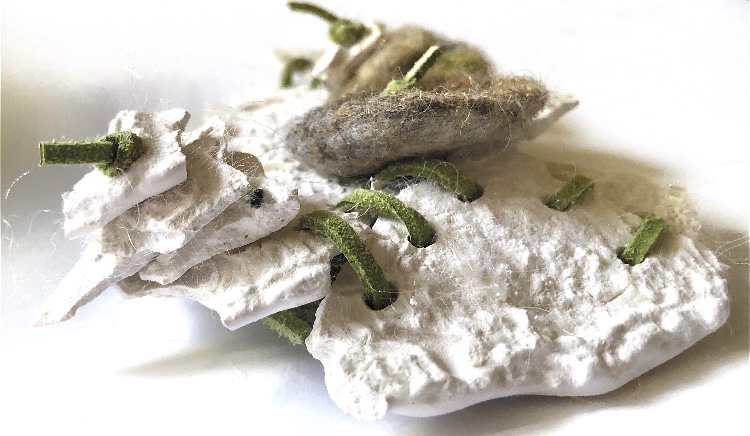
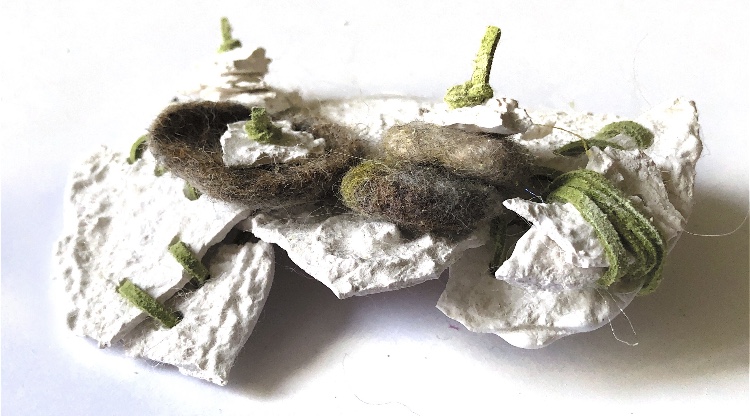
Following feedback from my tutor I decided to develop my collection of pieces from Part 5. The first thing I did was to add a bit of green watercolour to the small plaster sample, (Fig. 1) thereby tying it in with the other samples more closely. This can be seen in the group pictures. This small addition has made a huge difference to how the pieces fit together, I didn’t want to colour the cube but the plaster within the wire holds the colour really well for a subtle yet important splash of green.
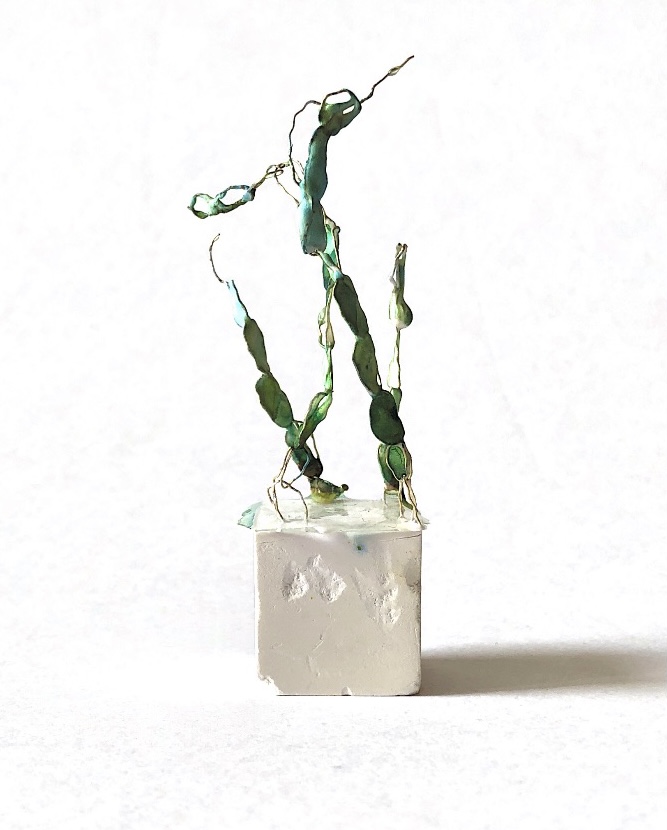
Fig. 1 Small plaster sample with added green colour
************************************
I then researched the work of Richard McVetis who makes small cubes with fabric and stitch. I was interested to see how he displays his work, – he groups his pieces in different arrangements and situations with plain backgrounds. With this in mind I then arranged and photographed my collection in different groupings. I also took more close-up photos capturing details and cropped images. (Fig. 2) I think the stacked cubes work really well, highlighting the beautiful greens, white, and the patterns within the cubes. The close up images distort the pieces into unrecognisable shapes and patterns.
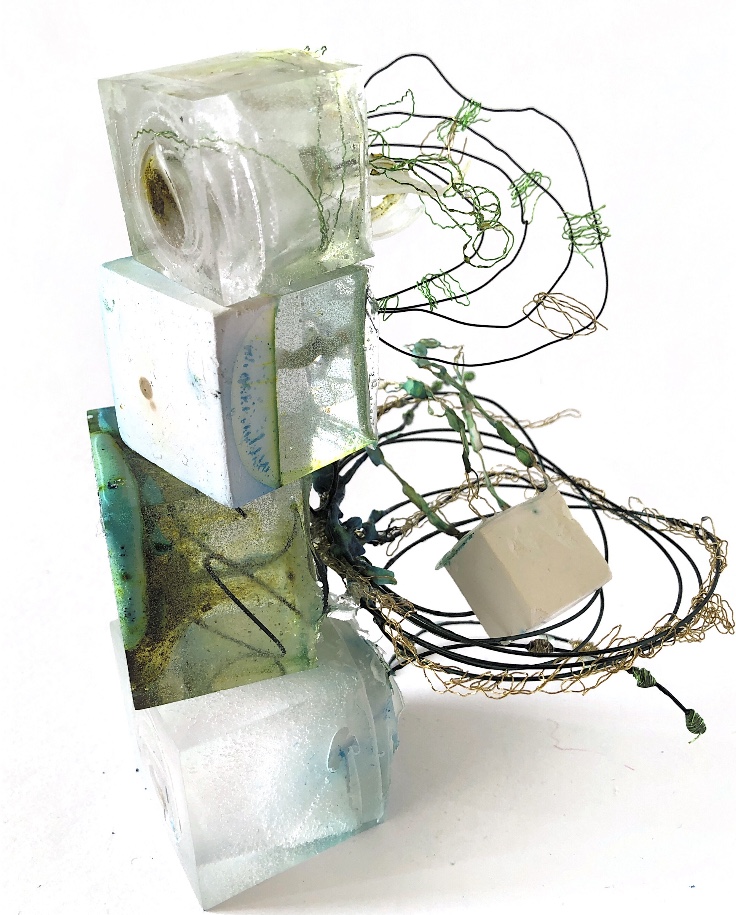
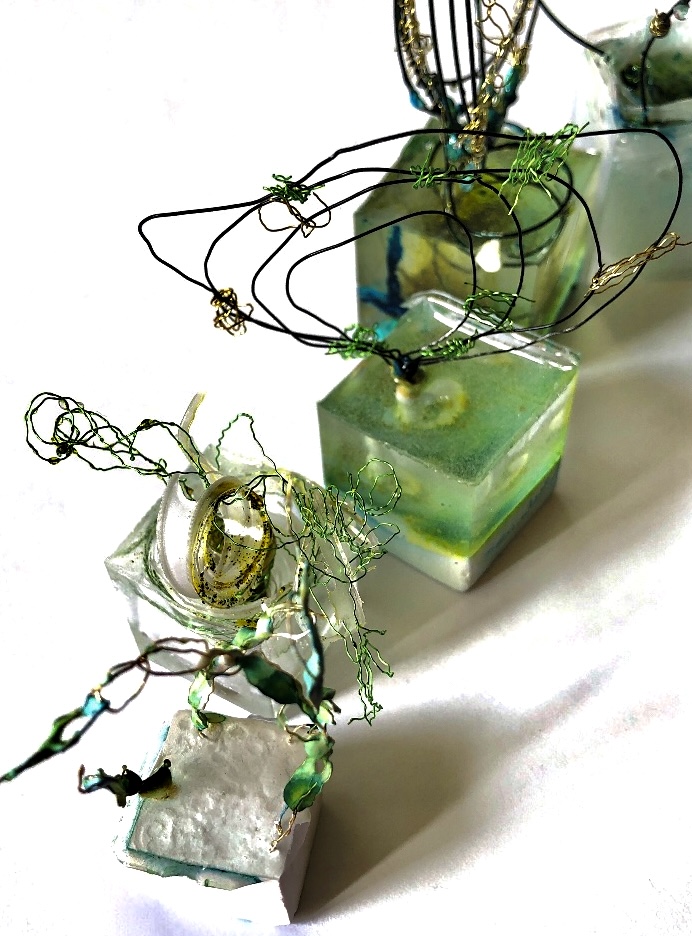
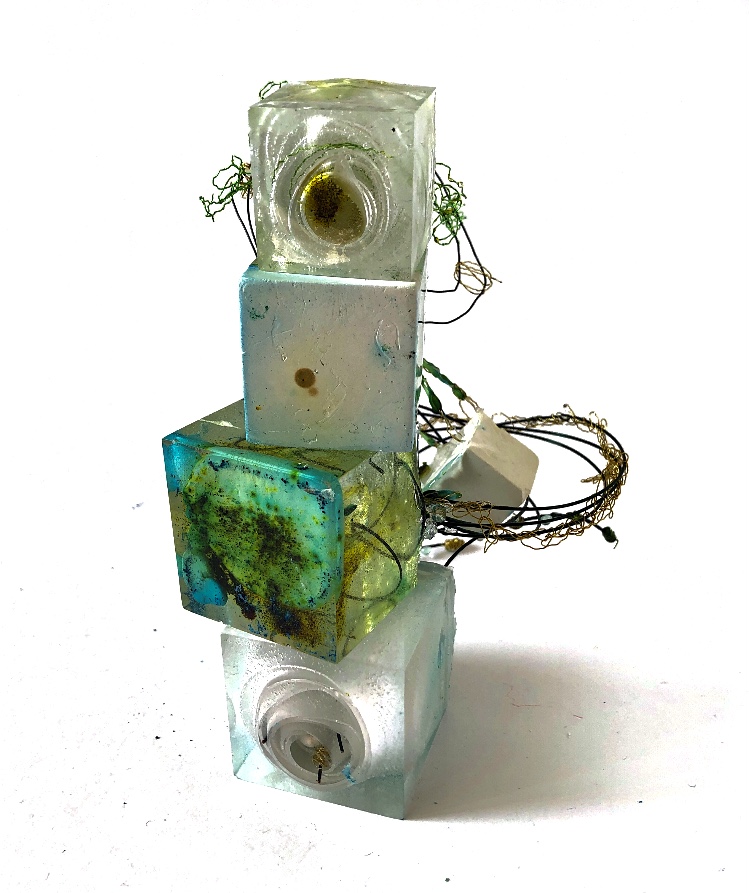
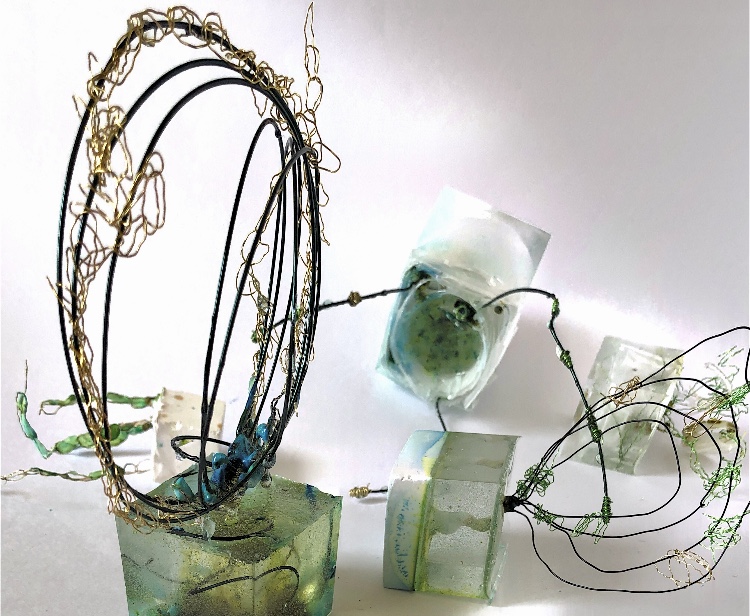
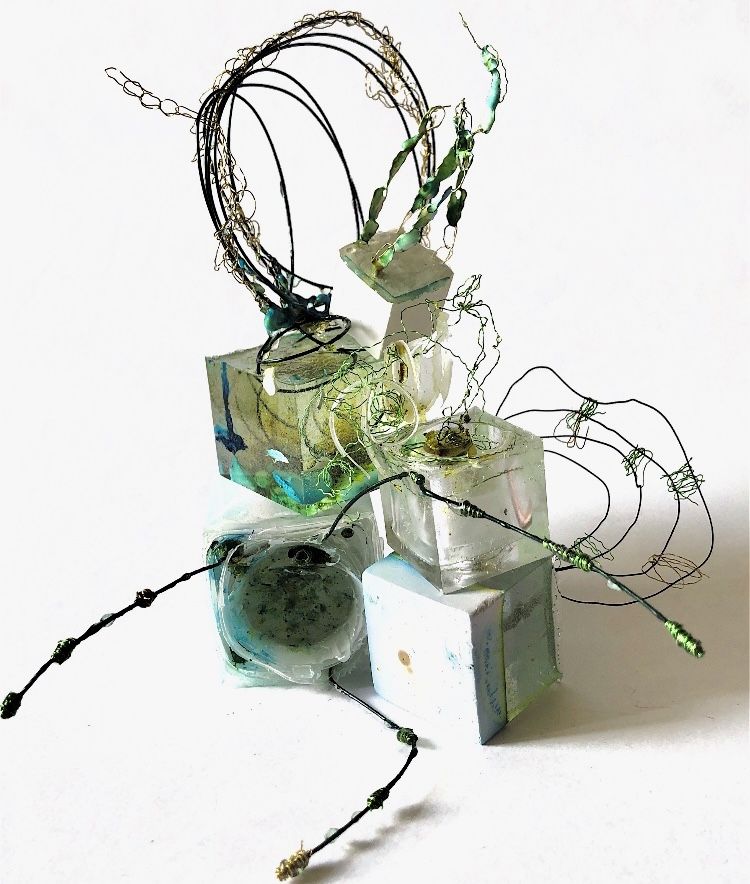
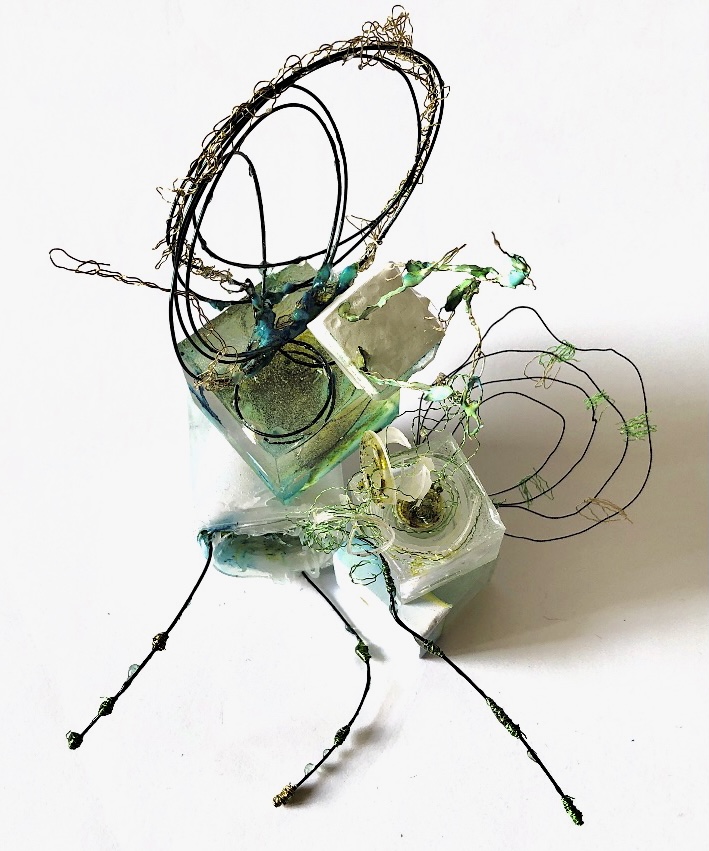
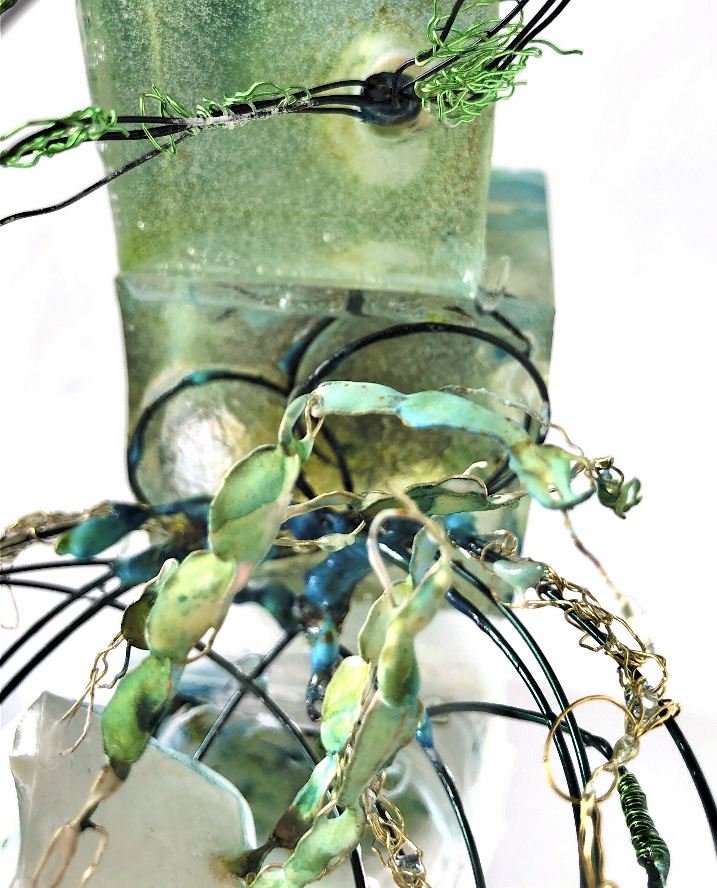
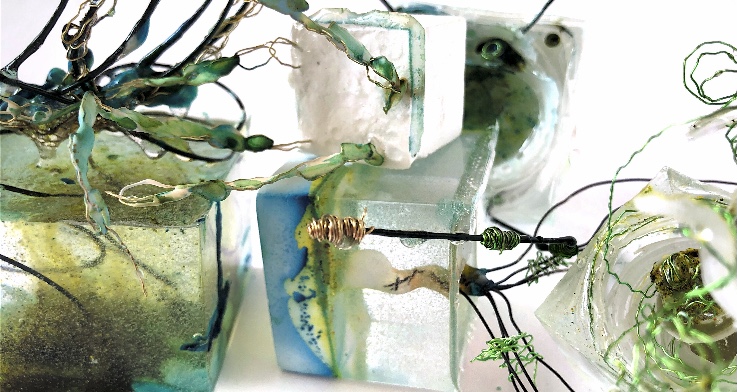
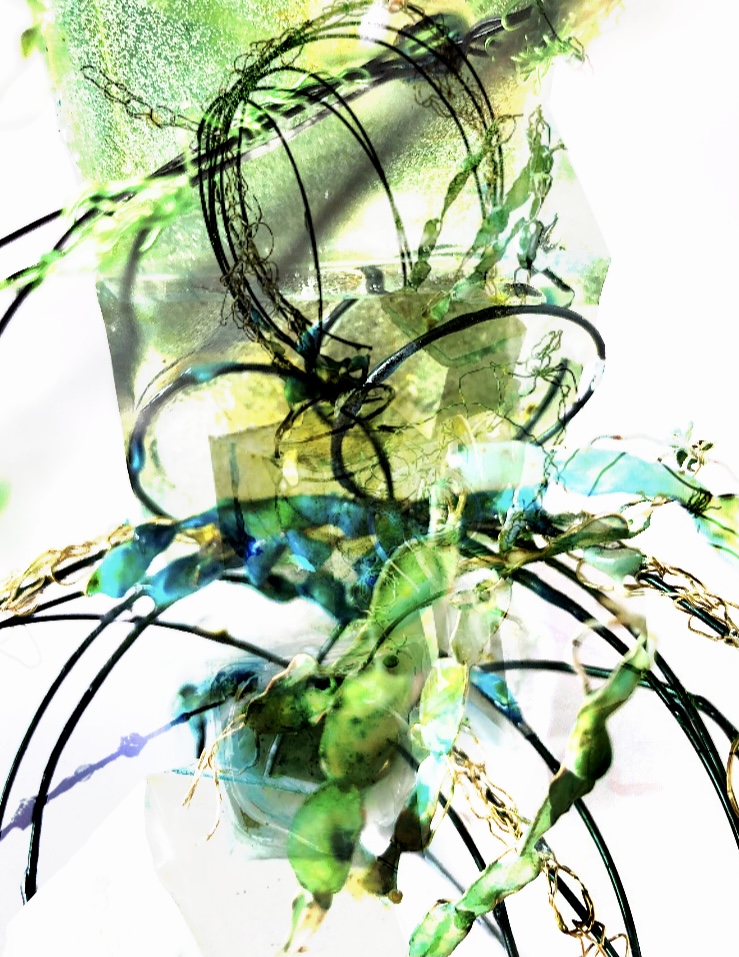
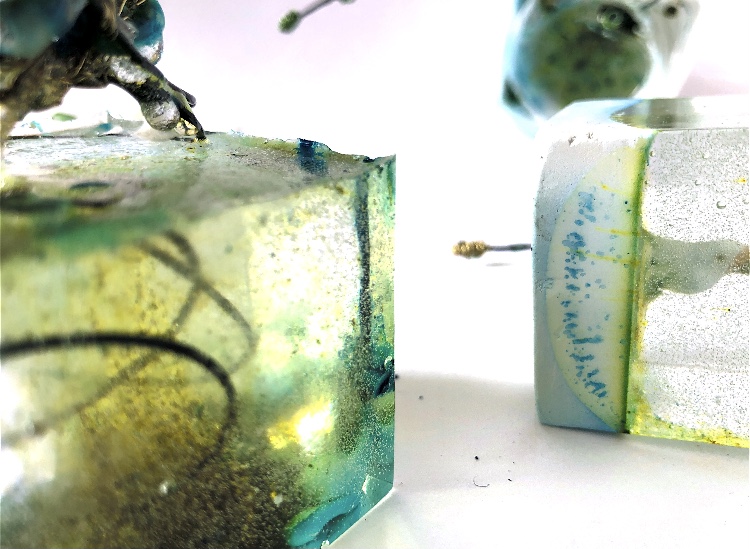
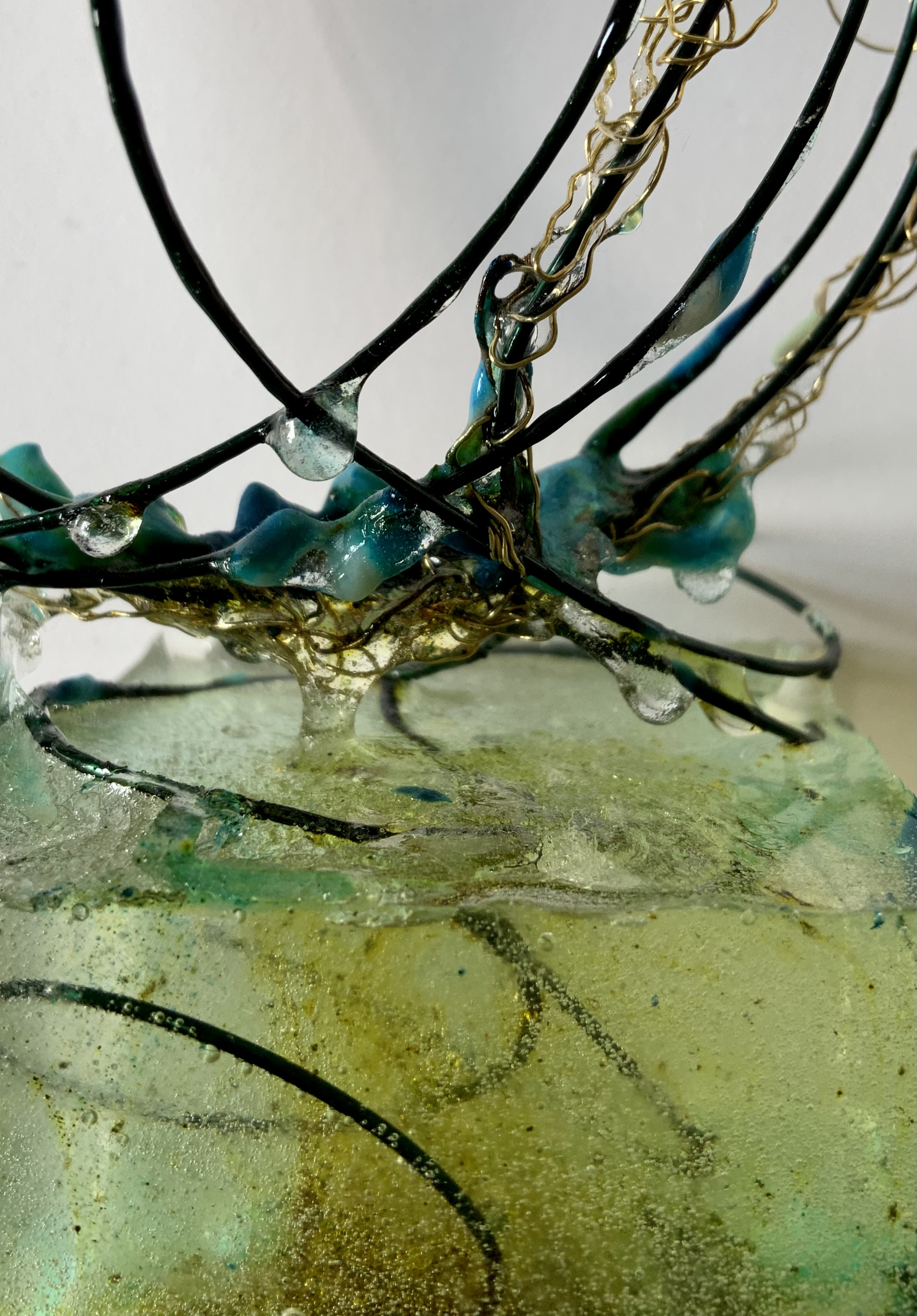
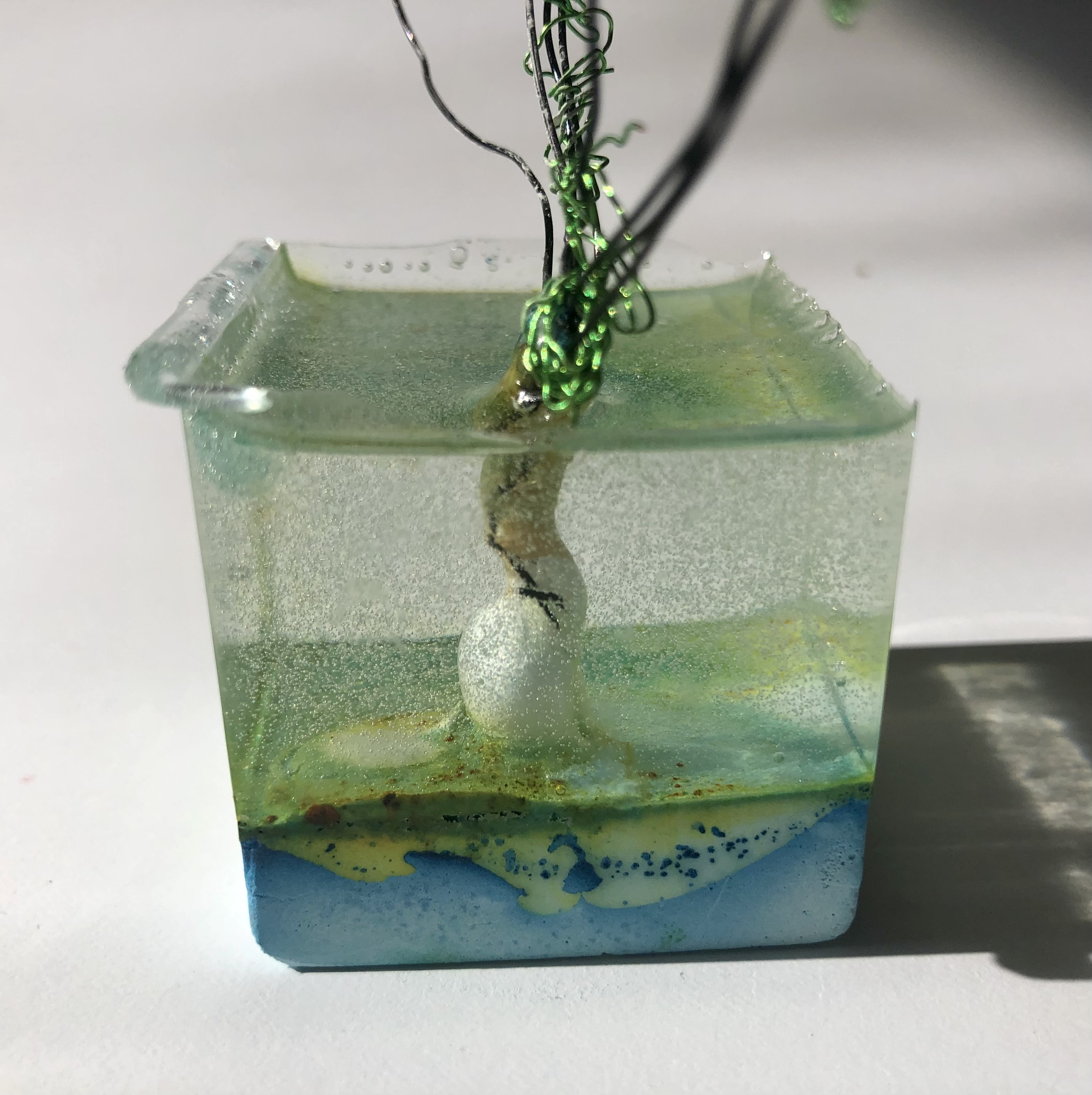
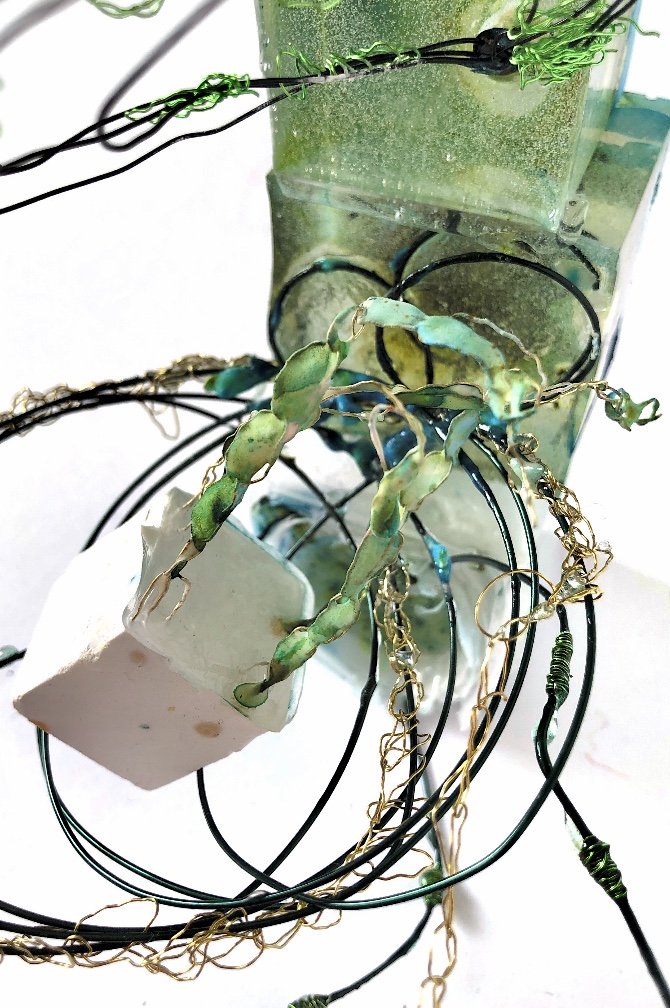
Fig.2 Different arrangements and close ups
********************************
To change the feel of the images I set the samples among sequins and beads, and then took them outside to photograph in the garden, (Fig. 3). I was able to use the wire to hang the pieces on a tree which was very effective, I like the organic nature of the leaves and flowers contrasting with the hard plaster, resin and wire sculptures. I also particularly like the photo bottom right in Fig. 3 where the stark white cube is resting on a branch and the wire tendrils almost seem to be part of the plant. Once again I am really drawn to contrasts of colour, material, shape and texture.
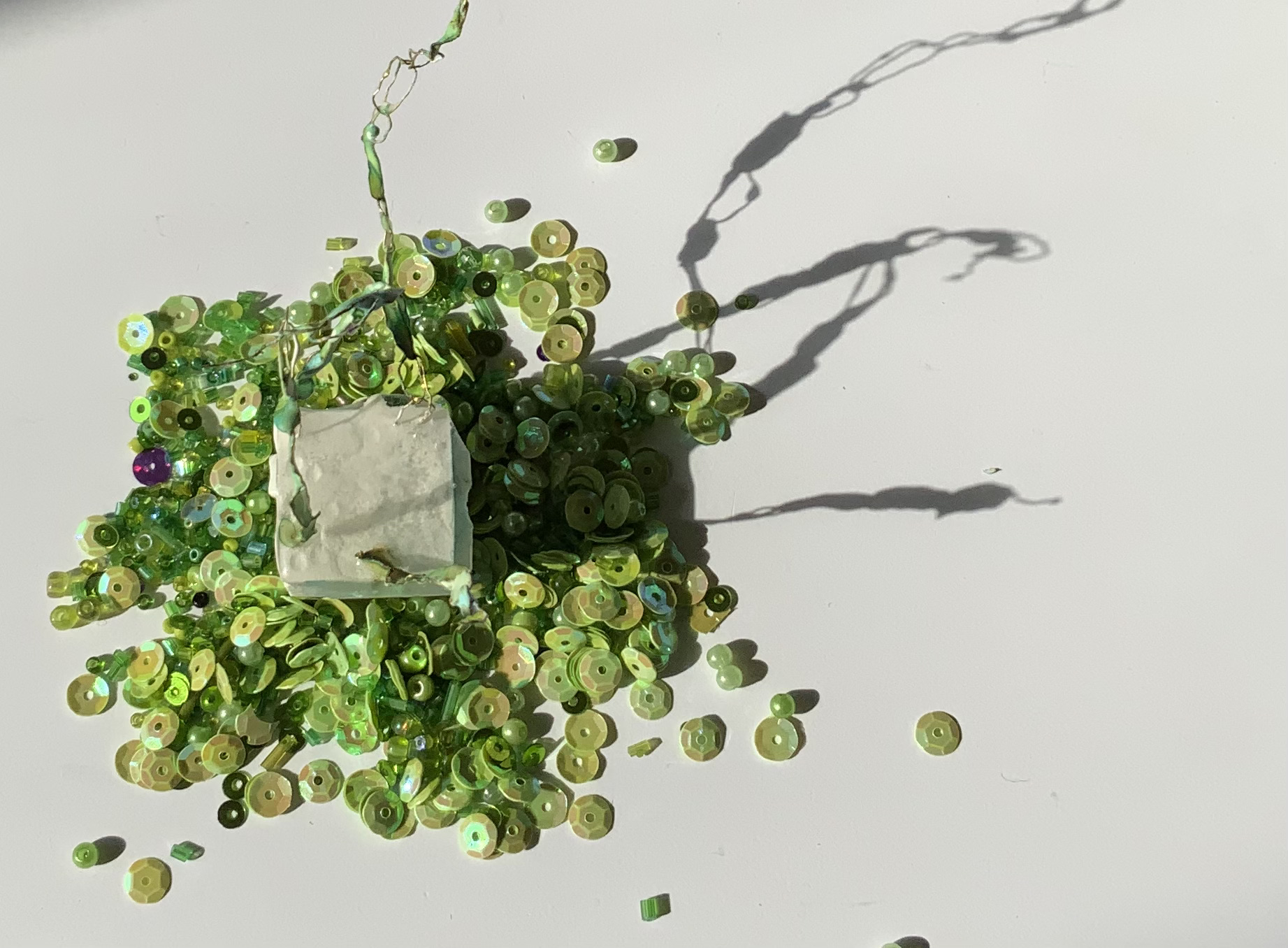
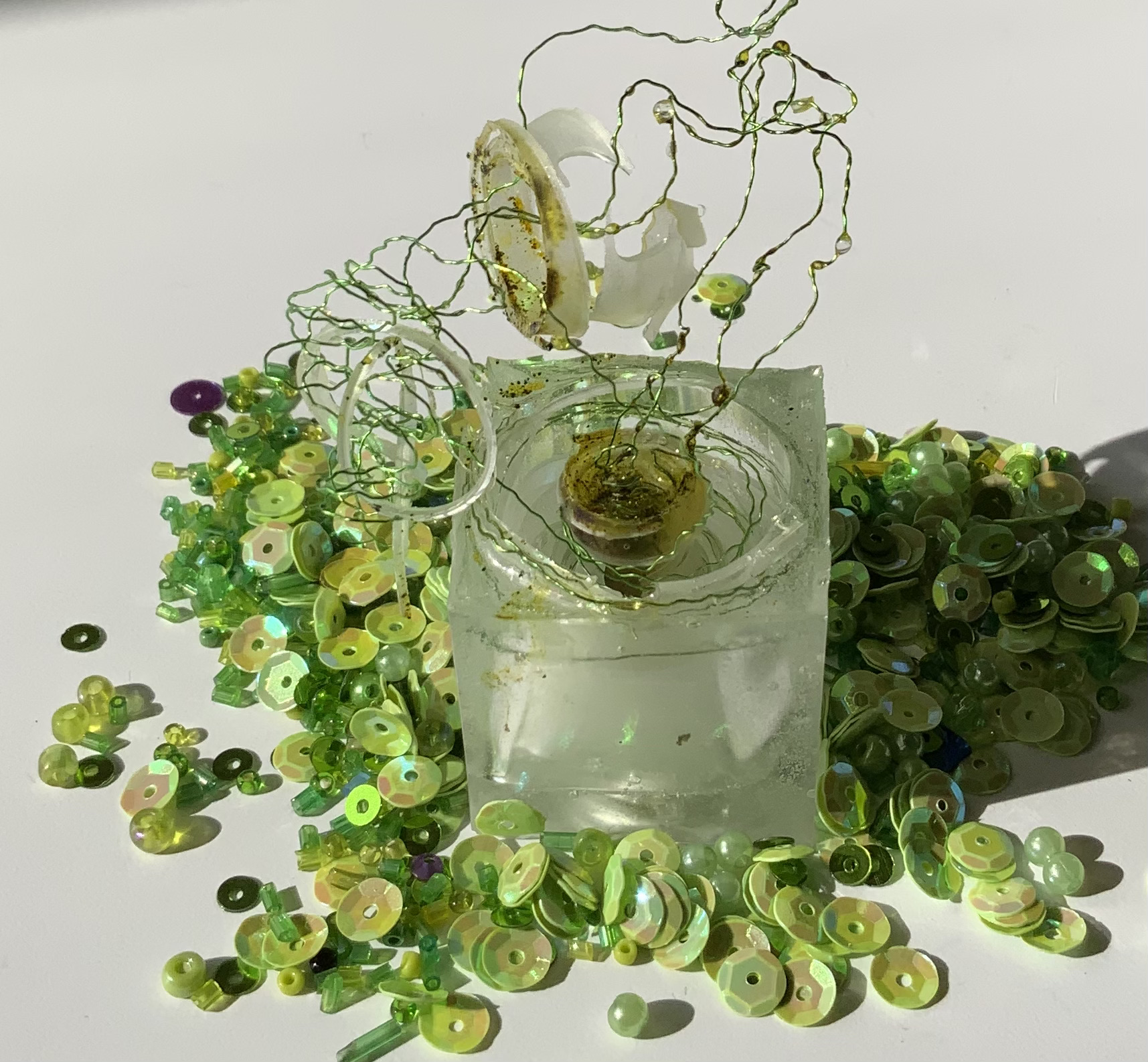
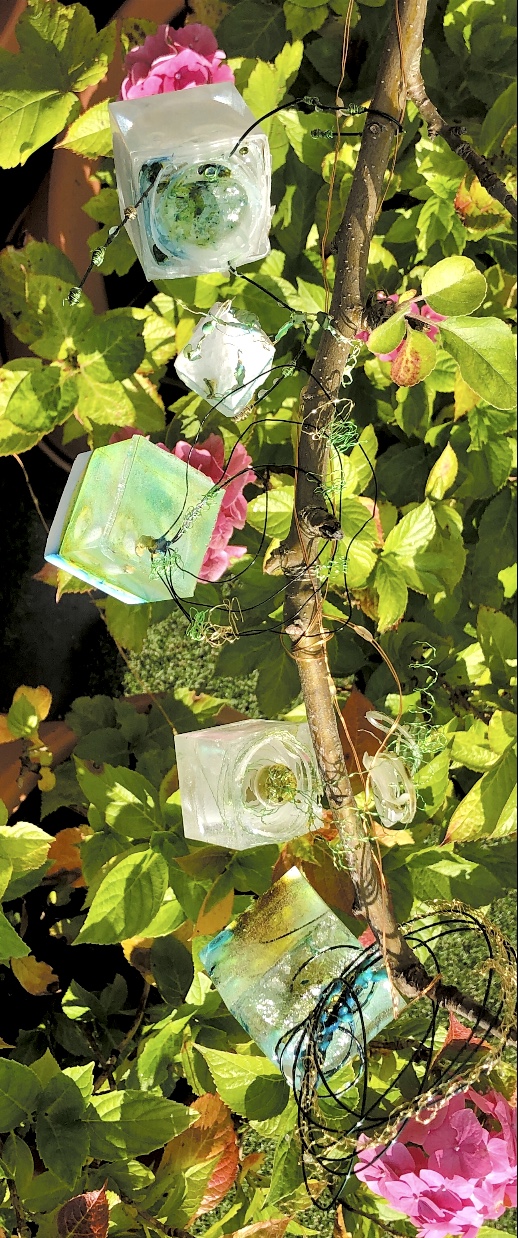
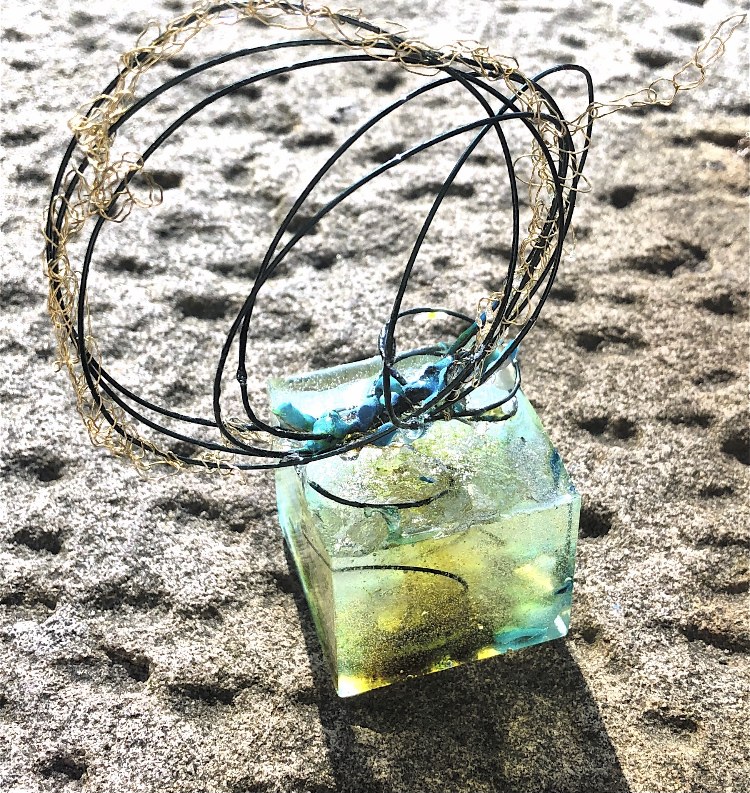
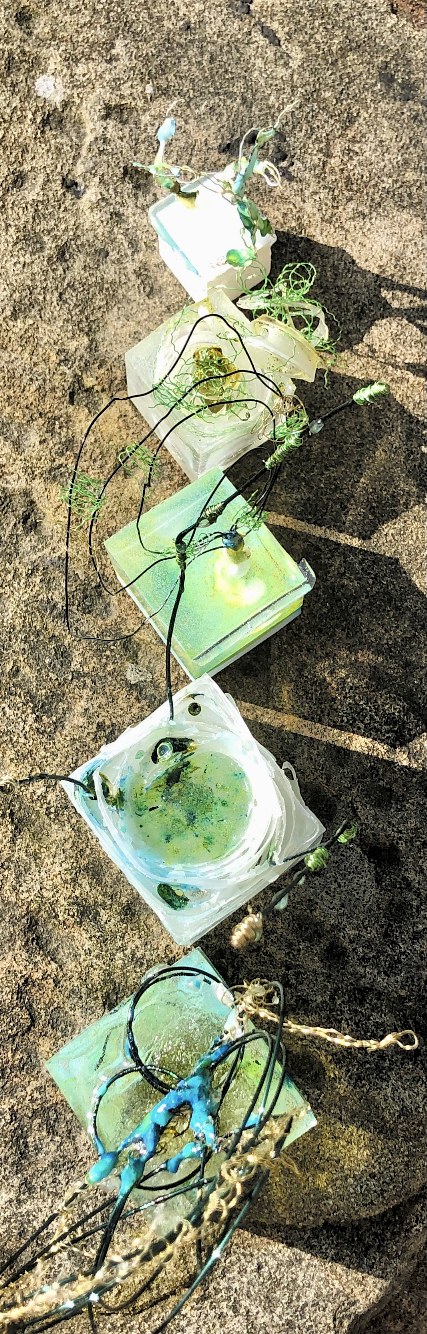
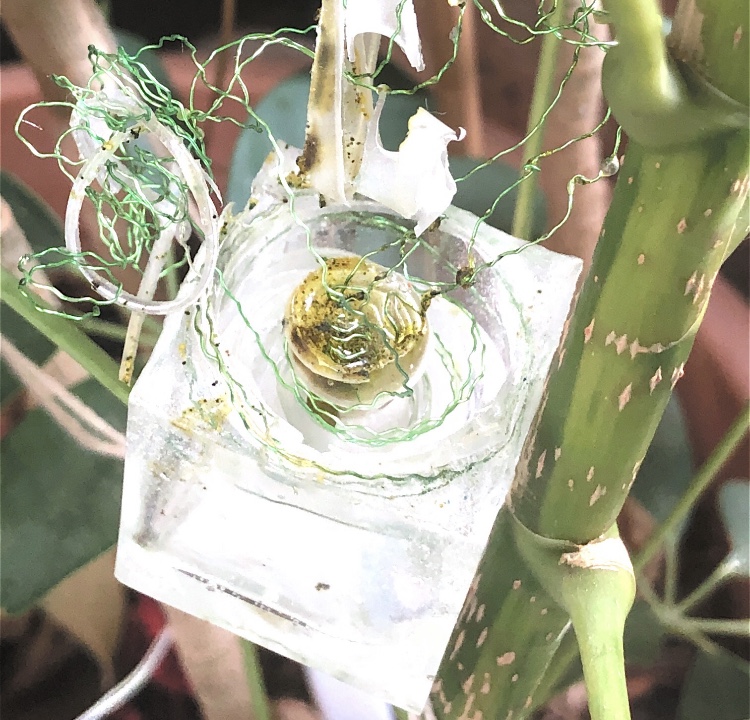
Fig. 3 Different situations
***********************************
I noticed that Richard McVetis sometimes uses a dark background to photograph his work. I found when I took photographs that the black background wasn’t always as dark a contrast as I would have liked, but by scanning and using some photo manipulation I was able to achieve a really dark backdrop and effective images, highlighting the colour and translucency of the blocks, the ethereal fragility of the swirls of fine wire, and the strong wire circles that seem to hover in the air. Layering of the images has added further pattern and ideas for applique, paper collage and stitch. (Fig. 4)
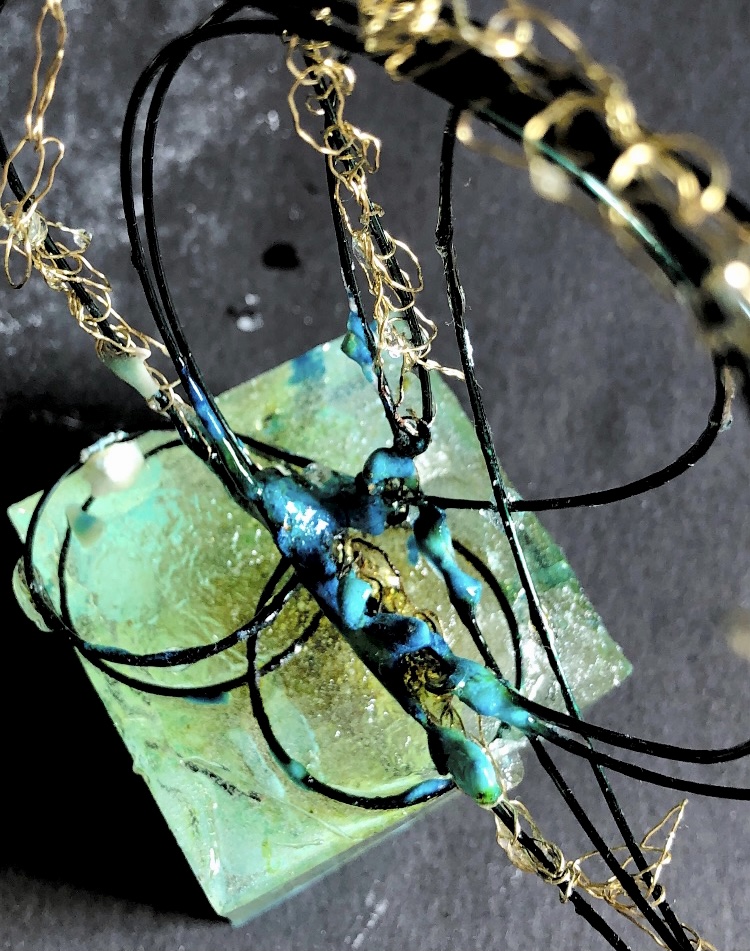
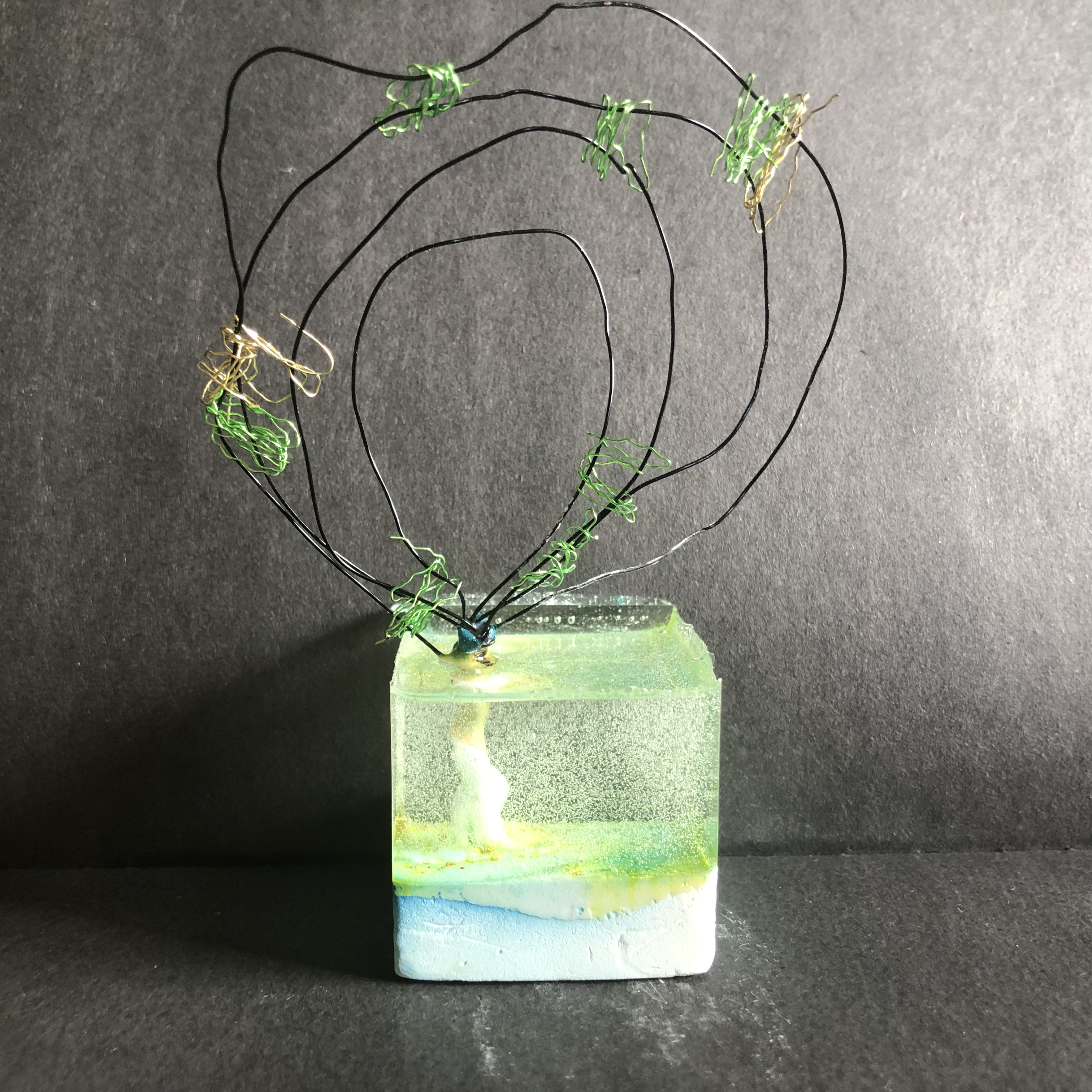
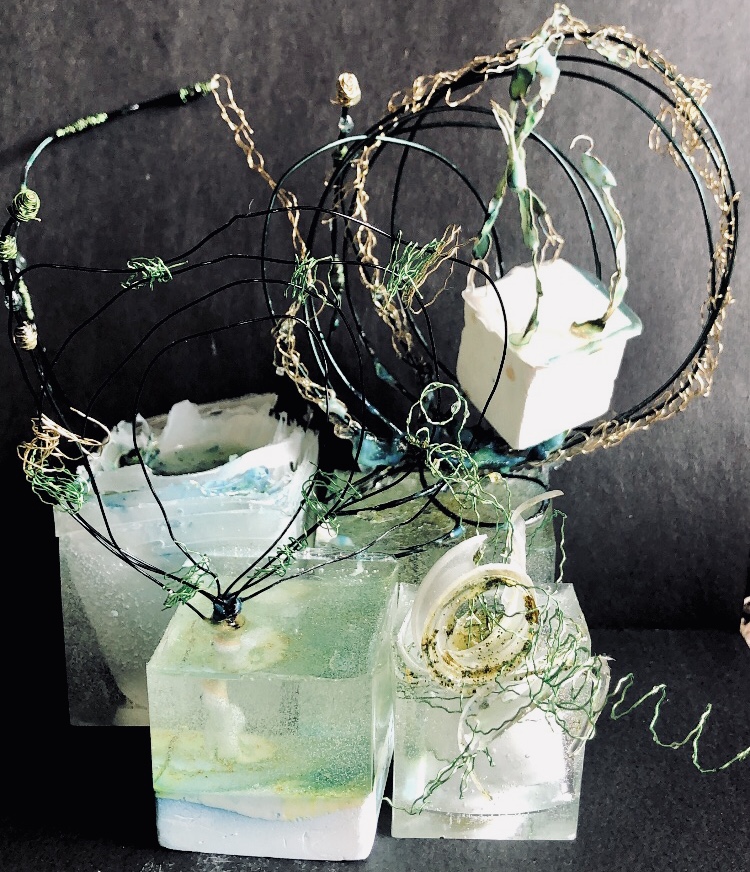
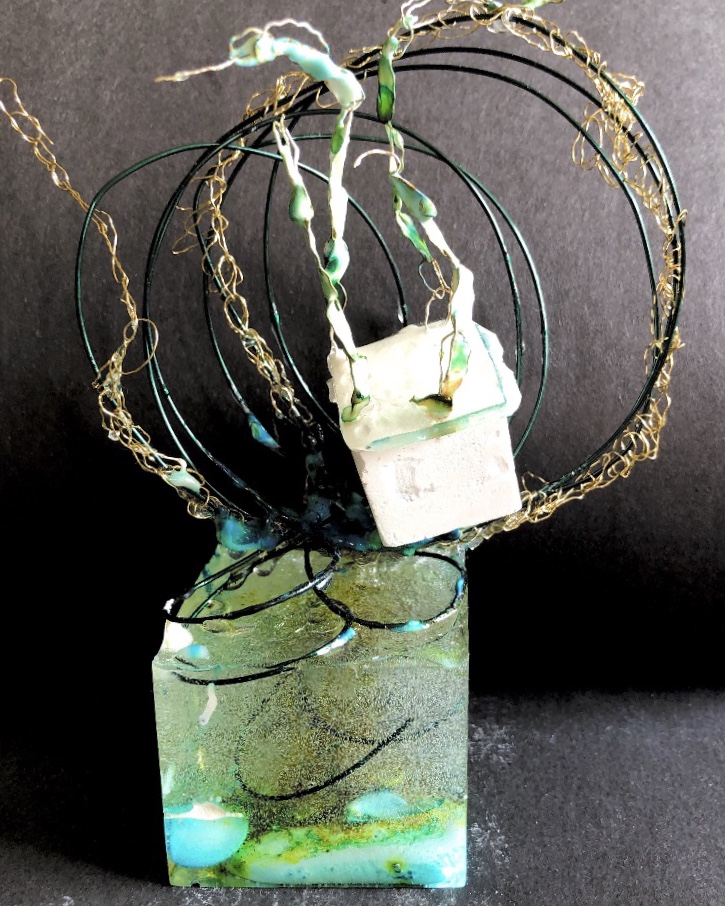
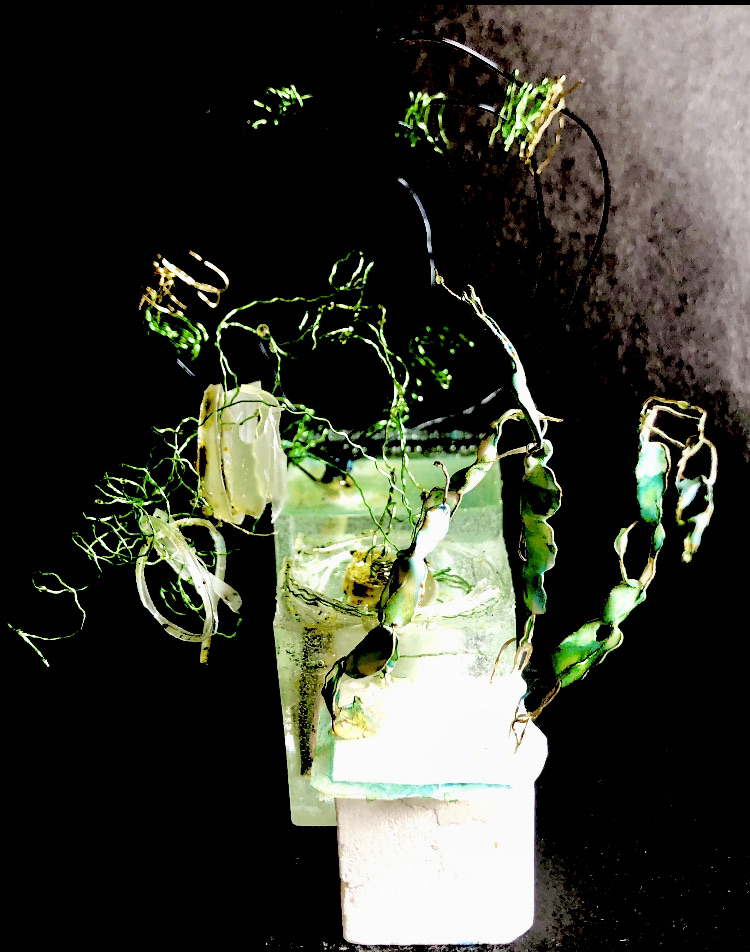
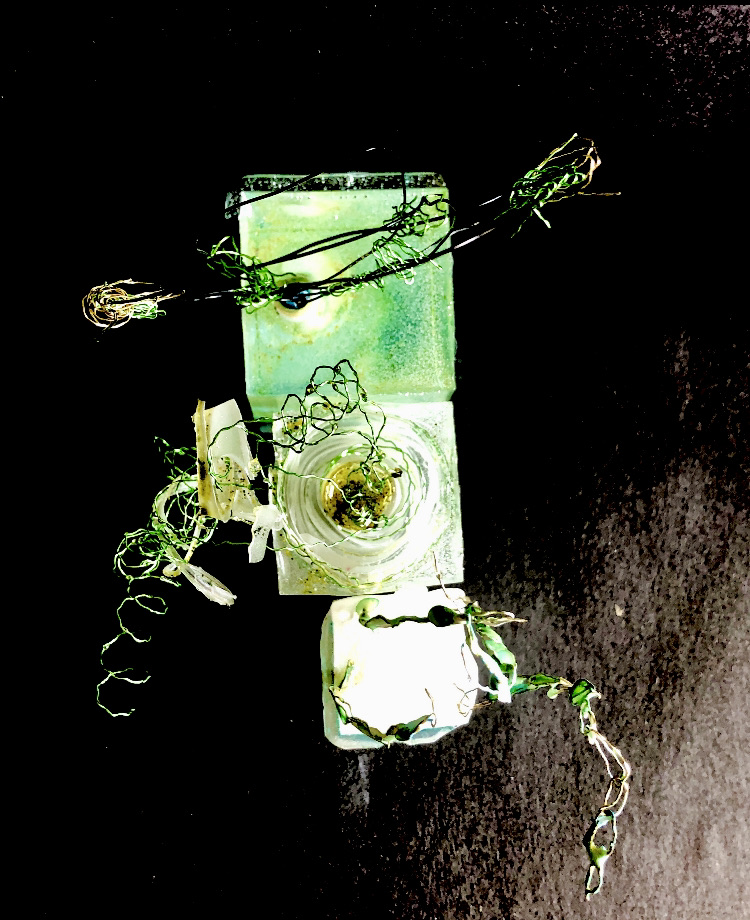
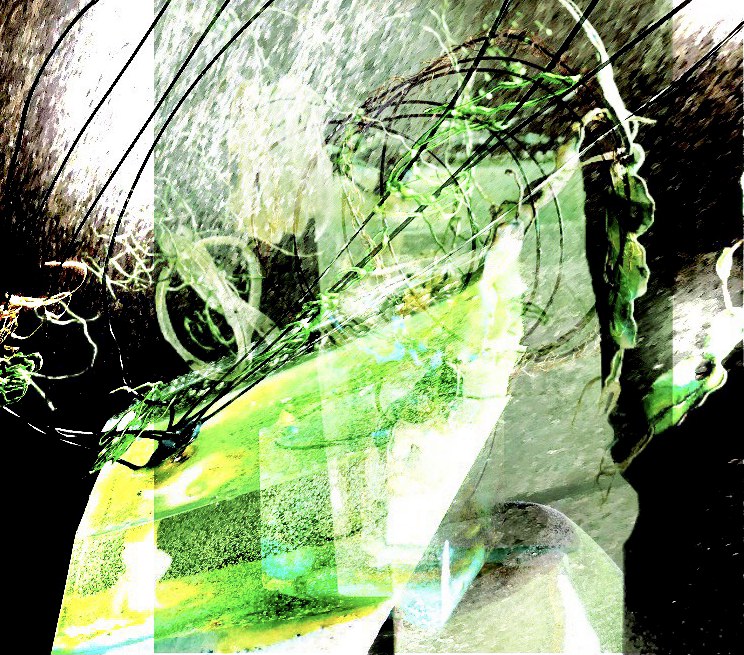
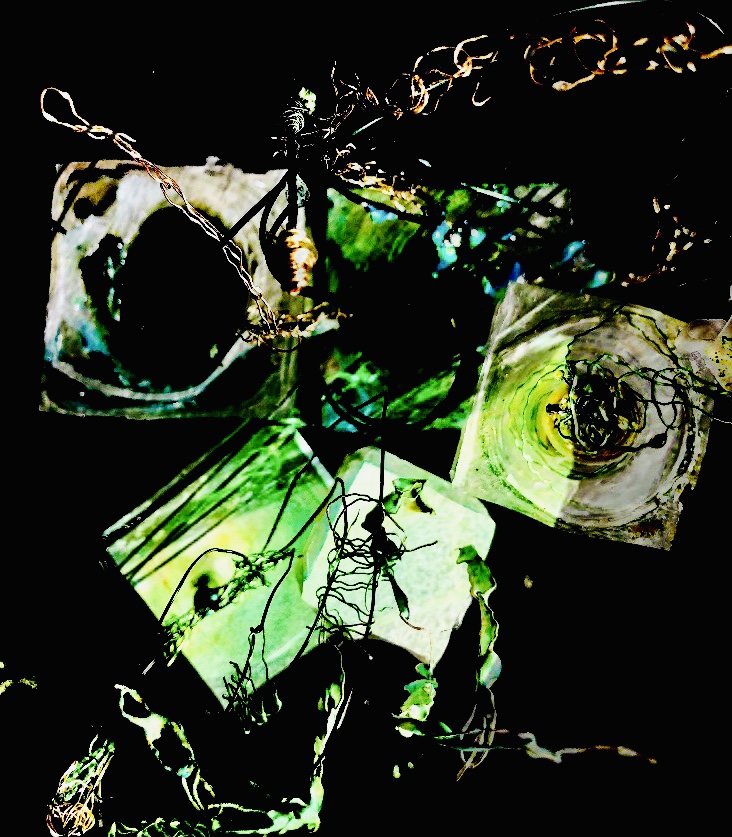
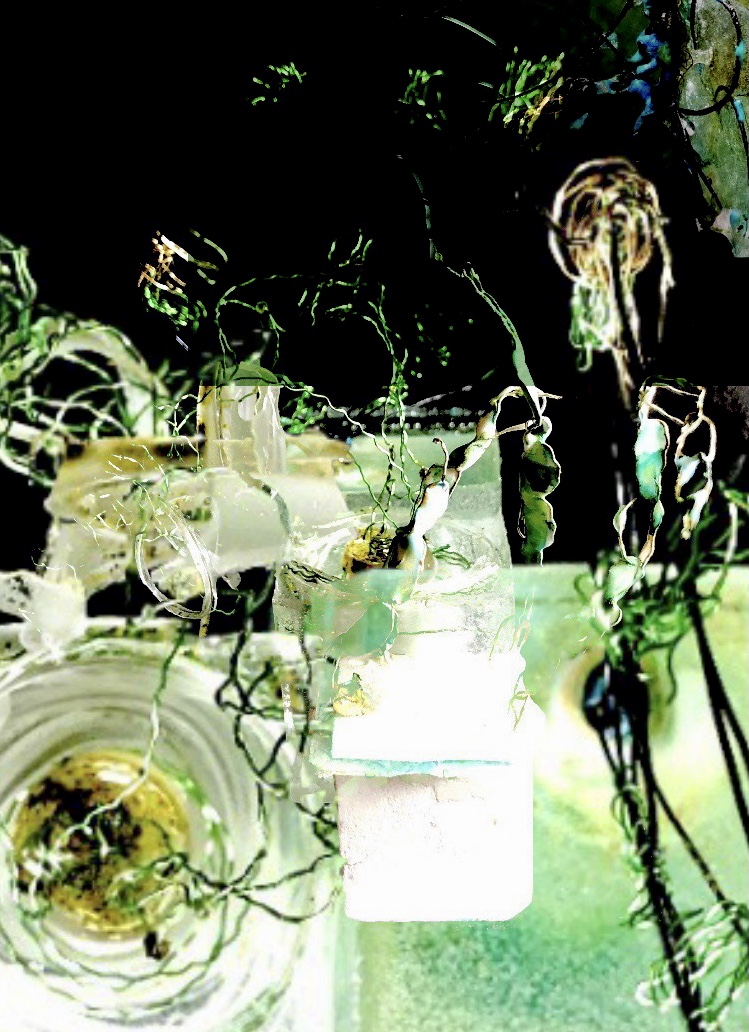
Fig. 4 Experimenting with a dark backdrop
********************************
Playing around with colour inversion produced some beautiful results and a whole new colourway to explore, (Fig. 5). Some of the images below have been overlaid with the original pictures to add some other colours back in.
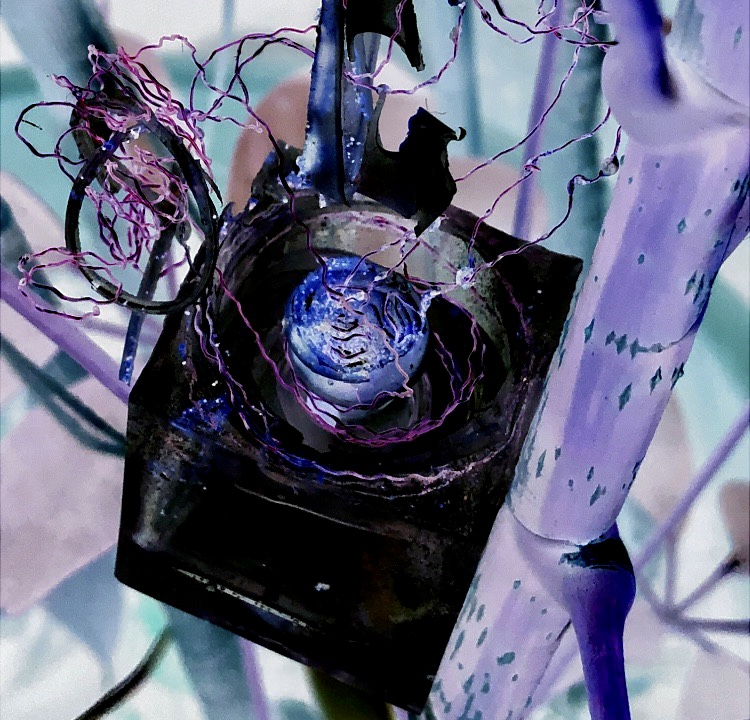
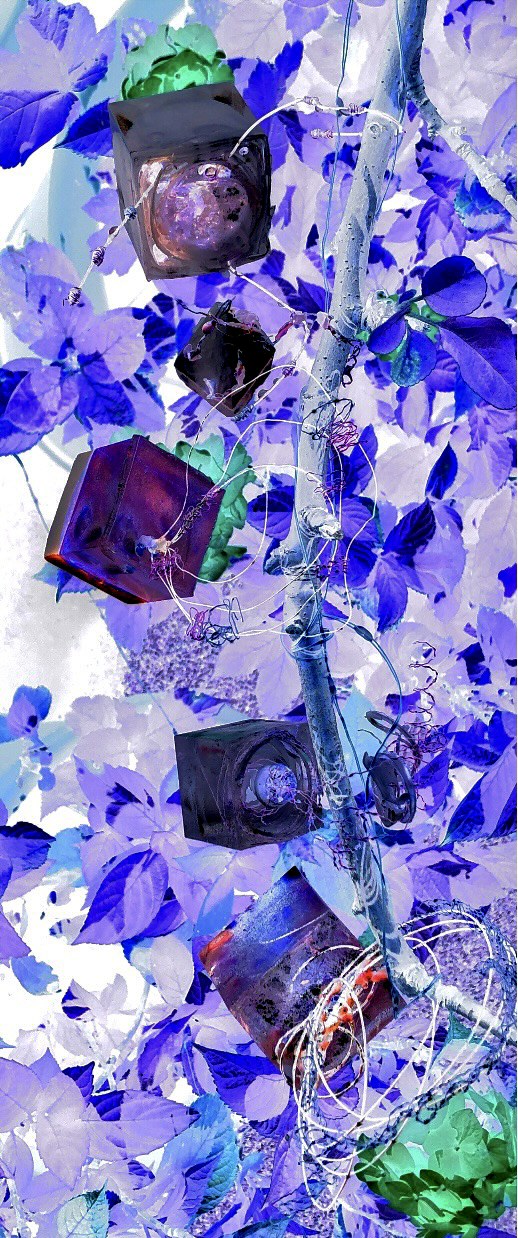
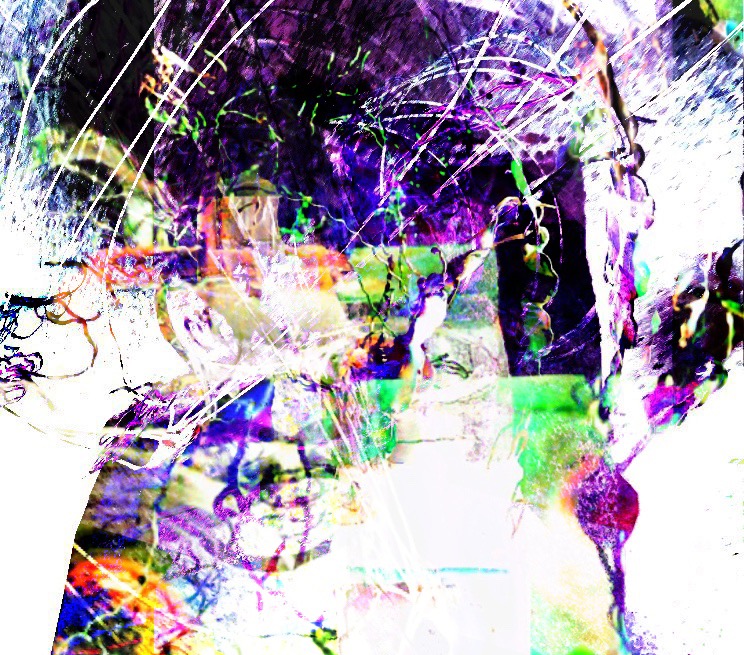
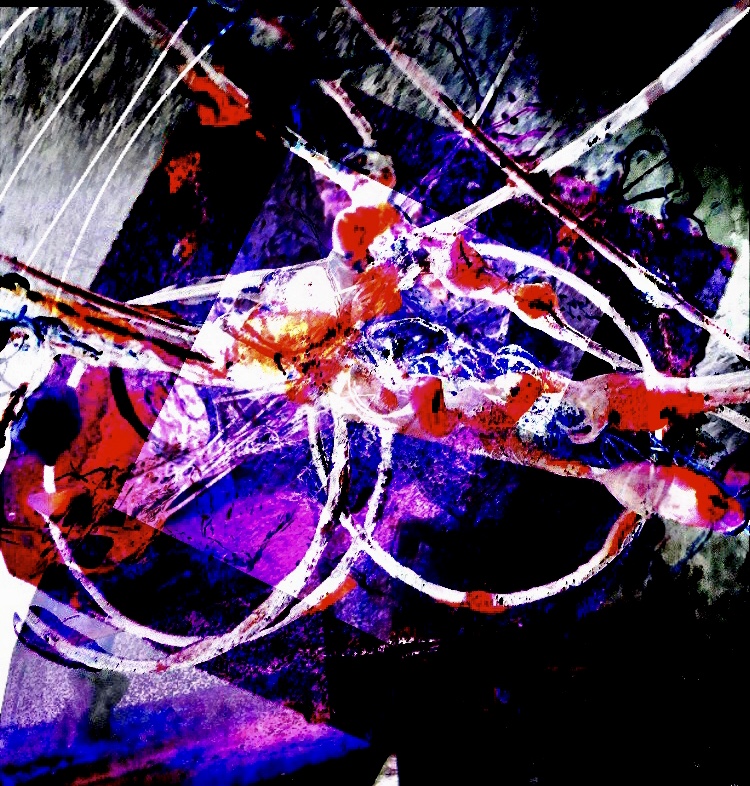
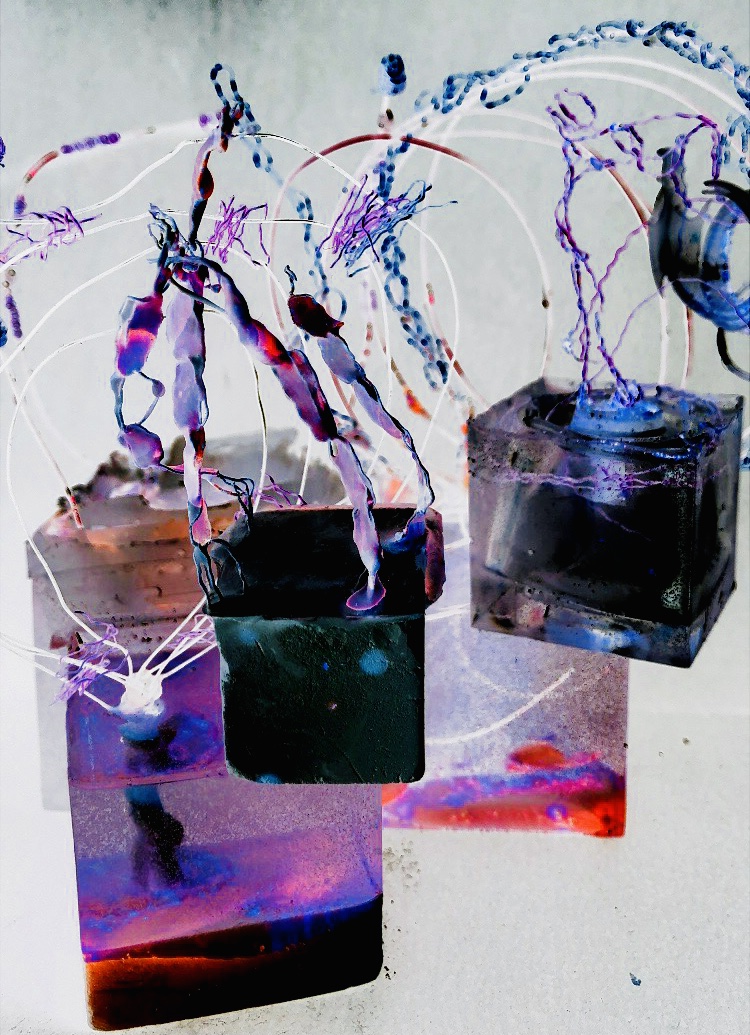
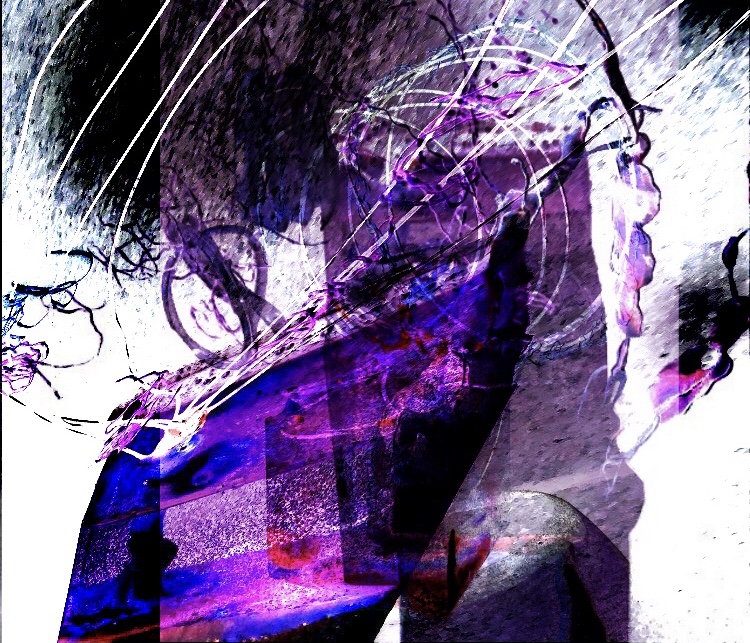
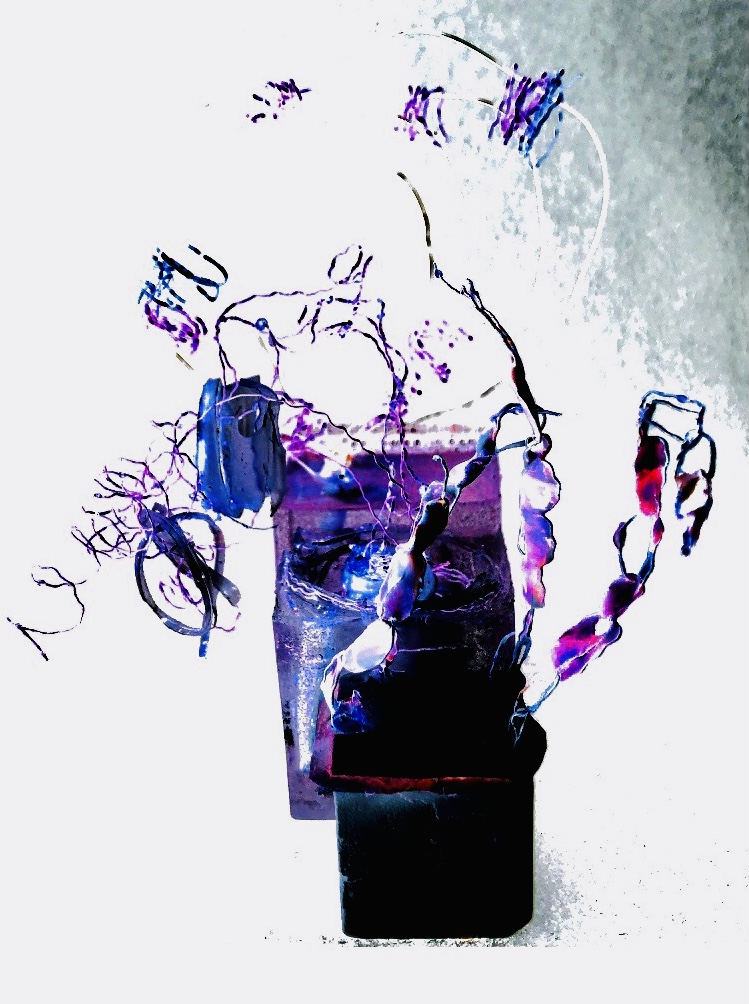
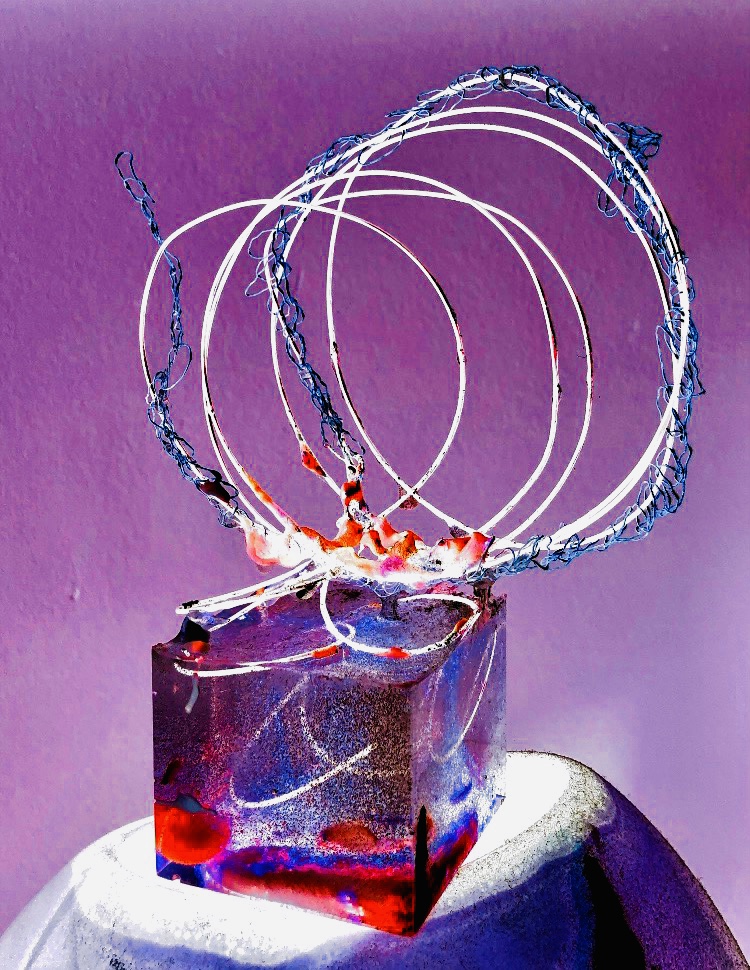
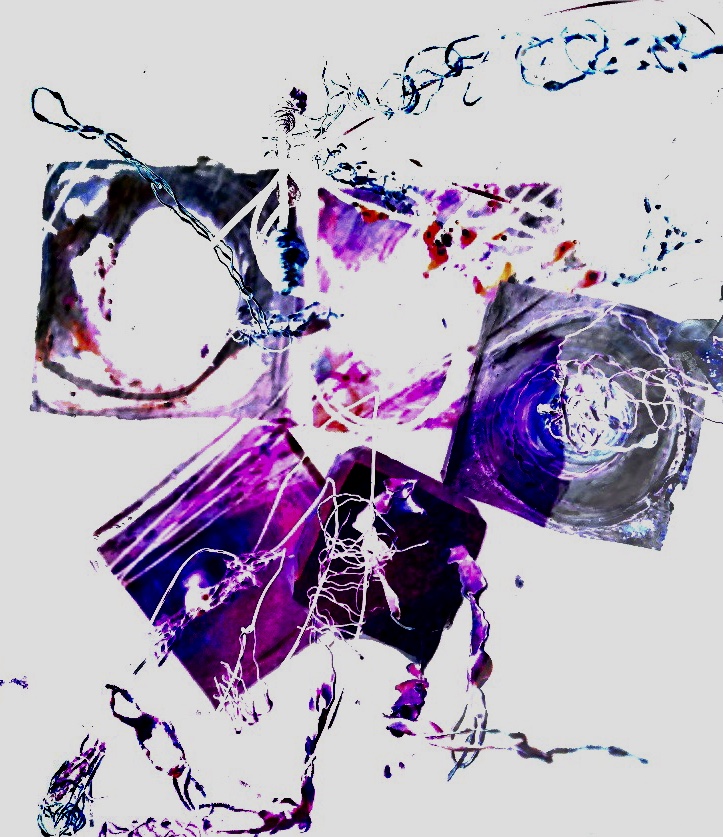
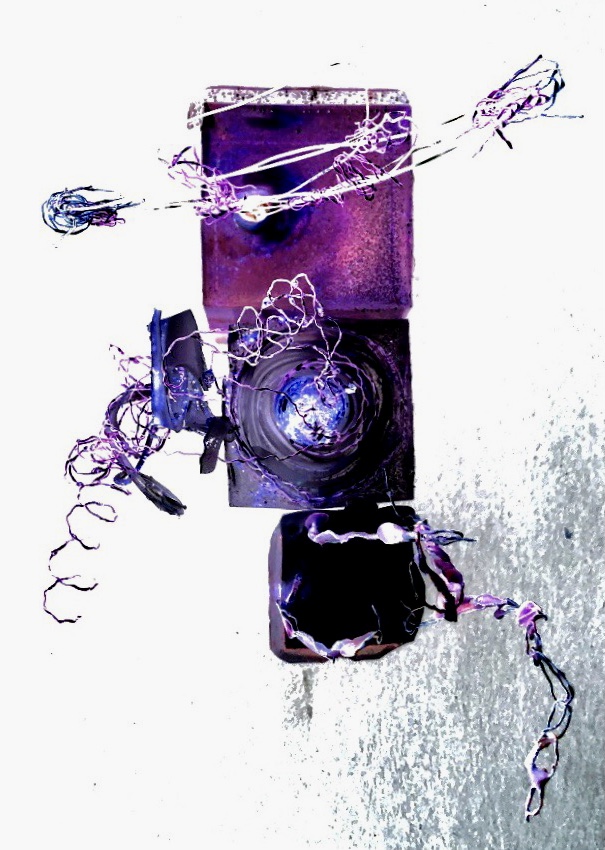
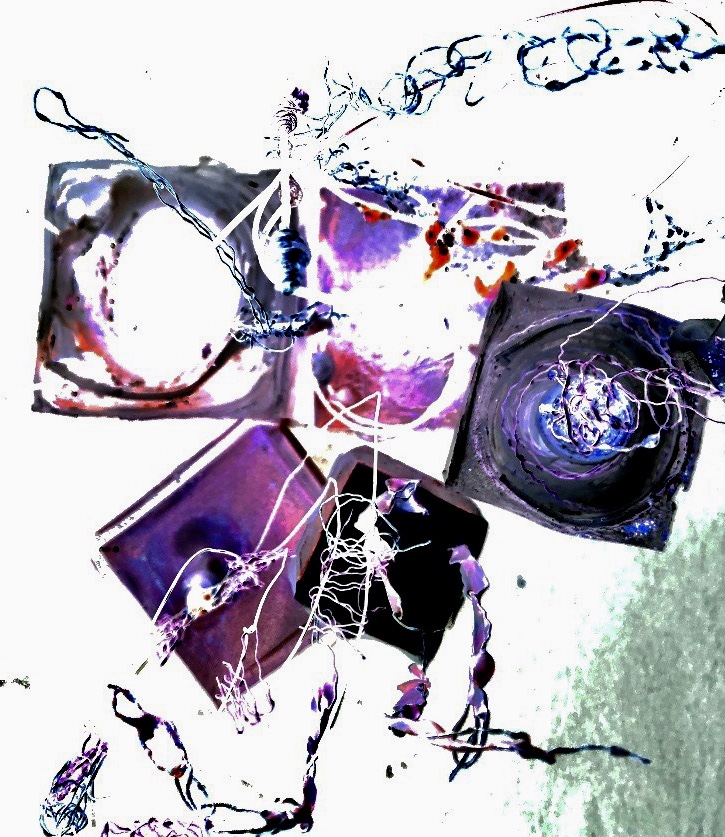
Fig. 5 Inversion of colours, and layering
*******************************
Playing around with my photos I was able to create mirror images and repeat patterns as ideas for prints, borders and stitch patterns. Some of these are reminiscent of kaleidoscope patterns. (Fig. 6)

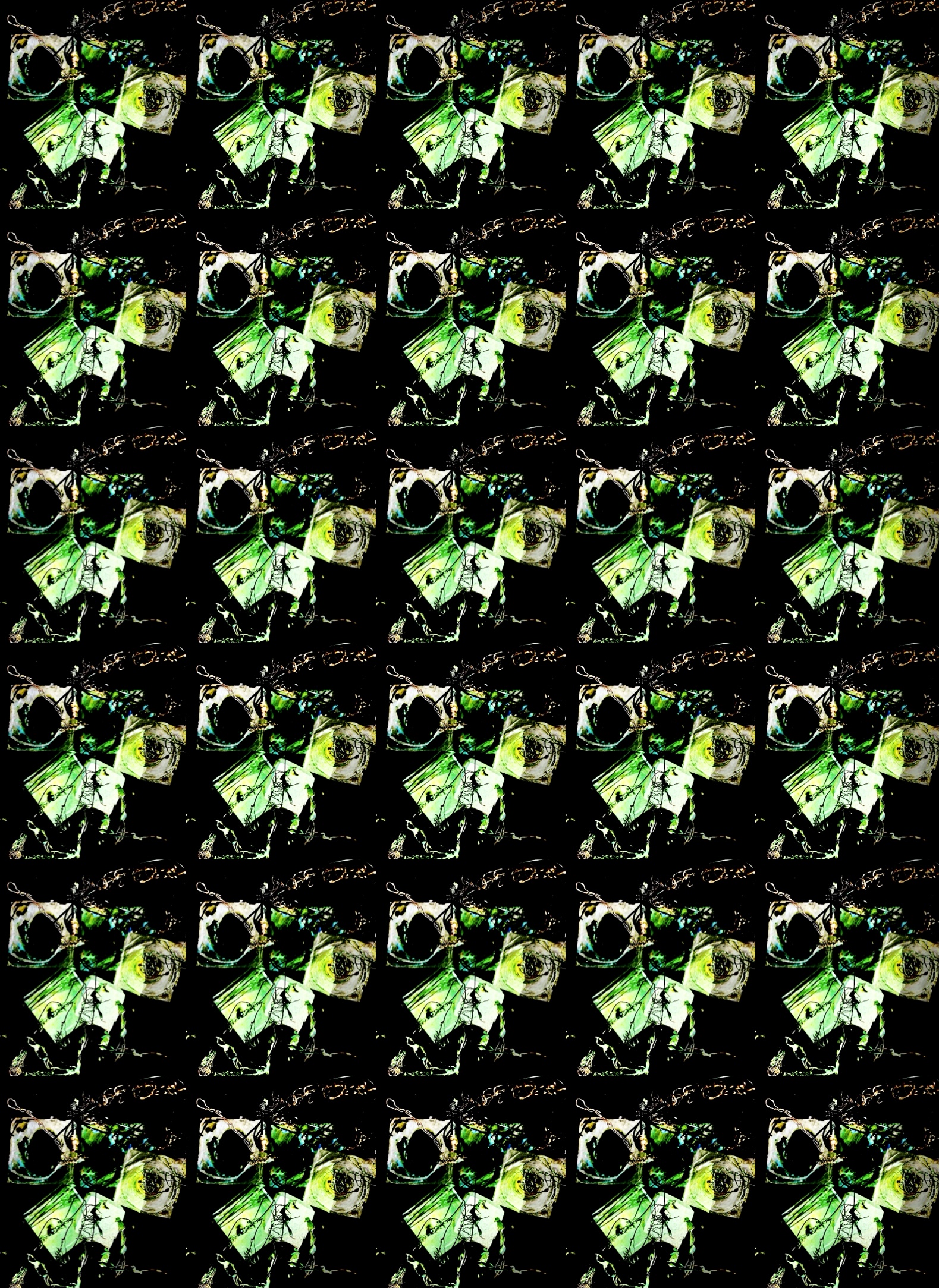


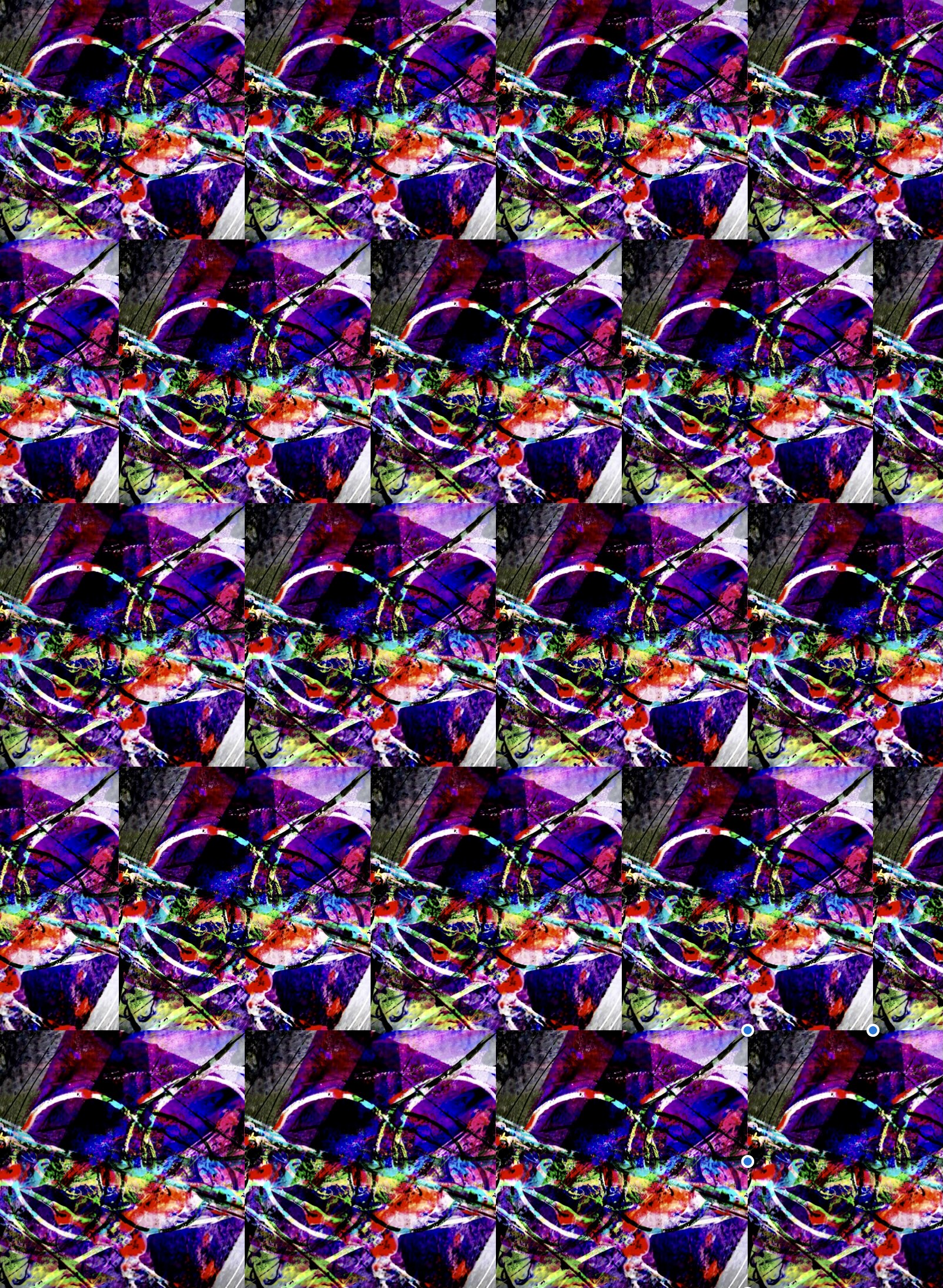
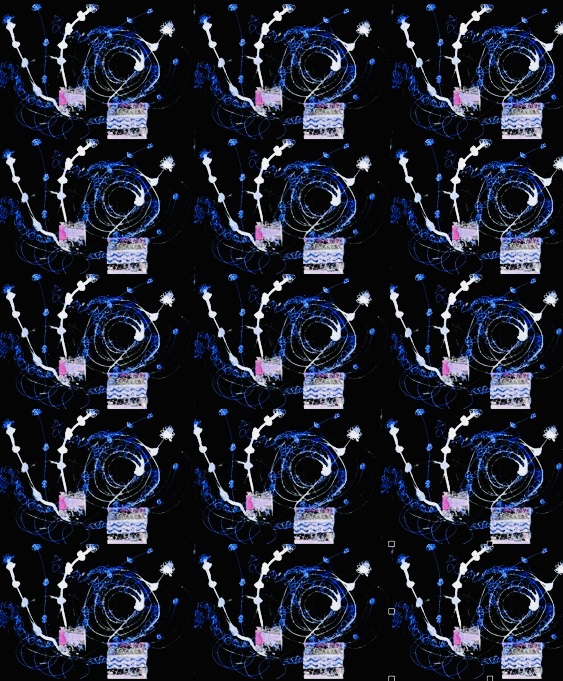

Fig. 6 Mirror images and repeat patterns
********************************
Using one of my layered photos as inspiration I scaled up my line drawing to A2 size and then added colour to make a linear image with lots of shapes and lines to inspire some fabric work. I then used this to make a fabric piece with scraps of fabric and machine stitching. (Fig. 7)
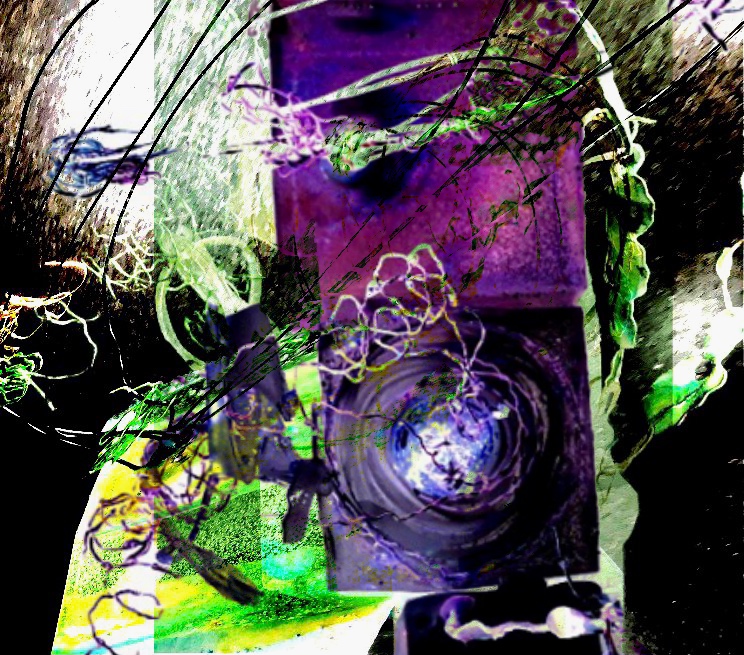
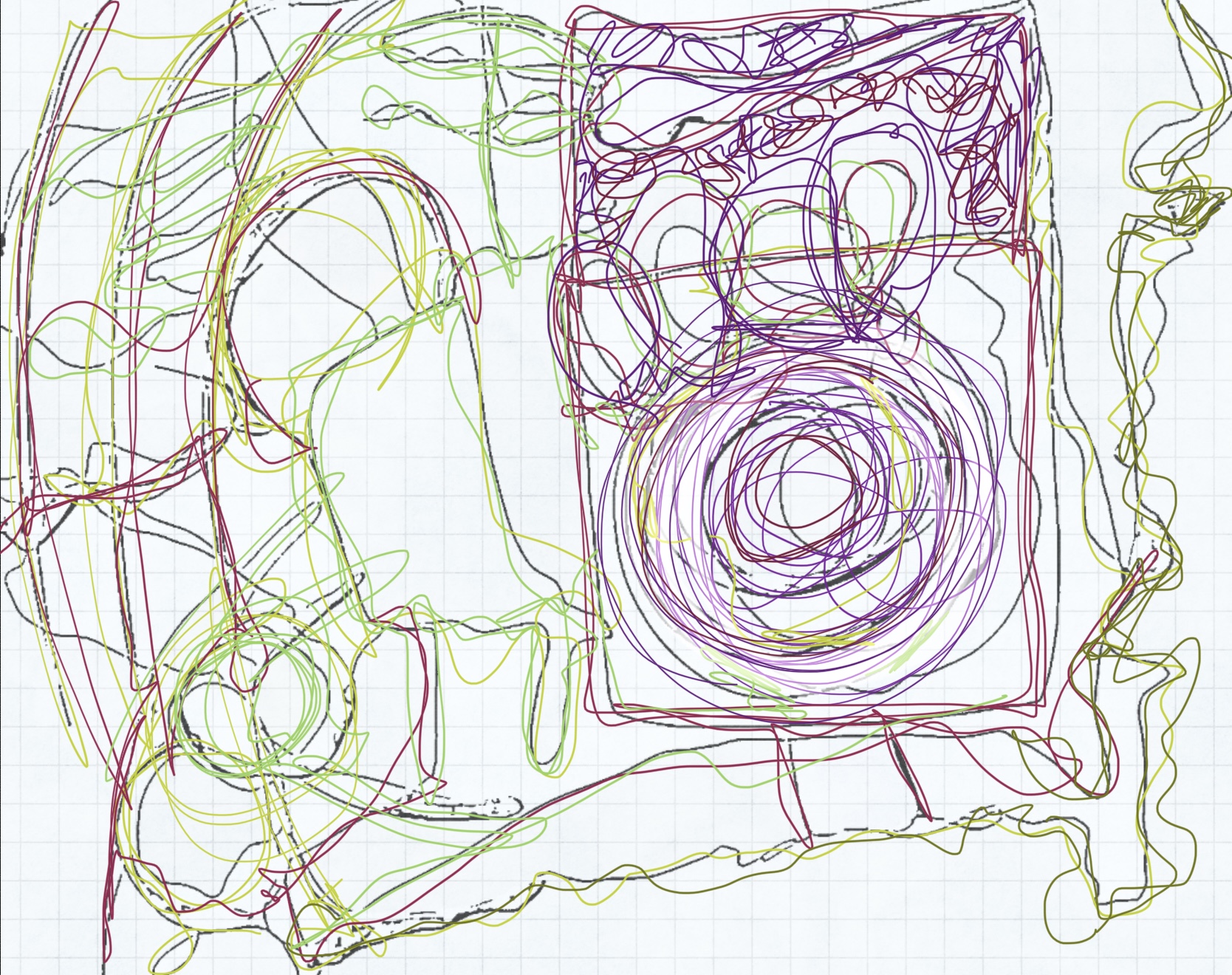
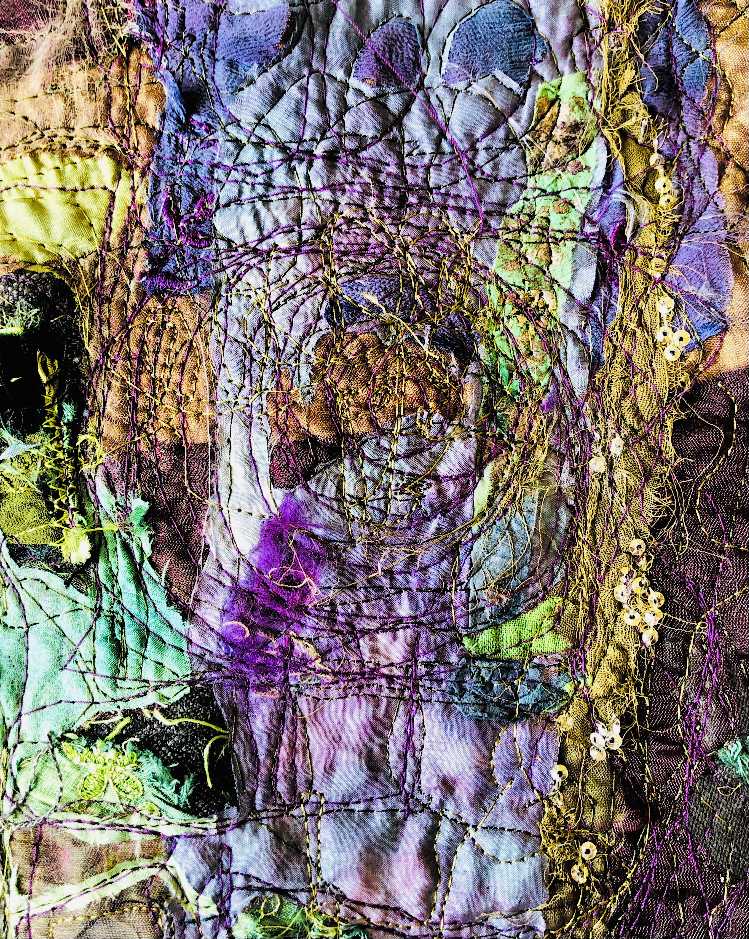
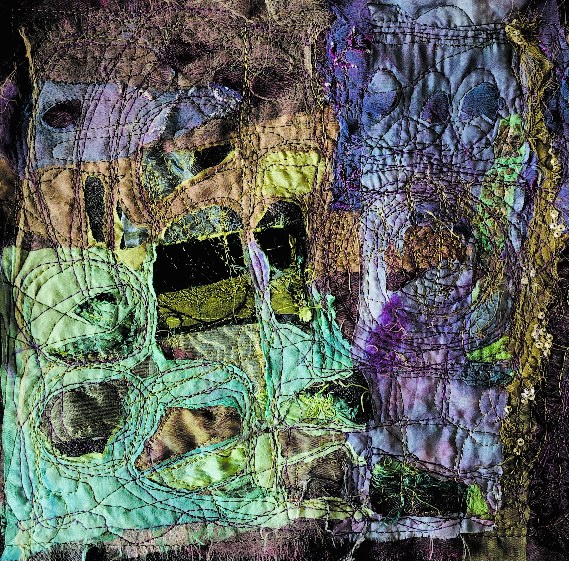
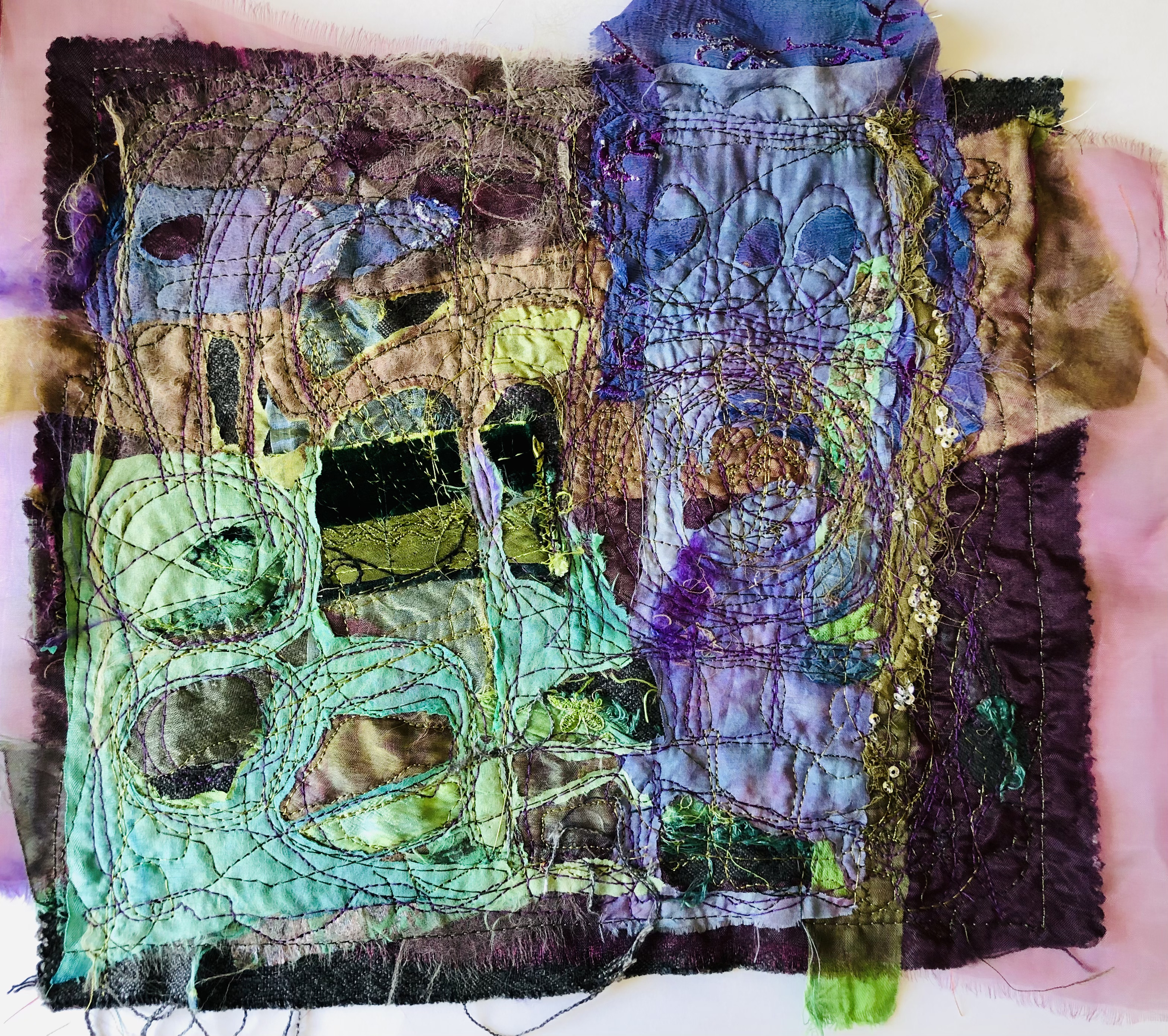
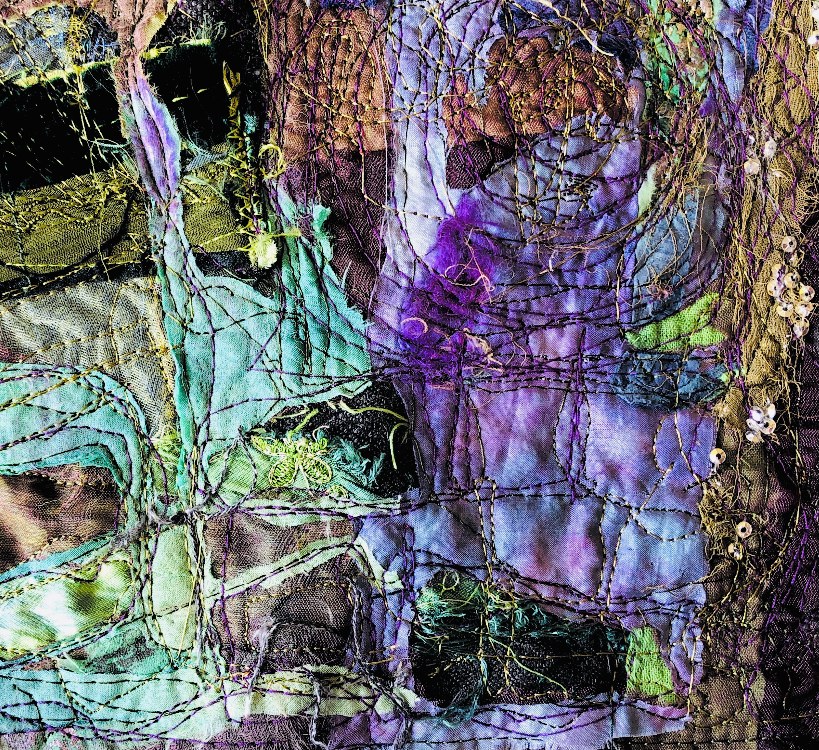
Fig. 7 A2 size Continuous line drawing with added colour. Stitched piece.
********************************
Working with lots of different threads I made crochet samples inspired by one of my resin pieces. (Fig. 8) Freeform crochet worked well for this subject with its uneven swirls and texture.
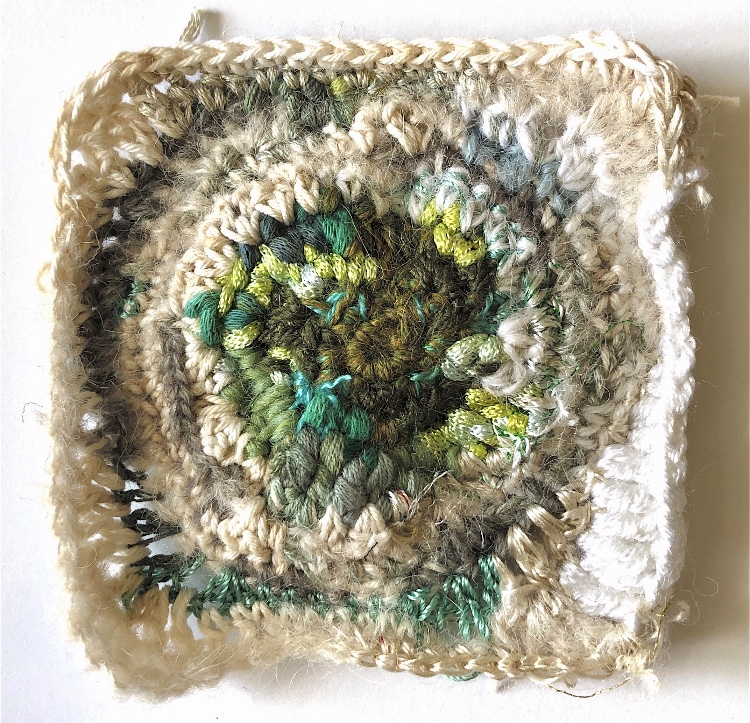

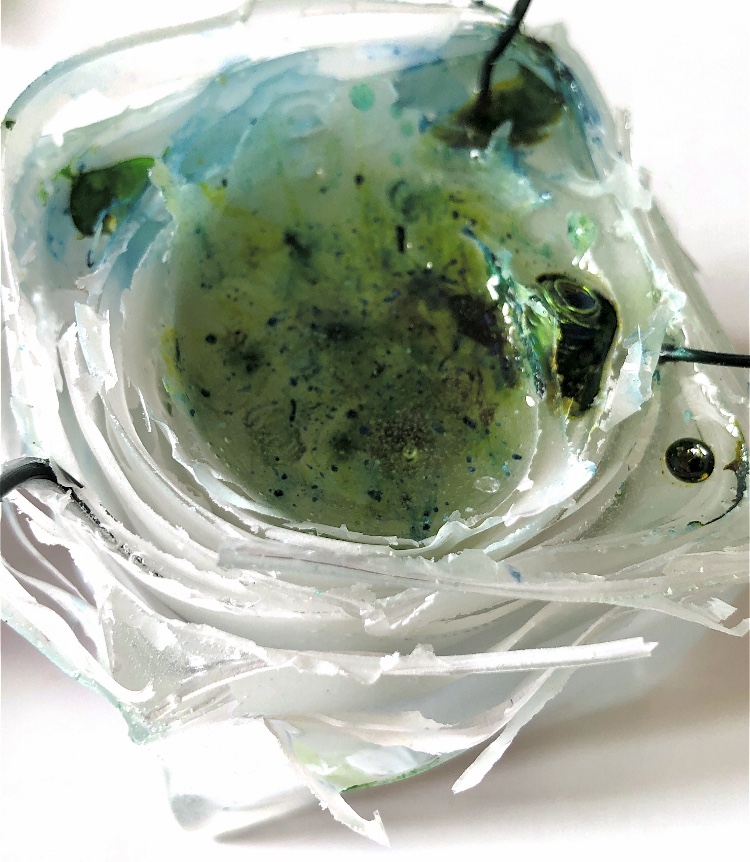
Fig. 8 Crochet samples.
******************************
Adding hand stitch and playing with the colours added more interest and development to the earlier stitched piece. (Fig. 9)
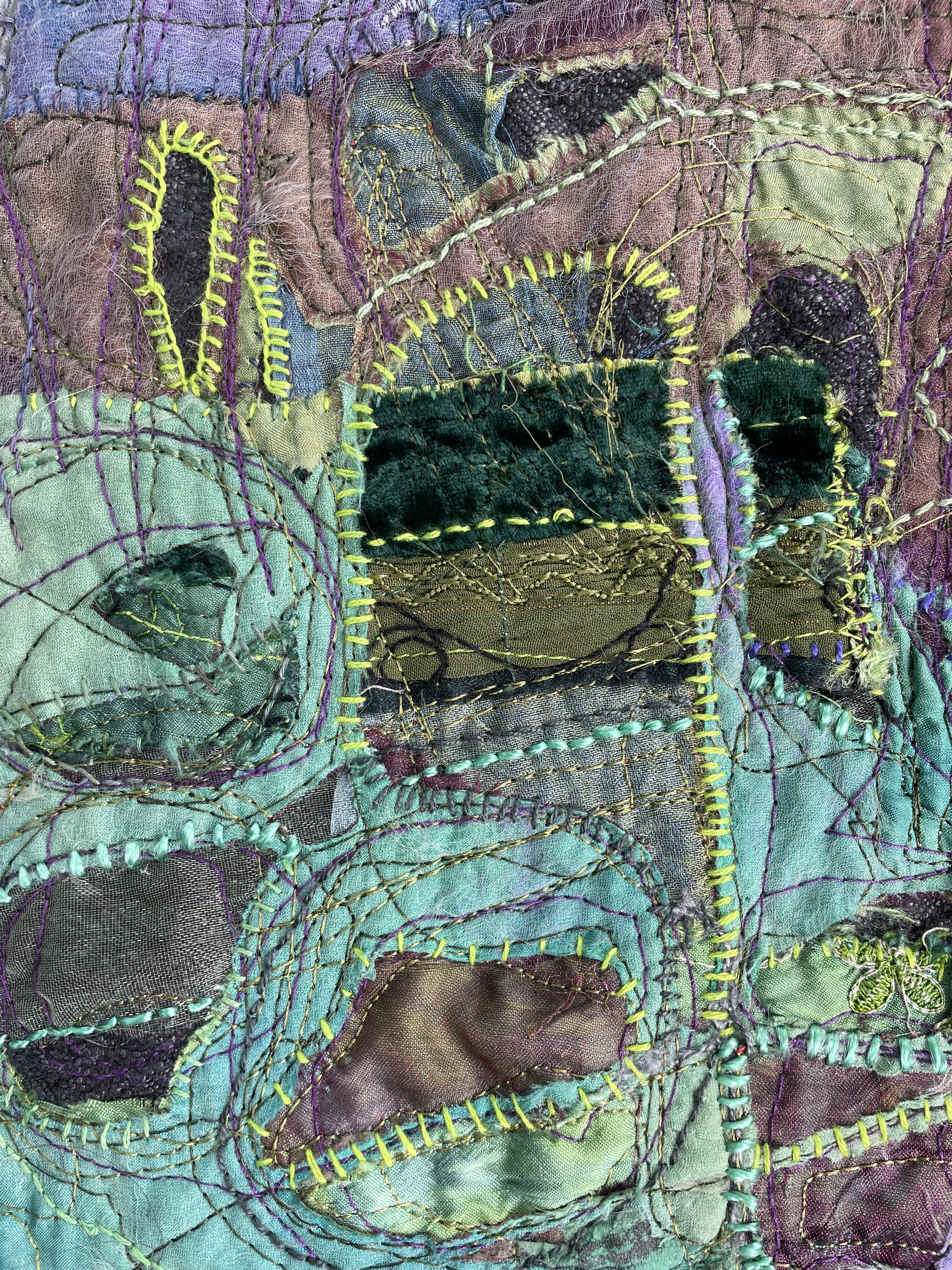
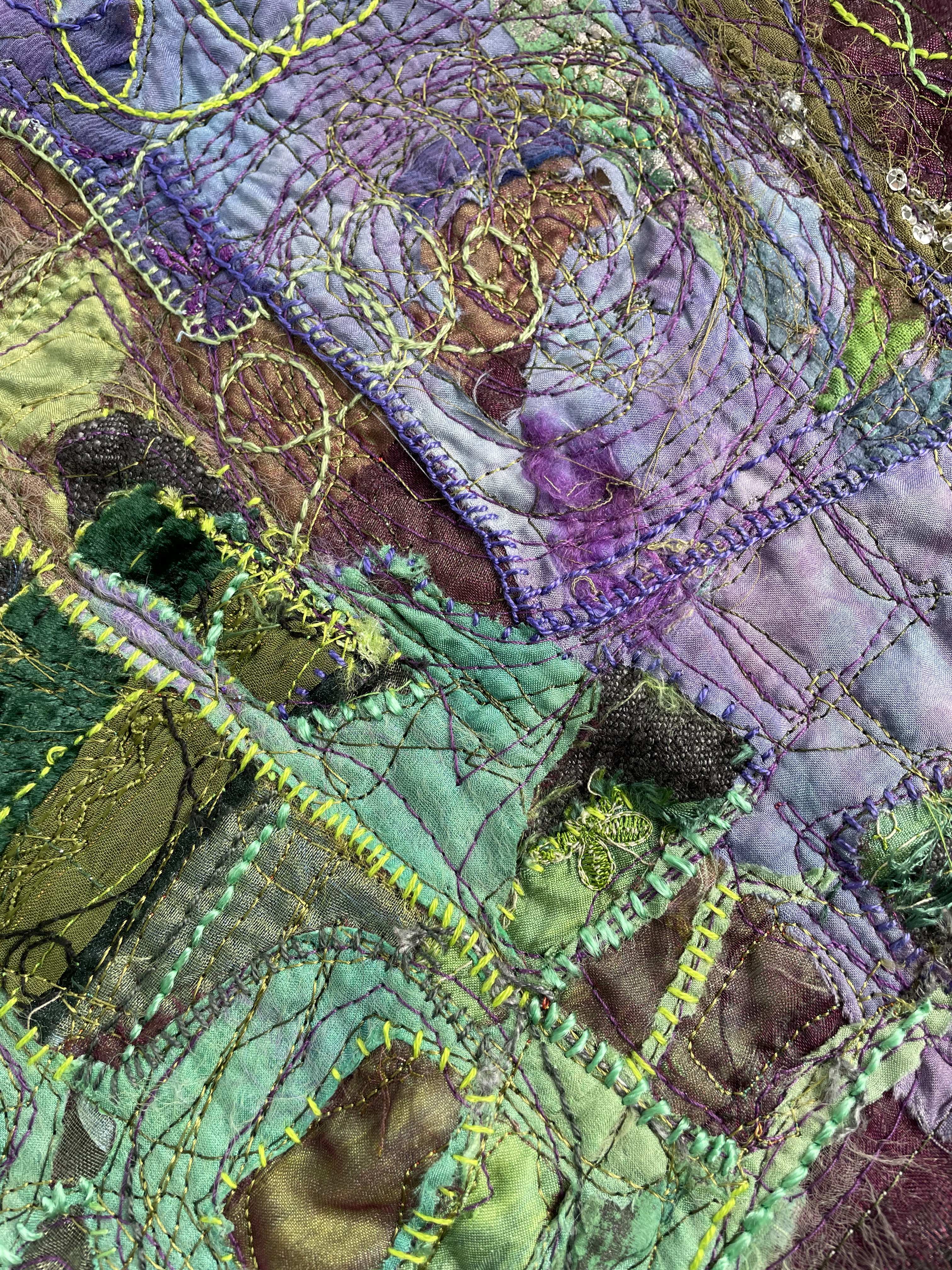
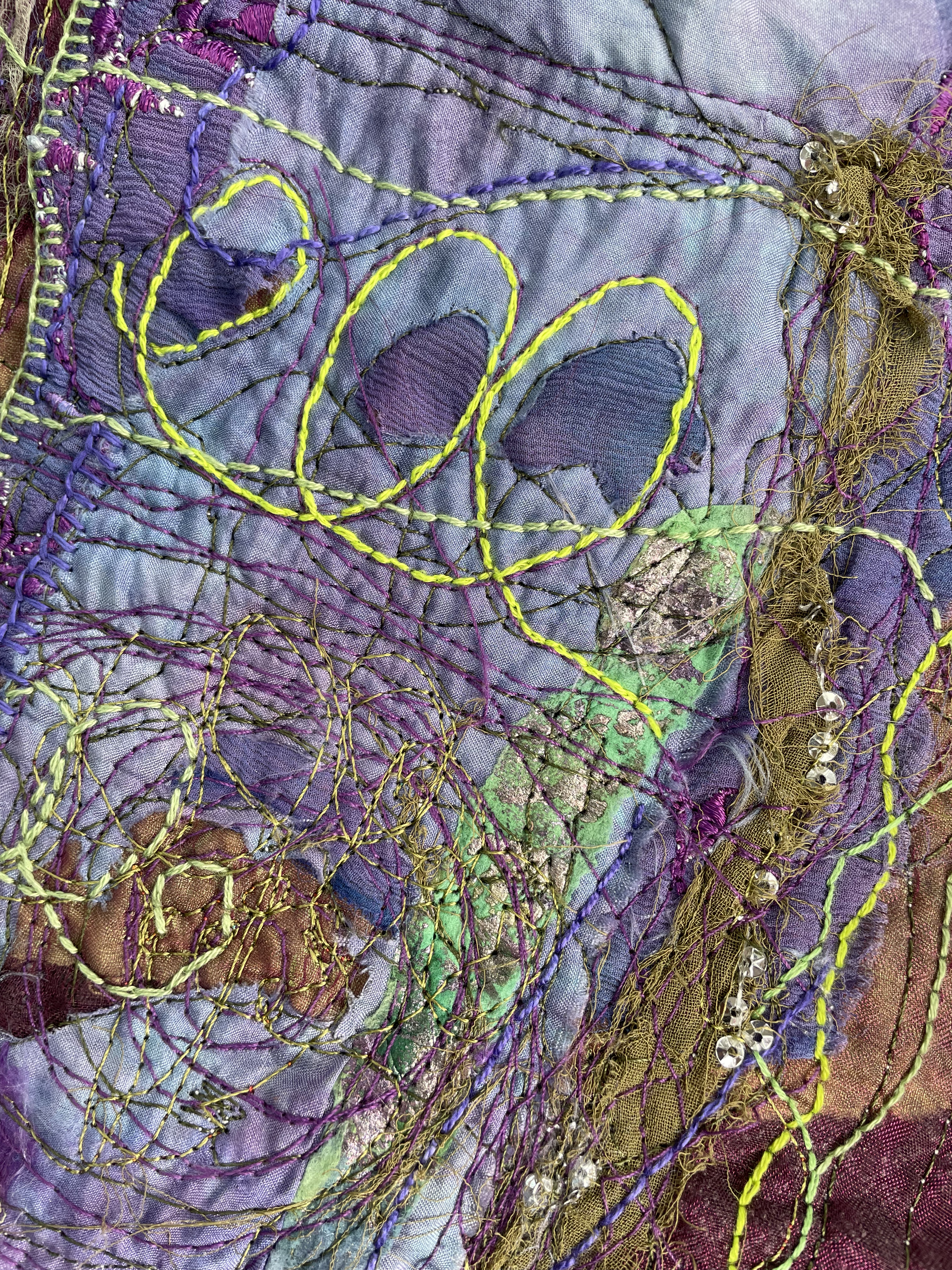
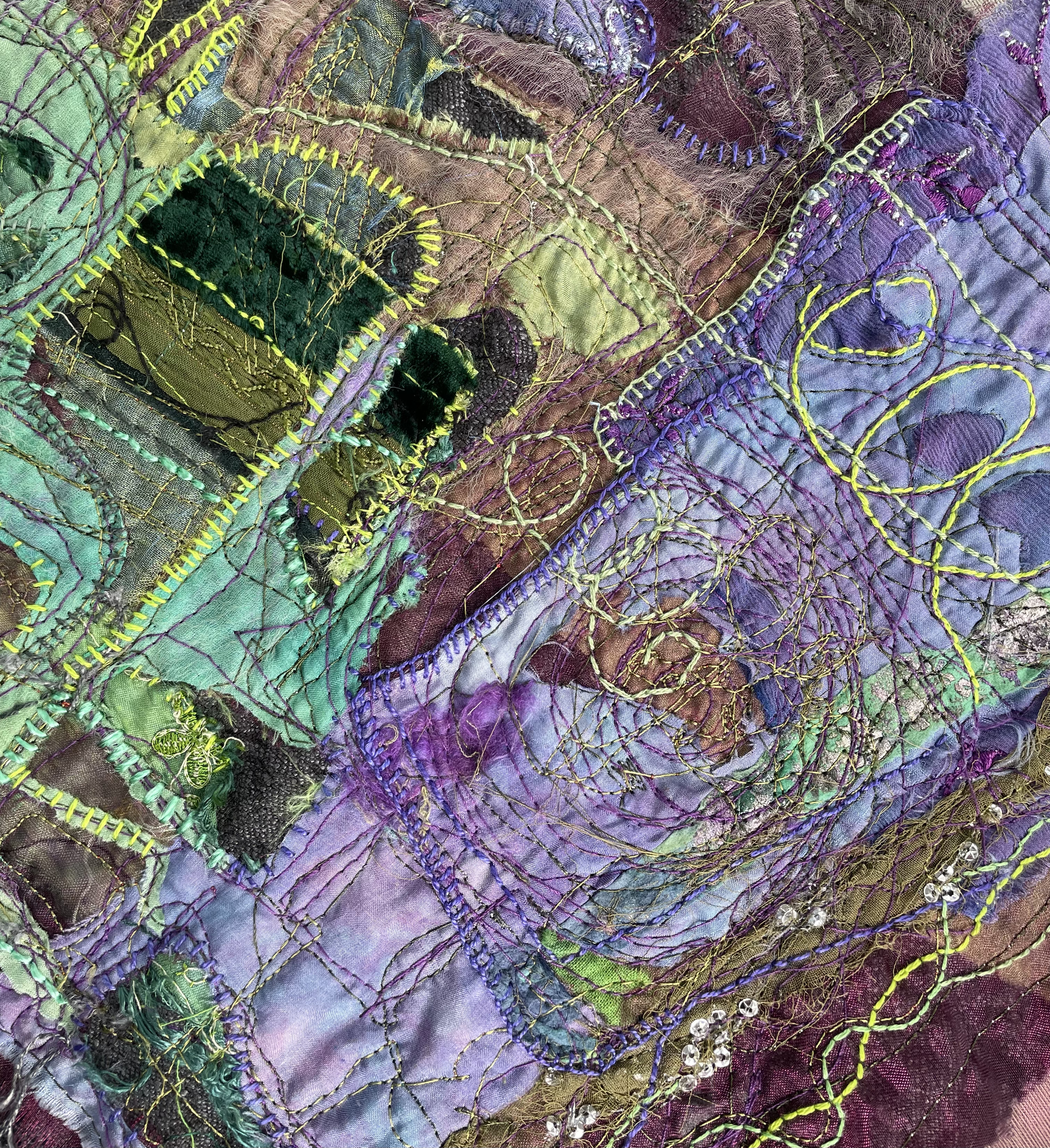
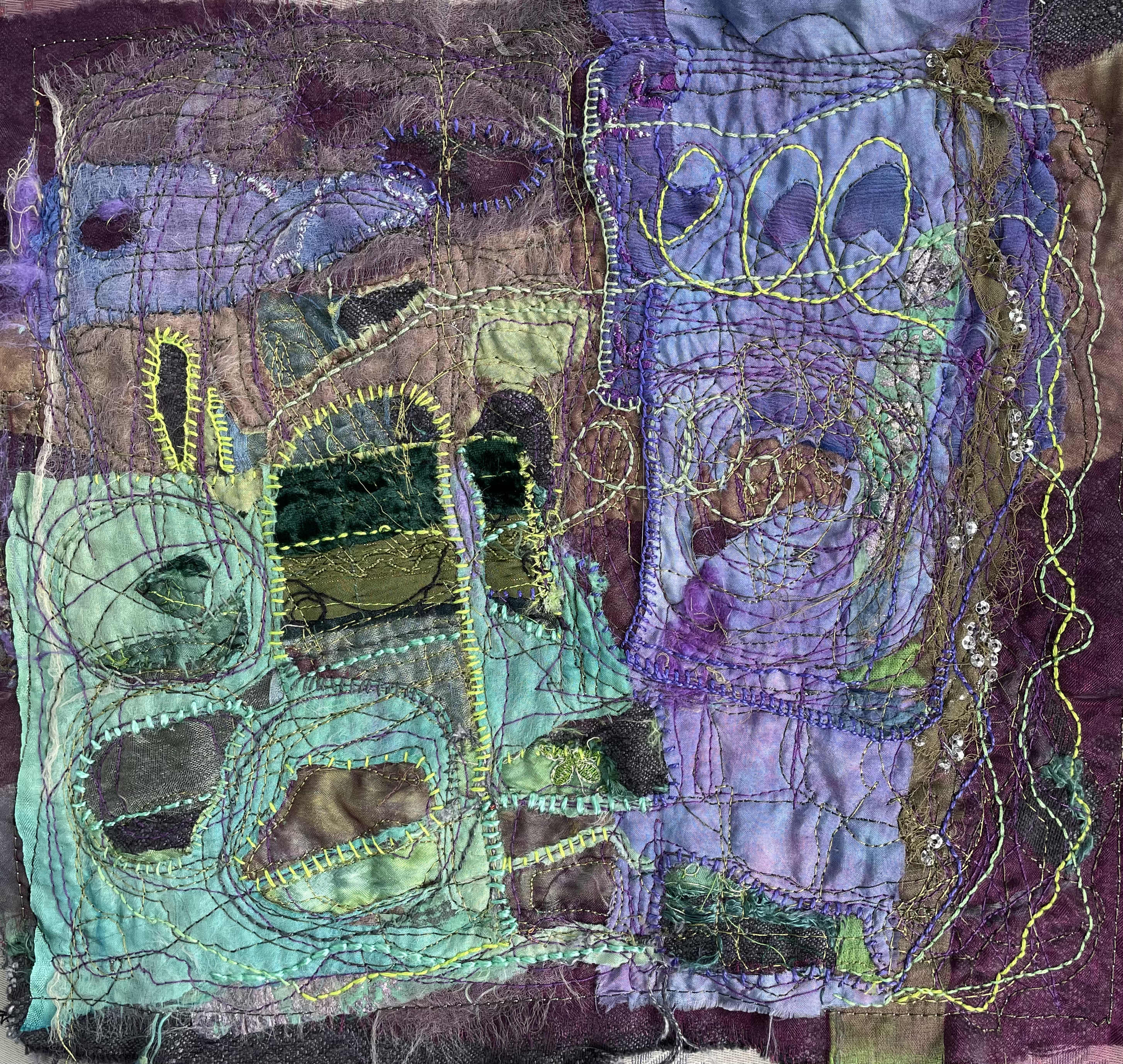
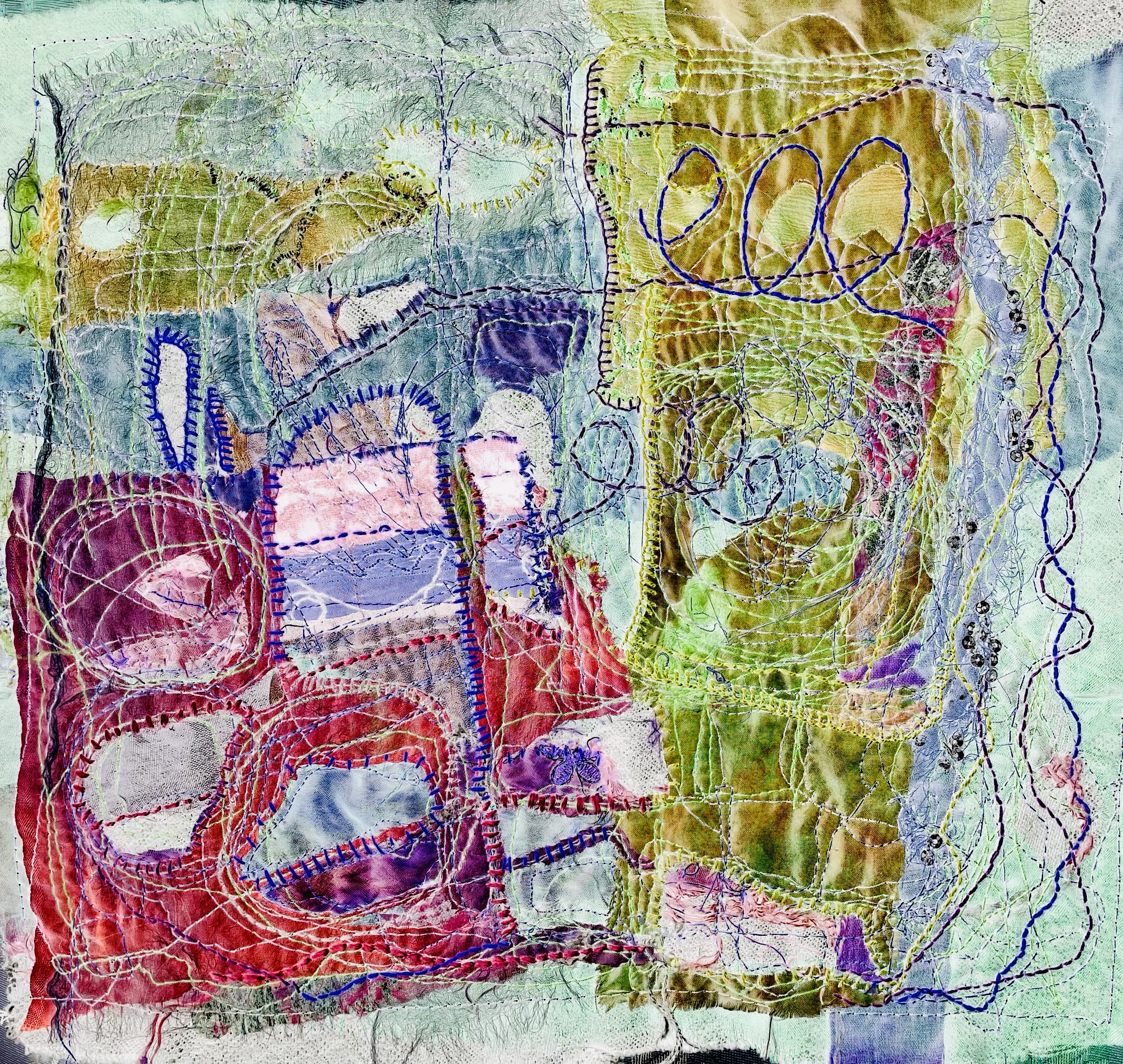
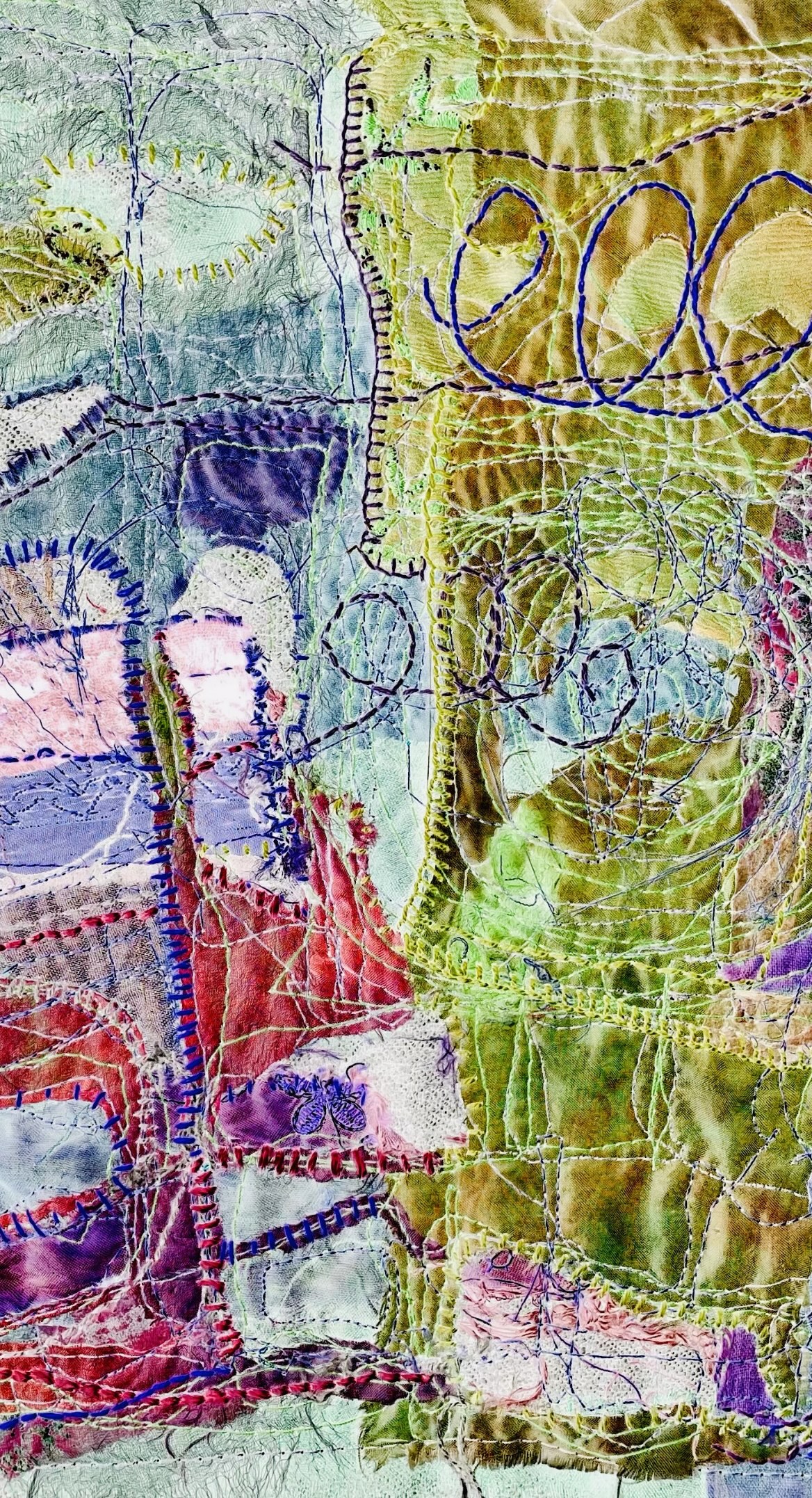
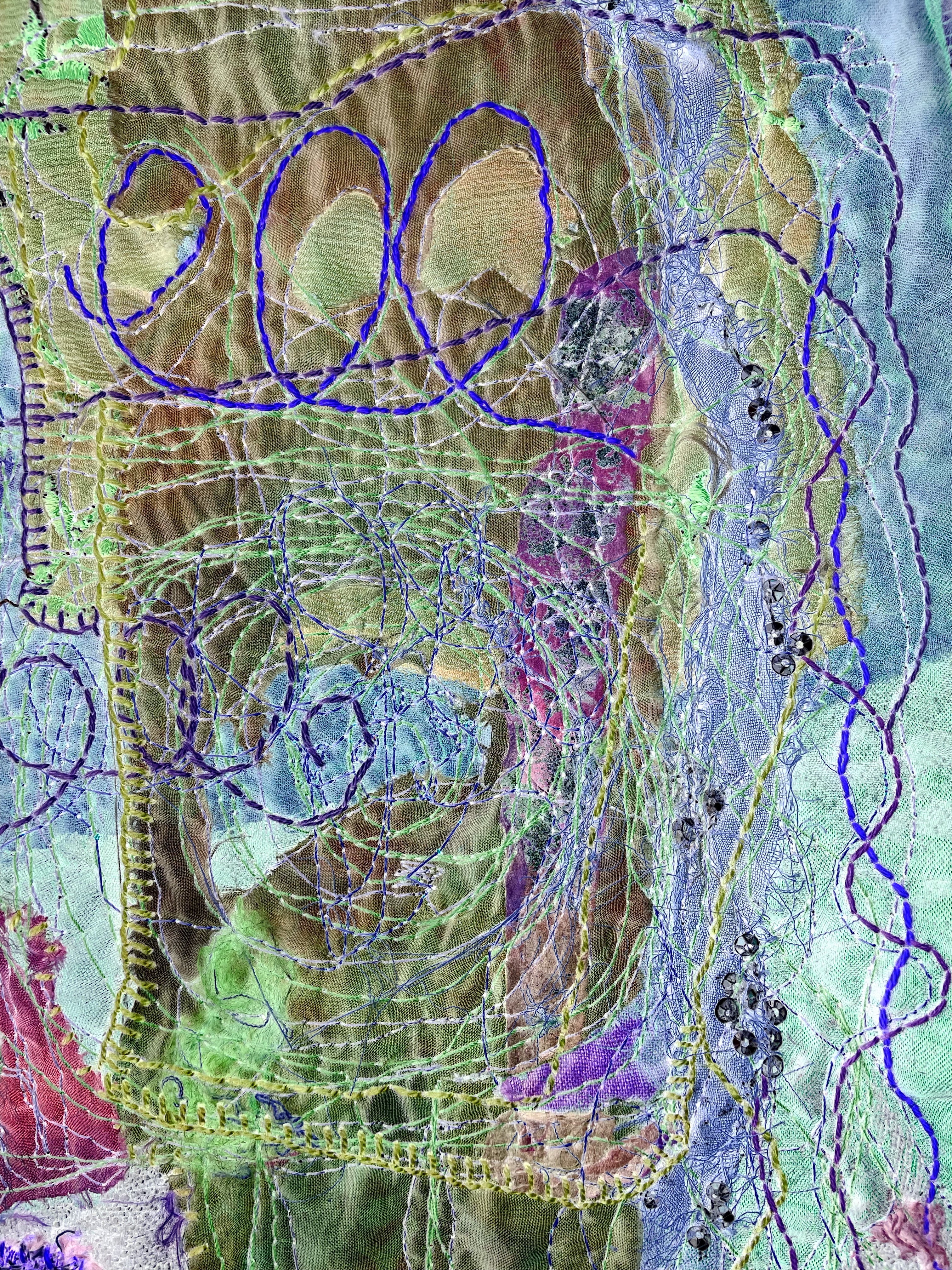
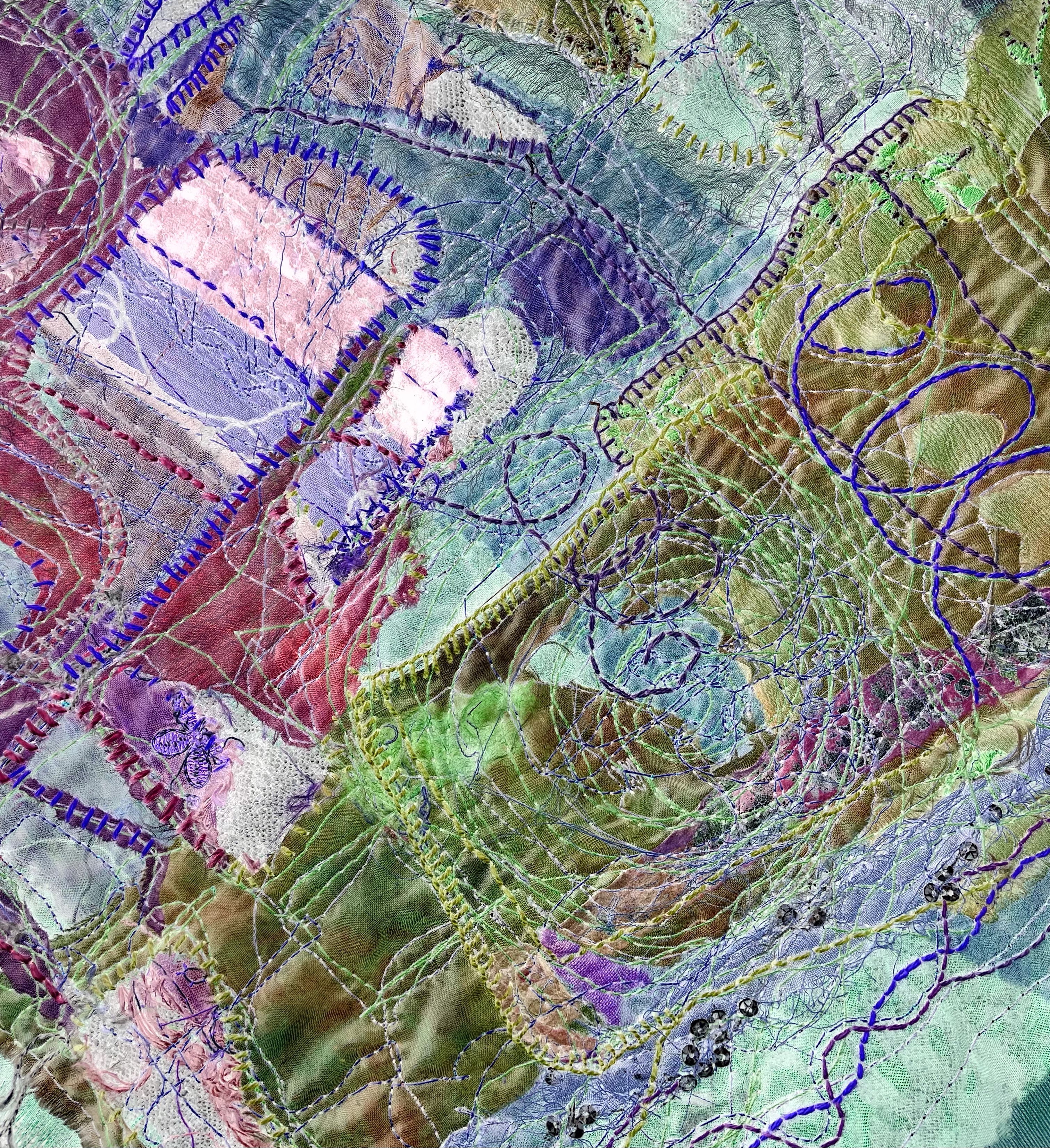
Fig. 9 Hand stitch
*********************************
Continuing to work with and develop my final piece has stretched my imagination and given me further ideas for colour and shape exploration. I would like to push this further and try to incorporate resin and stitch at some point in my studies, and as an initial experiment I took some photos of my stitched piece with the resin and plaster cubes. (Fig. 10)
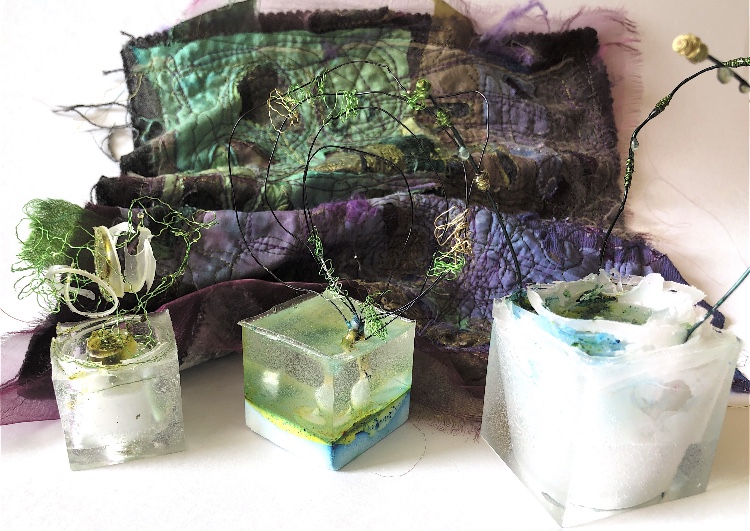
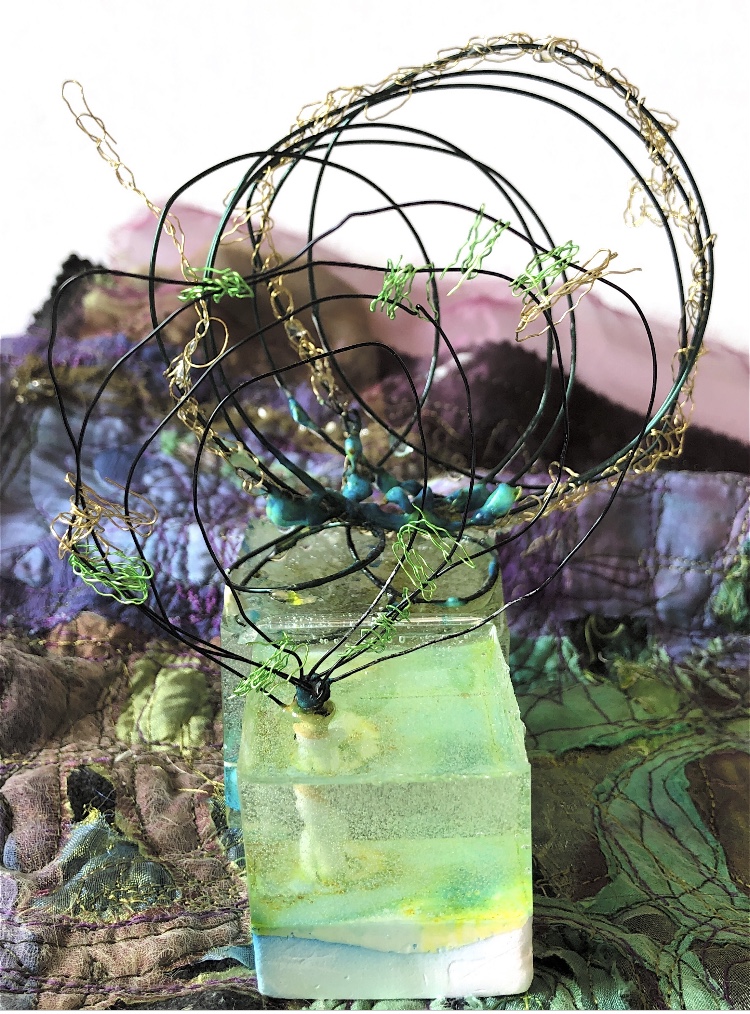
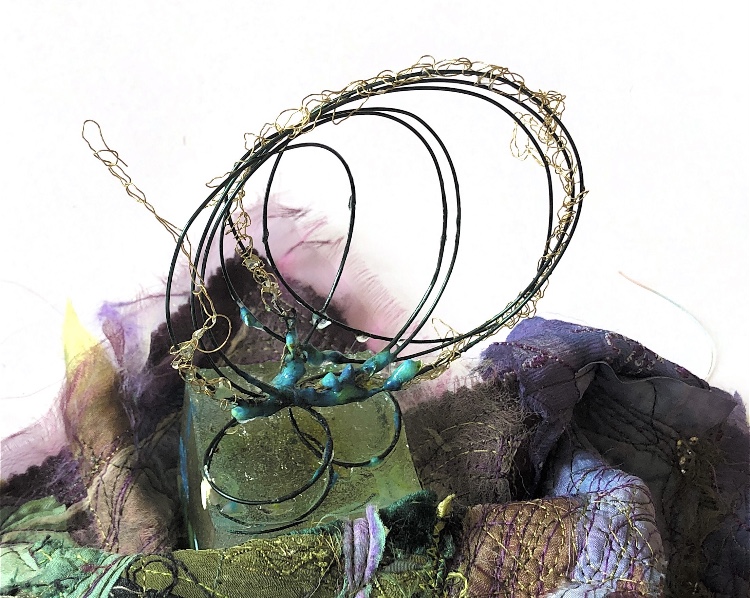
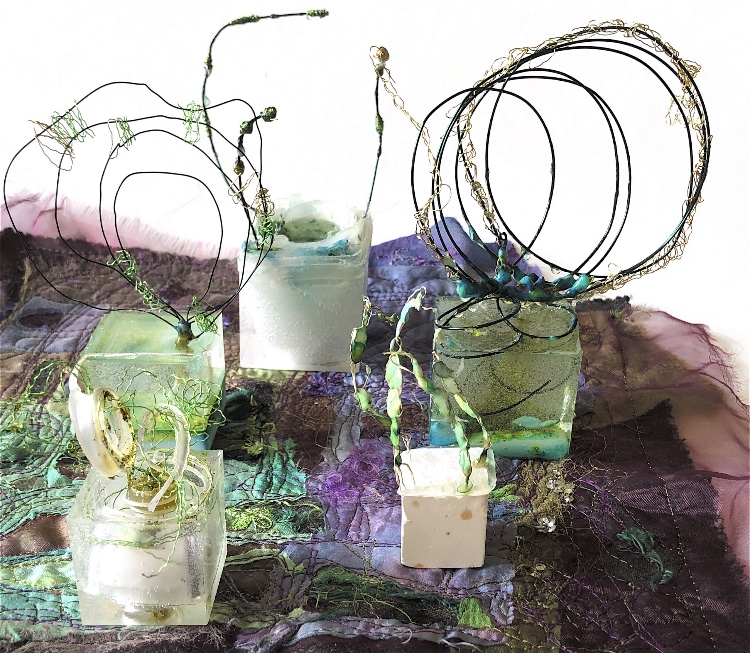
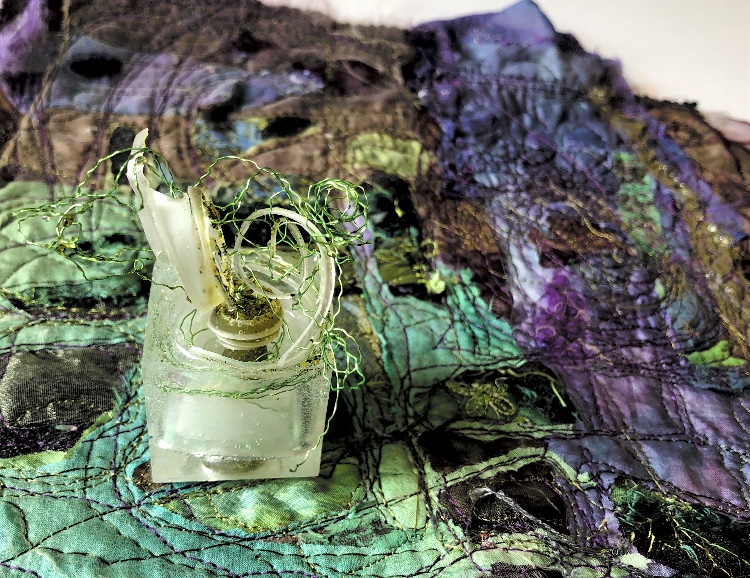
Fig. 10
*****************************
Lots more to experiment with here but for now I need to stop and move on. I am much more confident having pushed myself to try different colour combinations and pattern designs and I am excited to take these skills with me to my next Module.
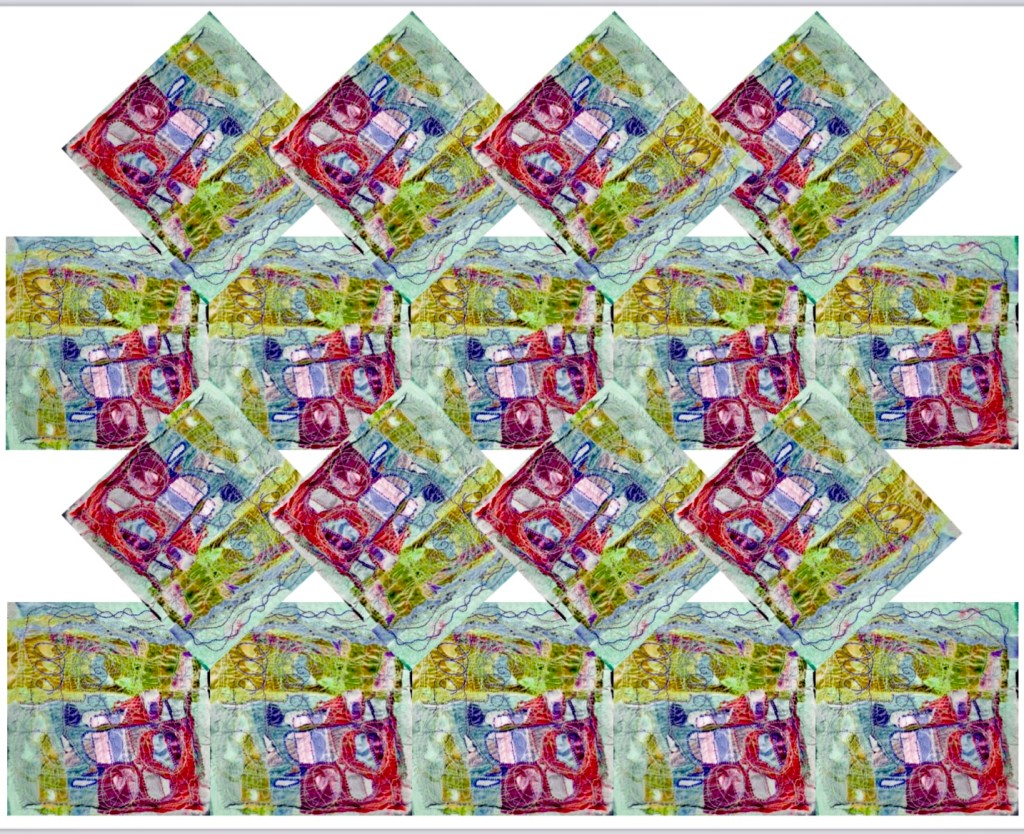
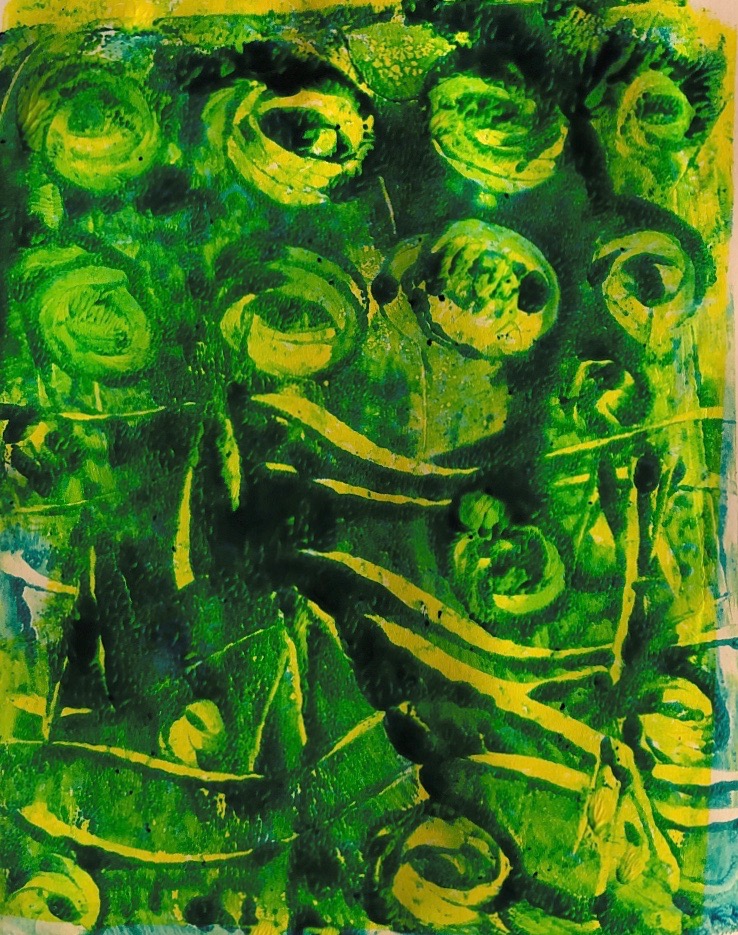
Fig. 11 Block pattern – maybe an idea for a print block?
Through this process of reflecting on feedback and evaluating my work with drawing, printing and making, together with research into other artists, I feel I have progressed my skills and gained a deeper understanding of how to progress through a cycle of inspiration, research, making, reflecting, drawing and remaking, pushing in new directions with an open mind towards taking risks.
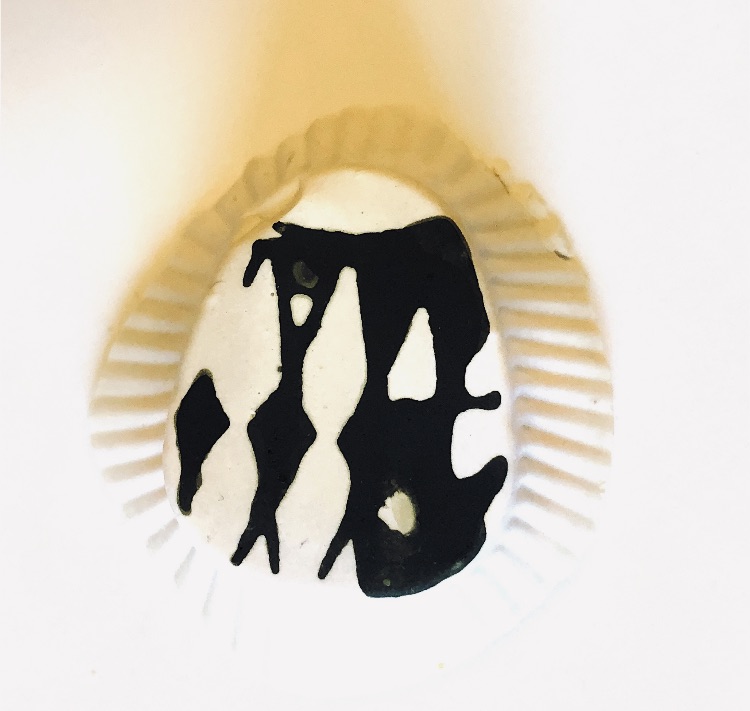

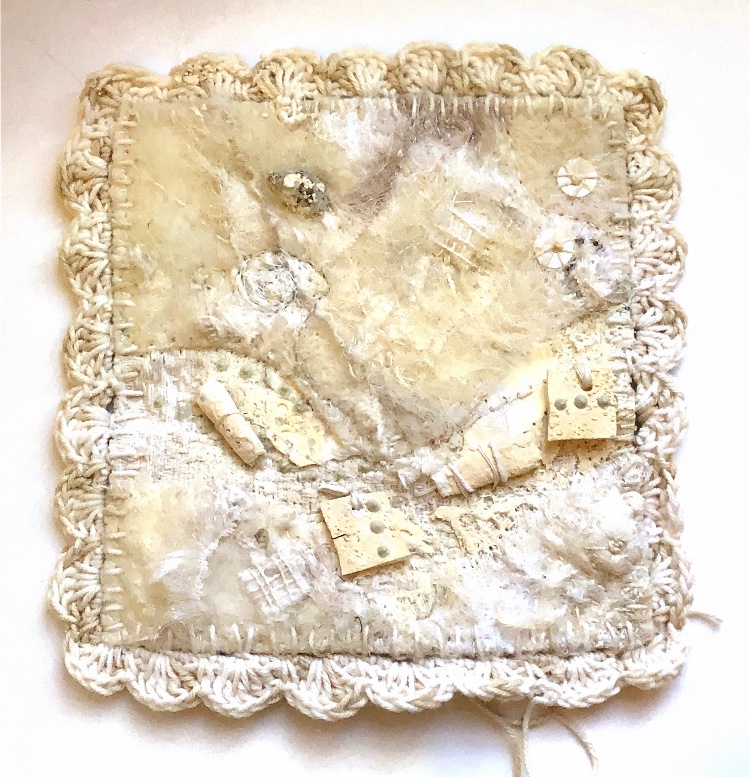




 Paper and stitch