Looking back over MMT Part 1 seems such a long time ago! Looking through the samples I made and the drawings was really absorbing.
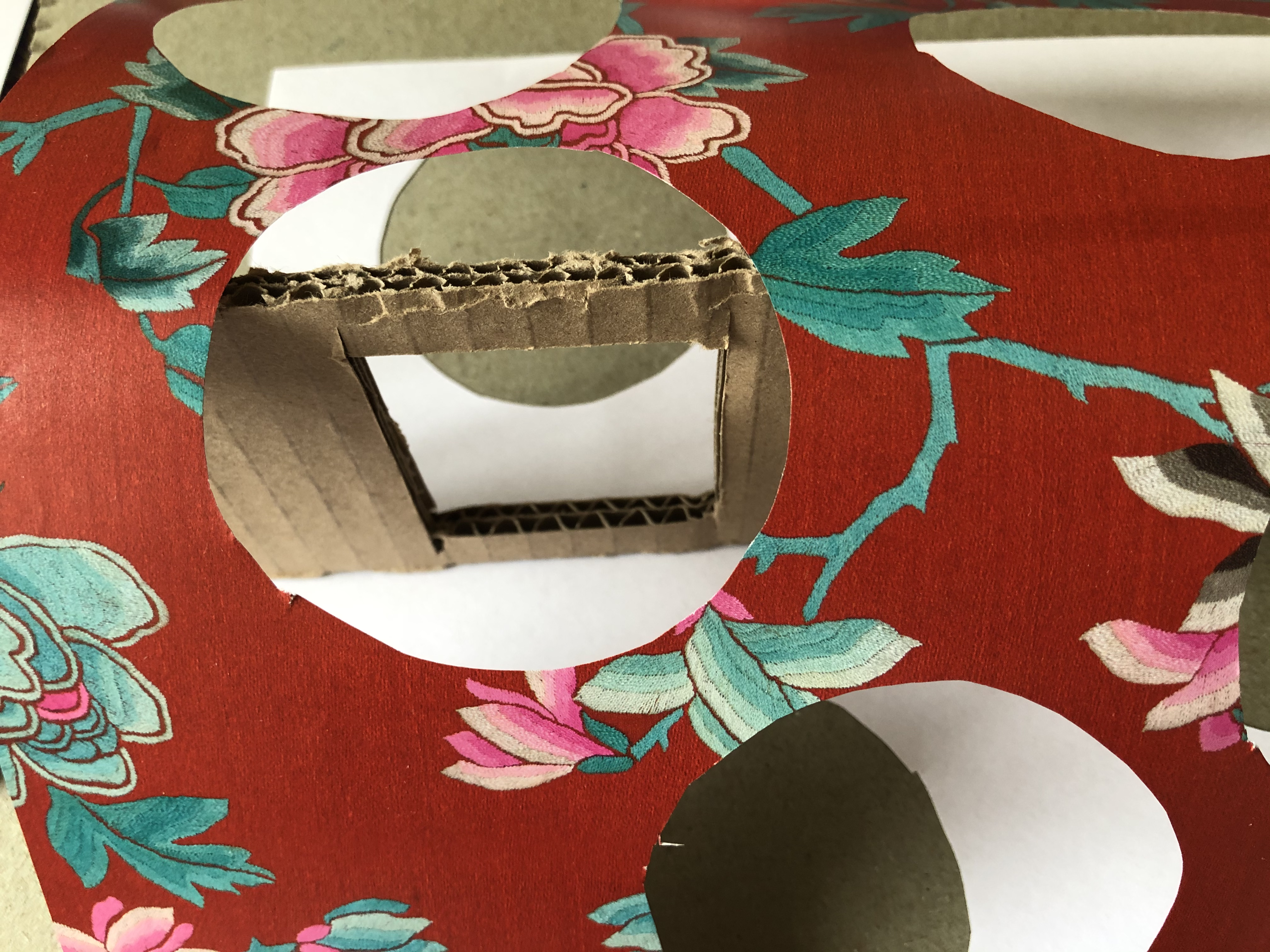
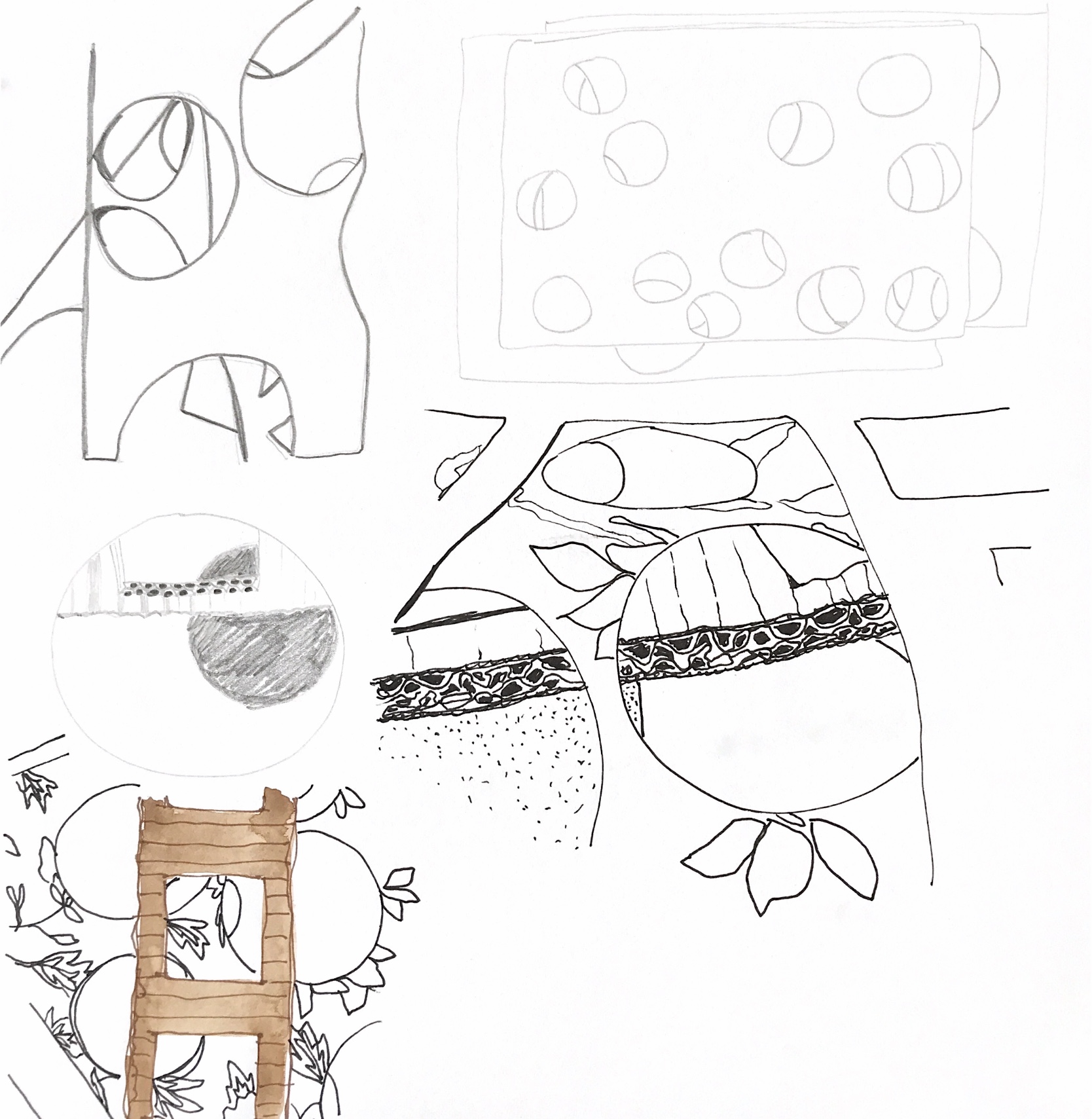
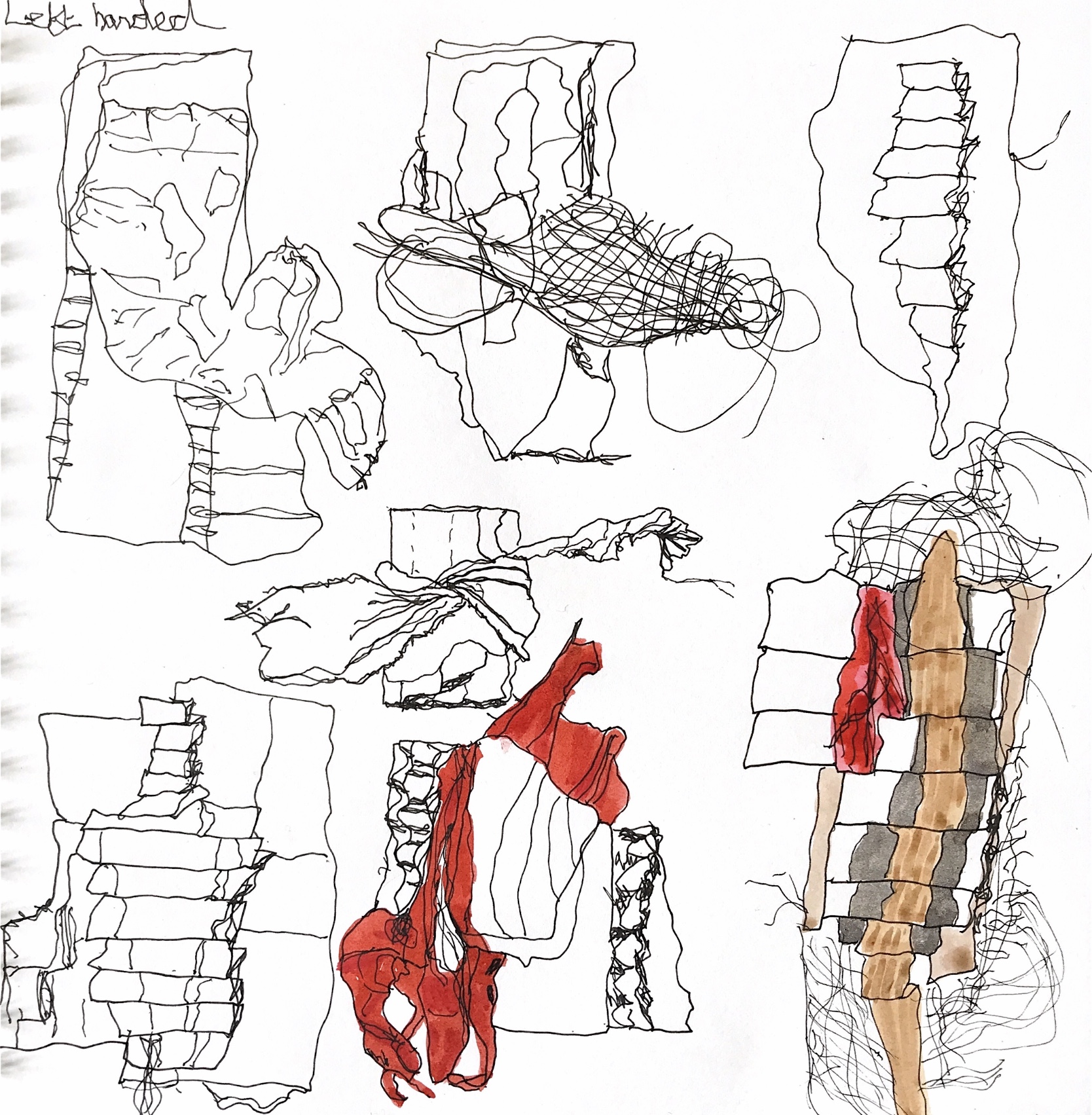
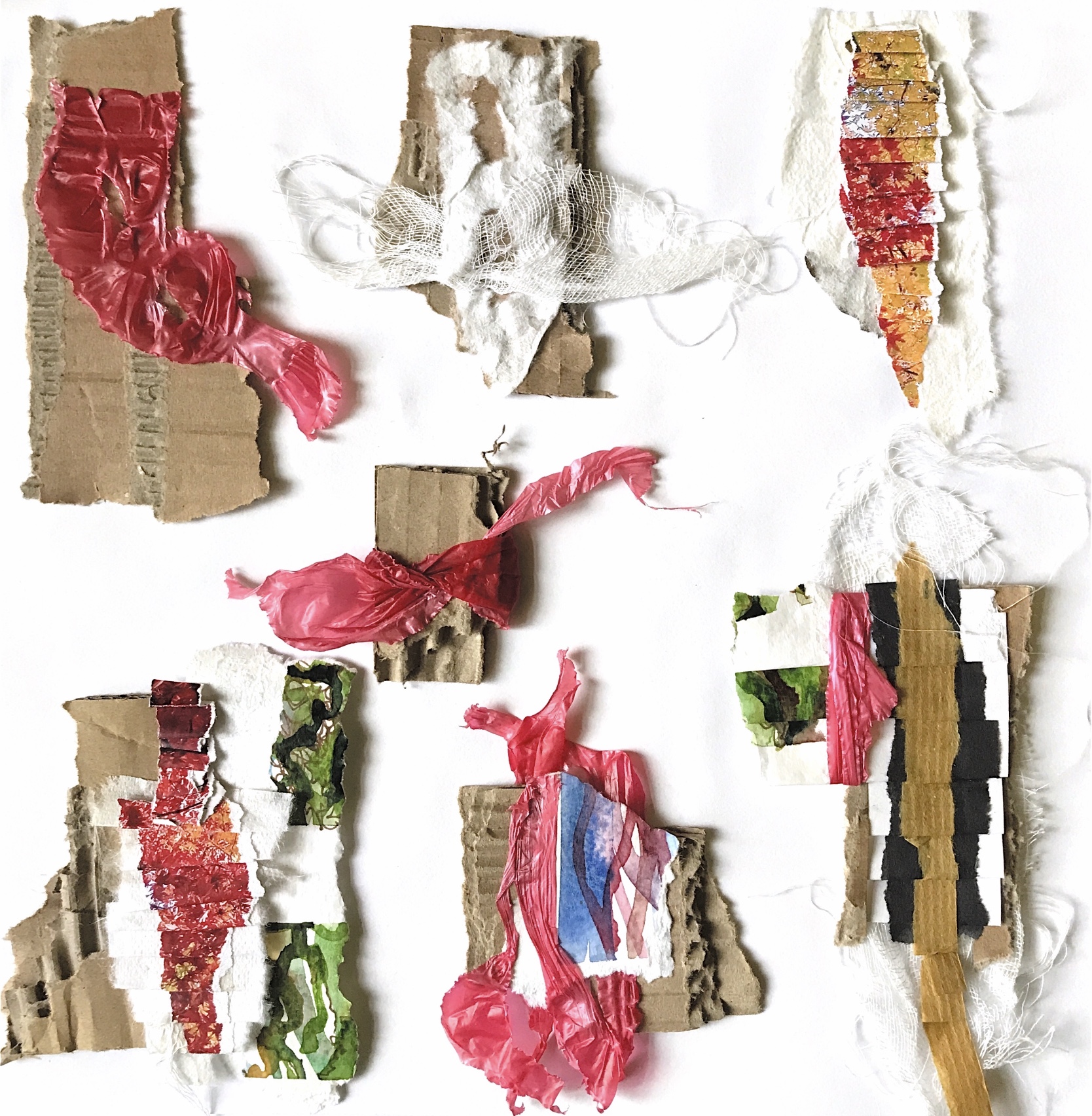
Fig, 1. I am interested in the way this simple sample of paper with circles cut out becomes so different when other pieces are placed behind, for the viewer to glimpse through the holes. Similarly the samples made with piled up pieces of torn paper, card, and plastic, gathered together as a group make each individual piece of material more fascinating. It is the contrast of materials and the arrangement, which may look haphazard but is carefully thought through, that makes these pieces so attractive.
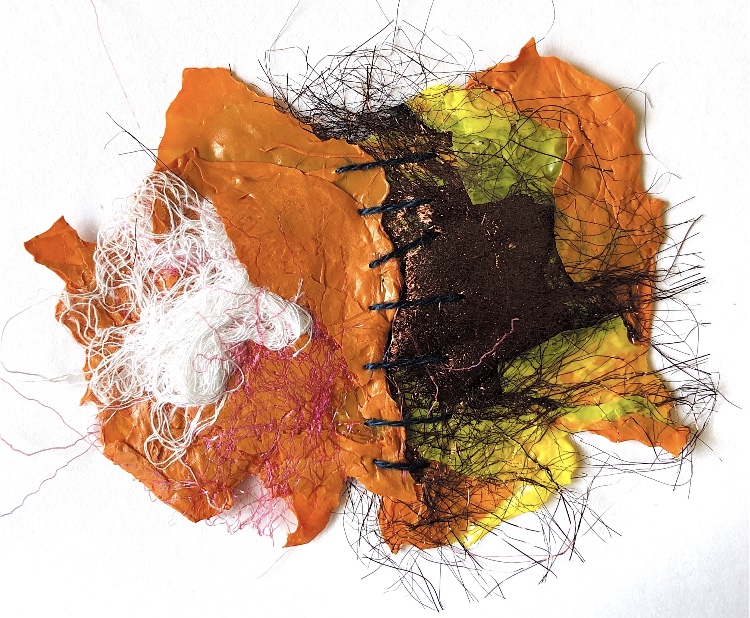
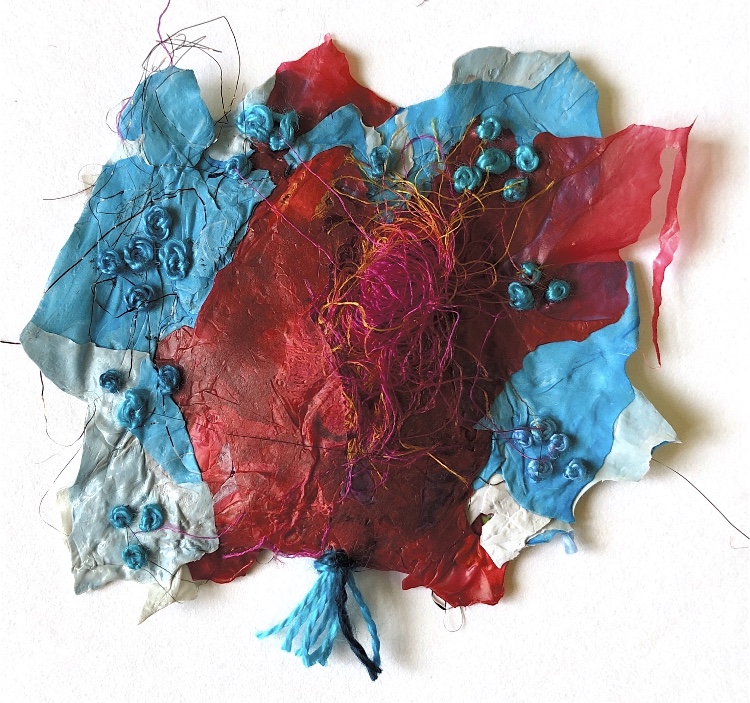
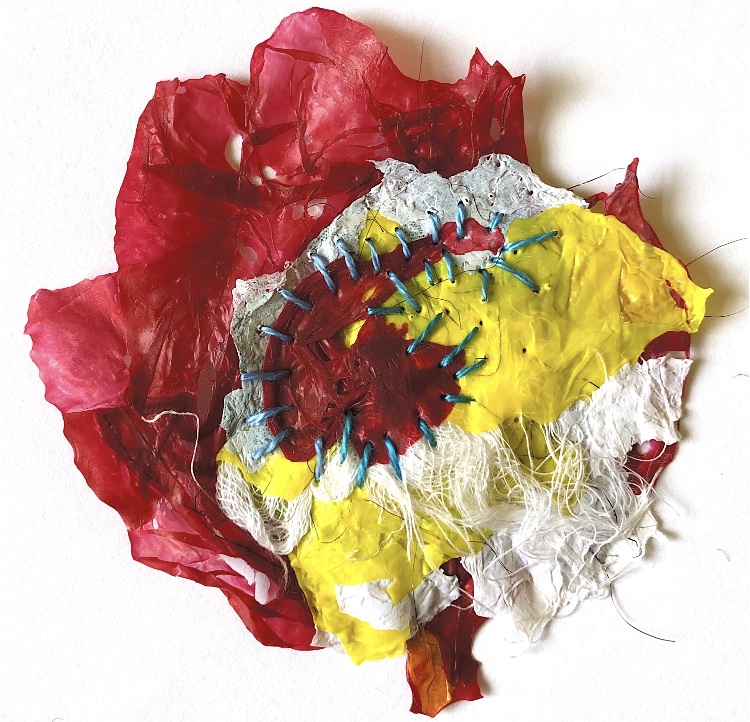
Fig, 2. Scrunching up and ironing plastic to make small plastic ‘nuggets’ produced bright weird shapes which were enhanced with simple stitch. Later on in MMT I produced samples which I described as being like a fantasy garden and these would definitely fit into this theme. I found using a different material and not having complete control of the outcome was exciting and made me concentrate on the process rather than the outcome.
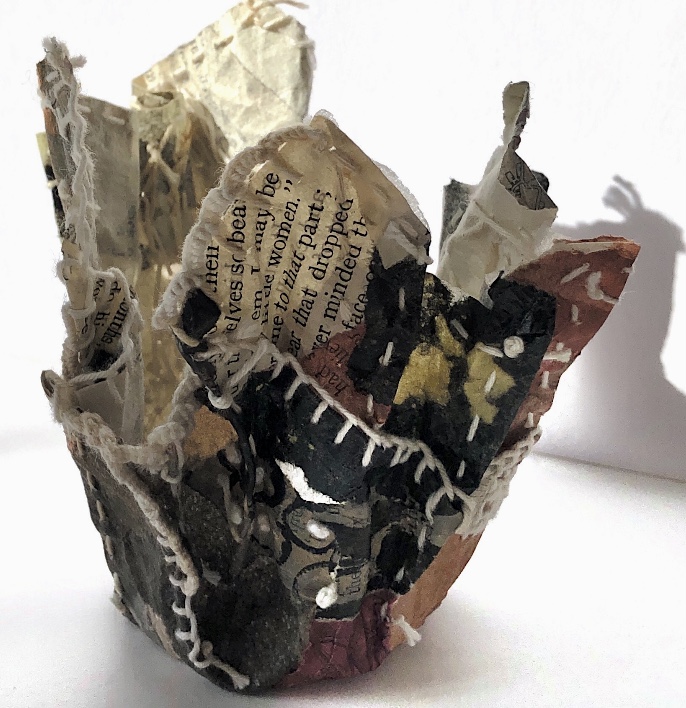
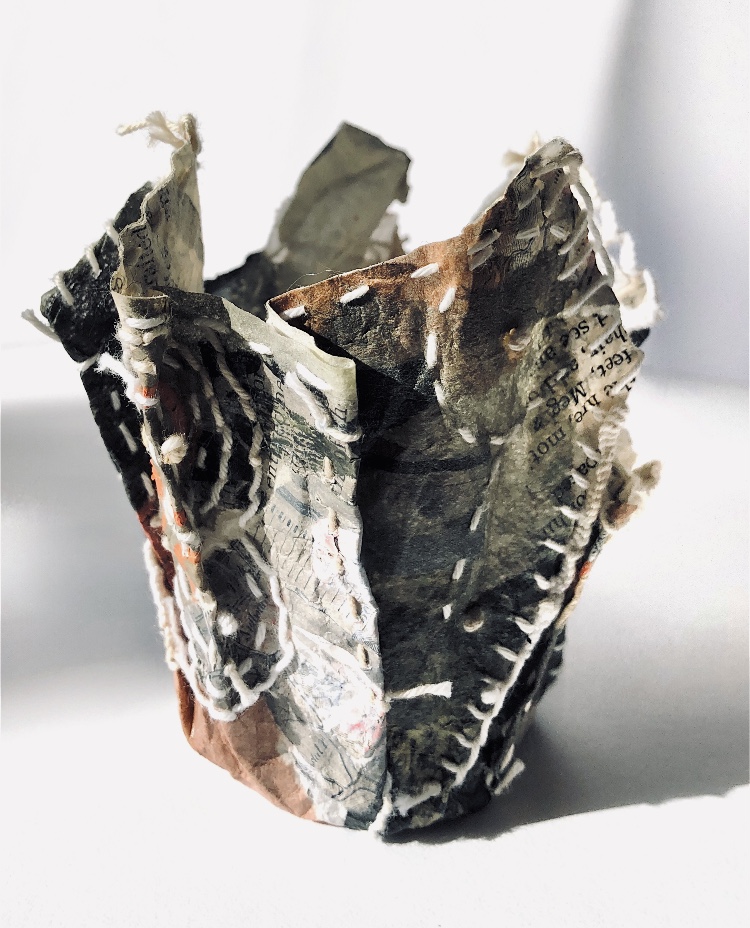
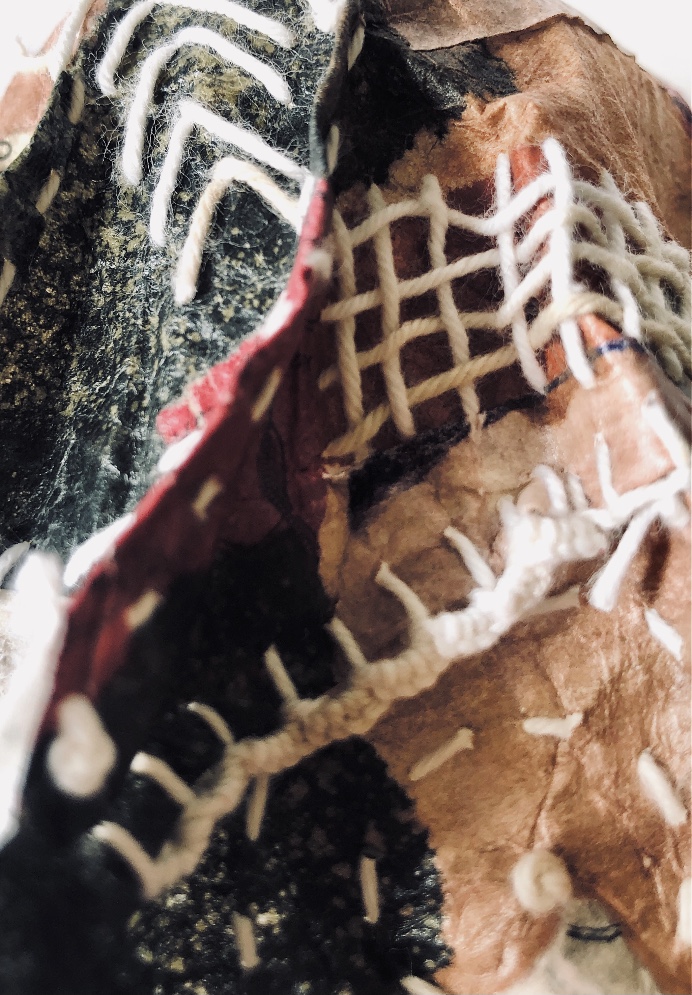
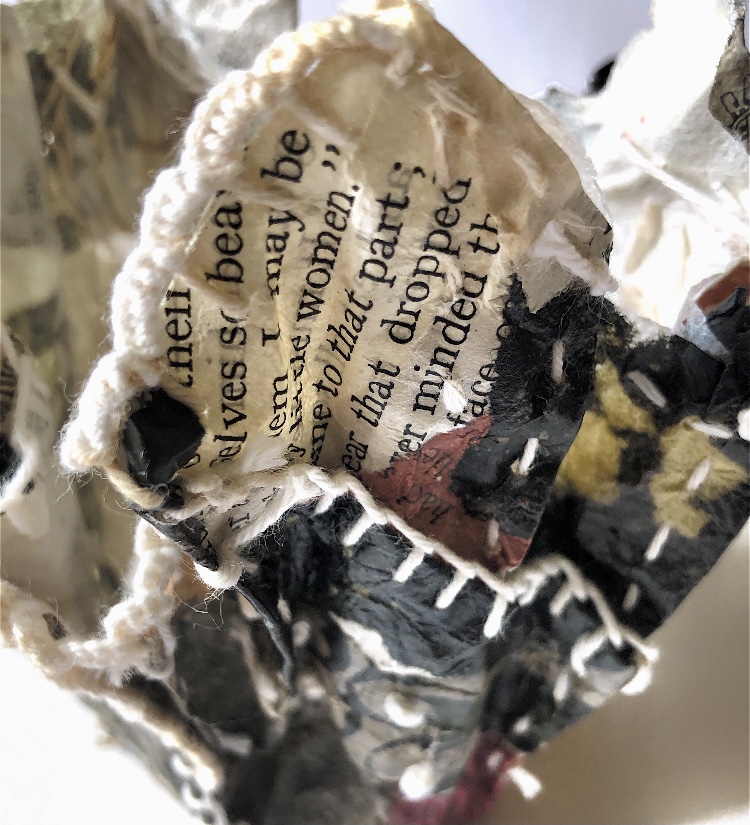
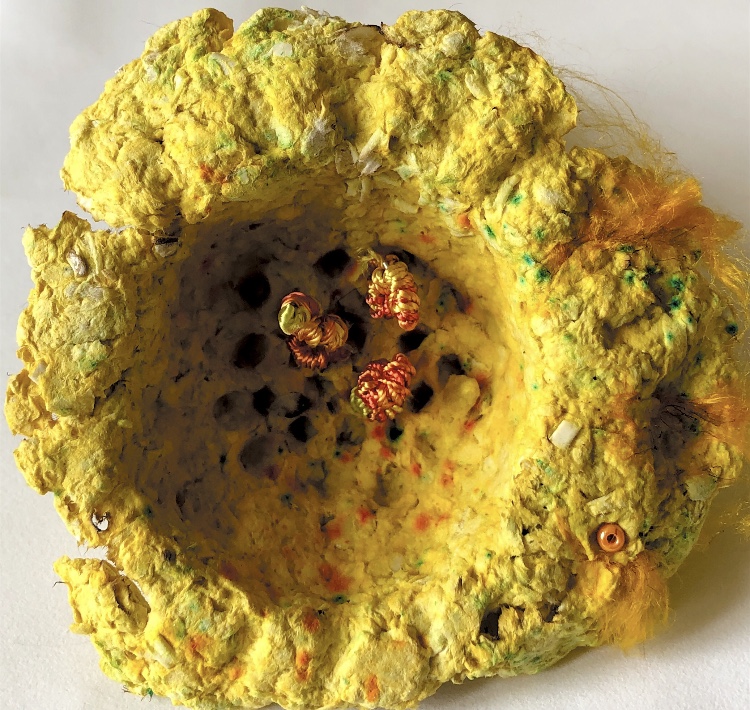
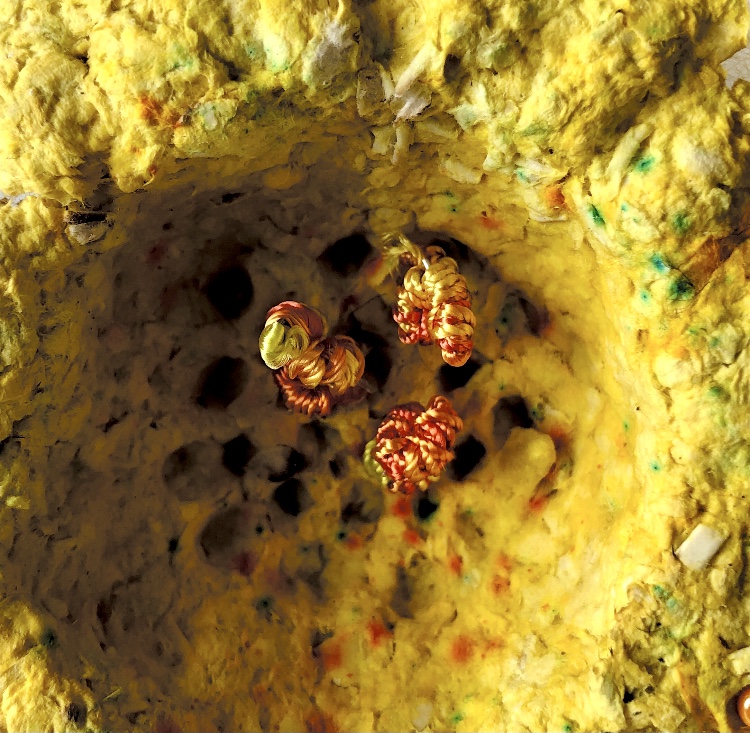
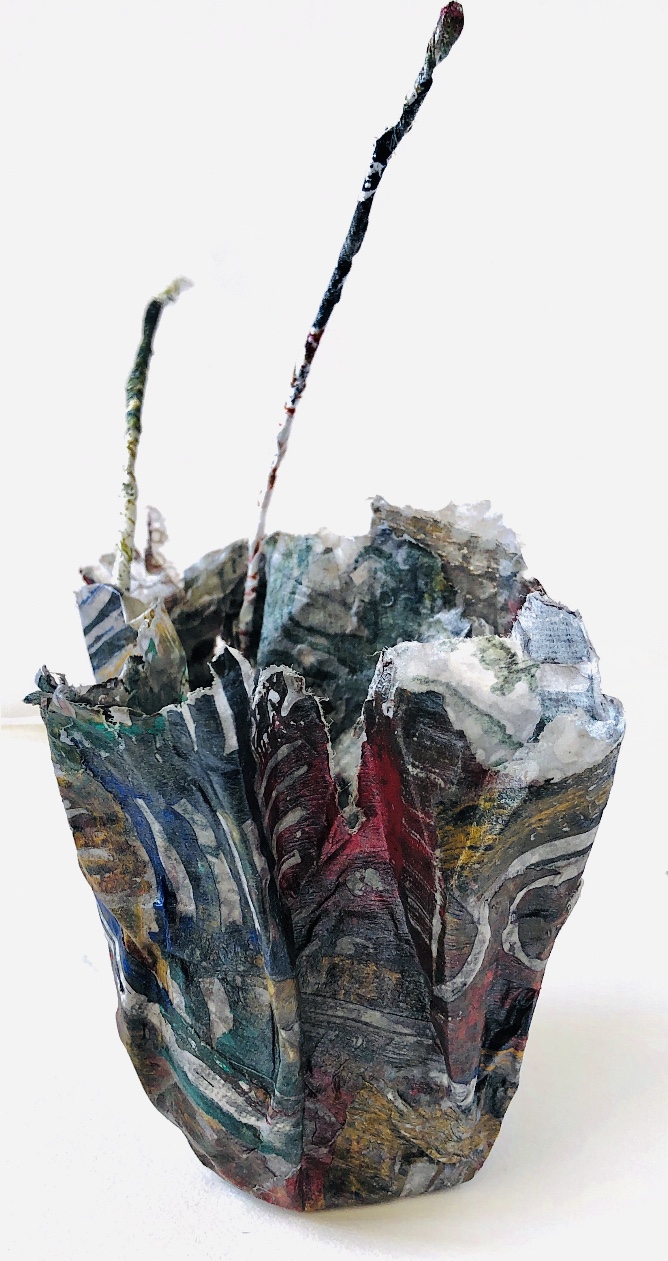
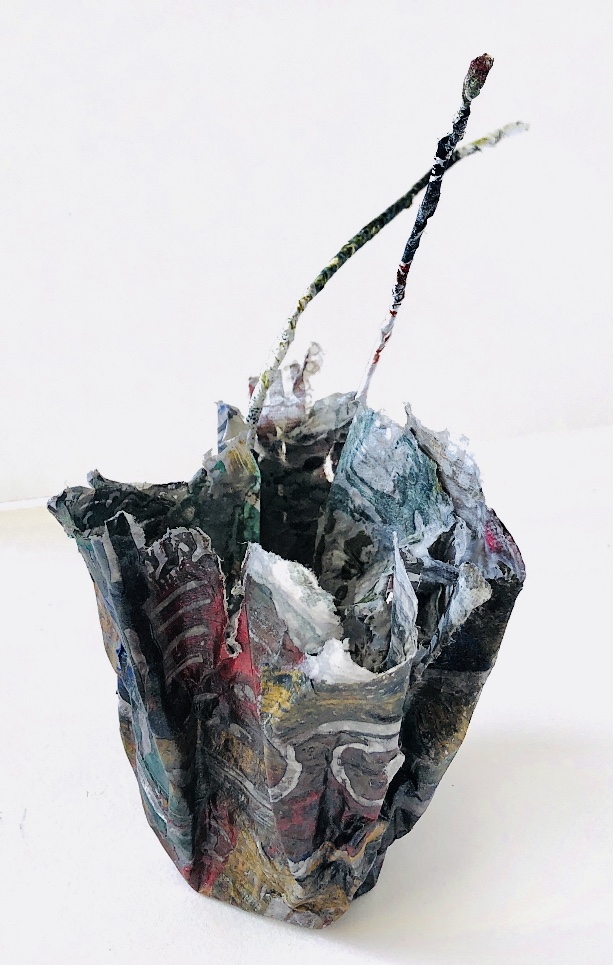
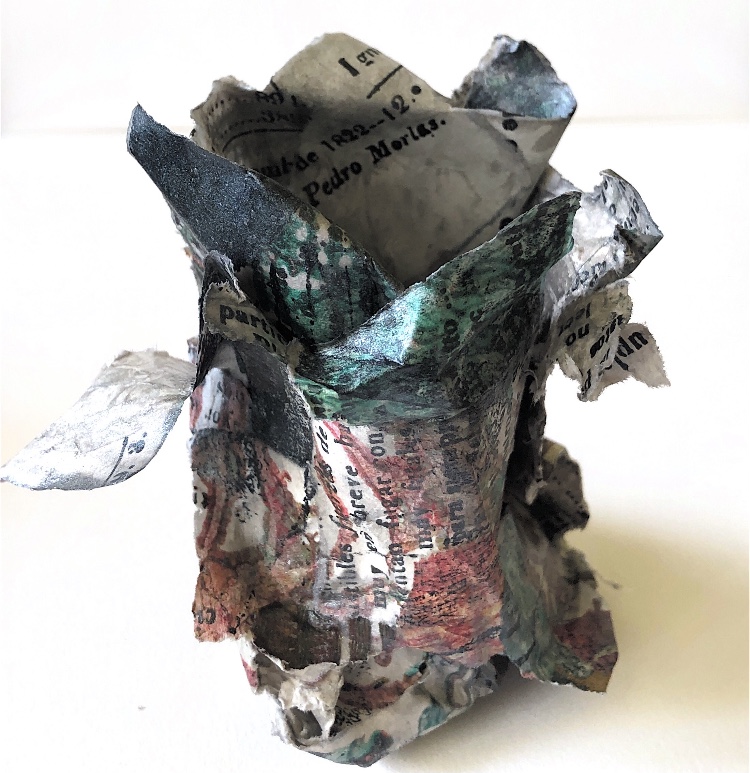
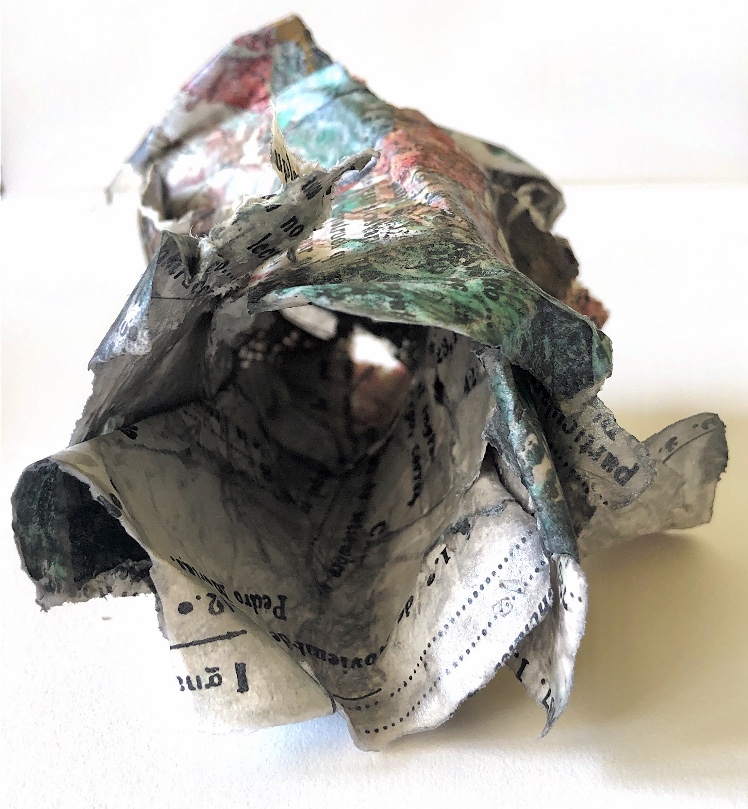
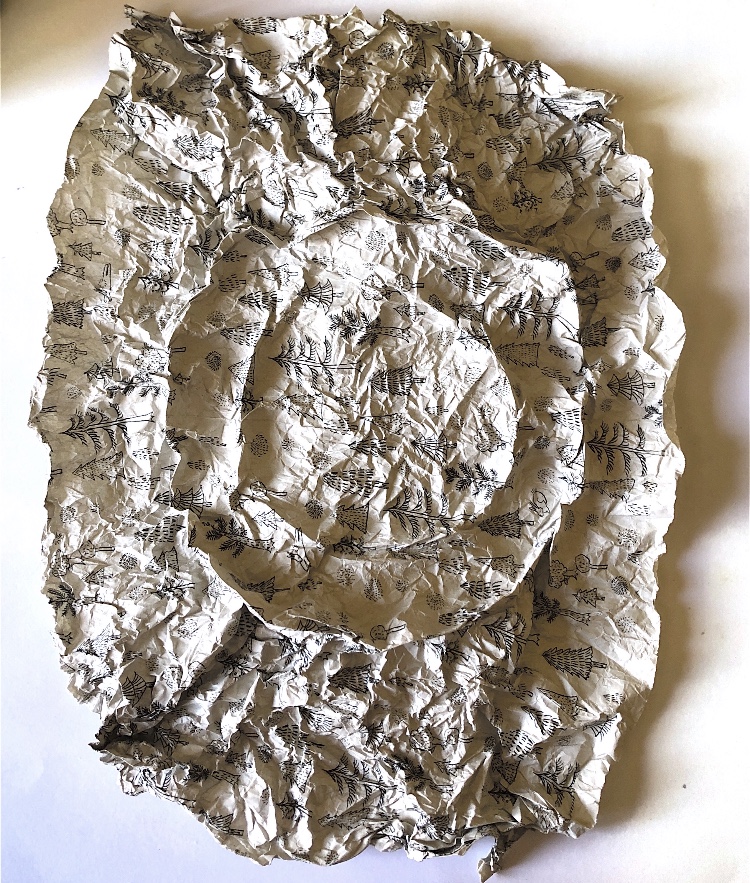
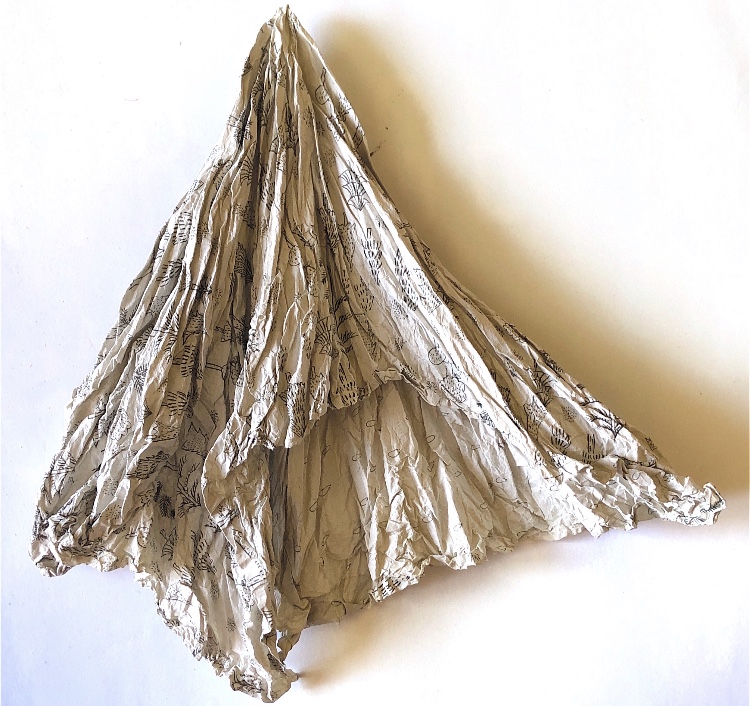
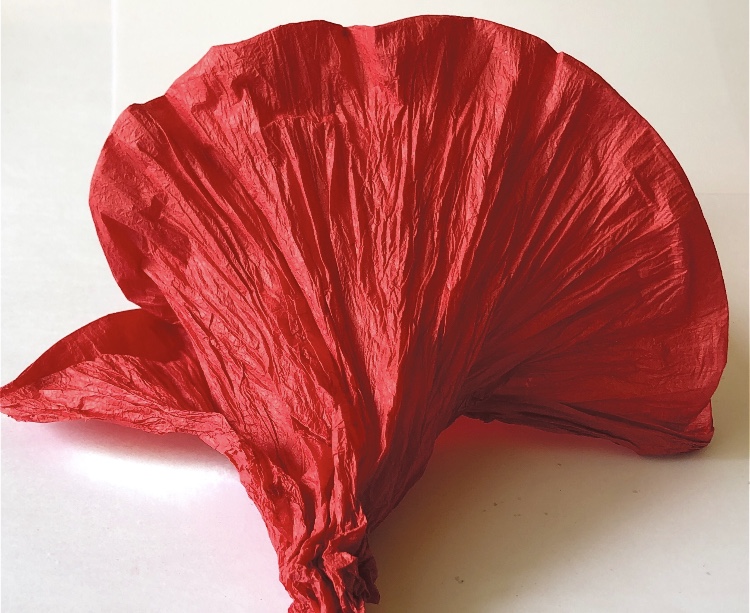
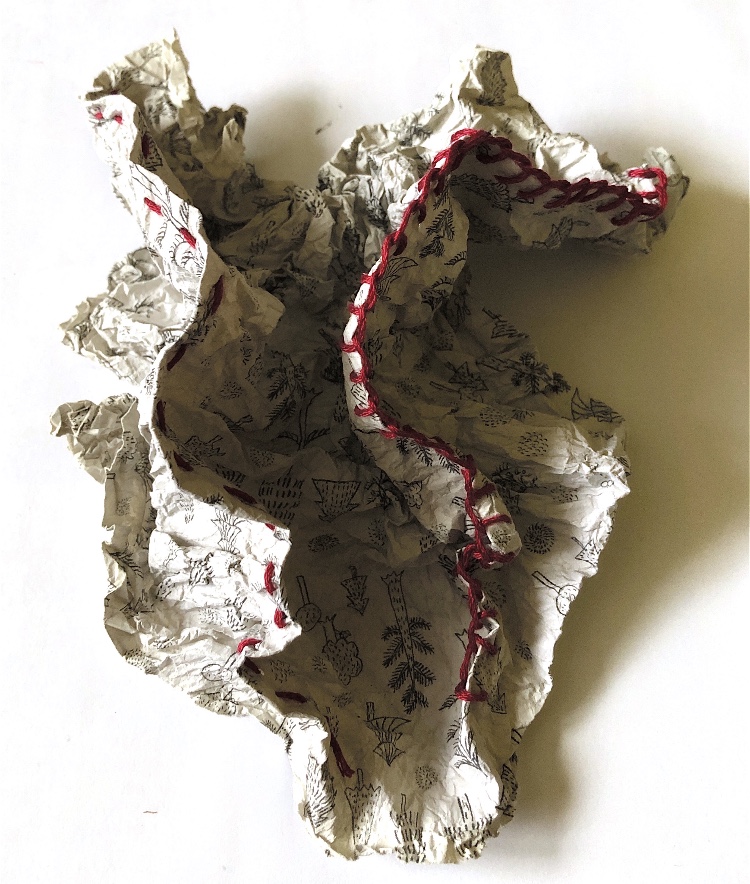
Fig, 3. Scrunching paper to make it soft and pliable was pleasing to the touch. I feel these could be developed further with stitch or crochet to enhance the folds and shapes. I particularly like the sample made from printed paper stitched with red along the edges. The stitch emphasises the structure.
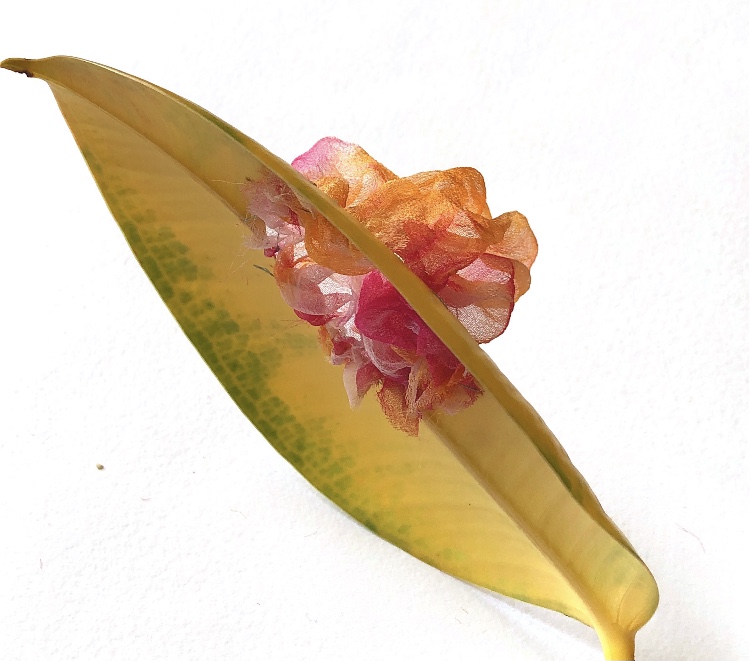
Fig, 4. While working on joining disparate materials with varying methods I created these two very different samples. In the first, pink and orange chiffon is gathered and stitched into a hole in a waxy leaf. The soft fabric billows out from the surface and the gathers create shadows and tones of colour, contrasting with the smooth surface and yellow/green colour of the leaf. It is as if a flower has grown in a leaf instead of on a stem.
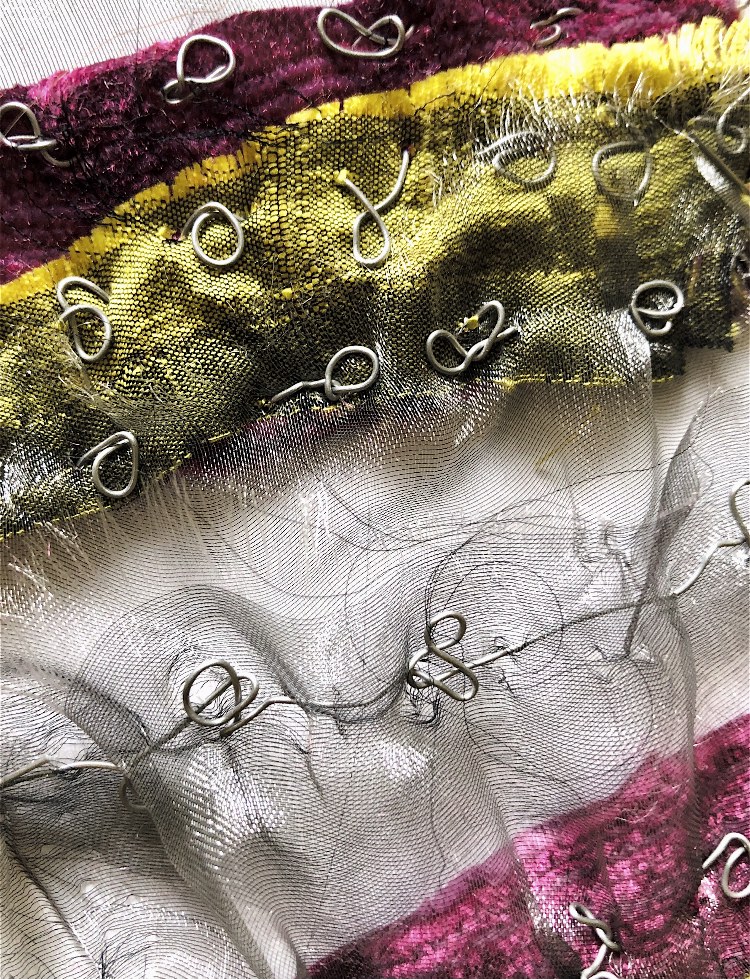
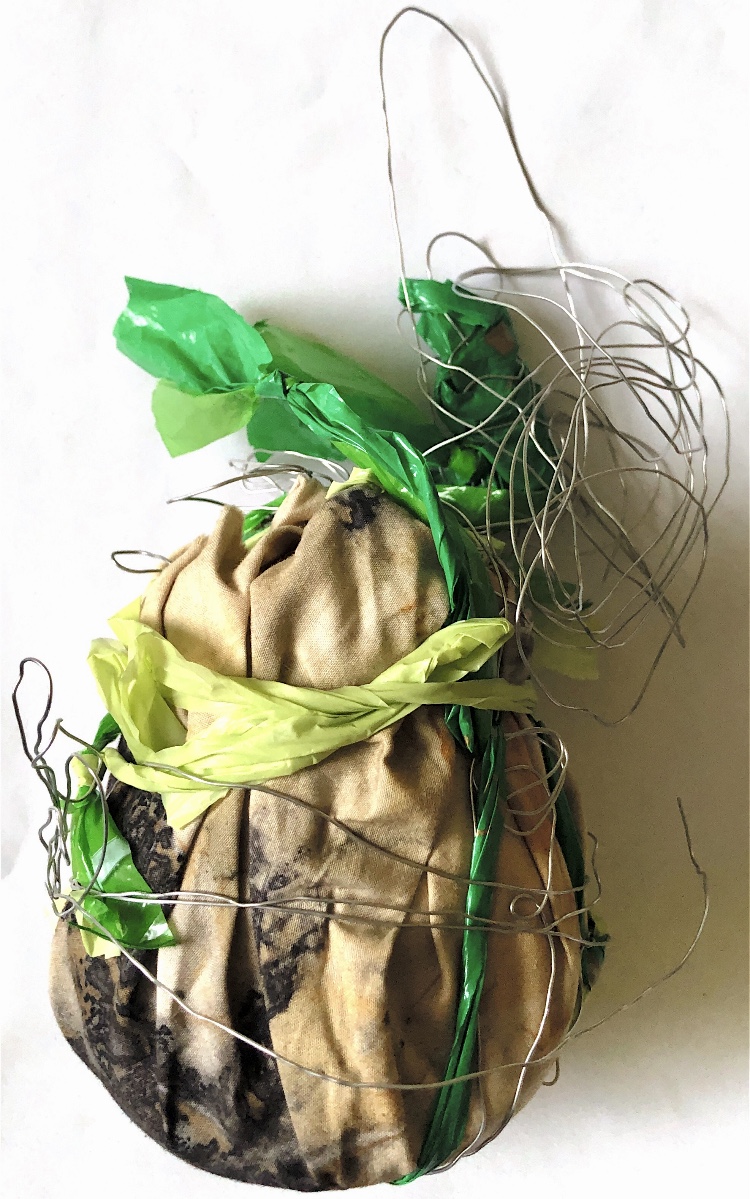
The second sample used wire to join different weights of fabric. I twisted the wire to make little loops so that it stayed in place, and this creates a pattern on the fabric that looks a bit like writing.
Using disparate materials creates tactile, visually exciting surfaces. I think that from these exercises I have learnt to experiment more.
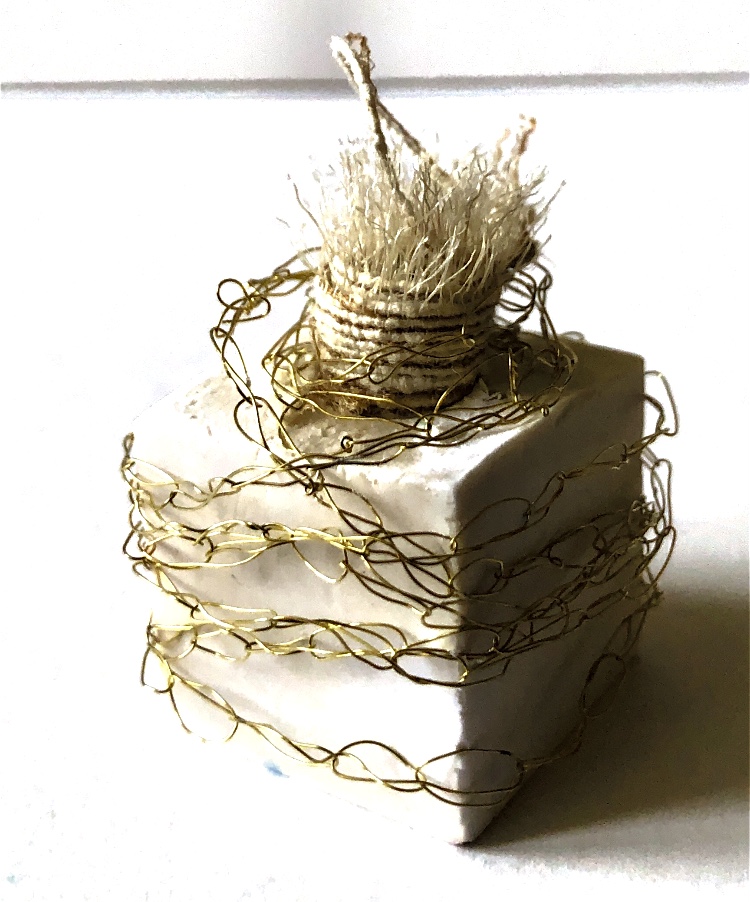
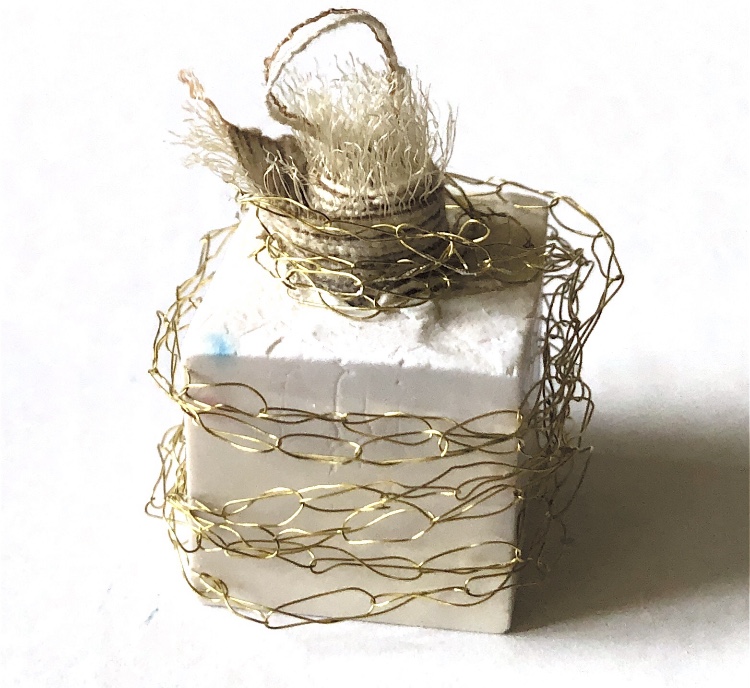
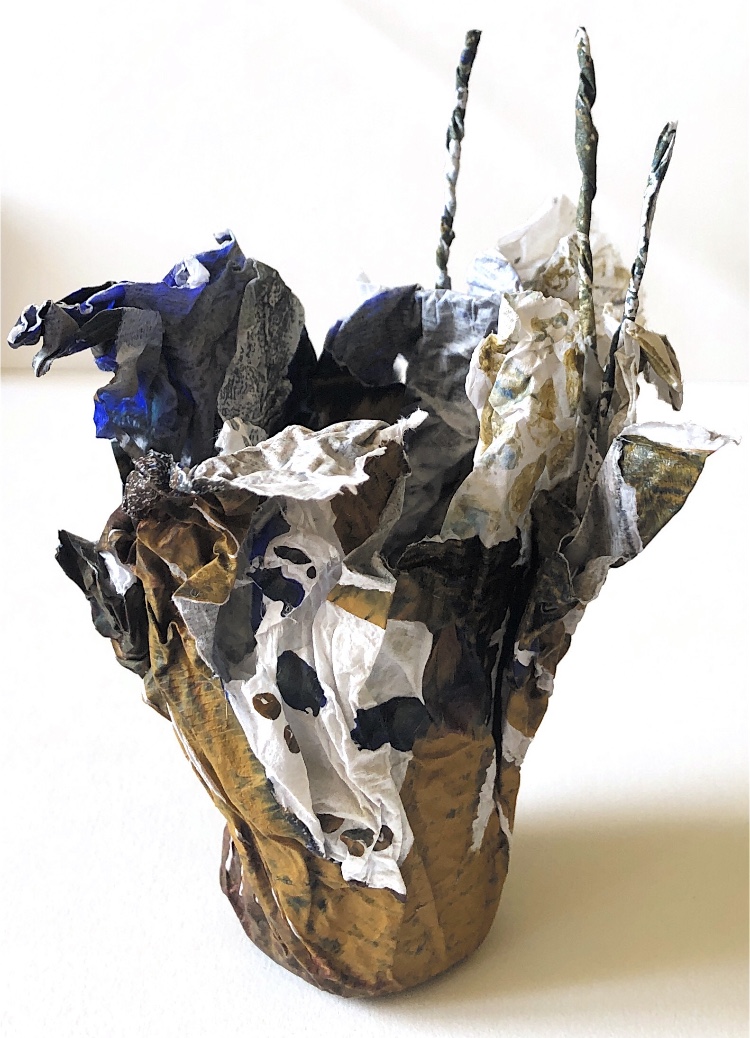
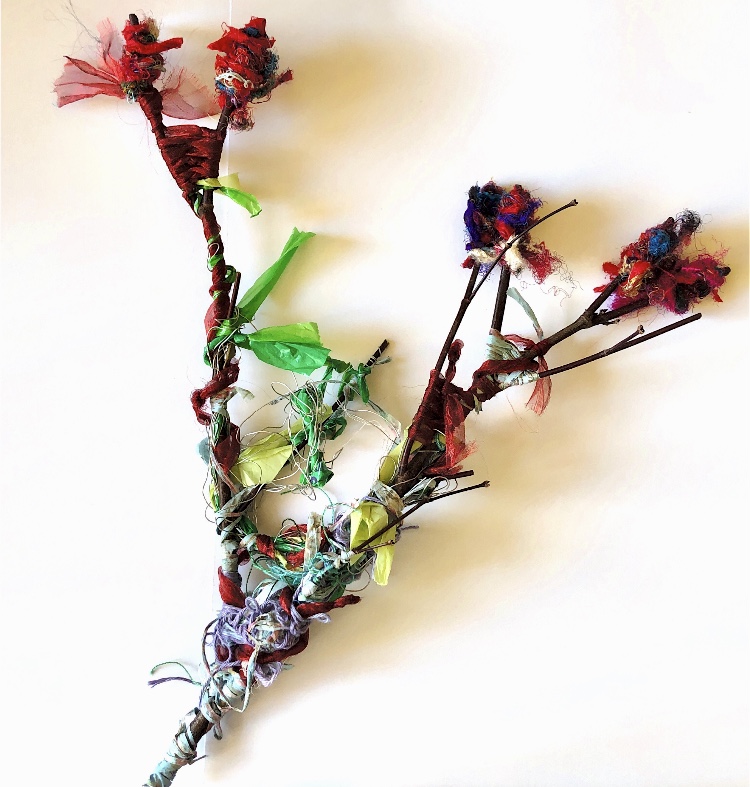
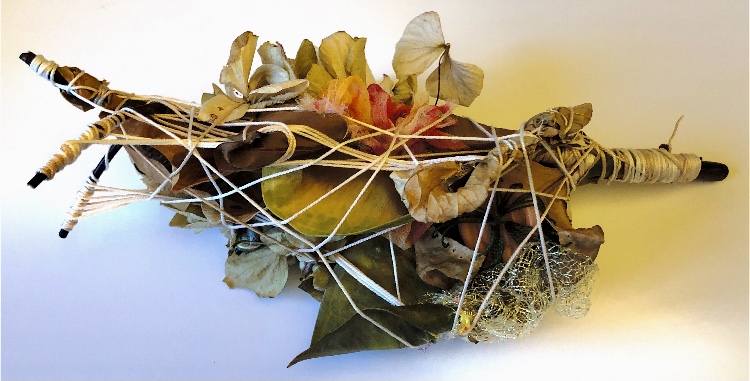
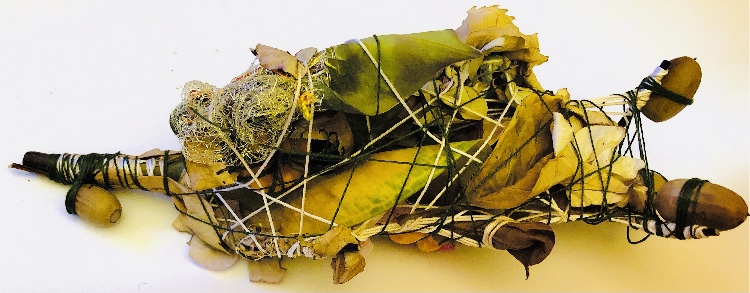
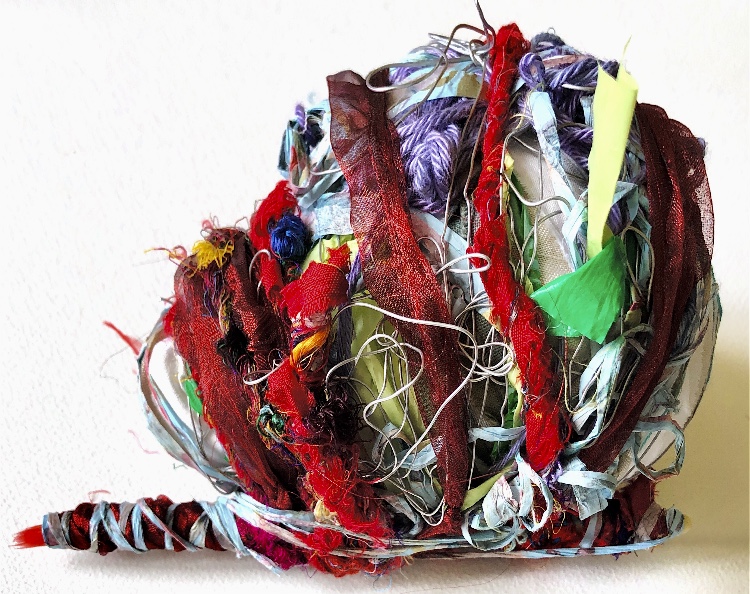
Fig, 5. I really enjoyed the wrapping section of MMT and tried to use lots of different materials including twigs, wire, plastic, eco dyed fabric, chiffon, silk waste and leaves. I like to combine organic and man-made materials and I think the twig wrapped with a combination of materials works really well.
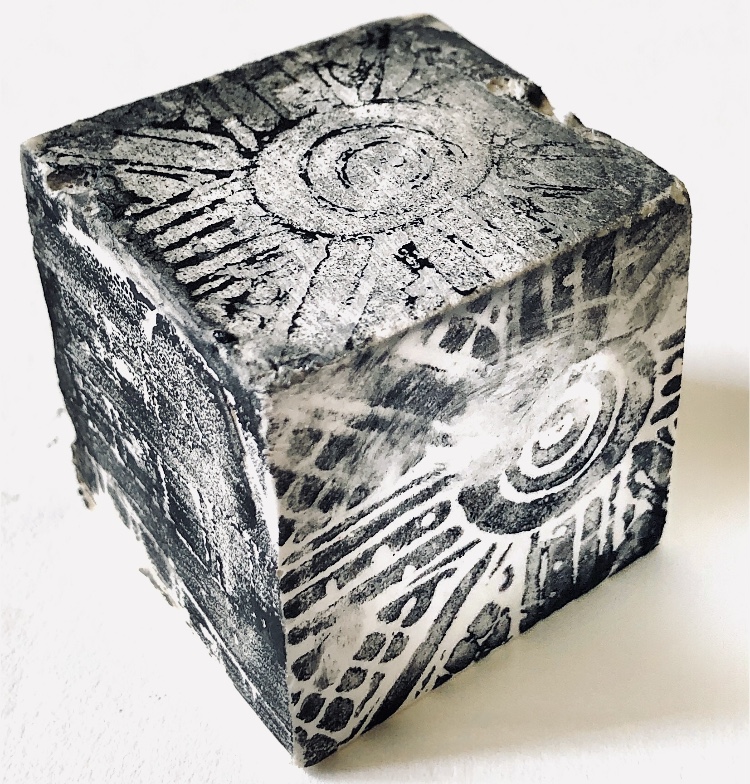
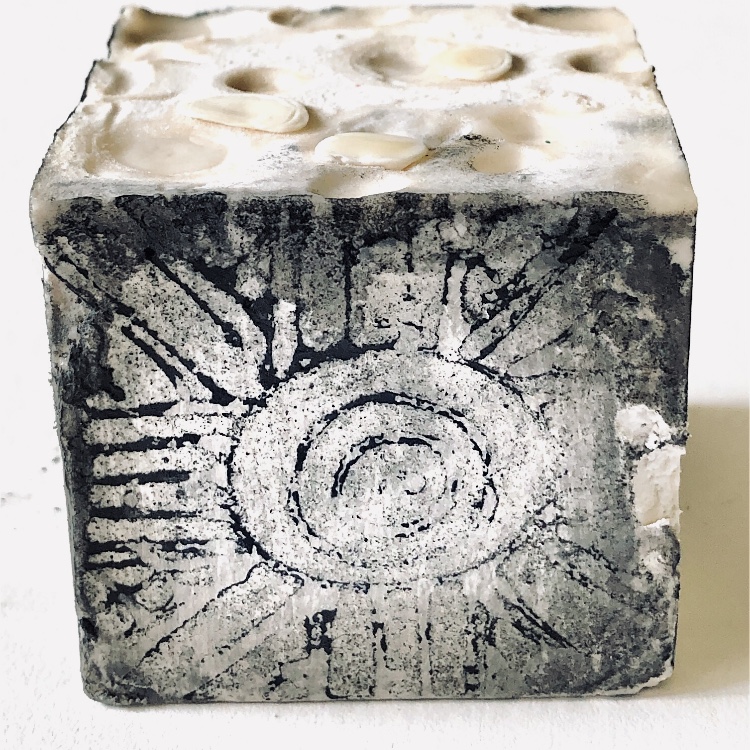
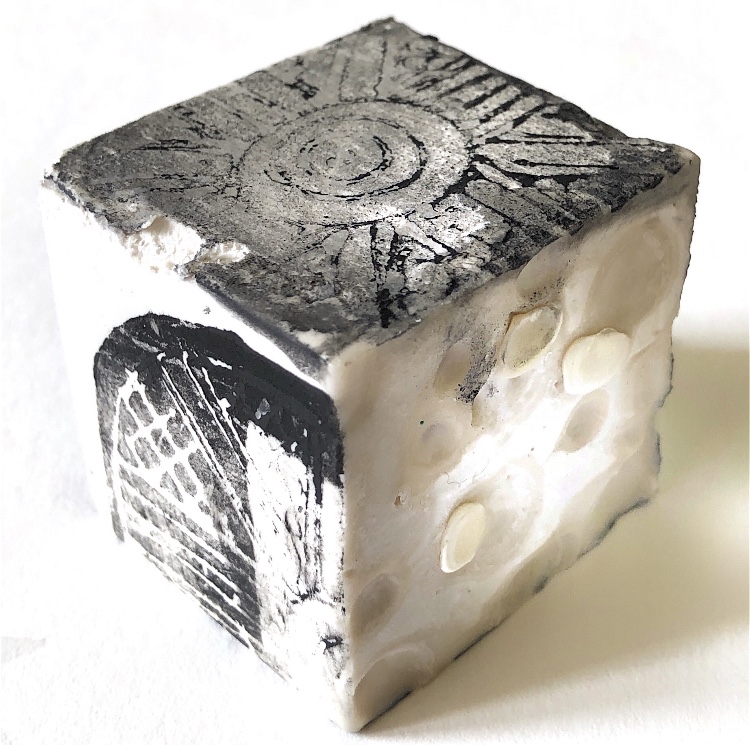
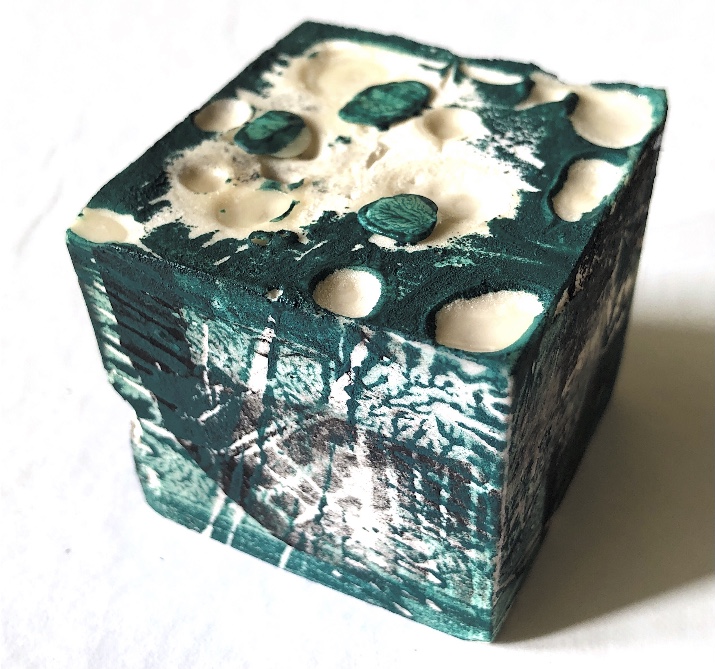
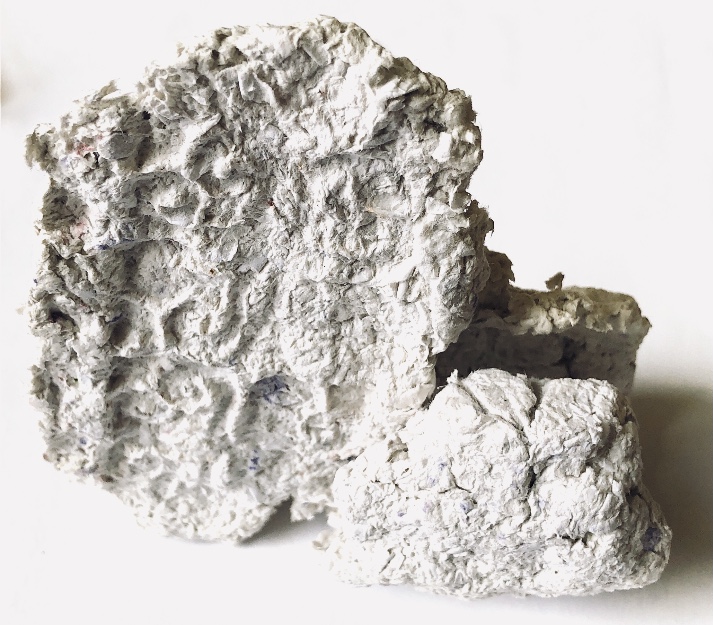
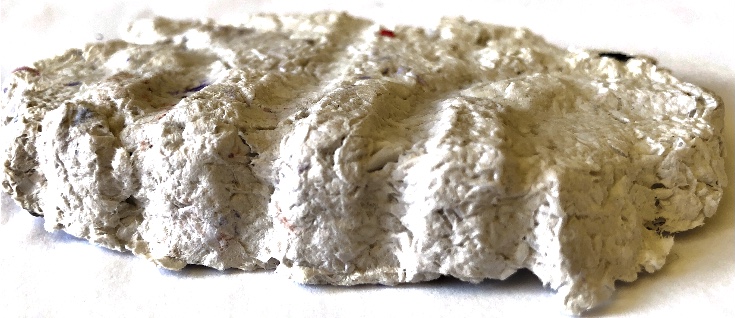
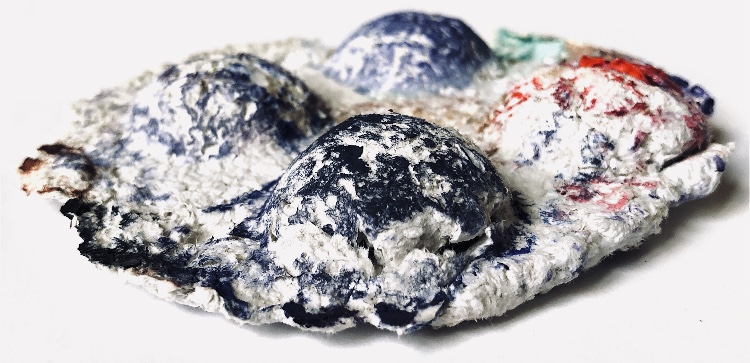
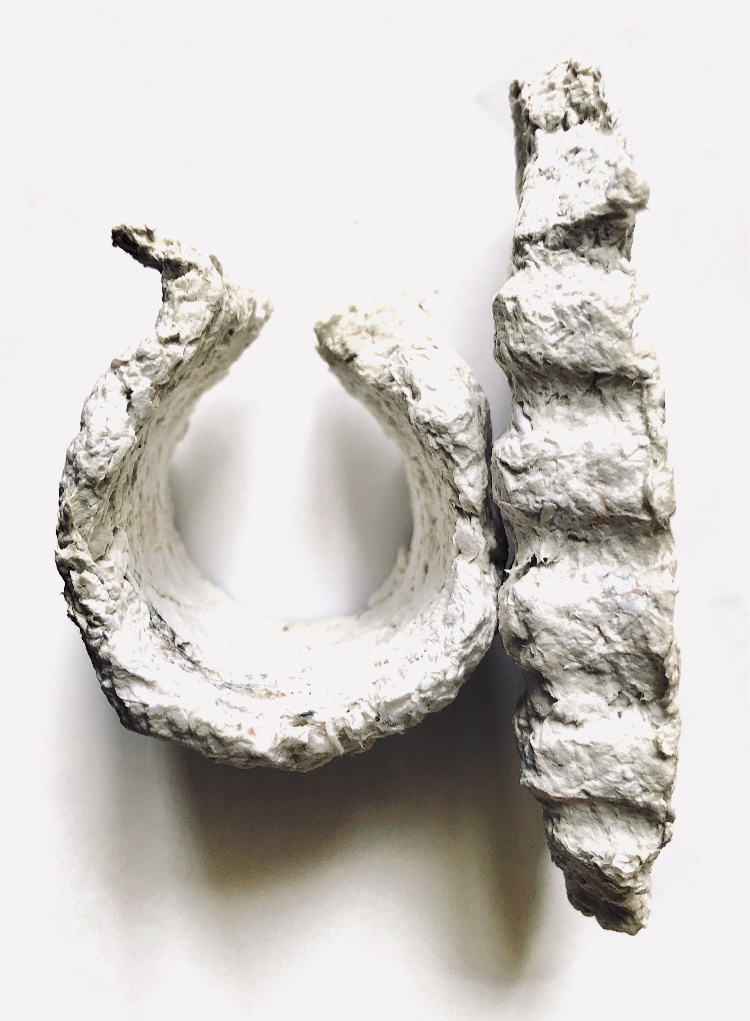
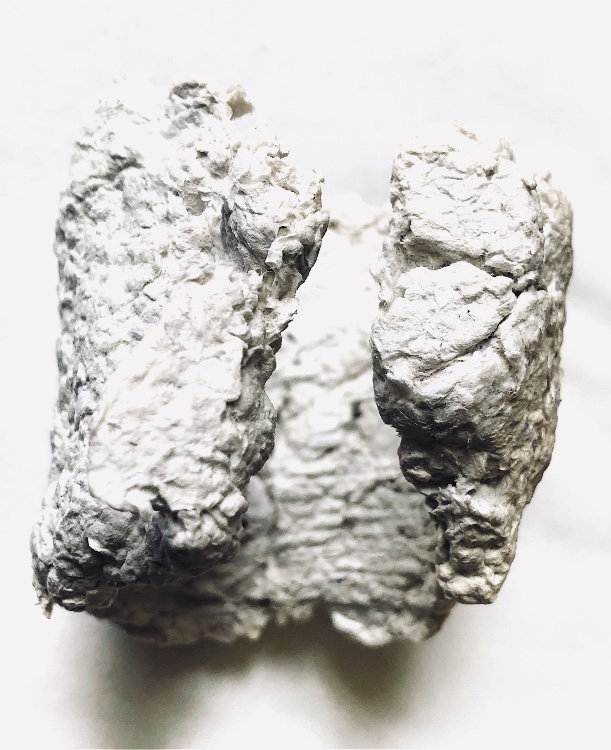
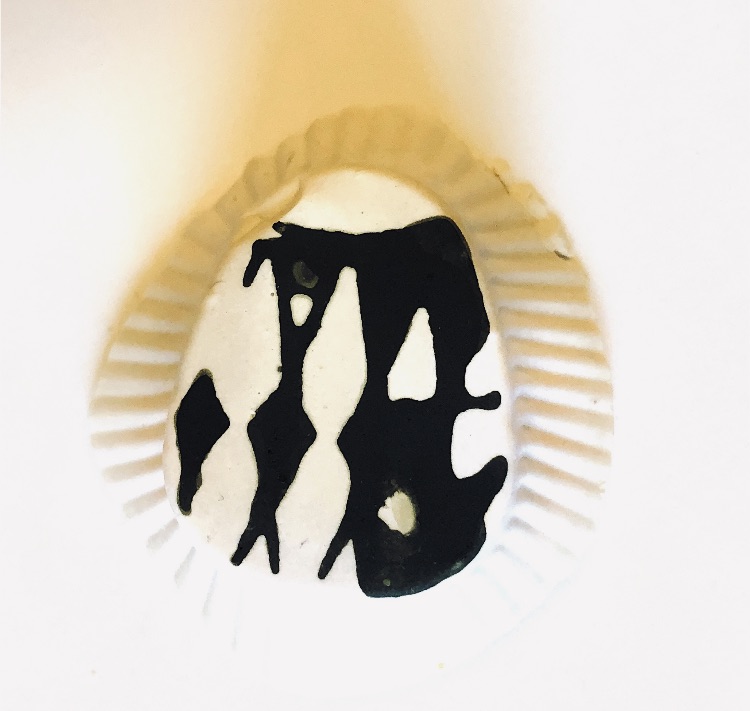
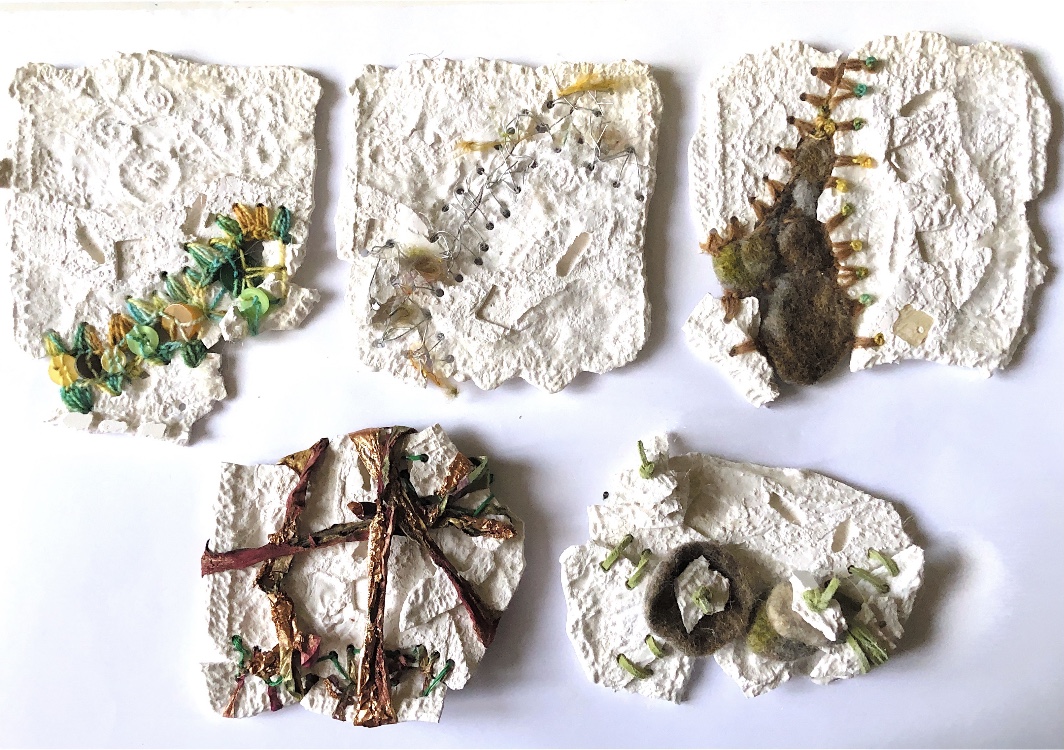
Fig, 6. I have chosen these cast paper mache pieces because I love the way they look like ancient carved stone, with patterns just visible like Roman remains. I am interested in the theme of buried artefacts and treasure, and this material works well for this subject. The sample which has picked up paint from its mold reminds me of a stone that had been decorated but has lost most of the paint through wear and age.
These samples have taught me that sometimes ‘less is more’ and that I don’t necessarily need to over embellish my pieces.
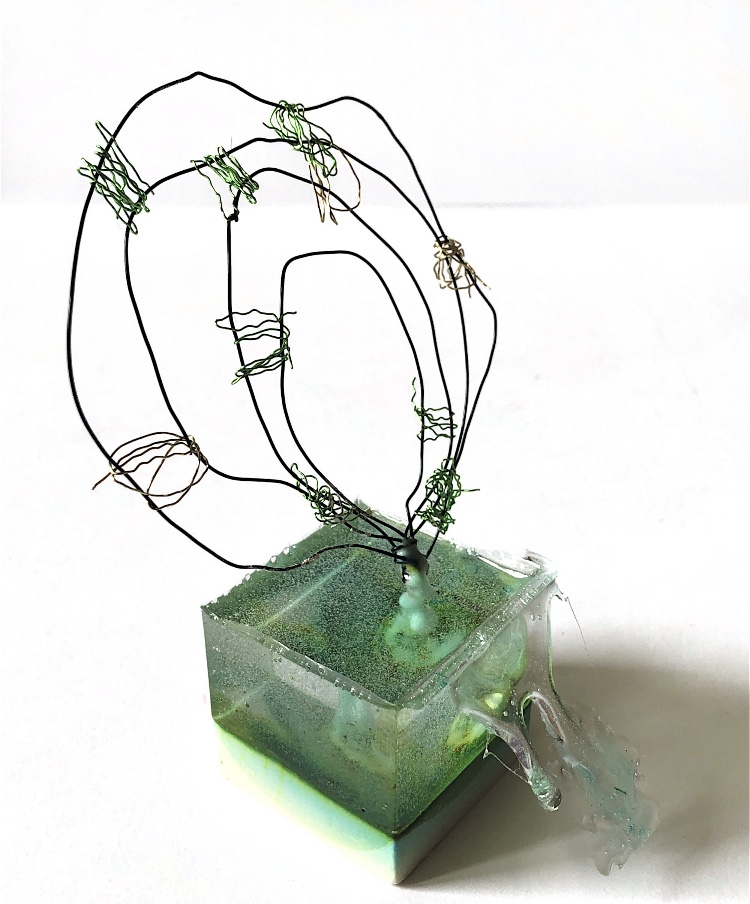
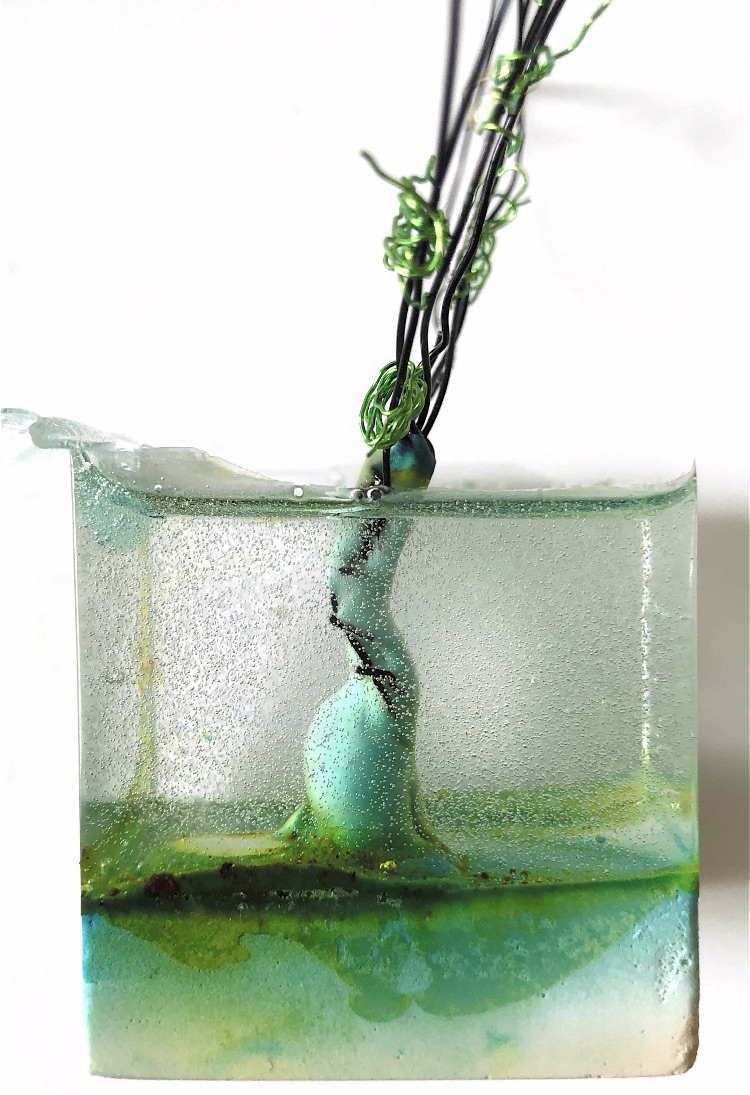
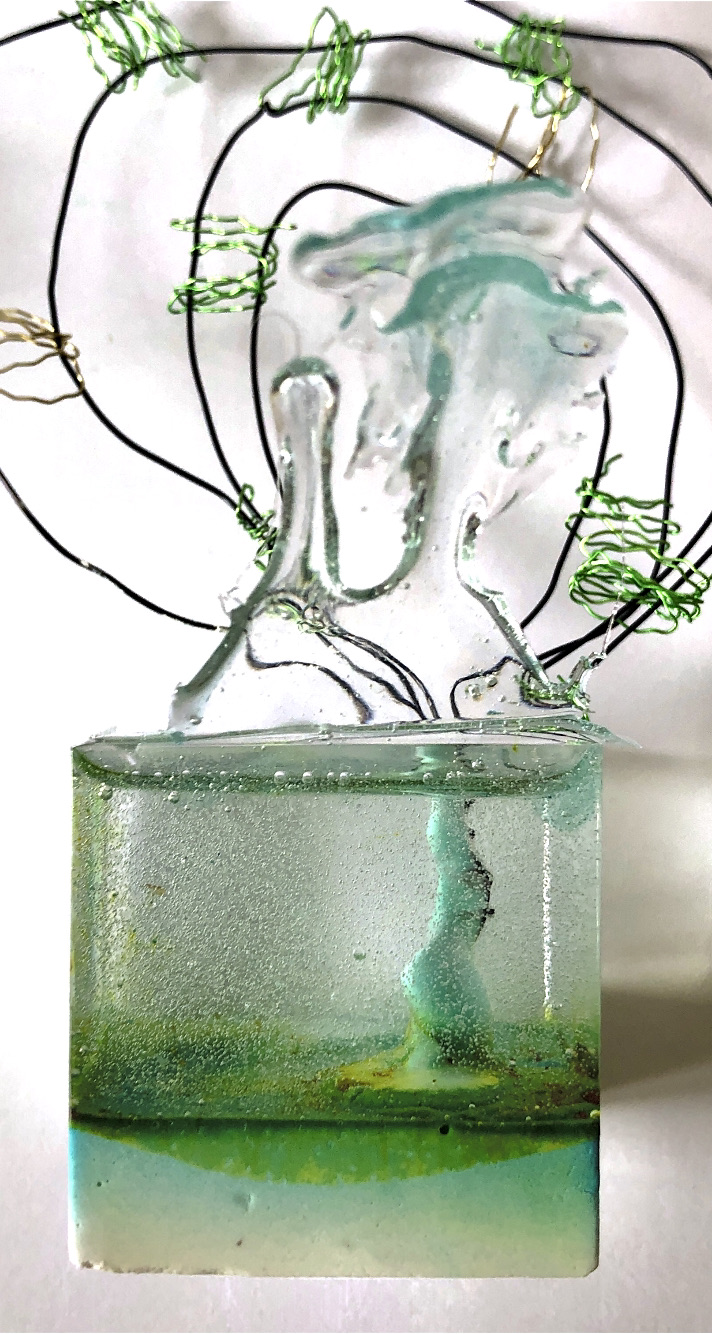
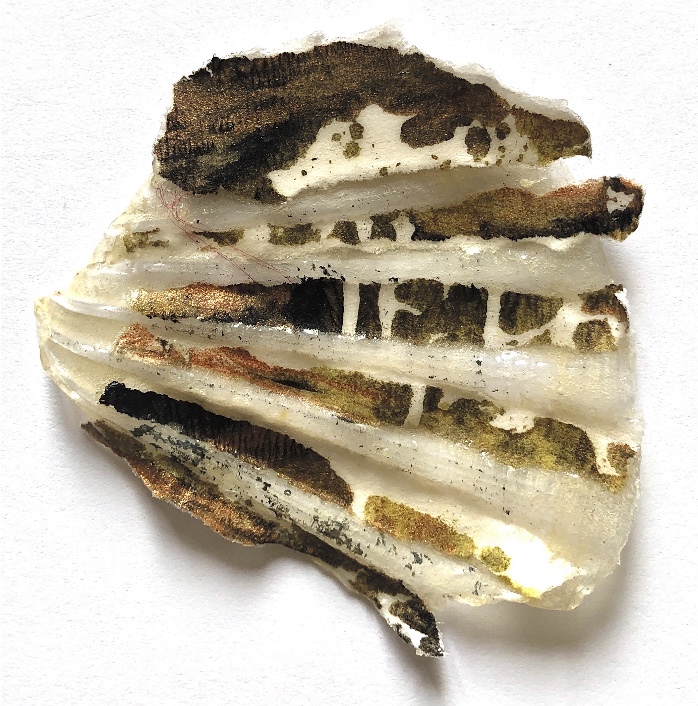
Fig, 7. I was unsure about using latex but I particularly like how this piece incorporating paper strips turned out. It was molded on a shell, and the translucency and flexibility of the latex makes it a useful idea for incorporation into larger pieces. I later used latex pieces to set into resin casts – creating an ethereal, other wordly look.
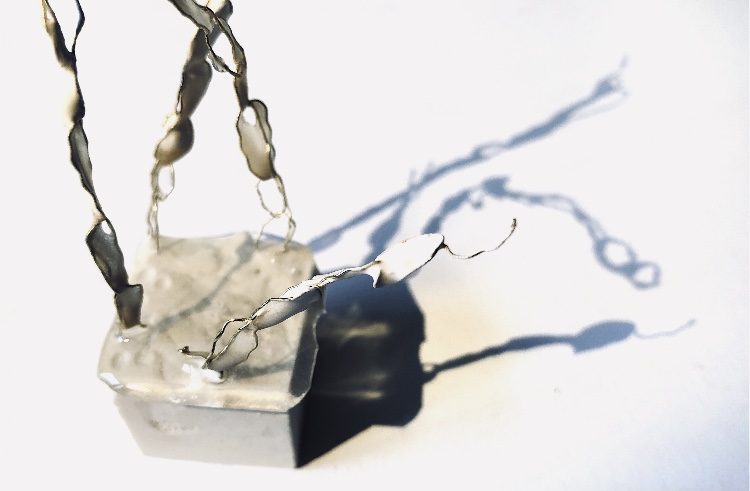
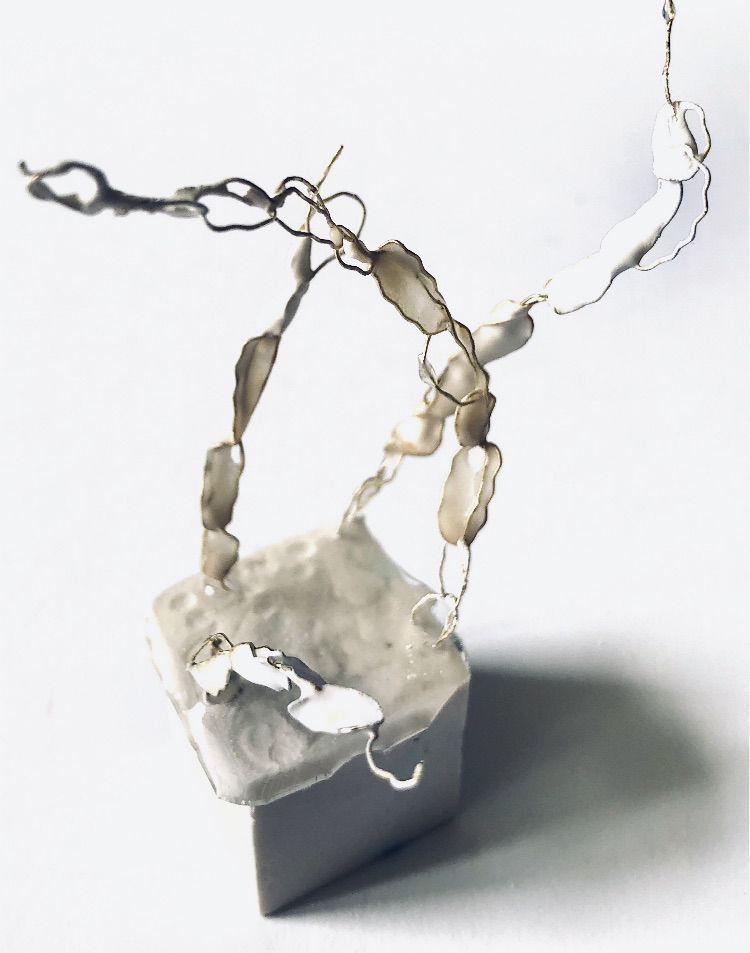
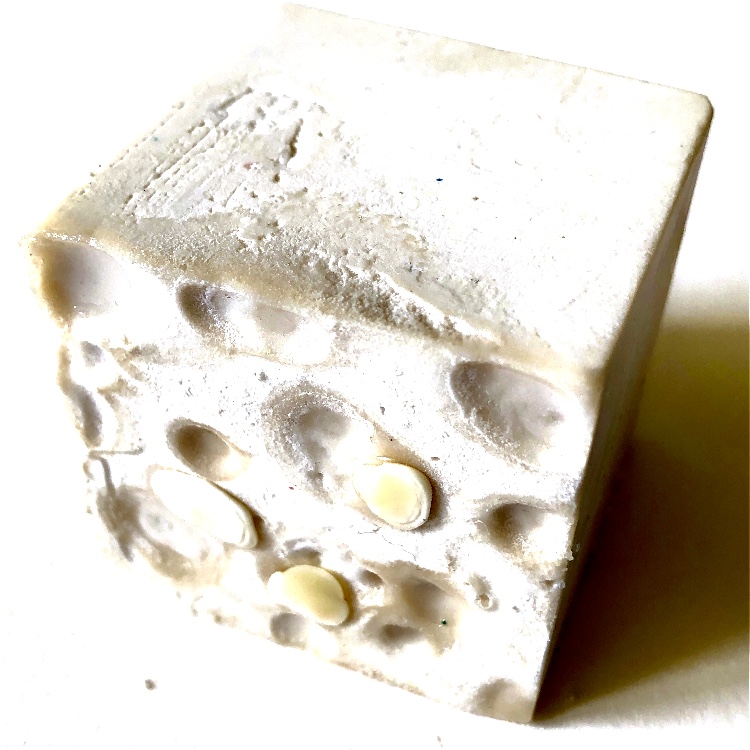
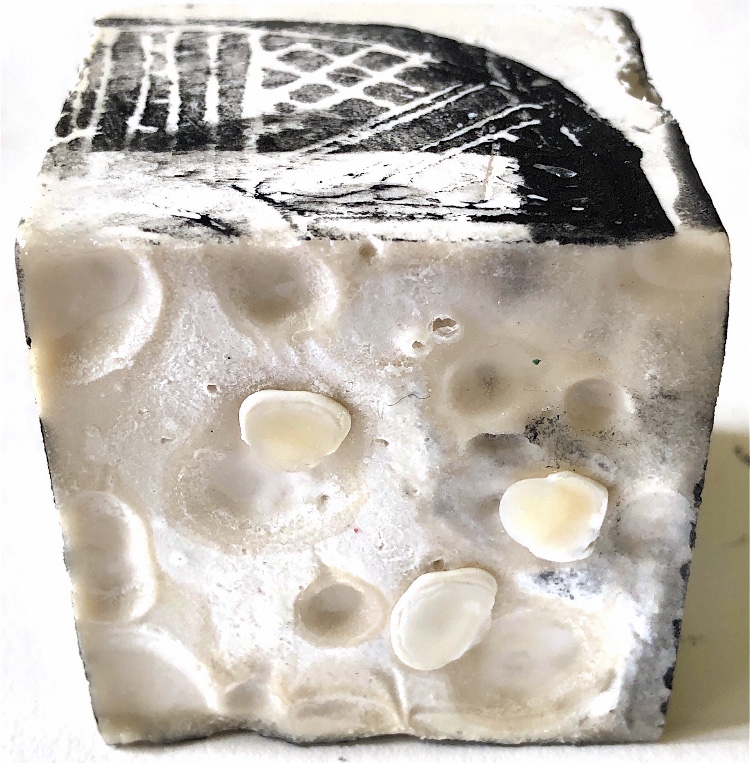
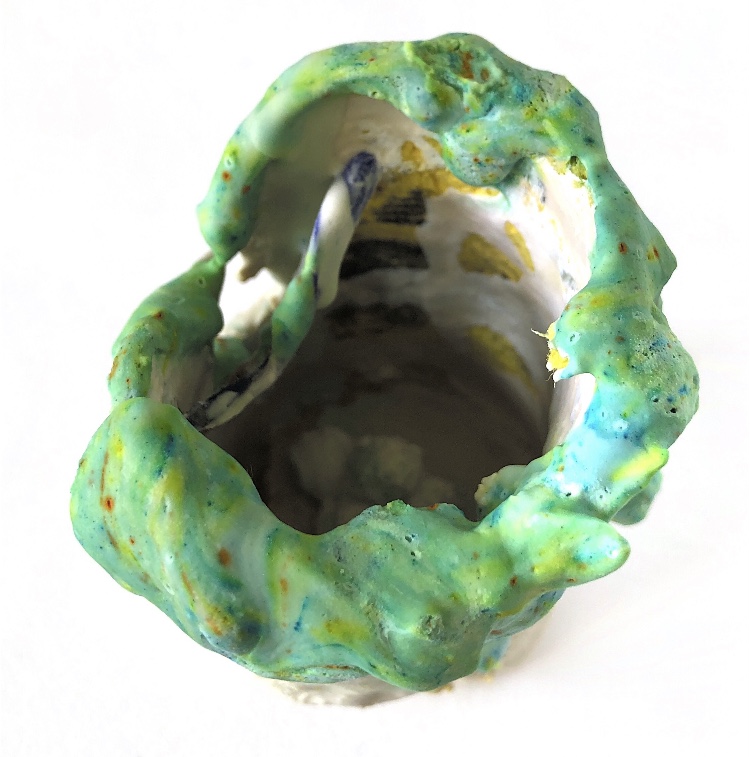
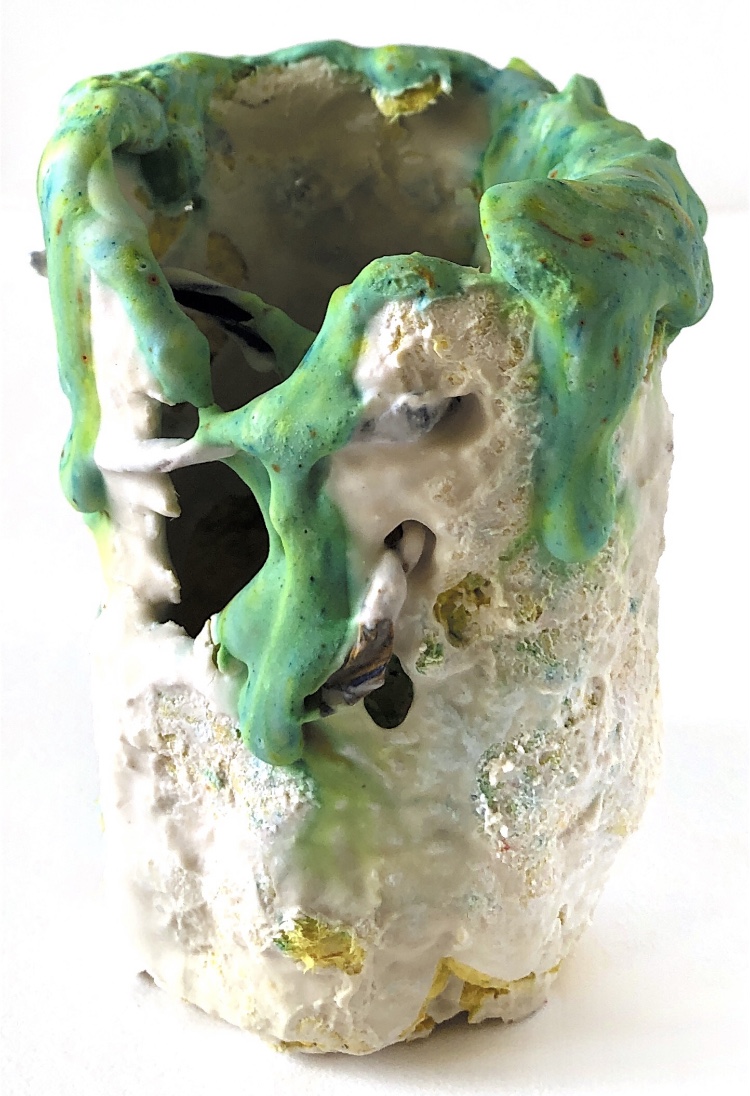
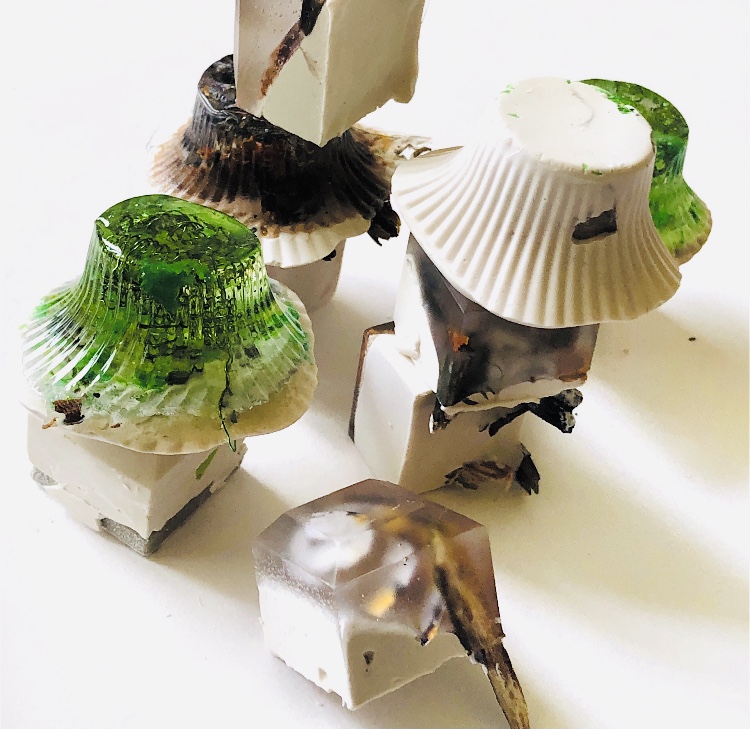
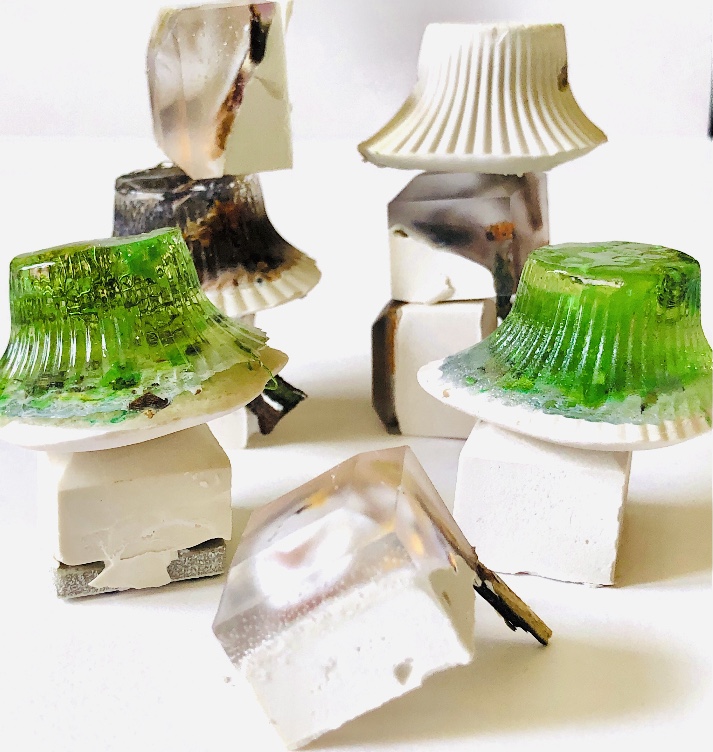
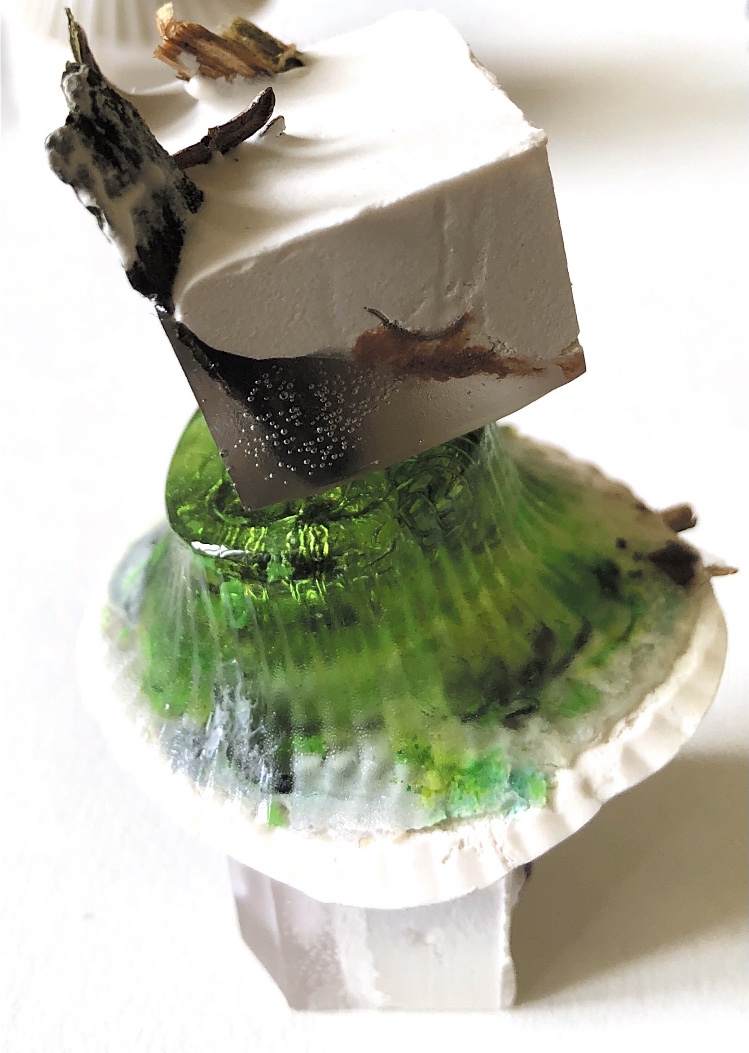
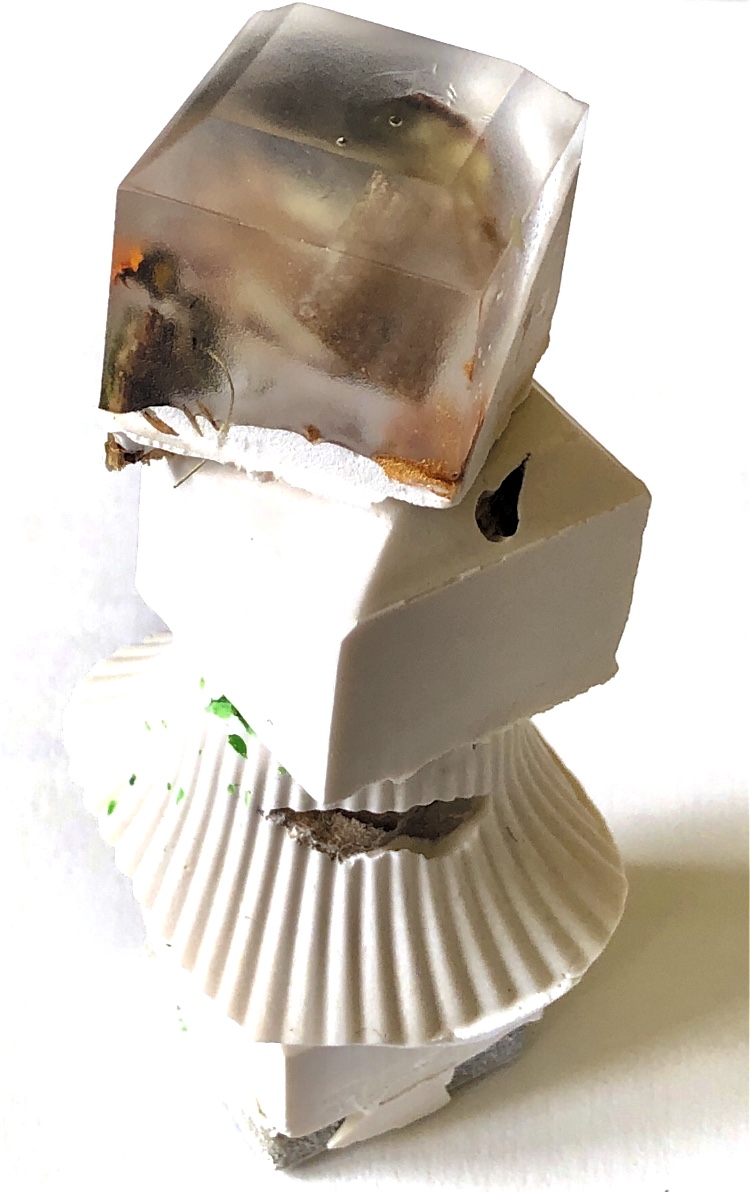
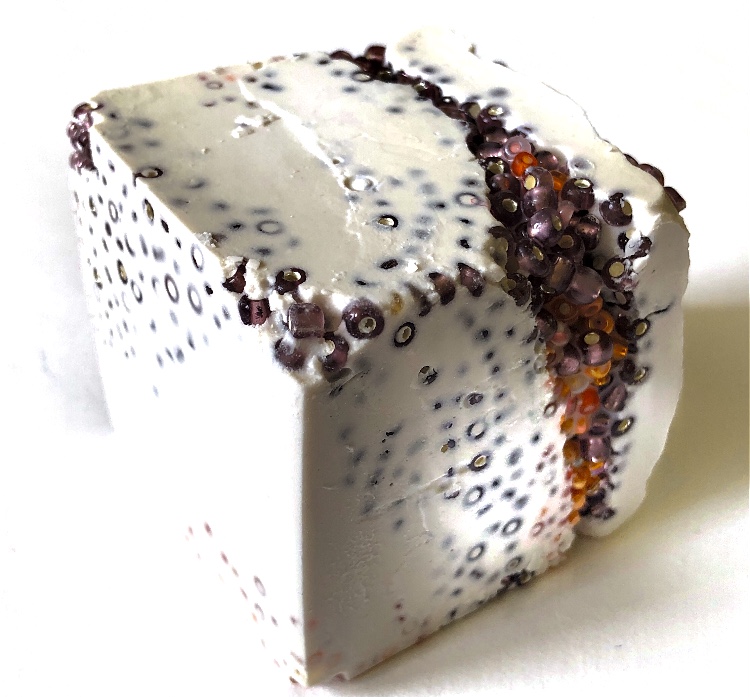
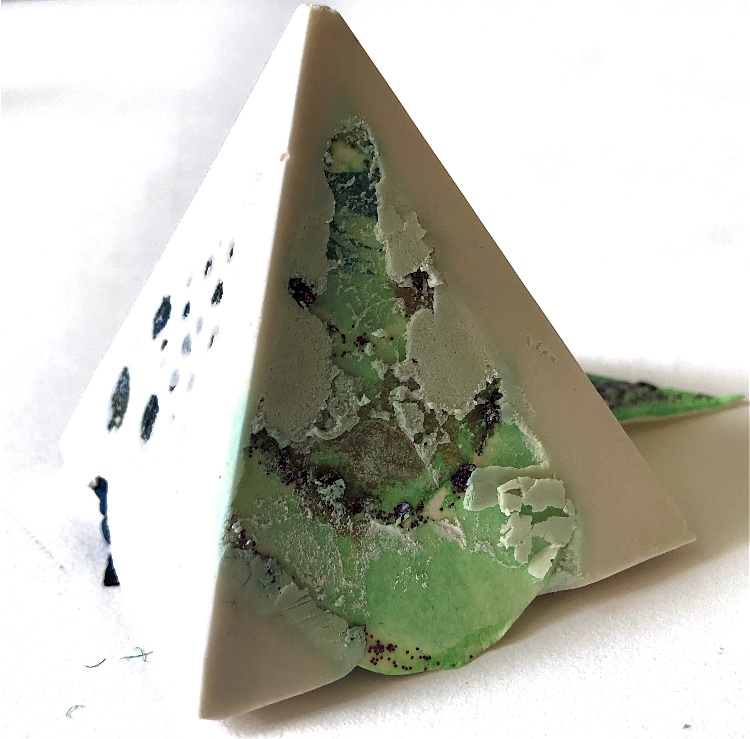
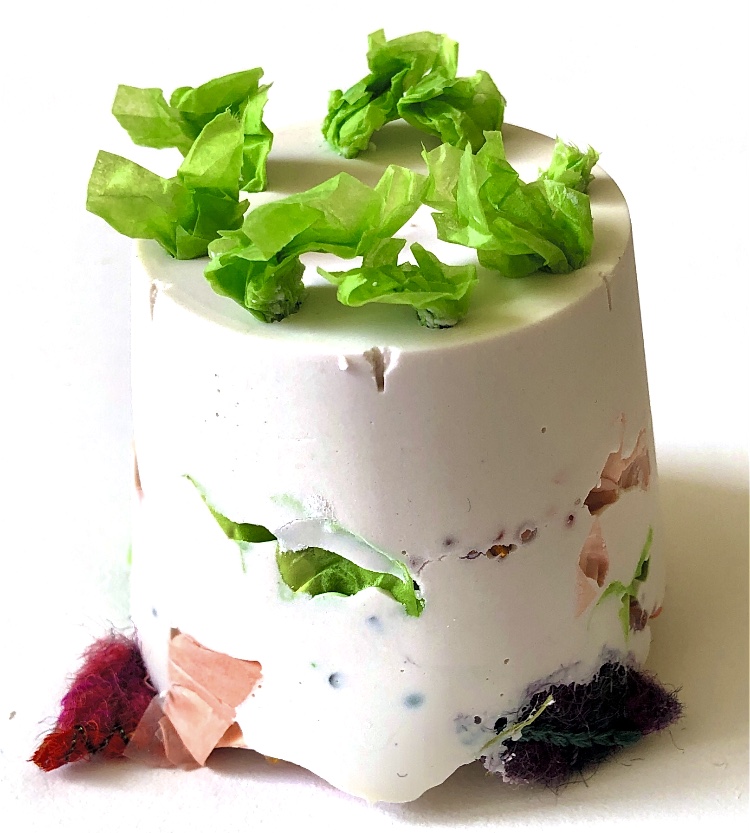
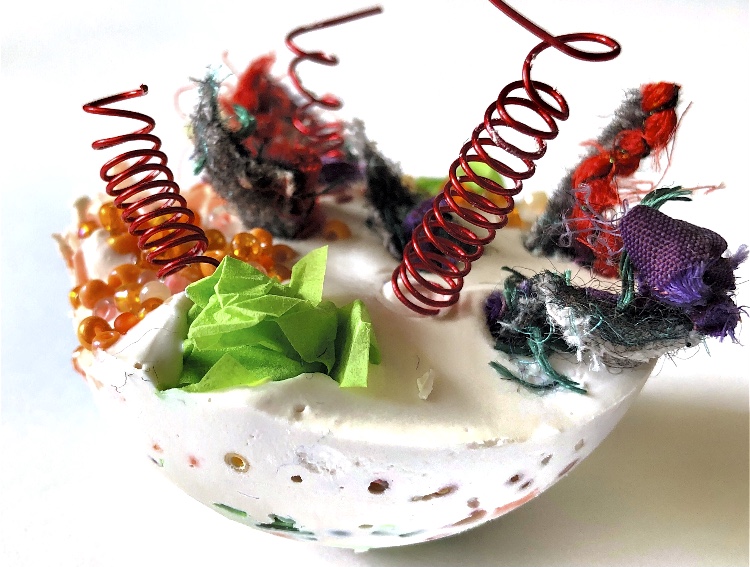
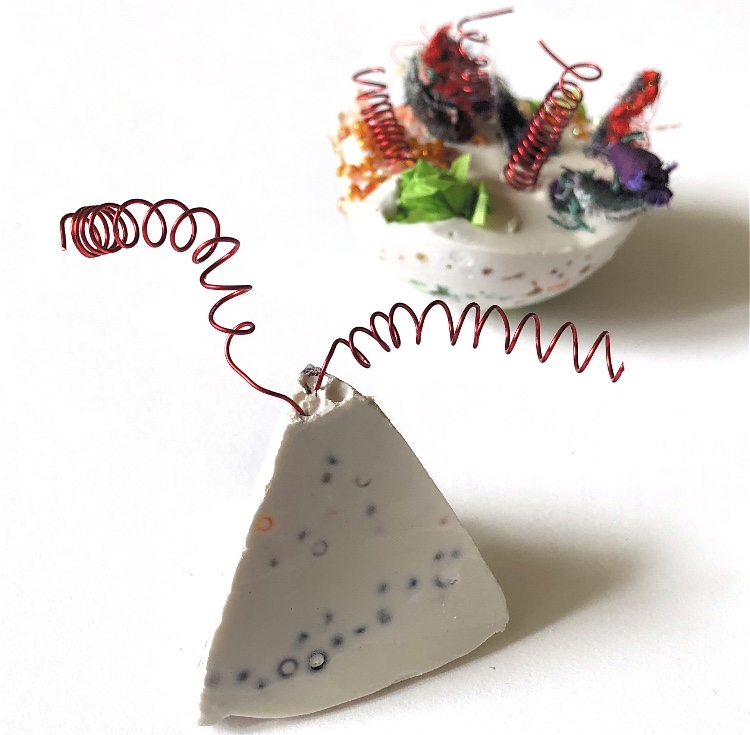
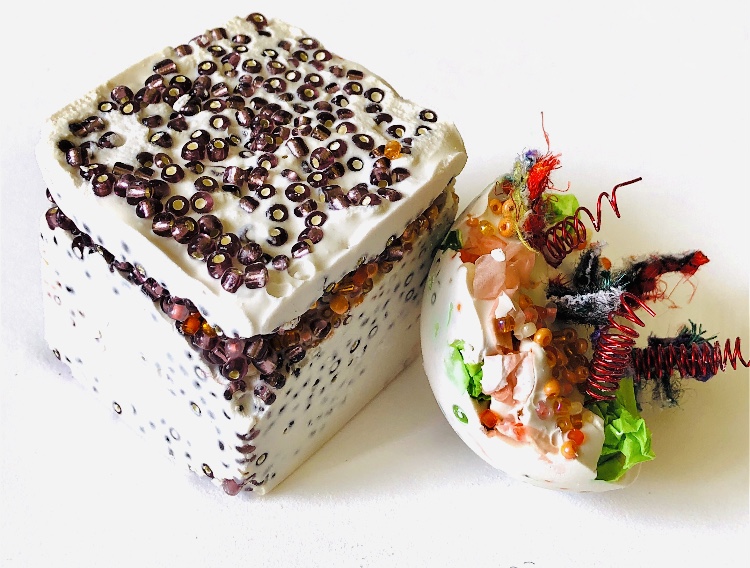
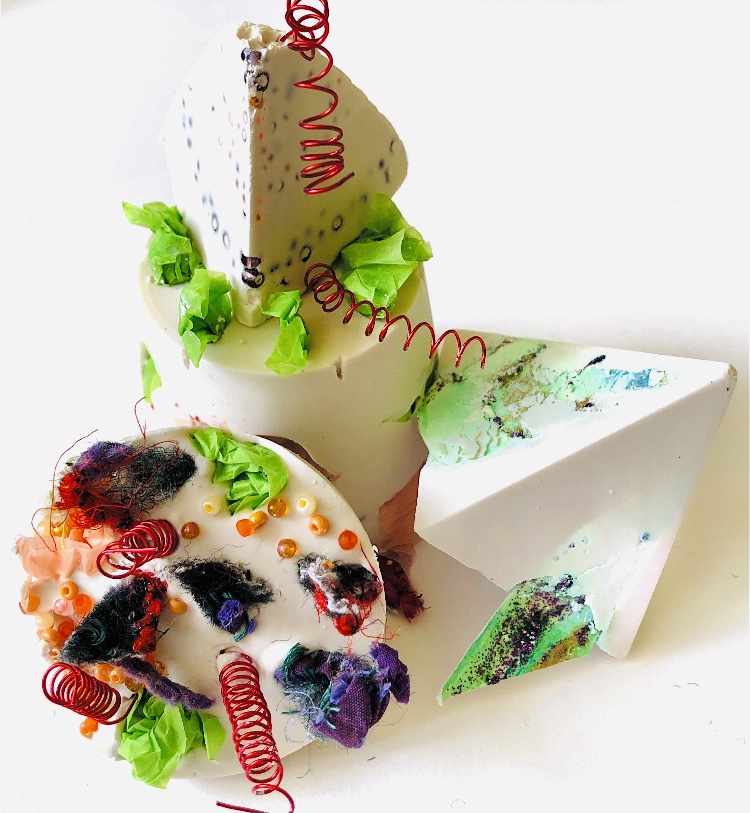
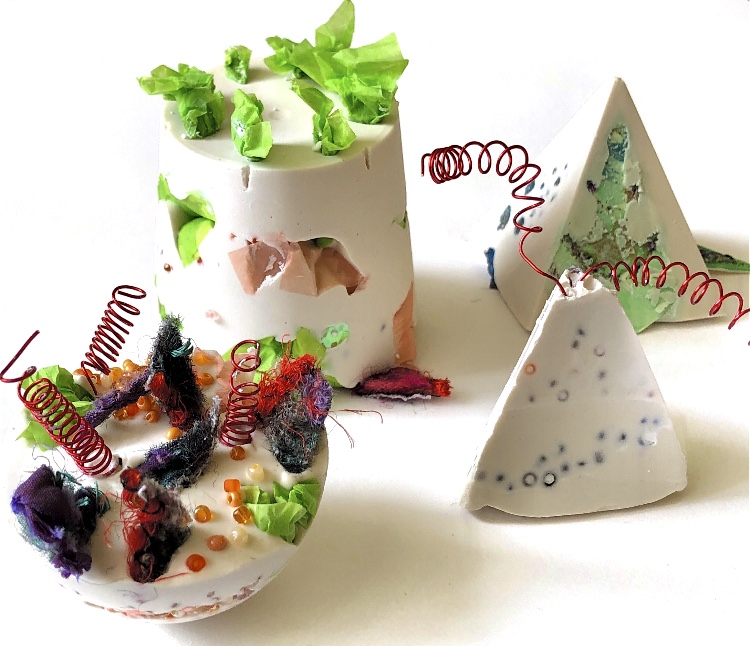
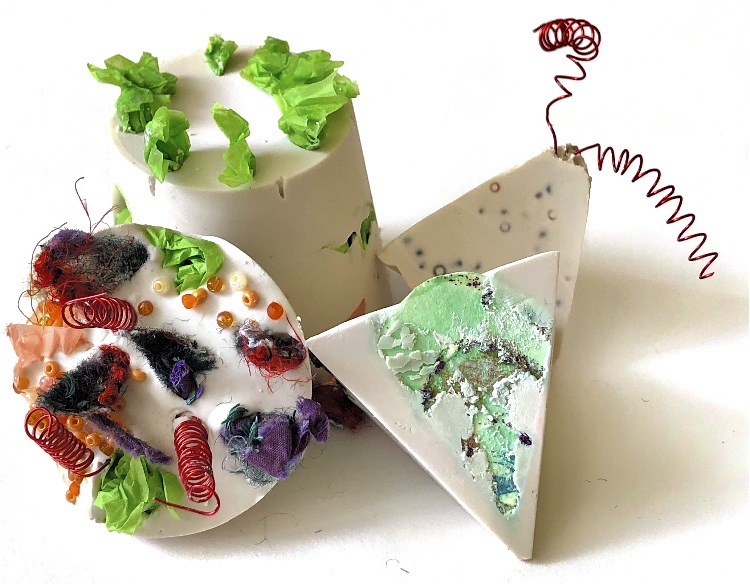
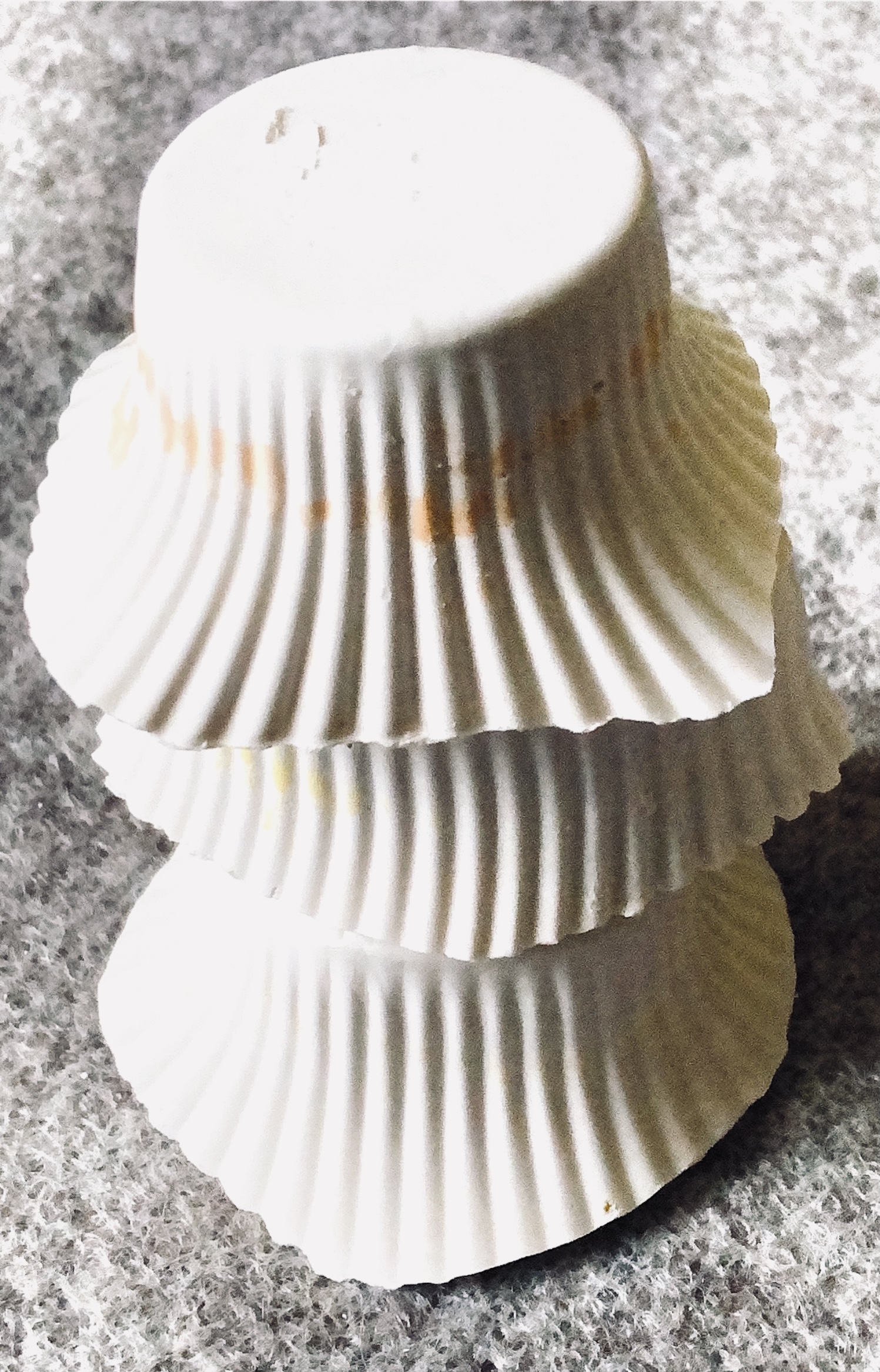
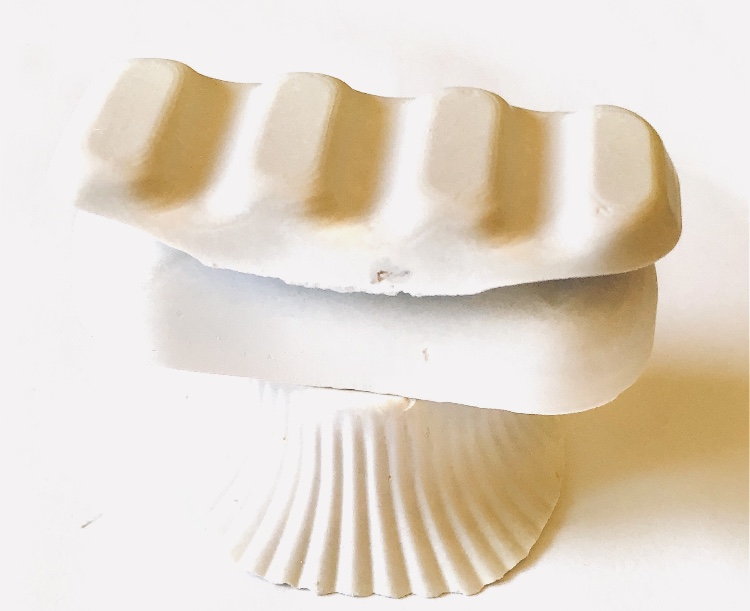
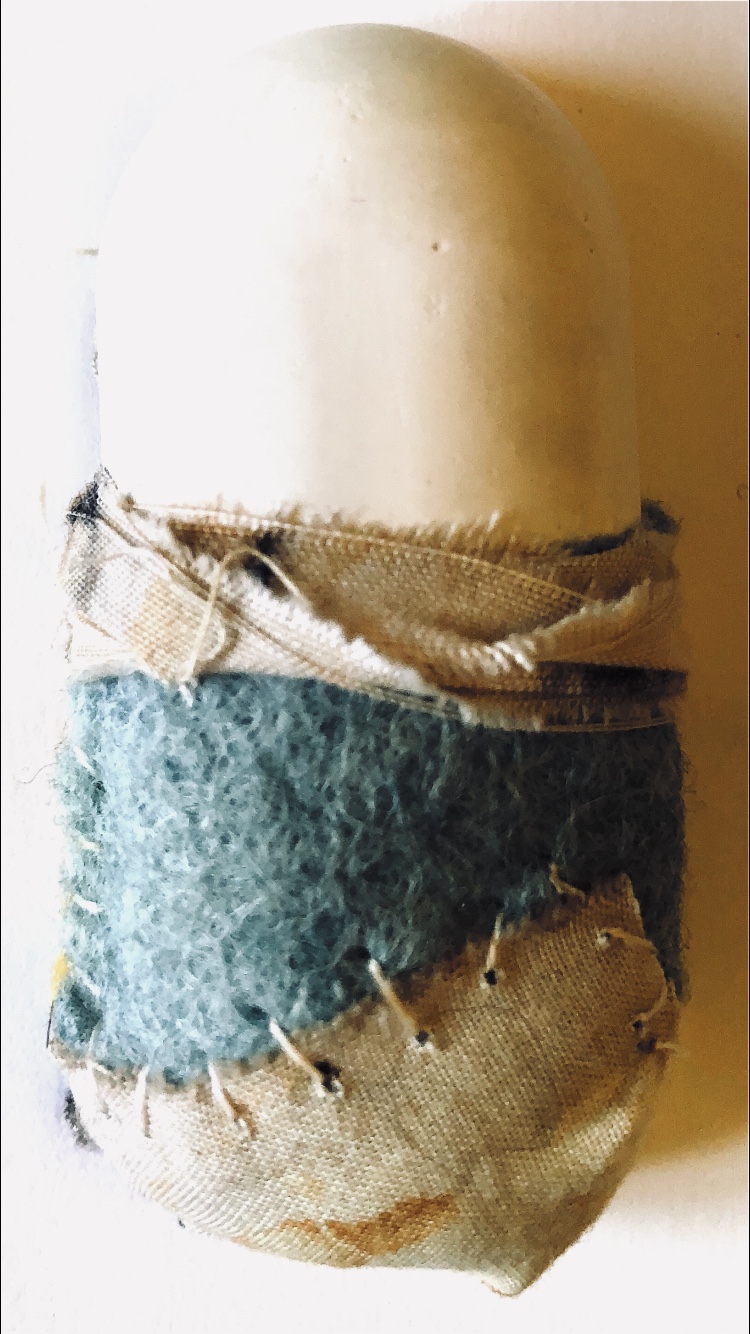
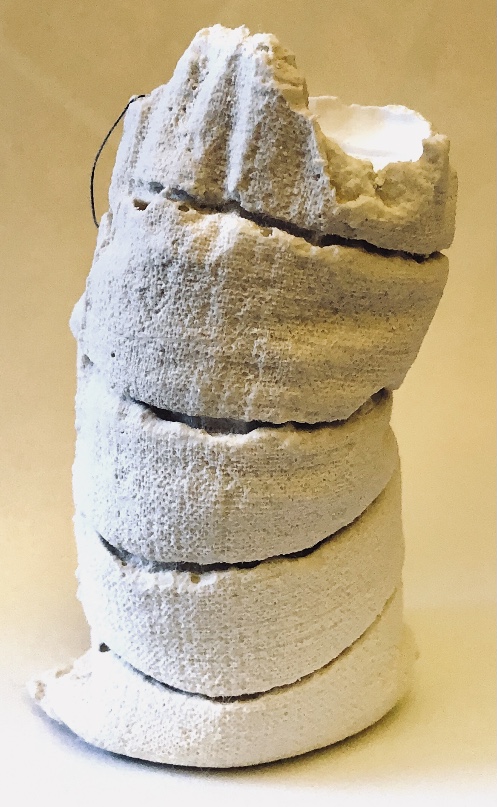
Fig, 8. Experimenting with small cast plaster of Paris shapes I created mini assemblages. This fired up my imagination for other experiments with assemblage later on. I also developed samples by printing, breaking and rejoining, and stitching fabric to make a pouch. These types of samples would work really well to make a final composition made of multiple pieces.
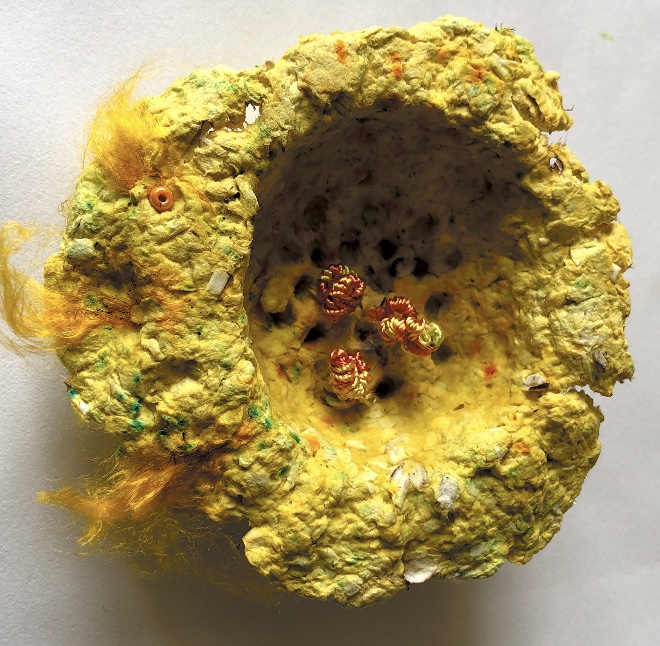
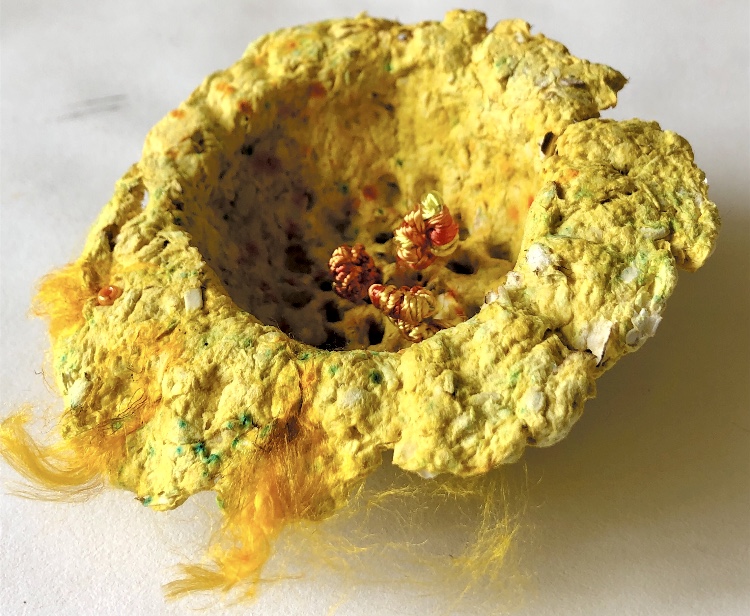
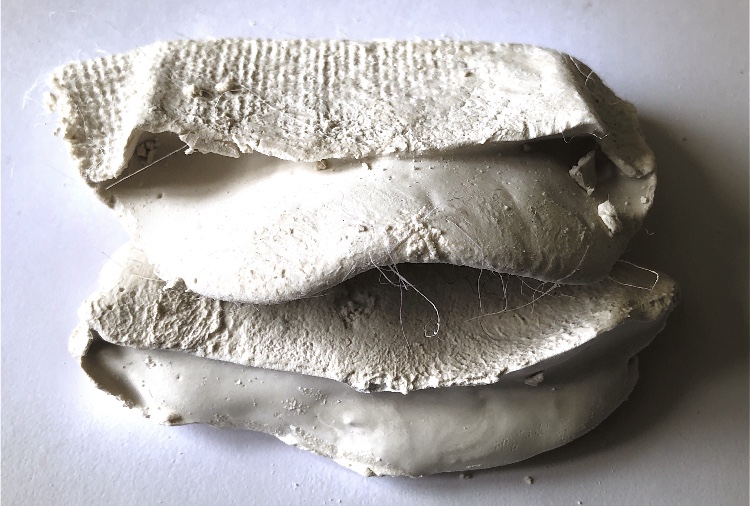
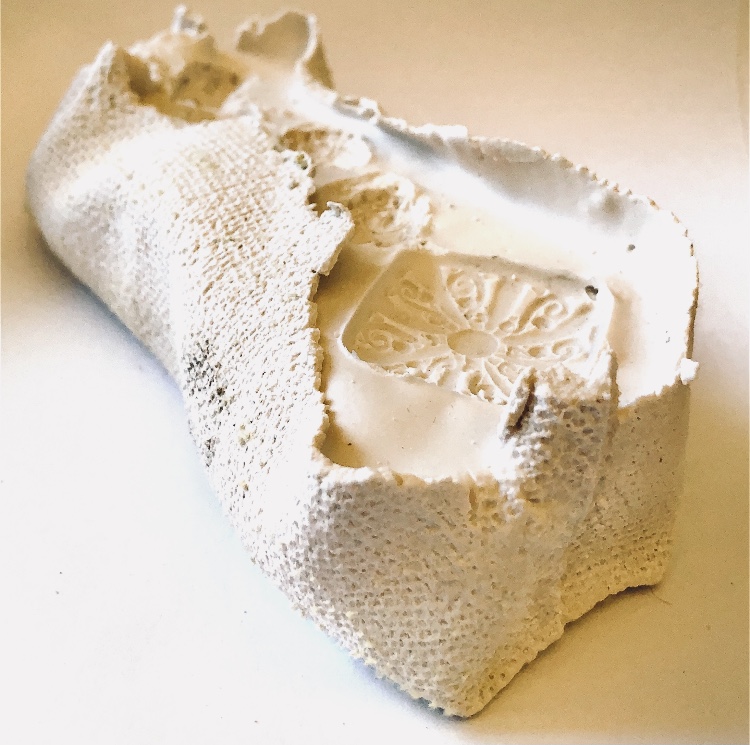
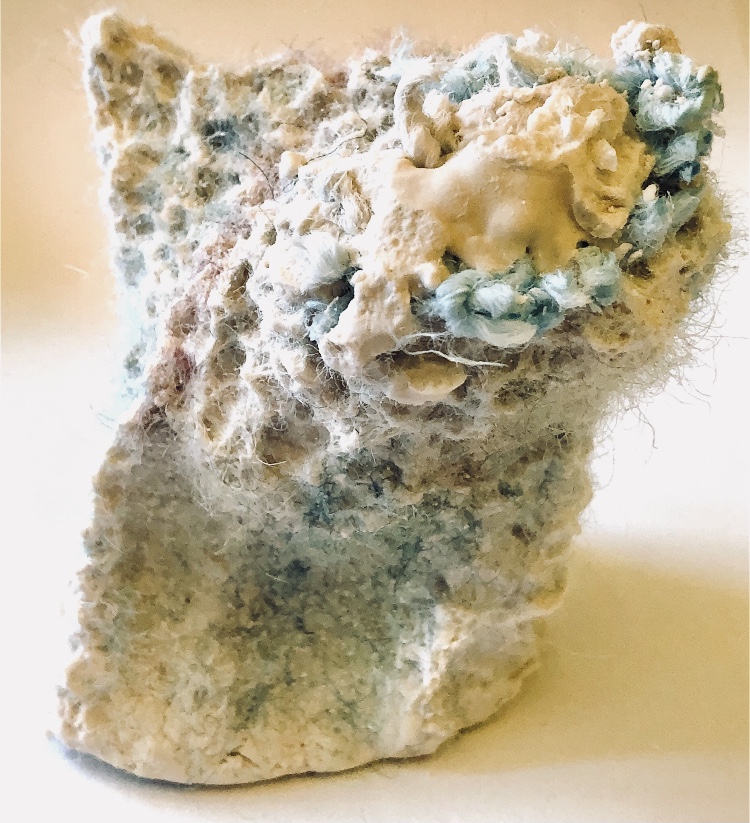
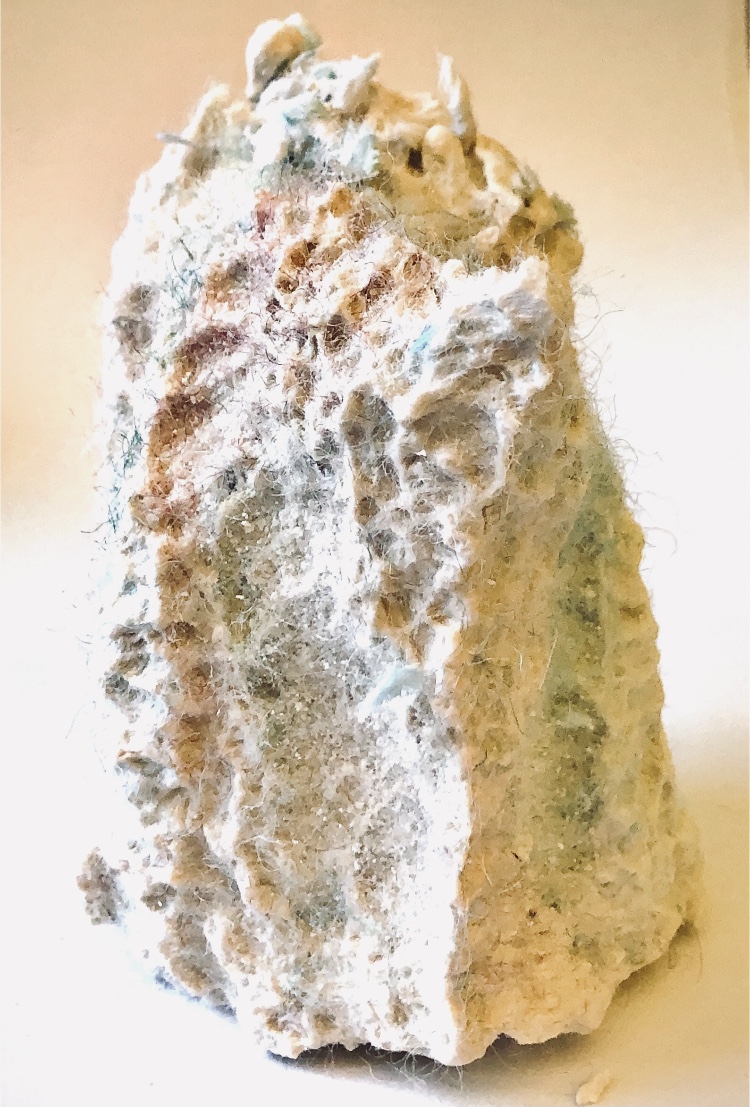
Fig, 9. Casting with plaster in small textile bags created samples with lots of texture. It was great to see every woven and knitted thread picked up by this material – plaster is great for detailed surfaces. The knitted bag left fibres in the plaster making a slightly fluffy piece that looked like coral. These pieces are satisfying to hold and stroke.
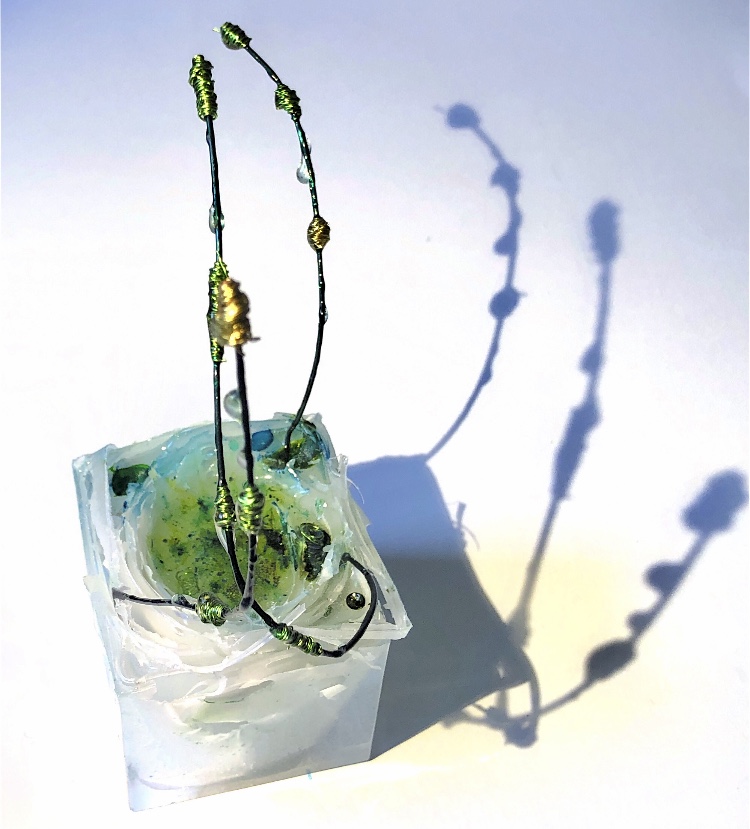
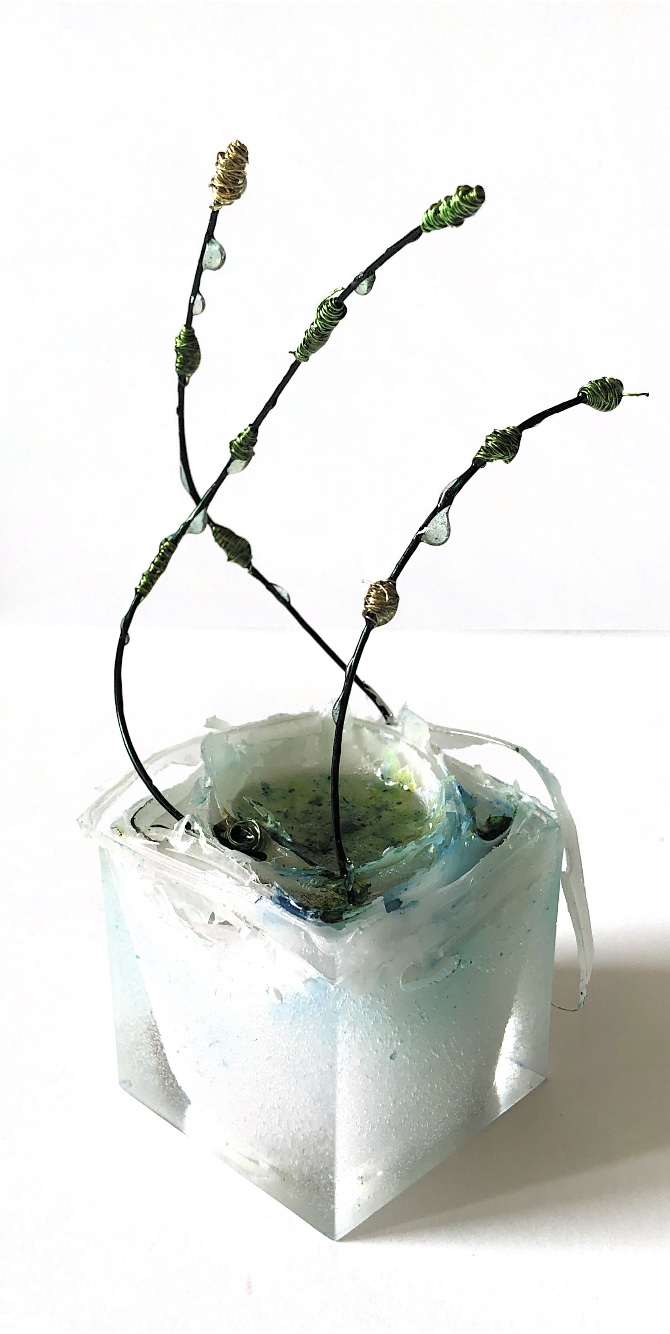
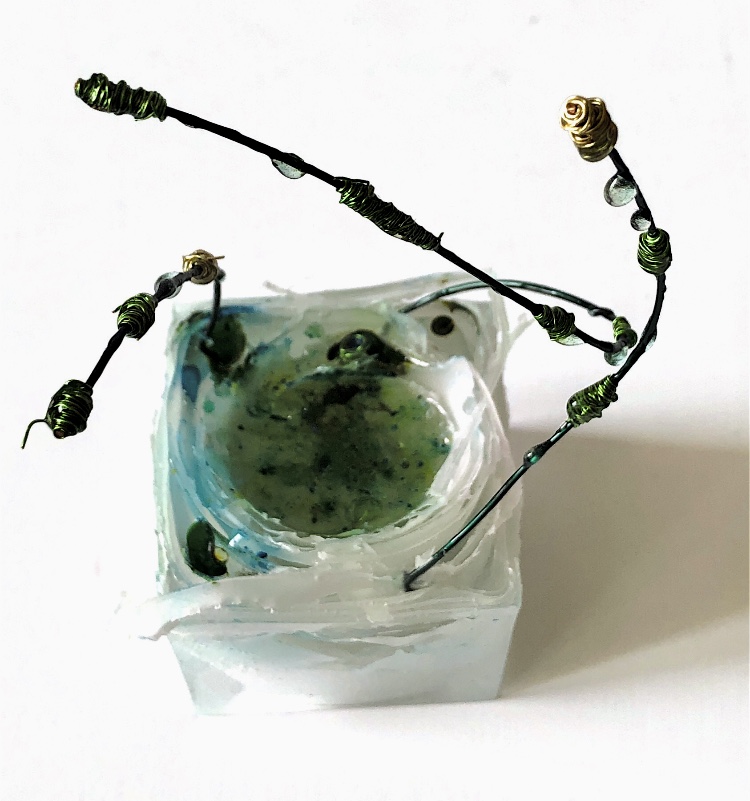
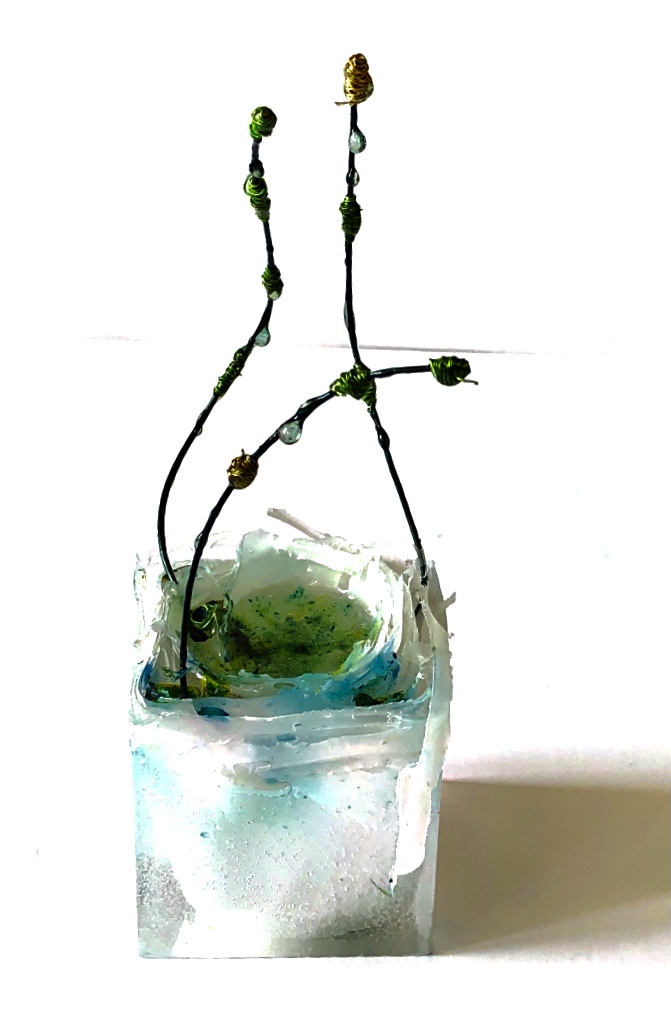
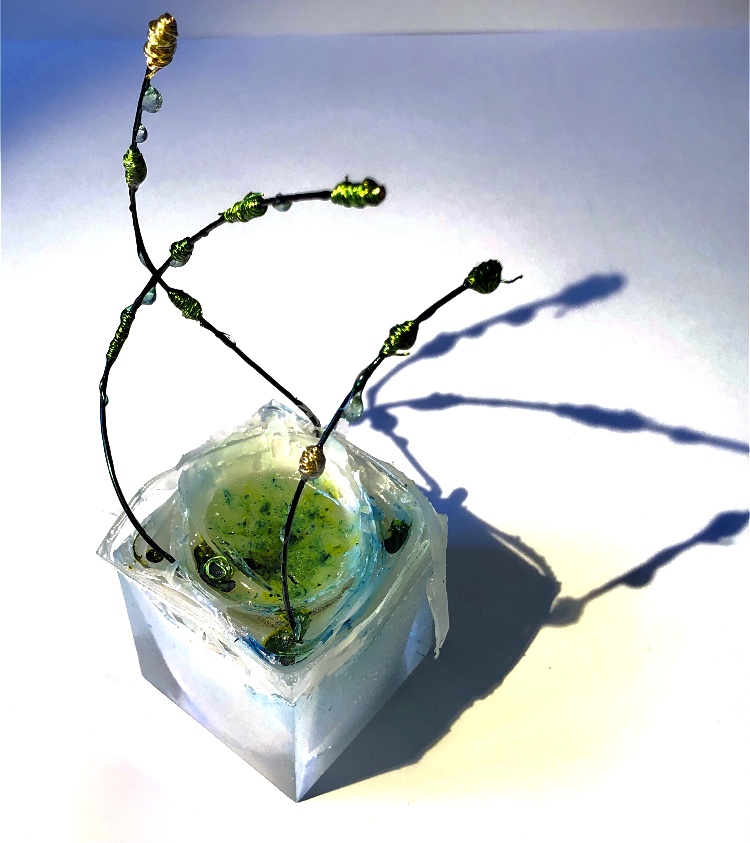
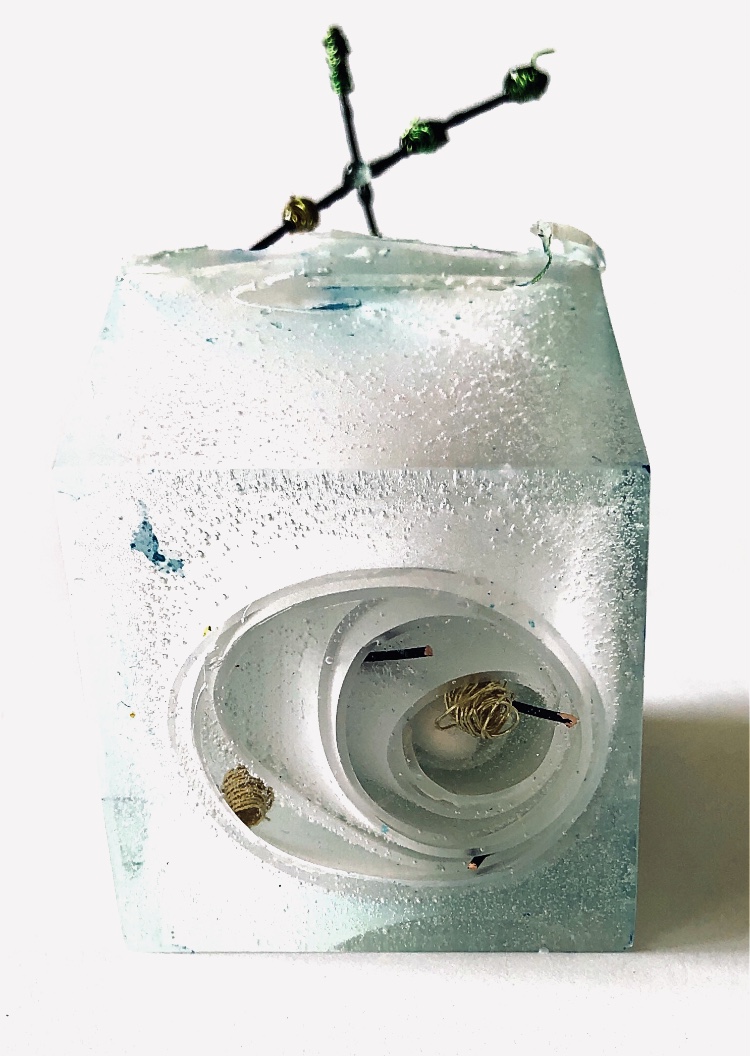
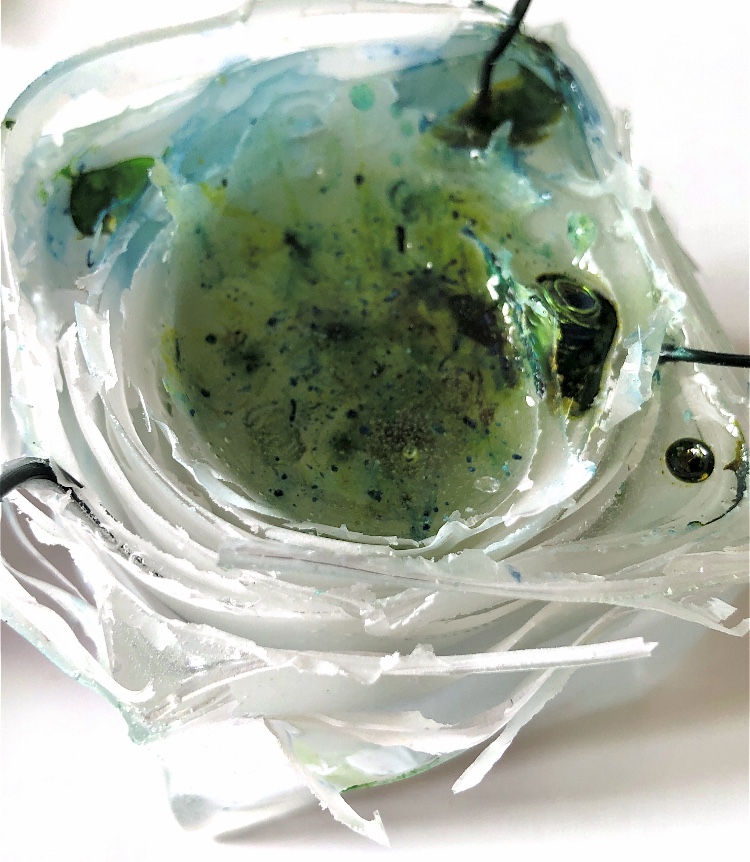
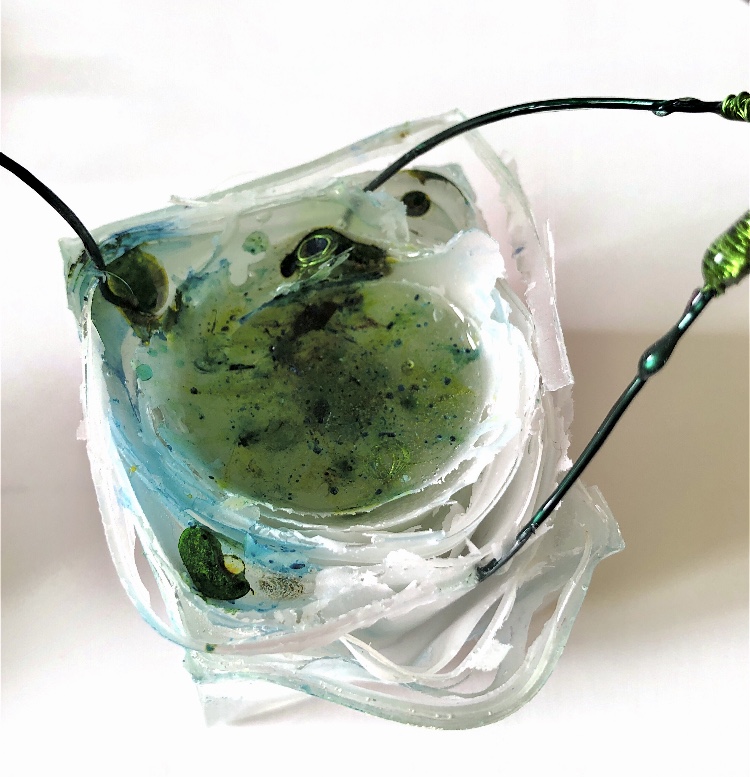
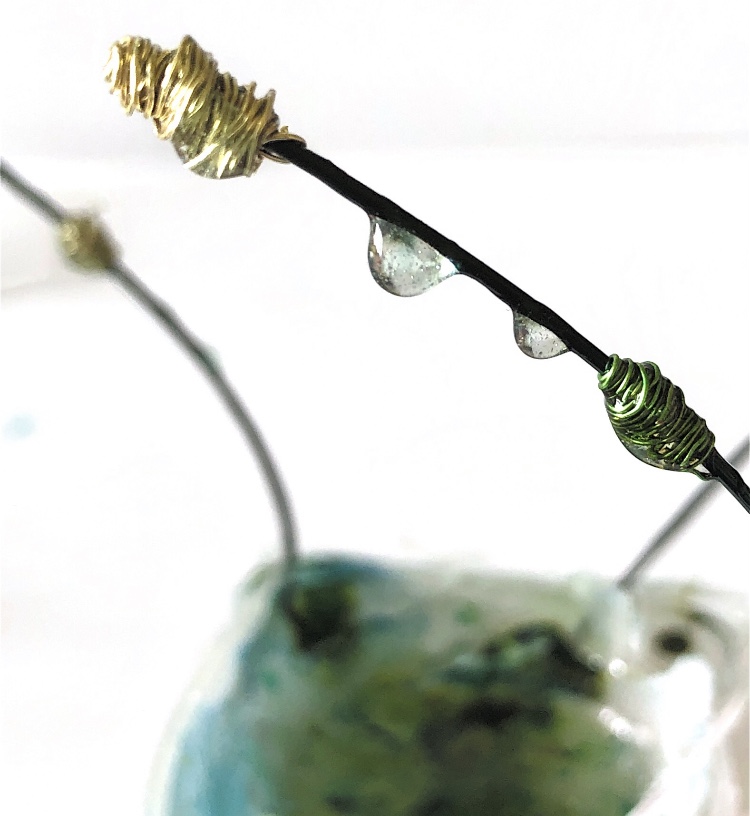
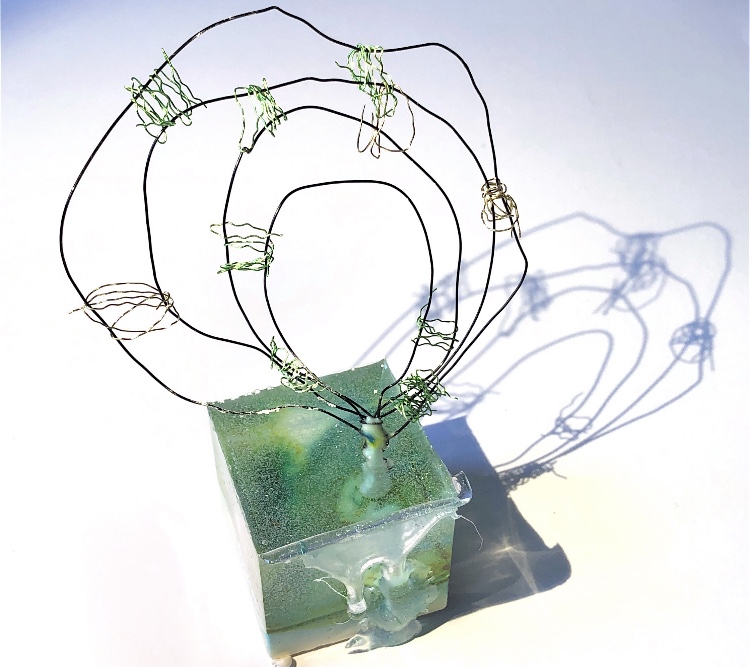
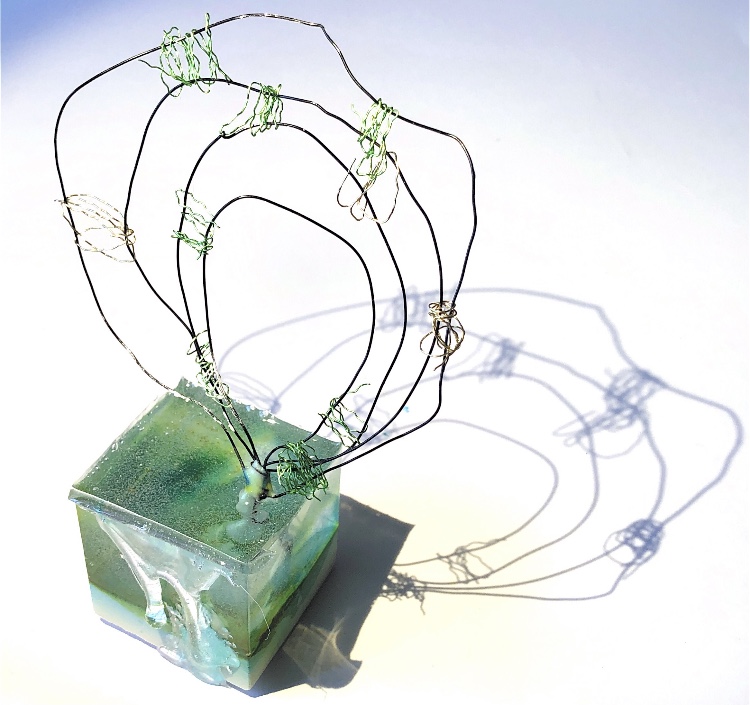
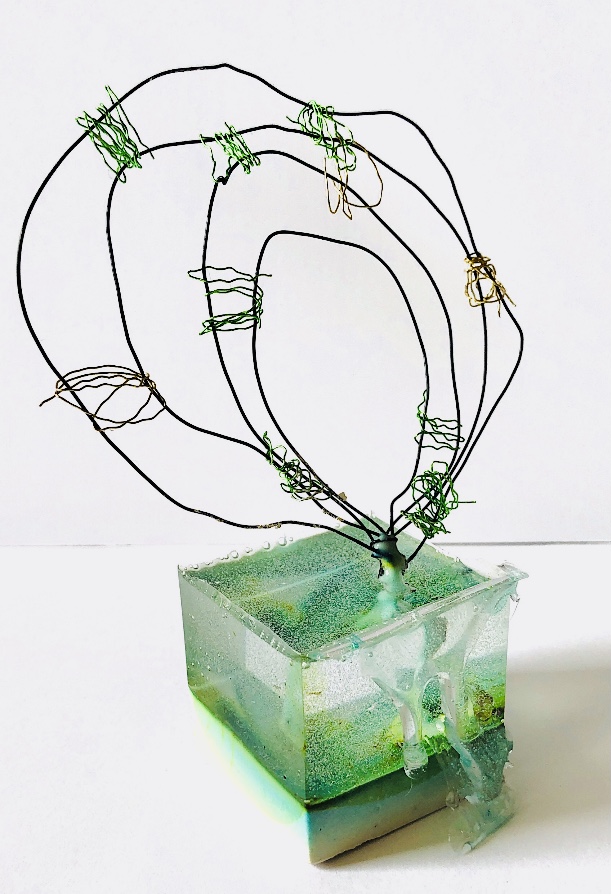
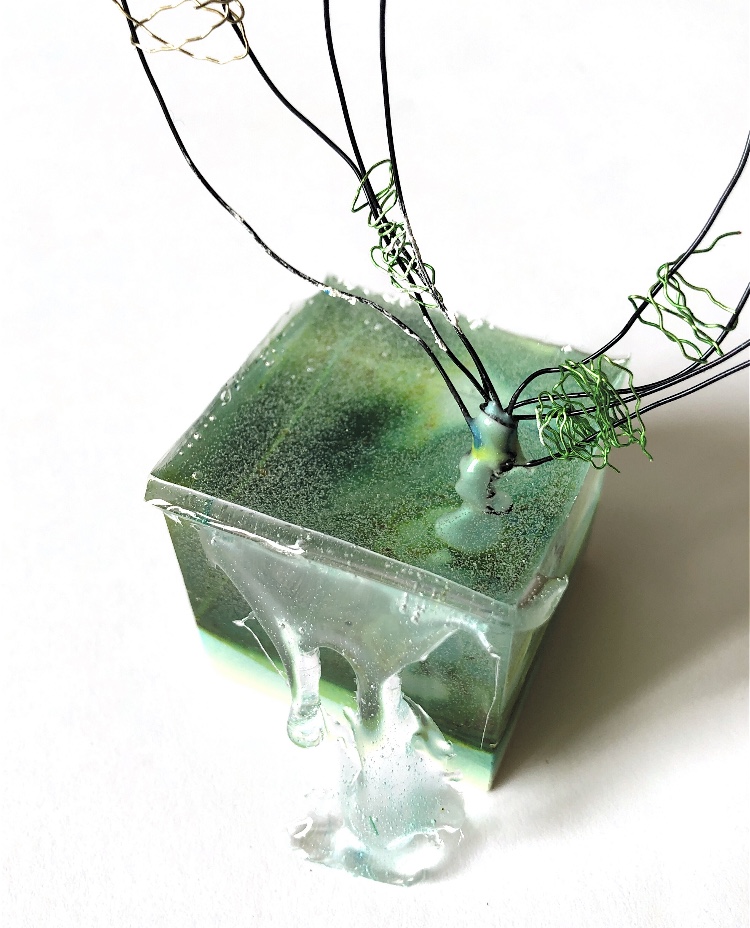
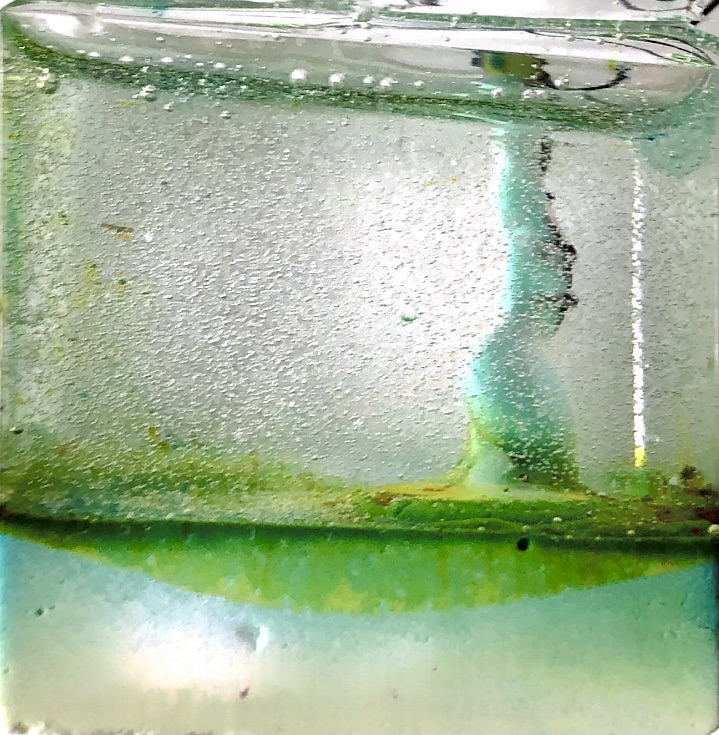
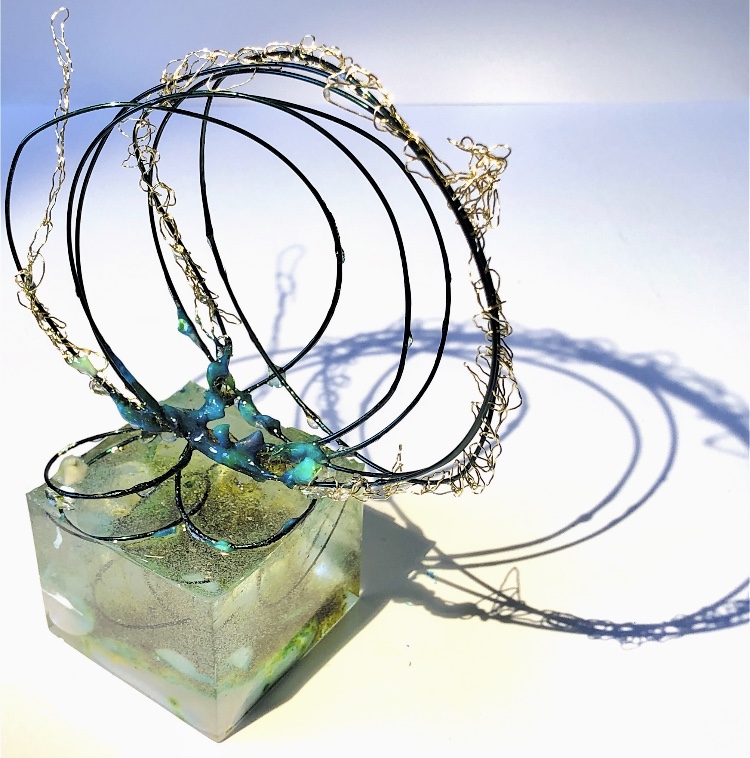
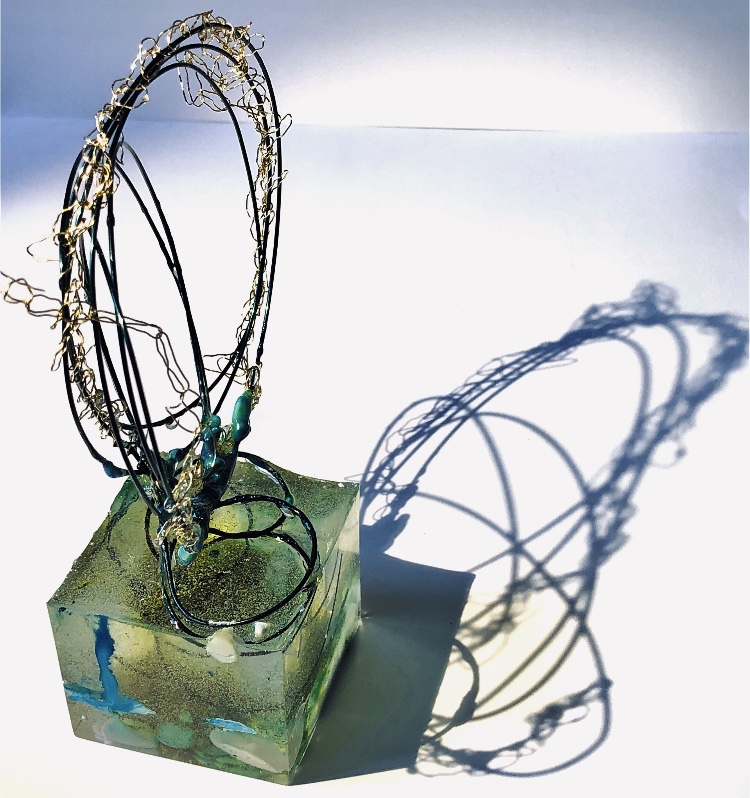
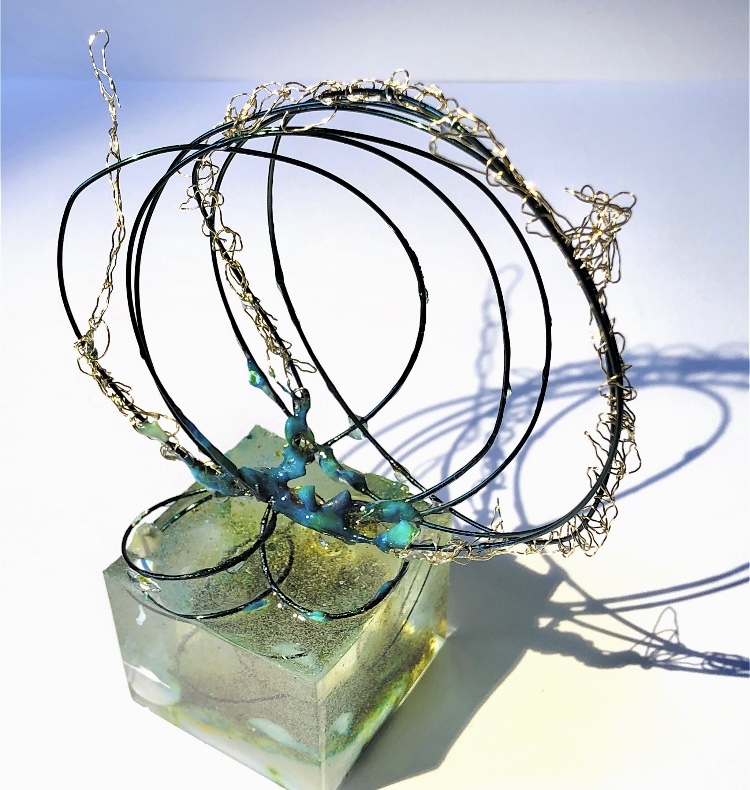
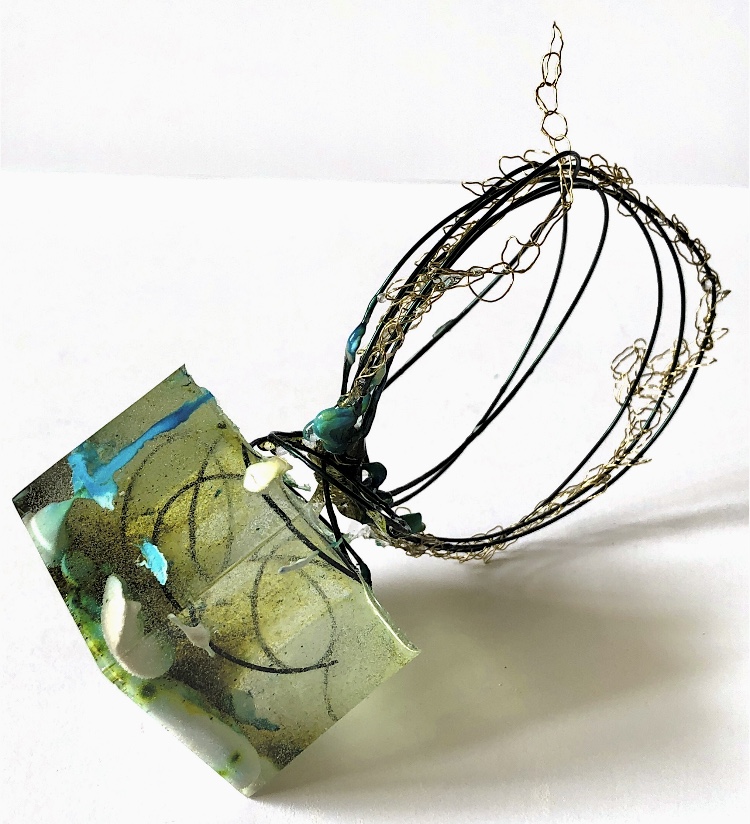
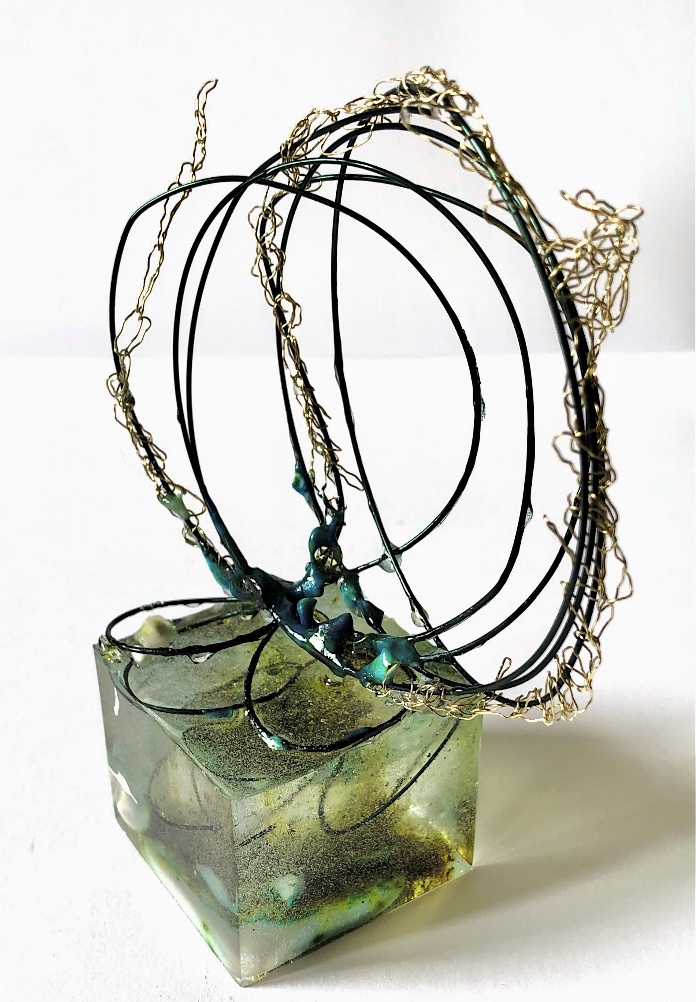
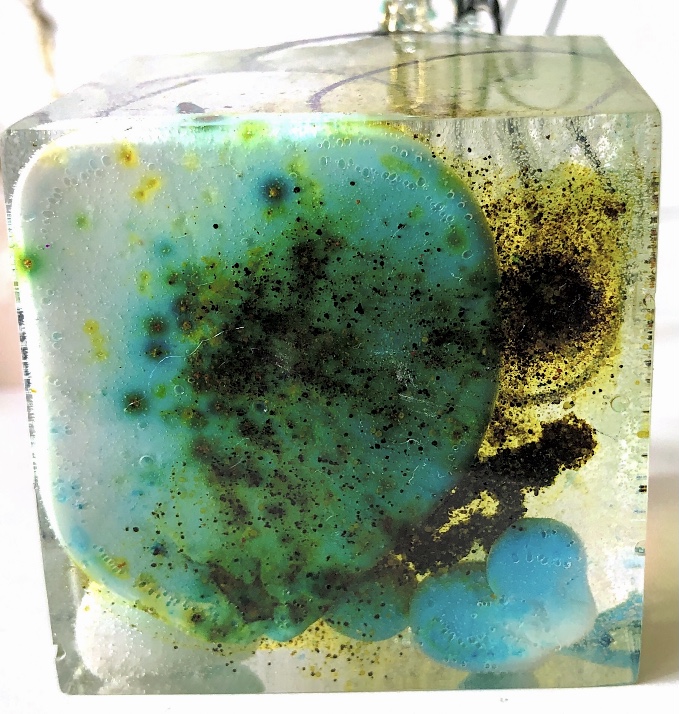
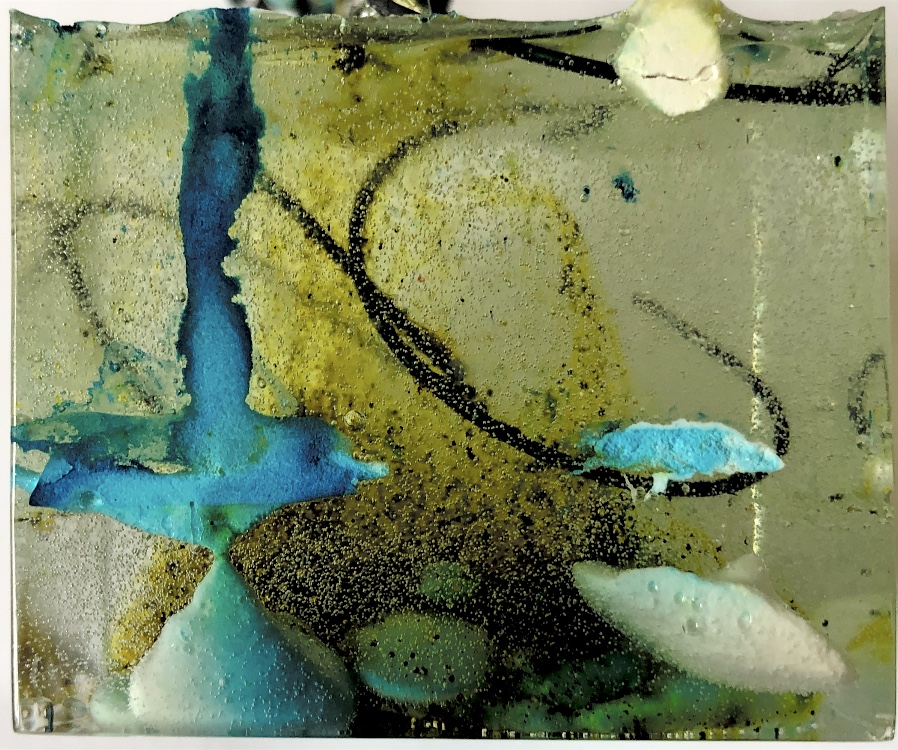
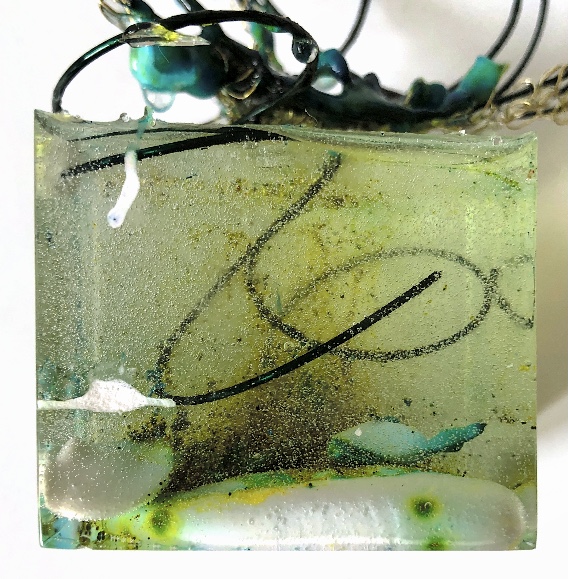
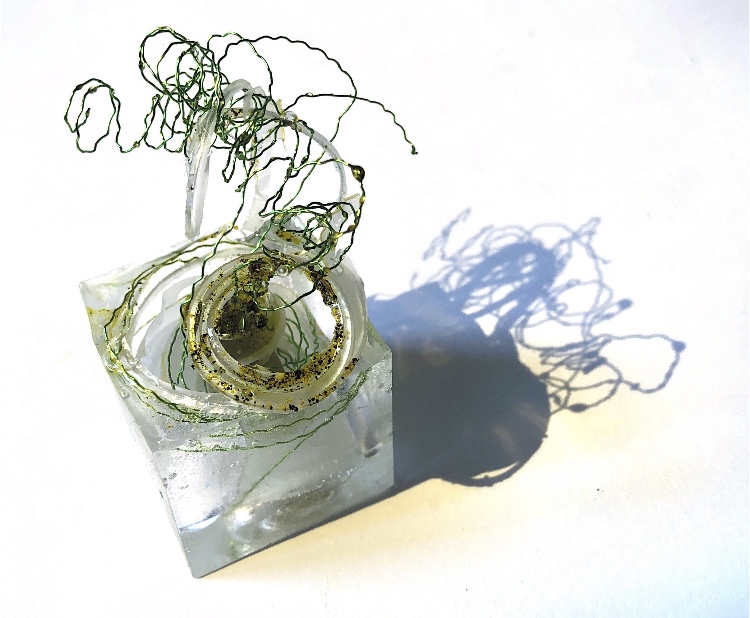
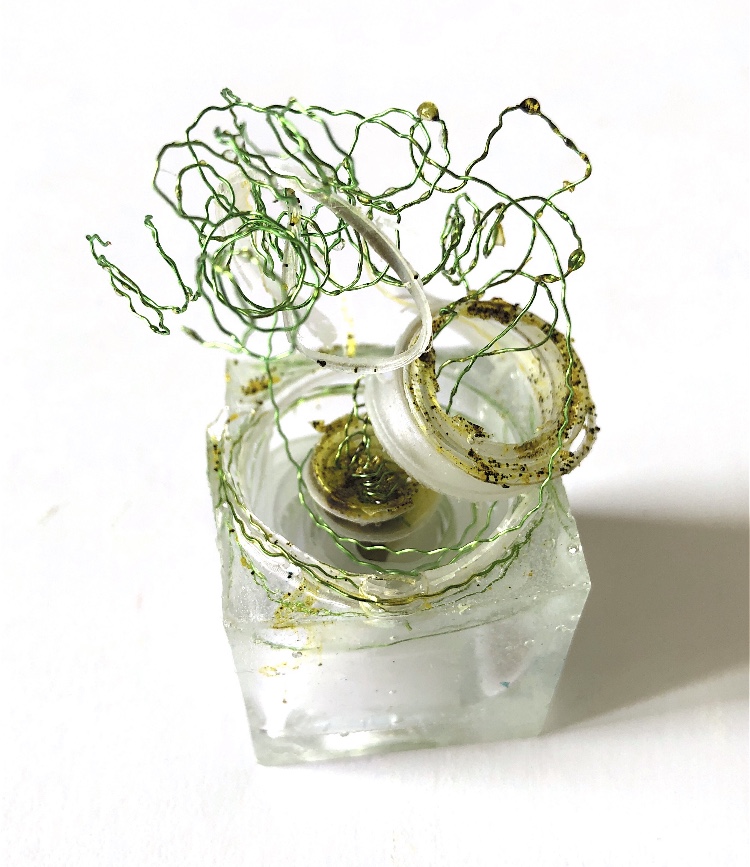
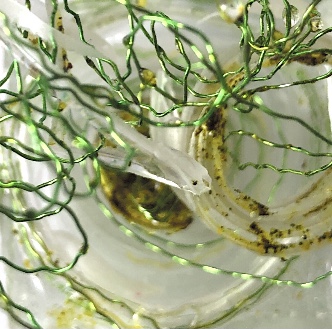
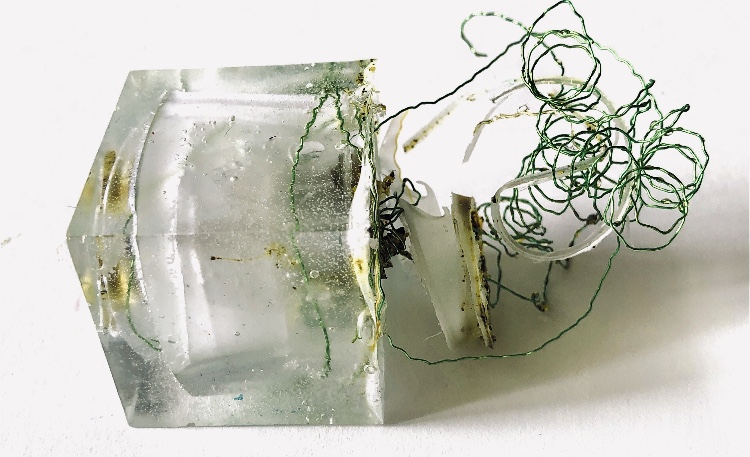
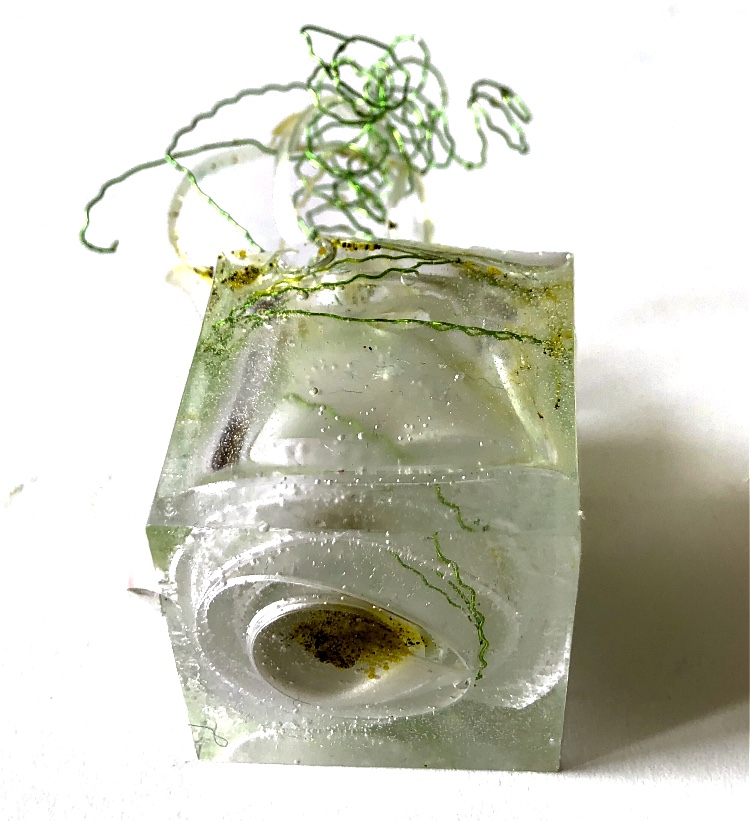
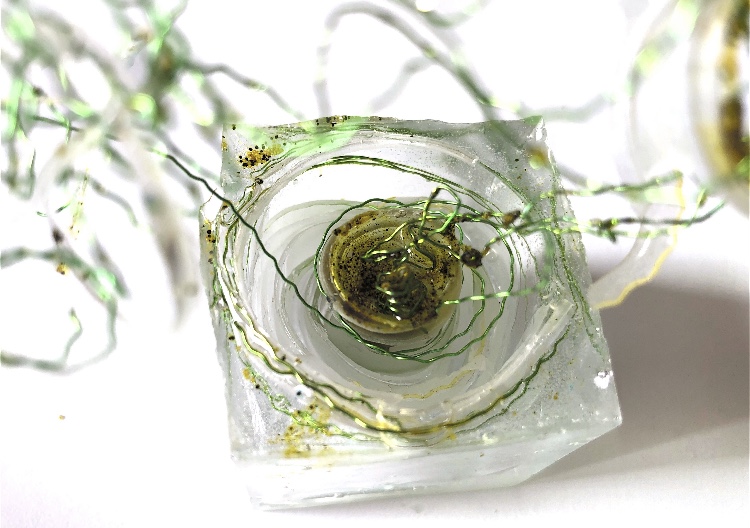
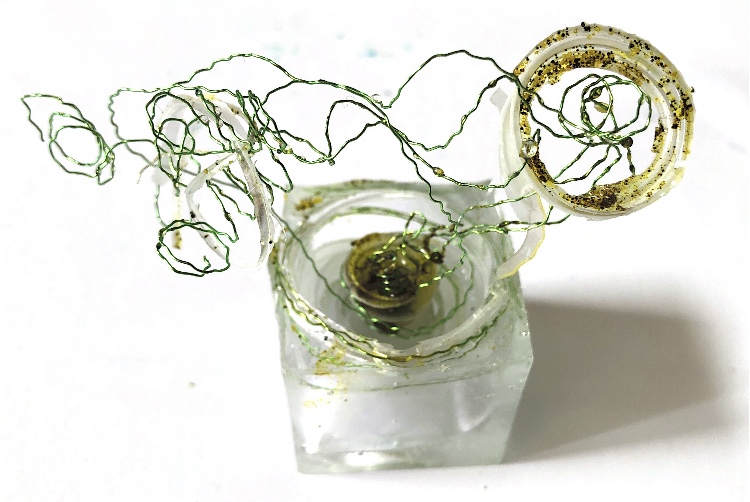
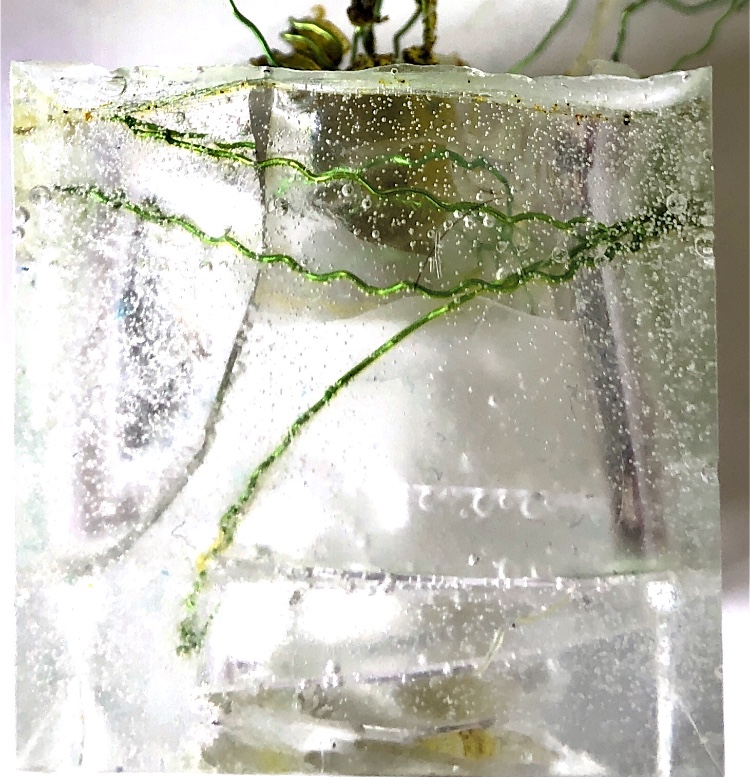
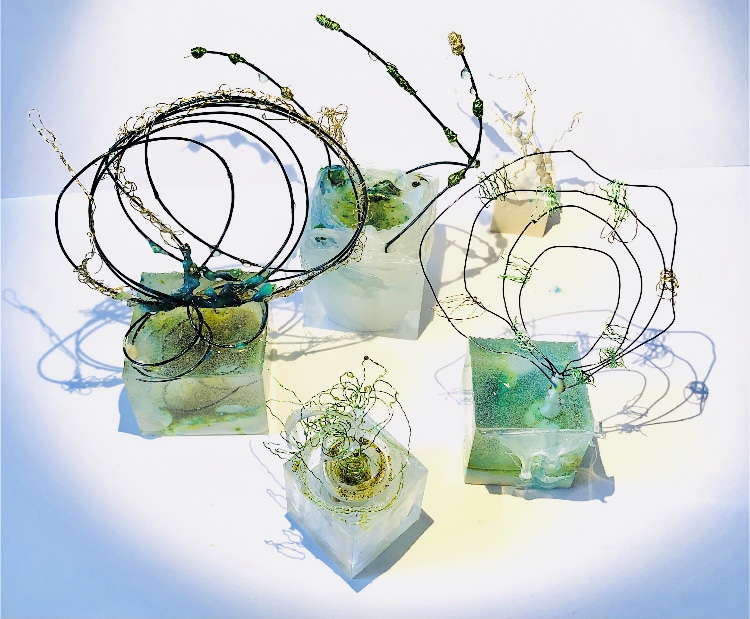
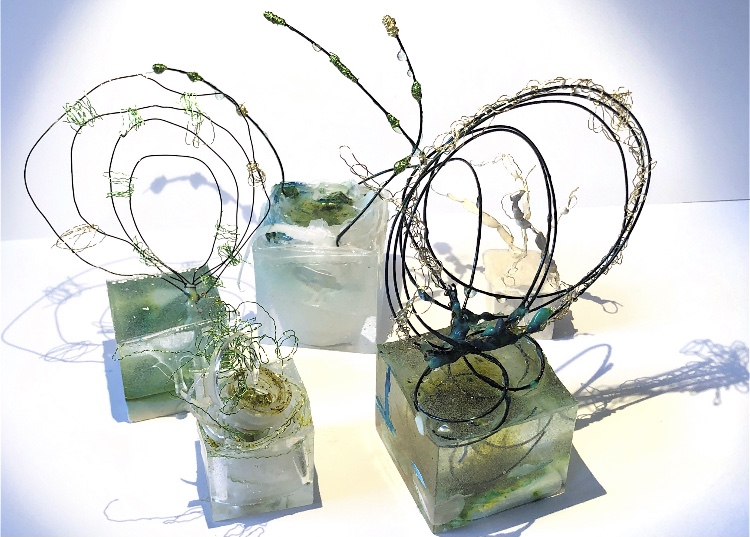
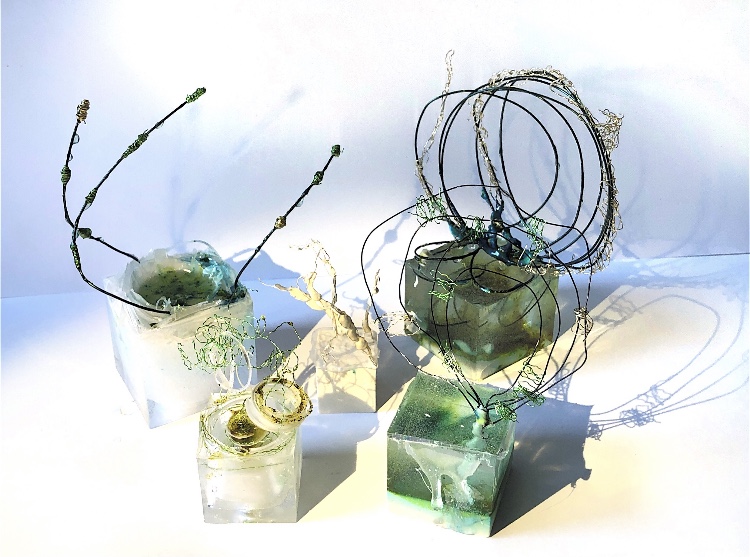
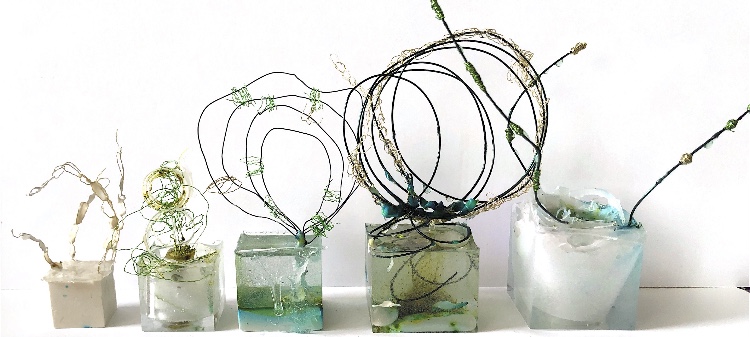
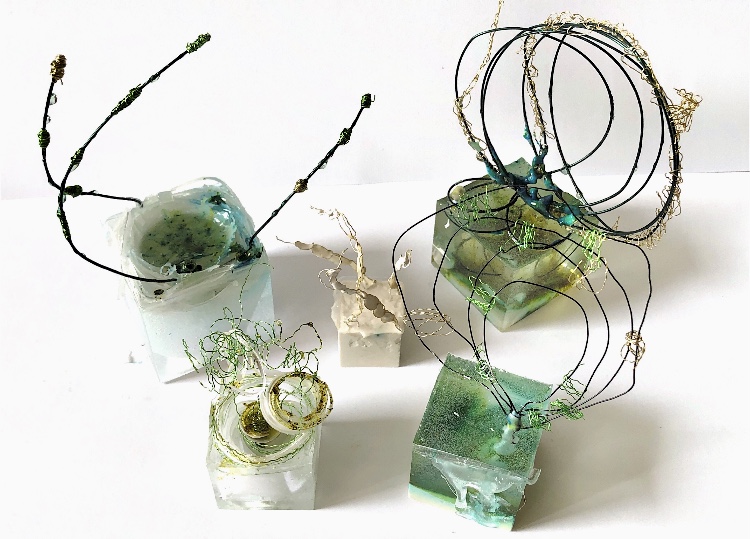
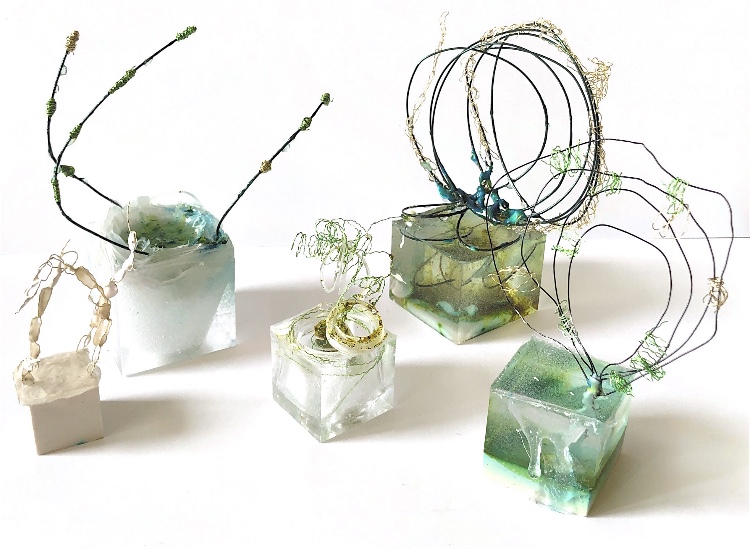
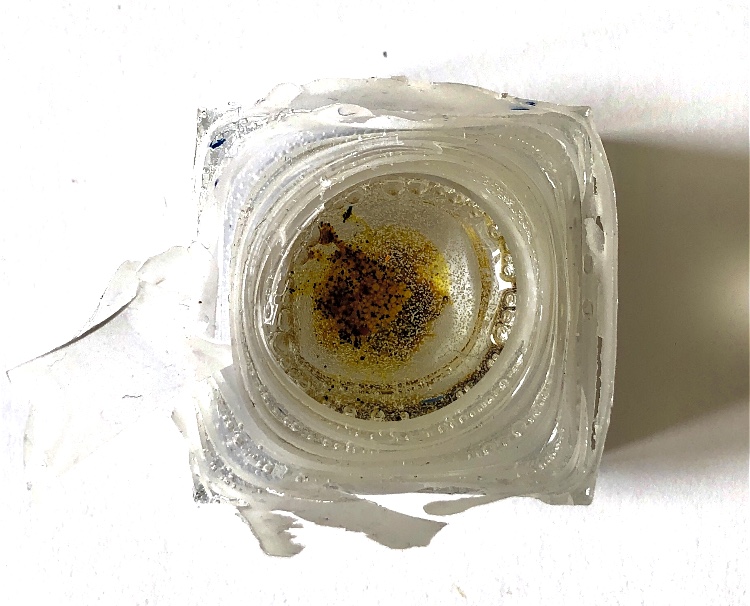
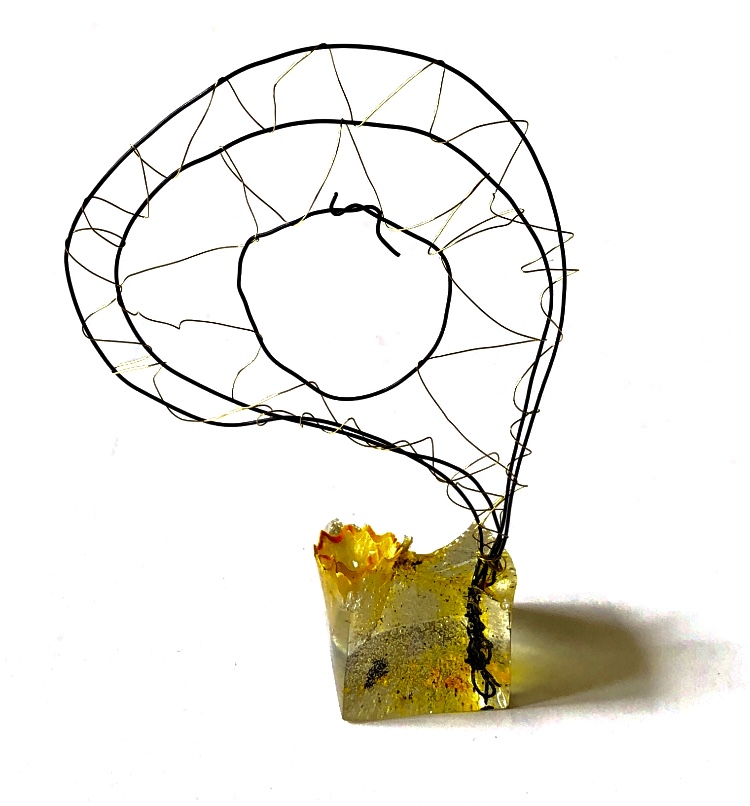
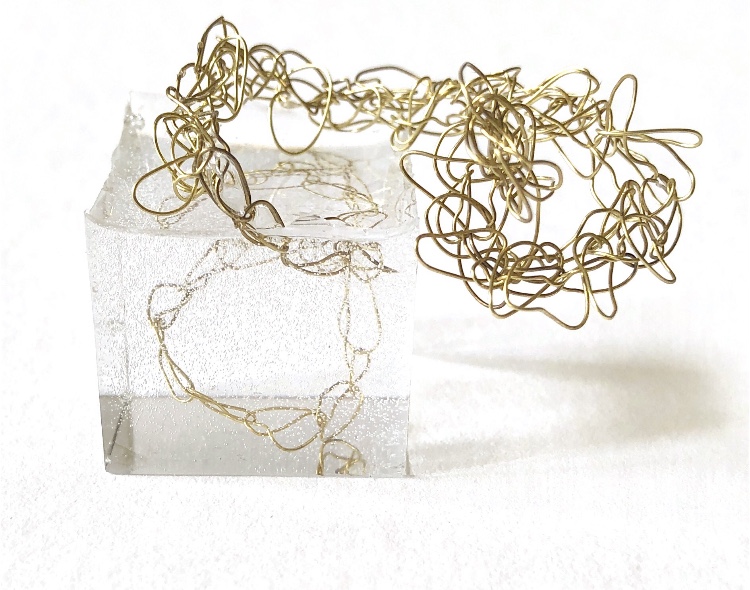
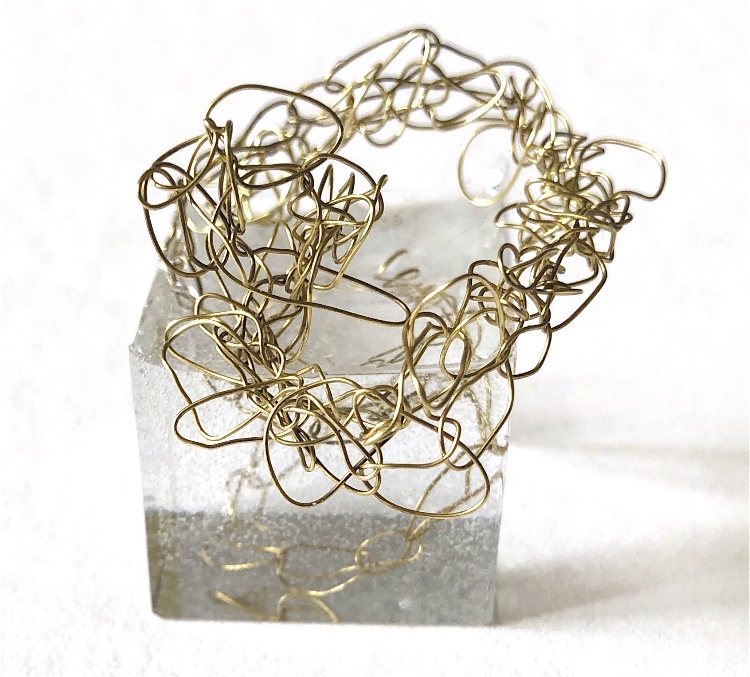
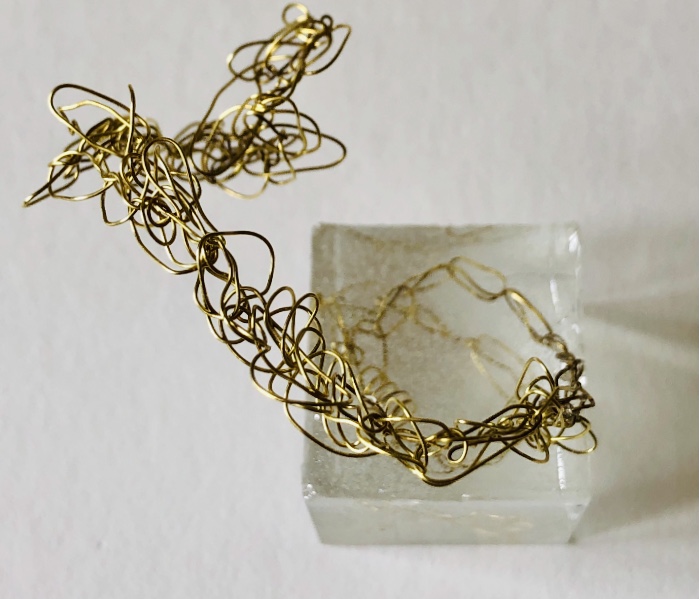
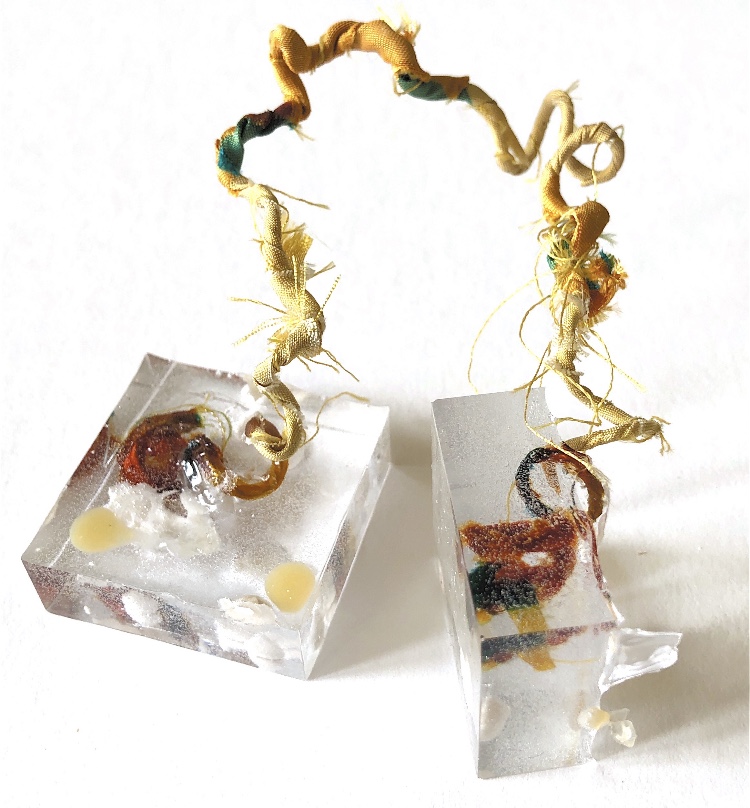
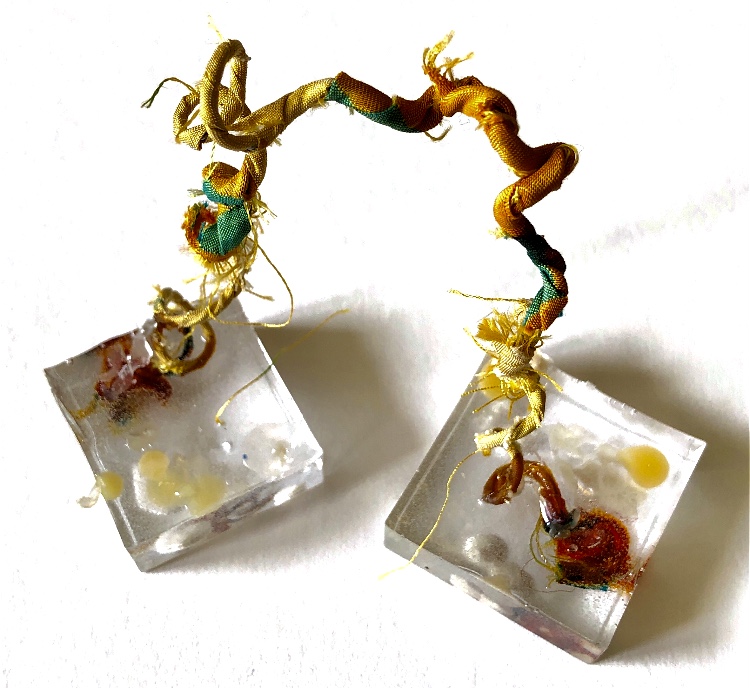
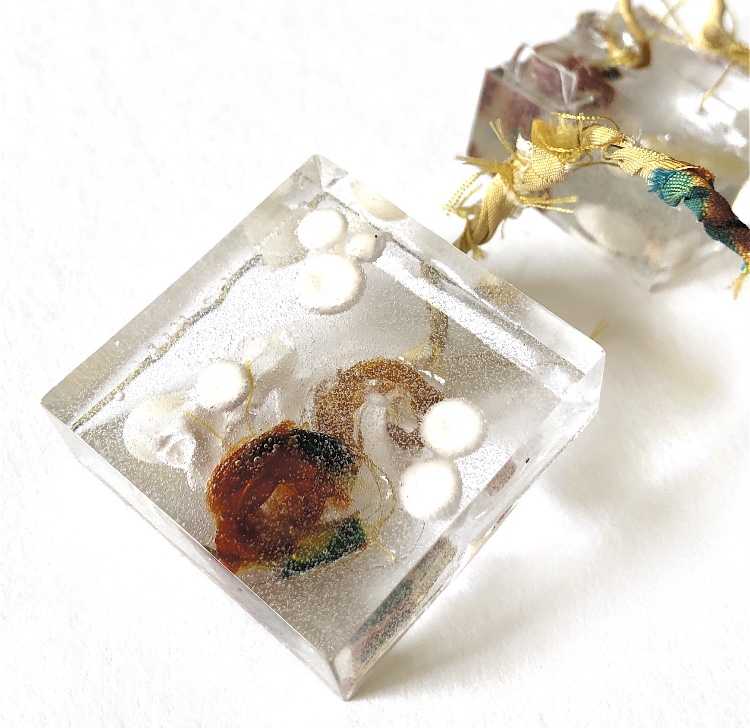
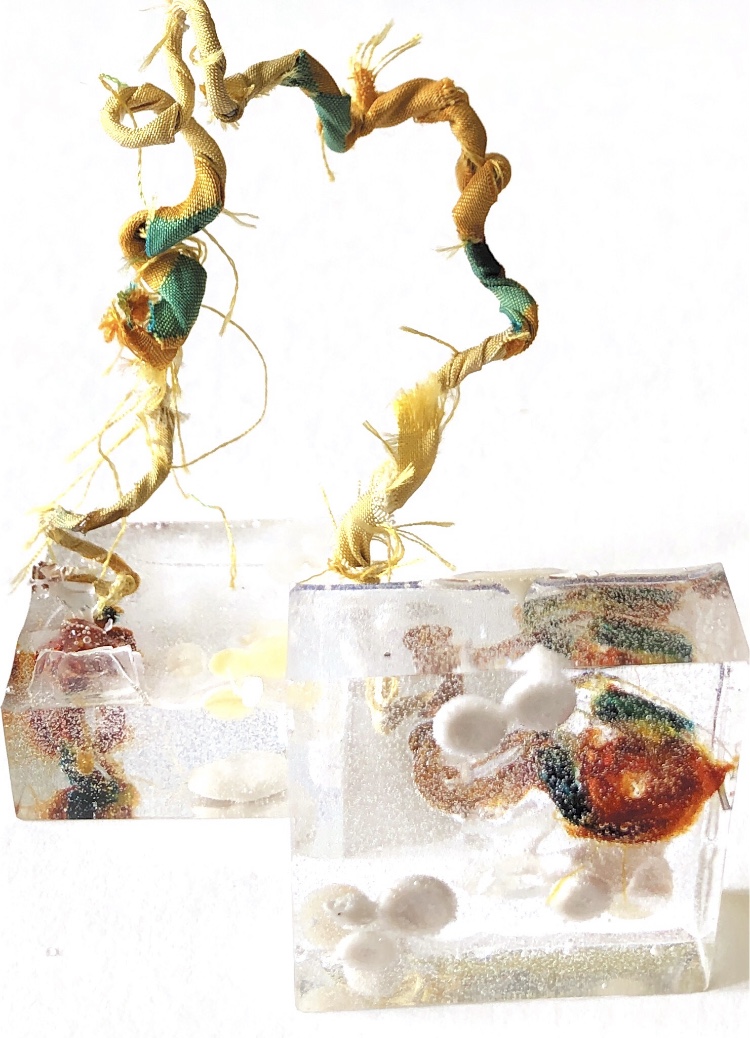
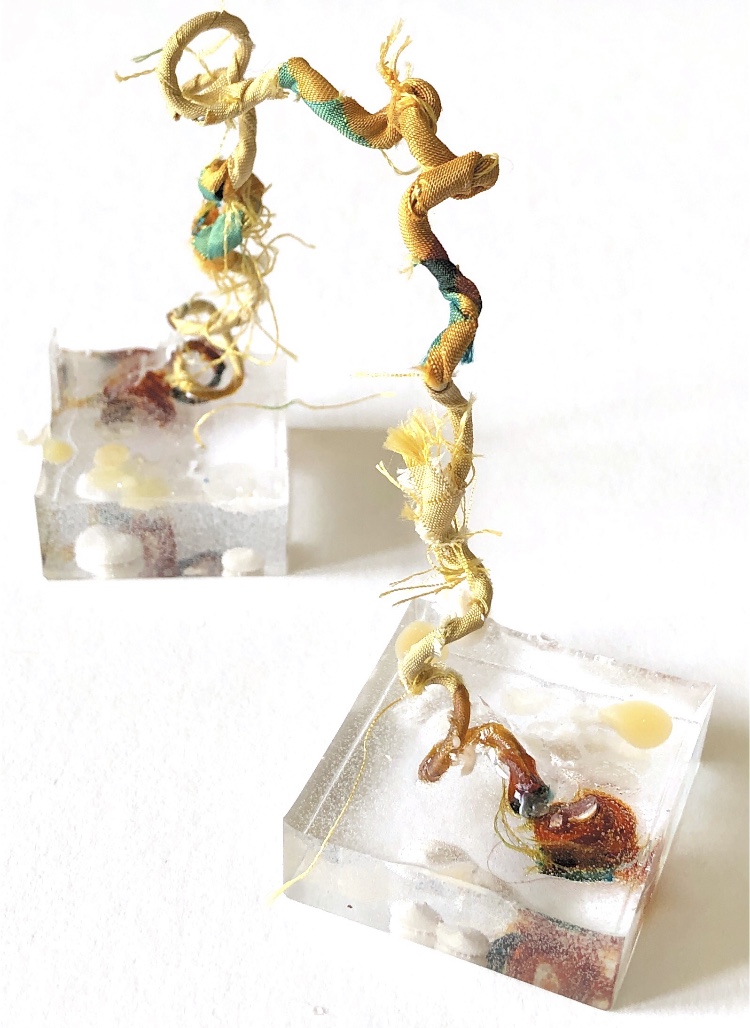
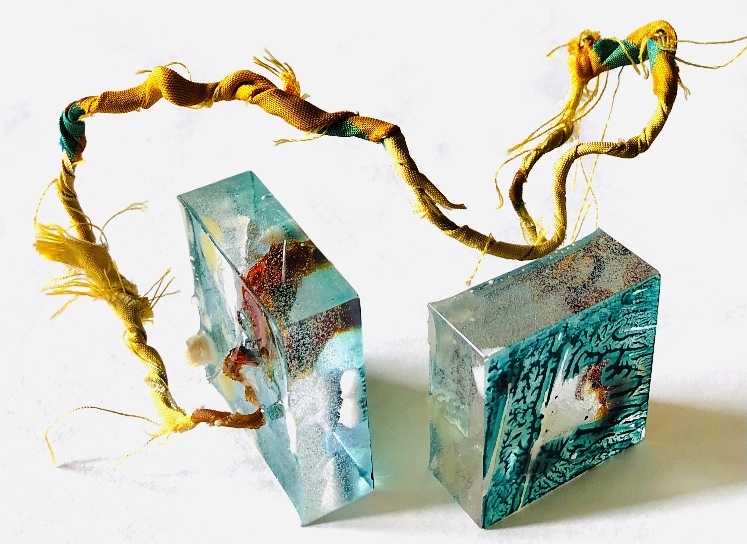
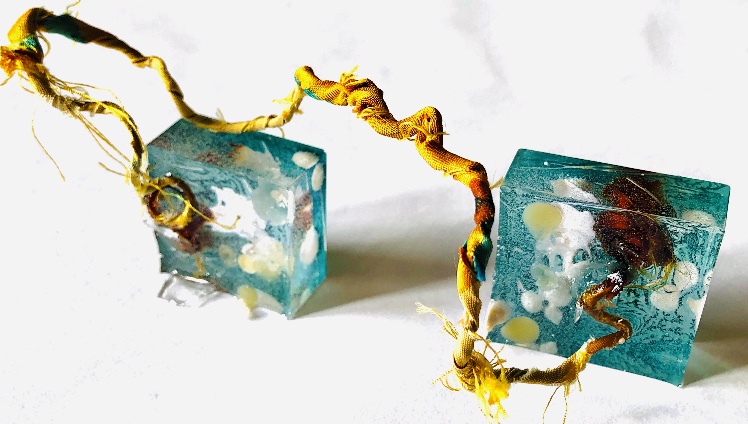
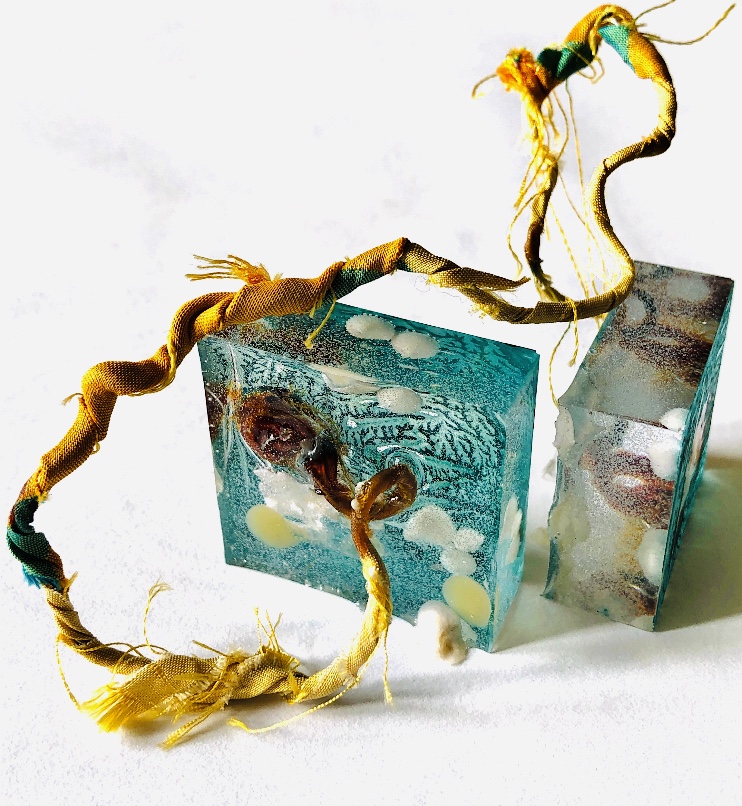
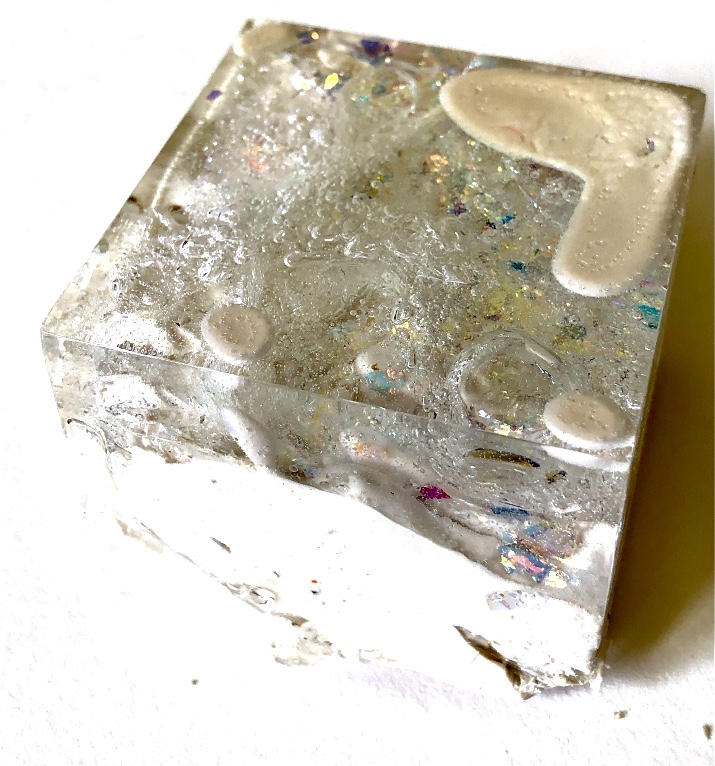
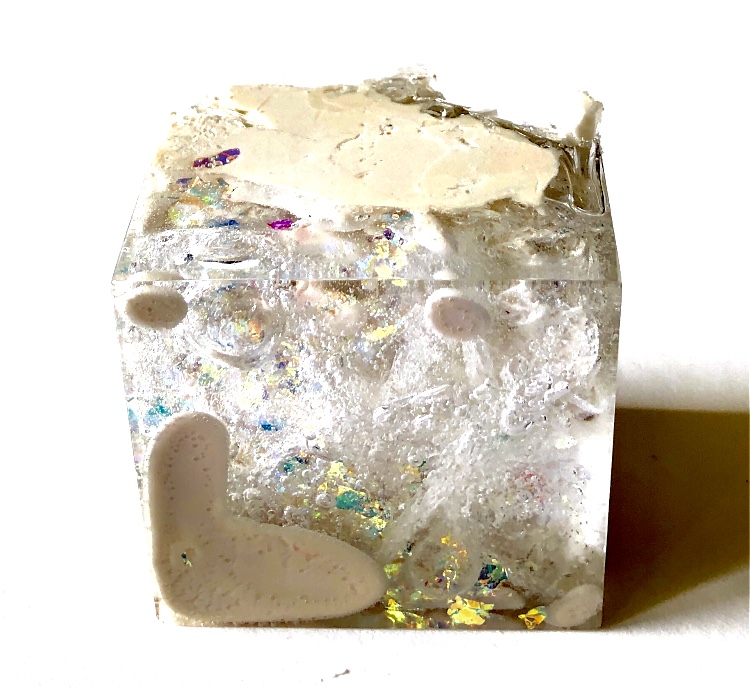
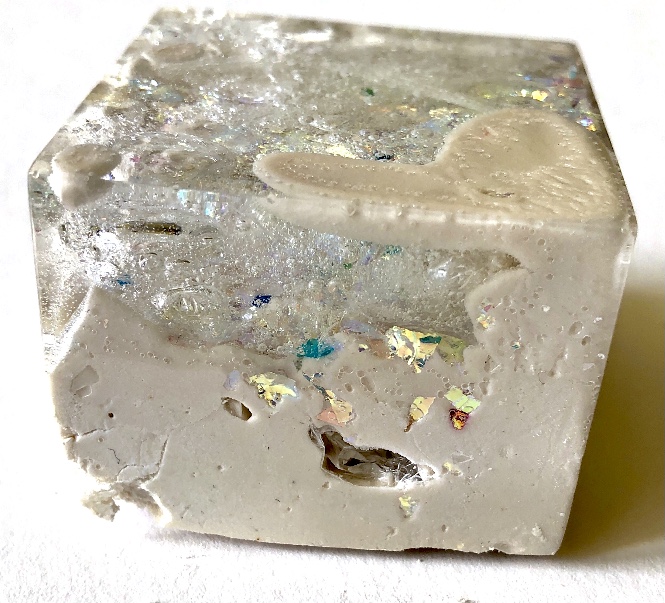
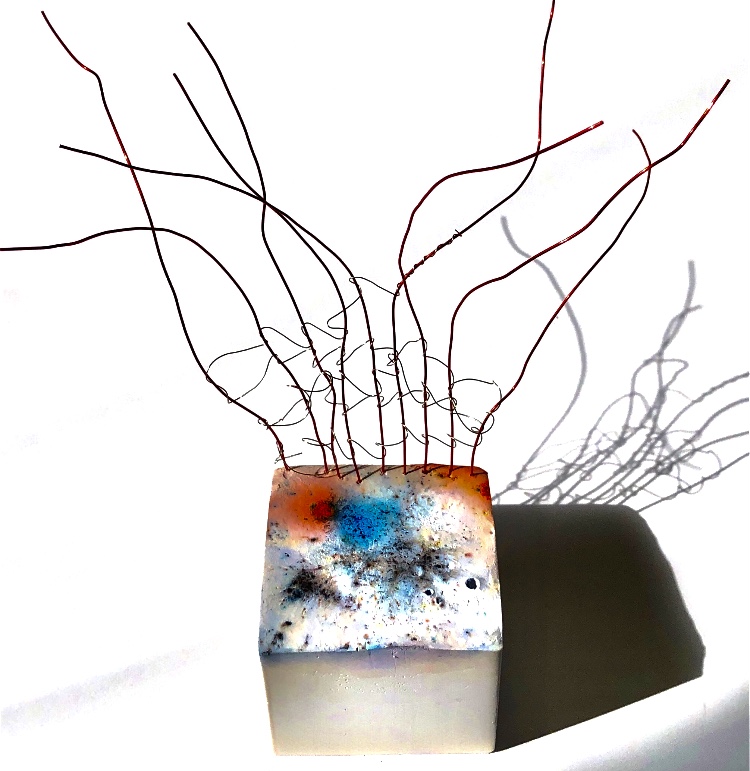
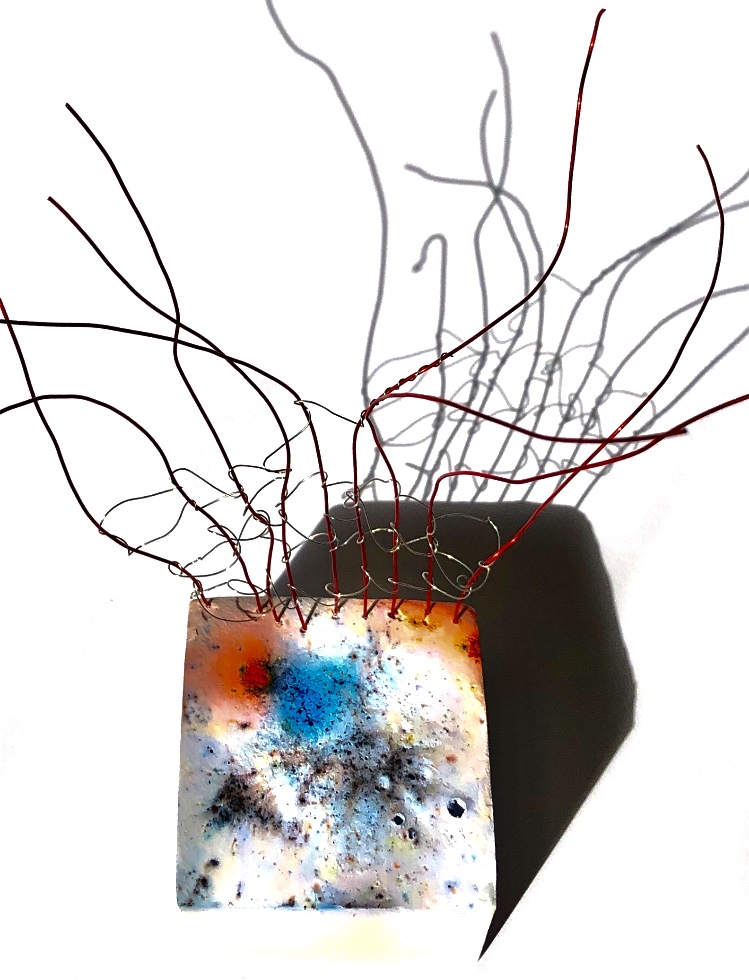
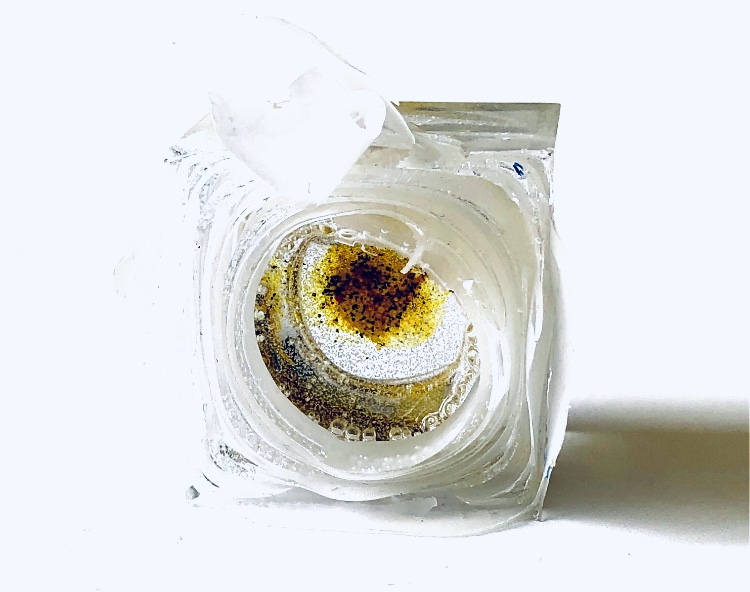
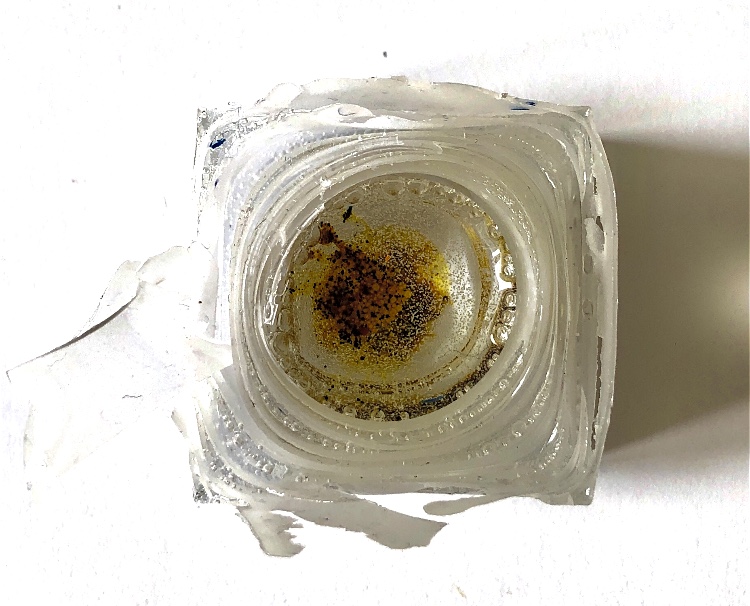
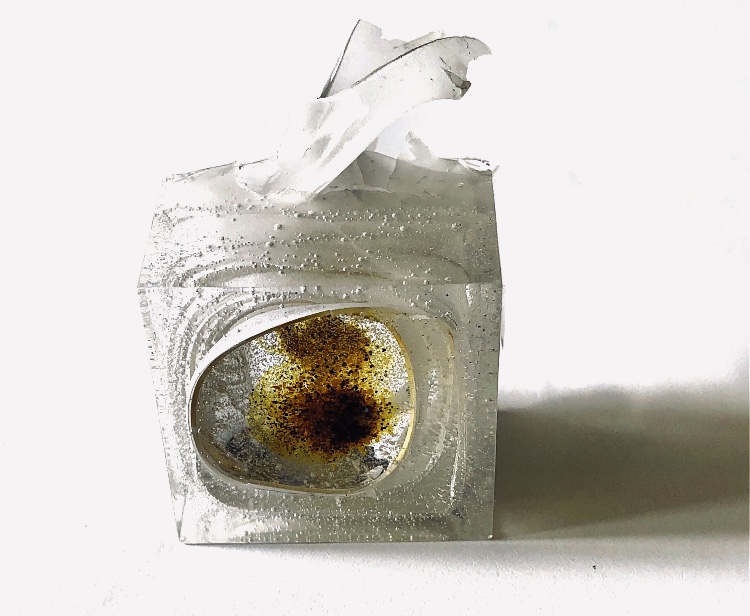
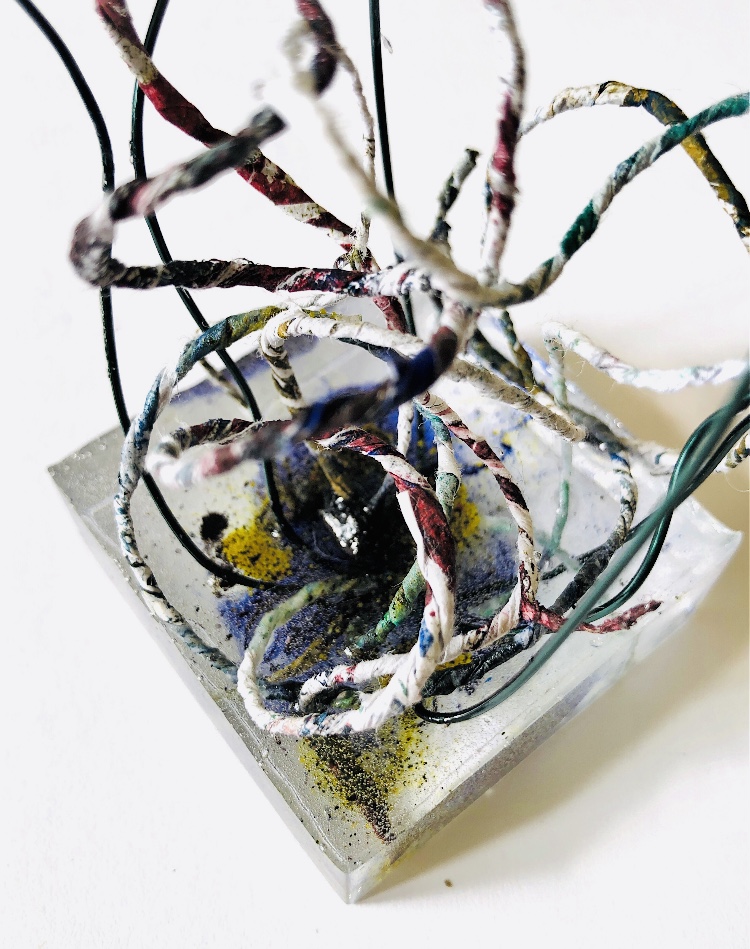
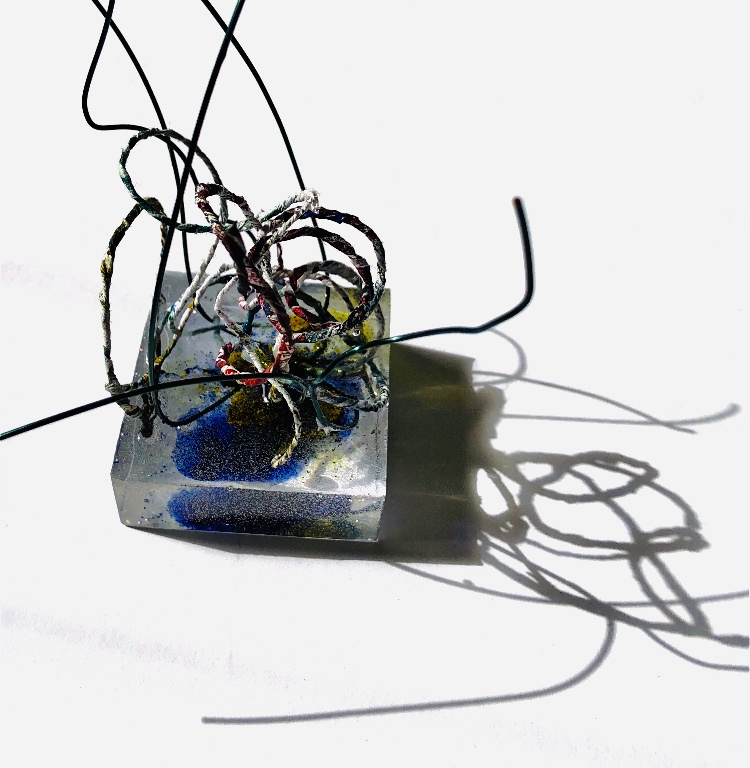
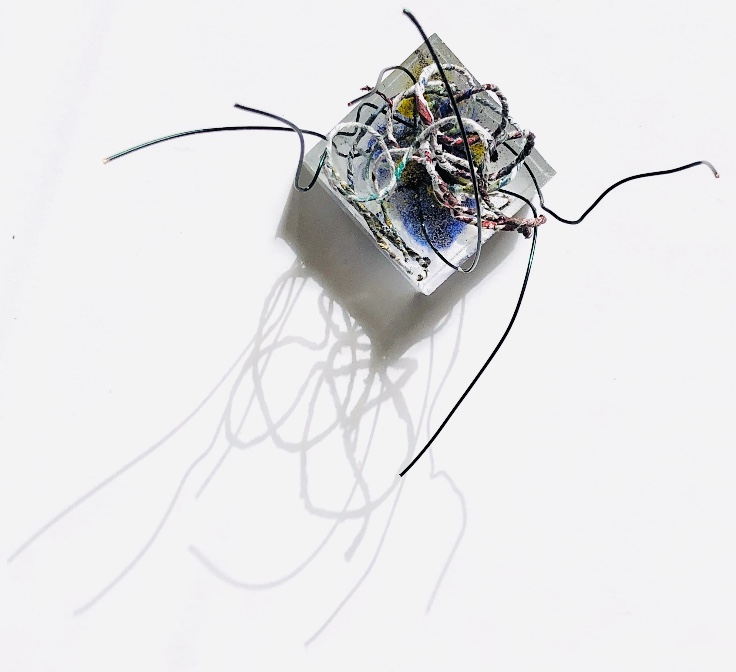
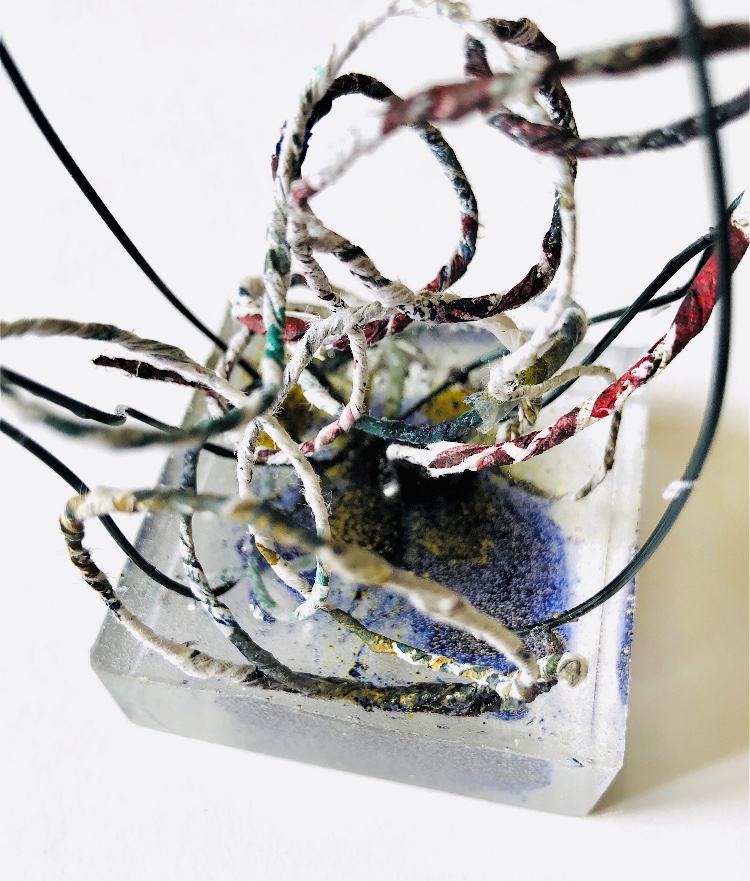
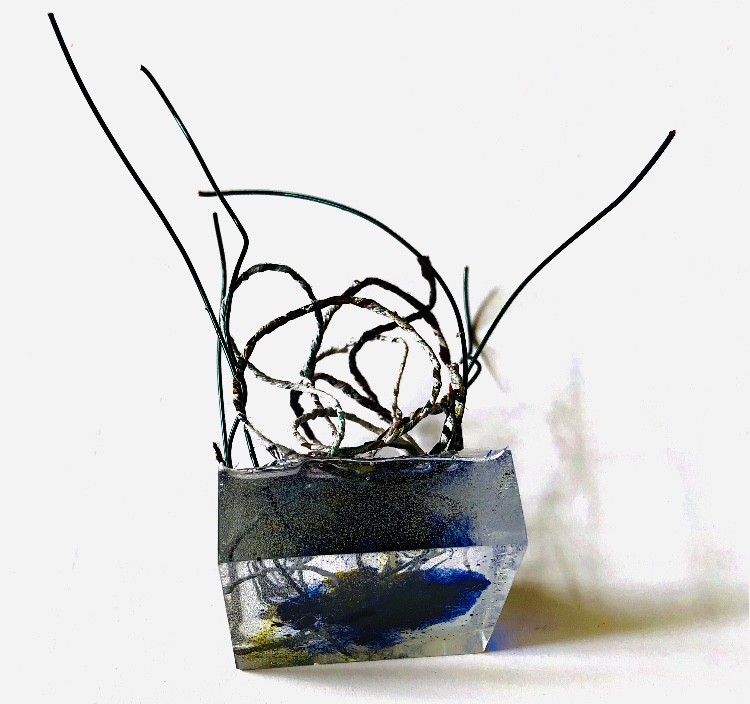
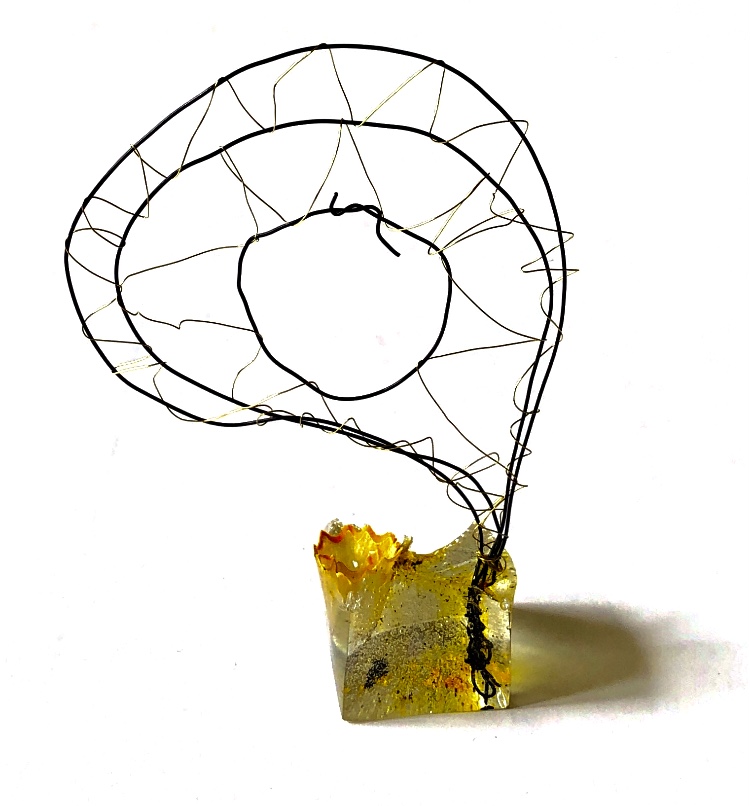
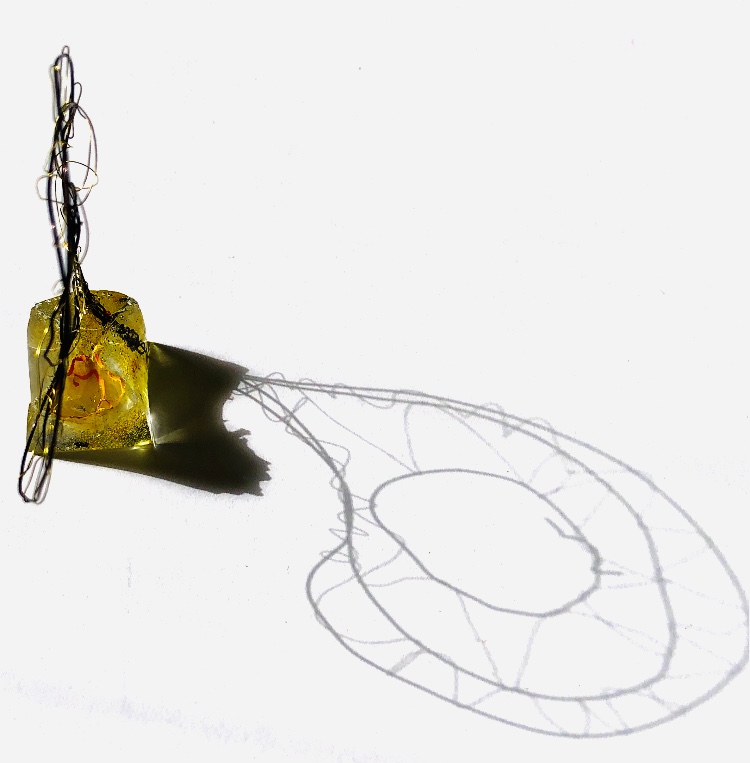
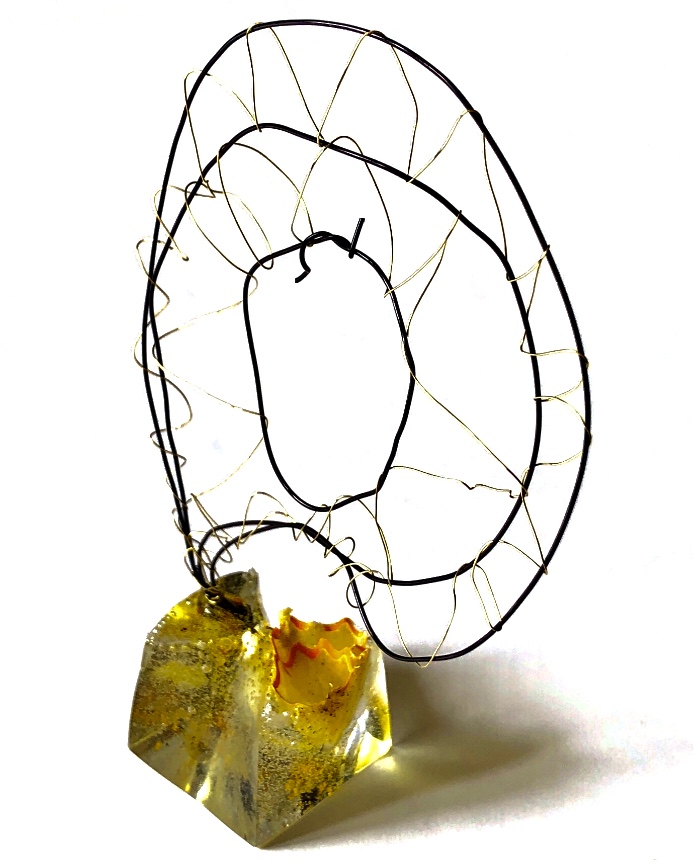
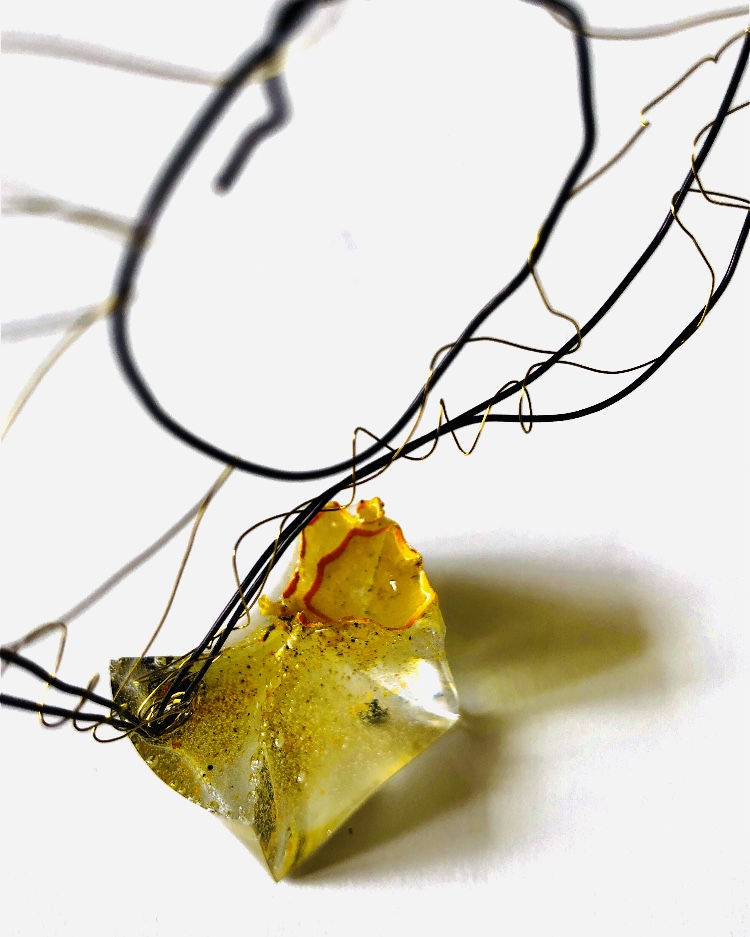
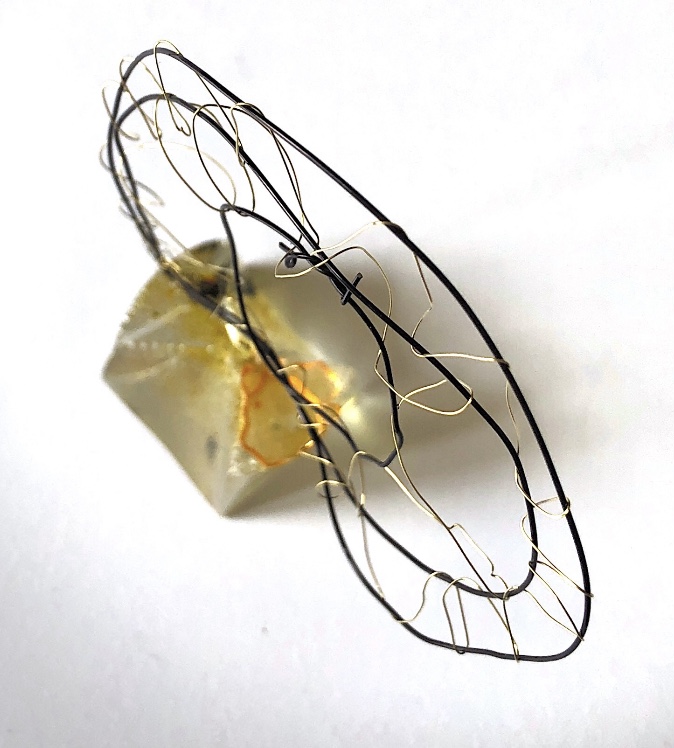
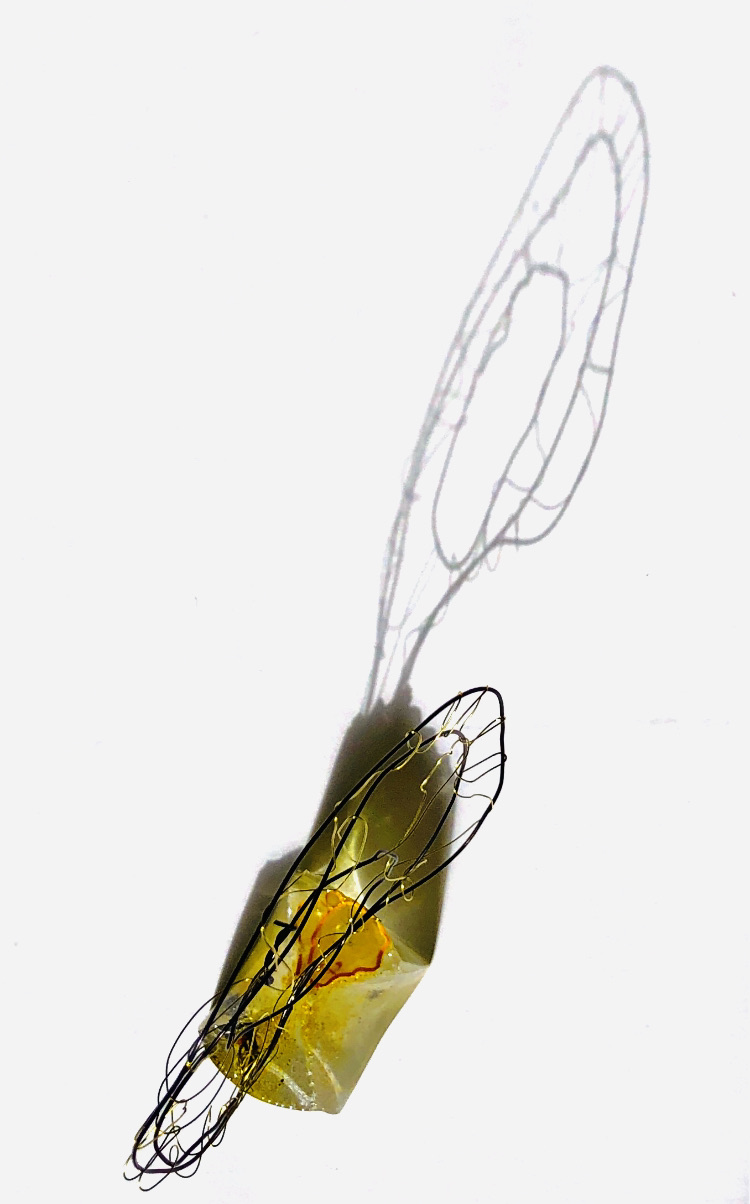
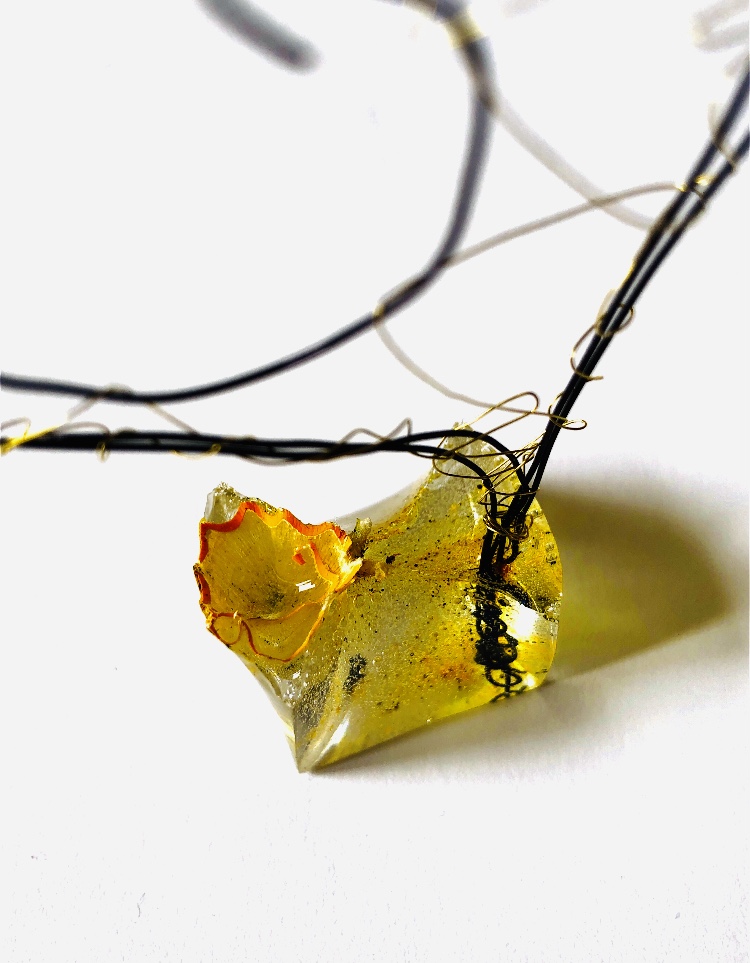
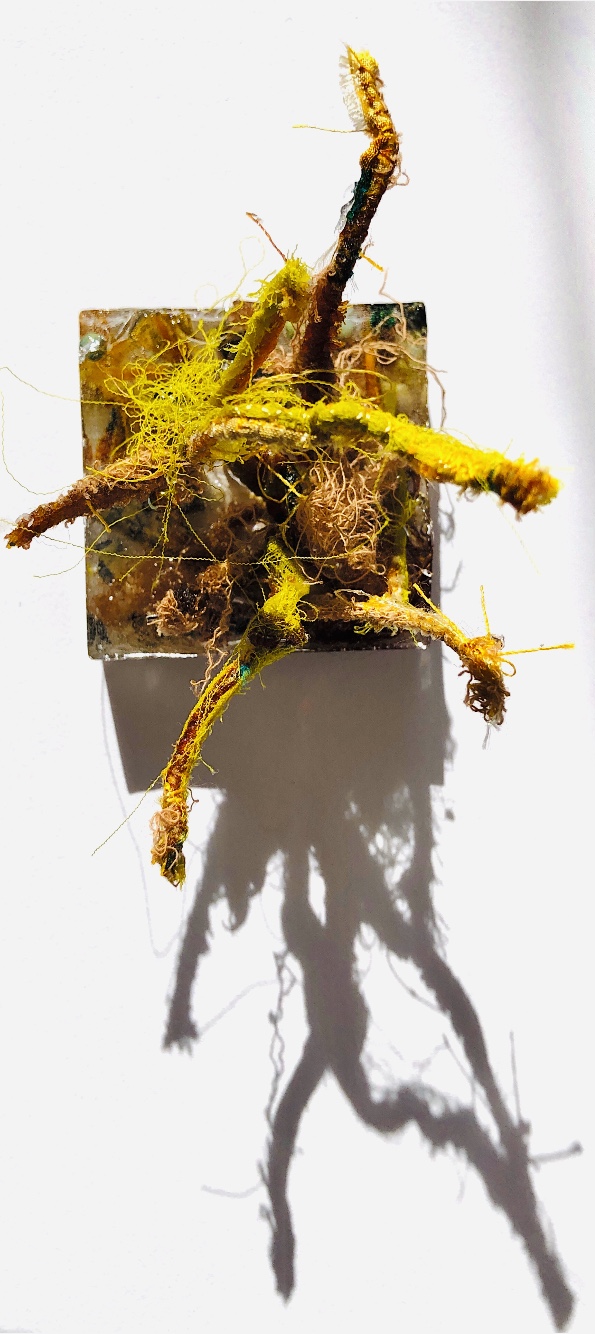
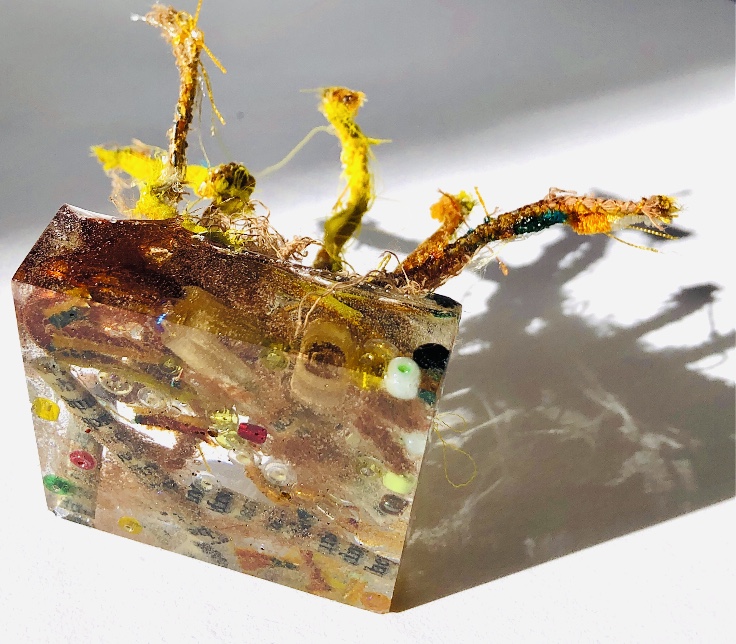
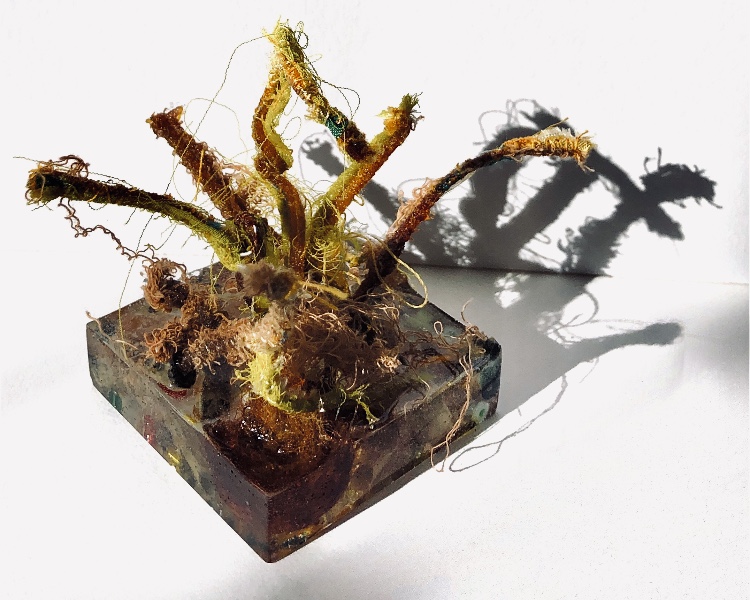
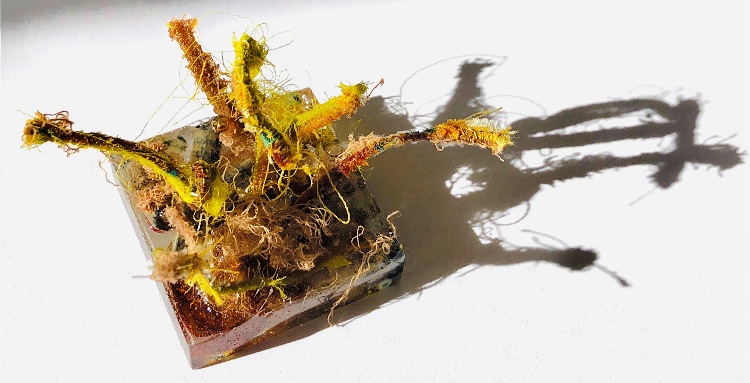
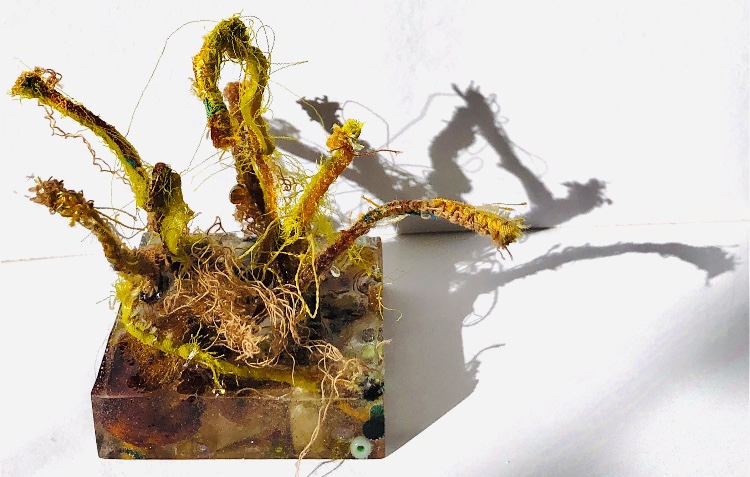
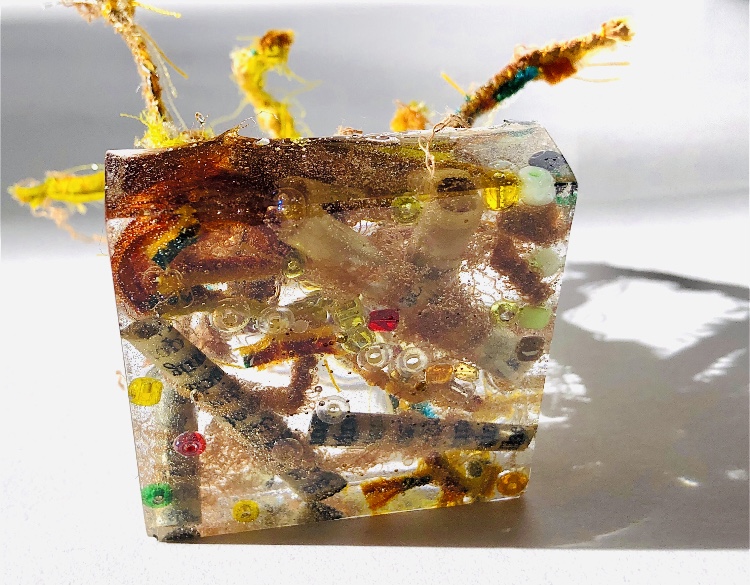
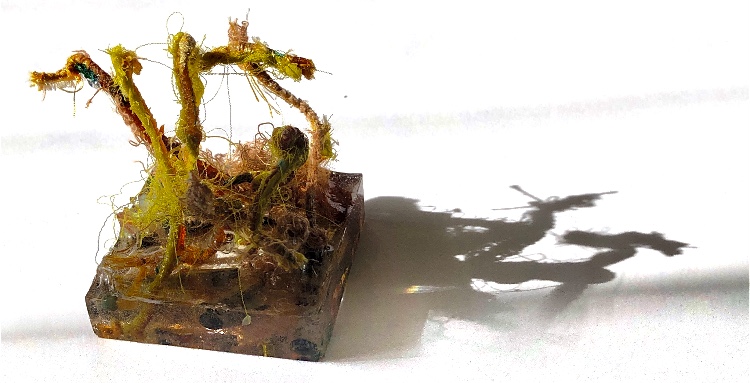
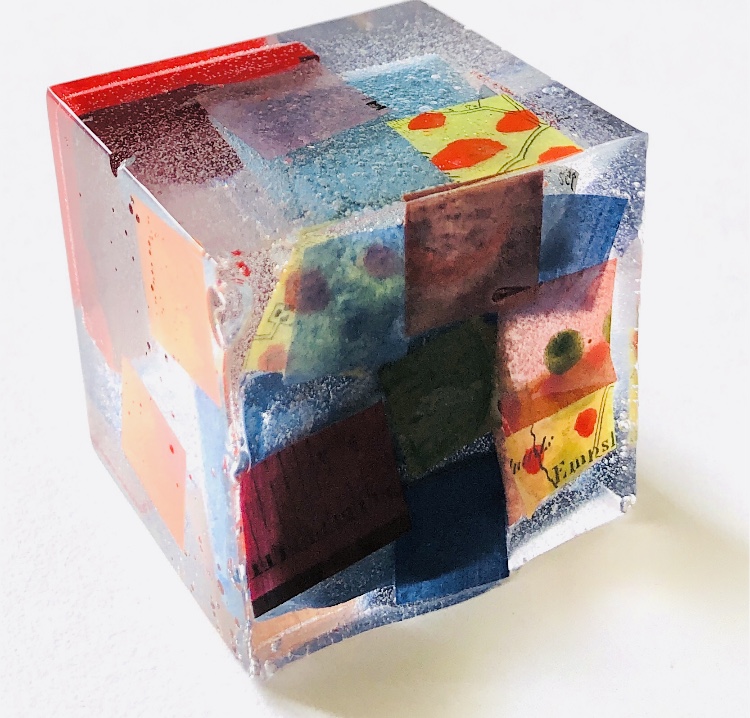
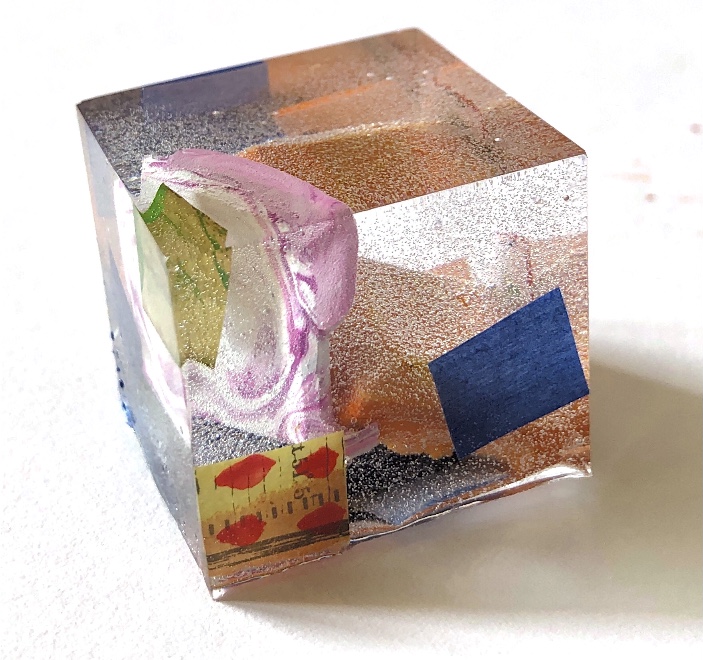
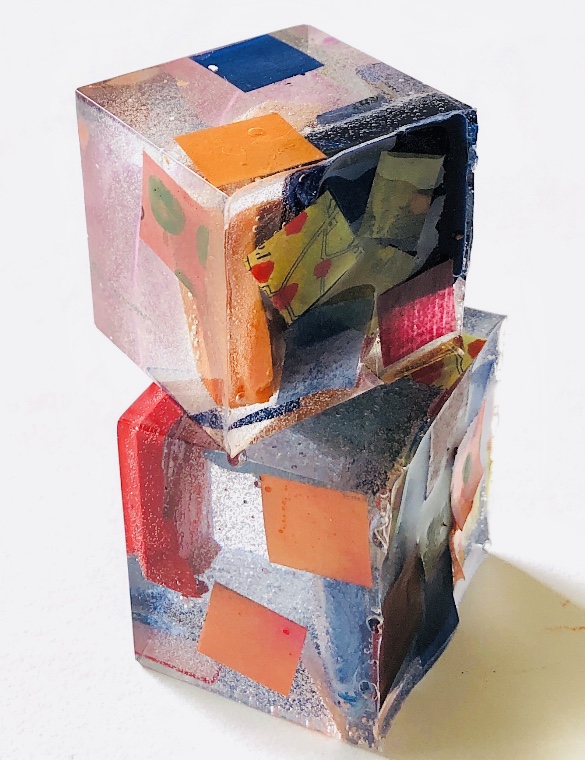
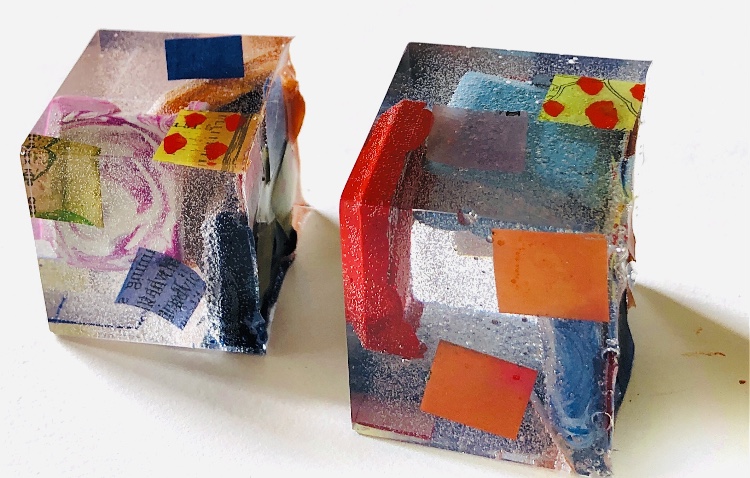
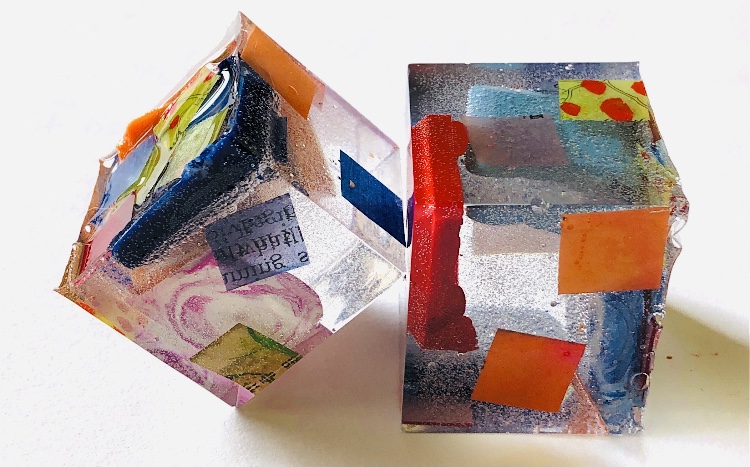
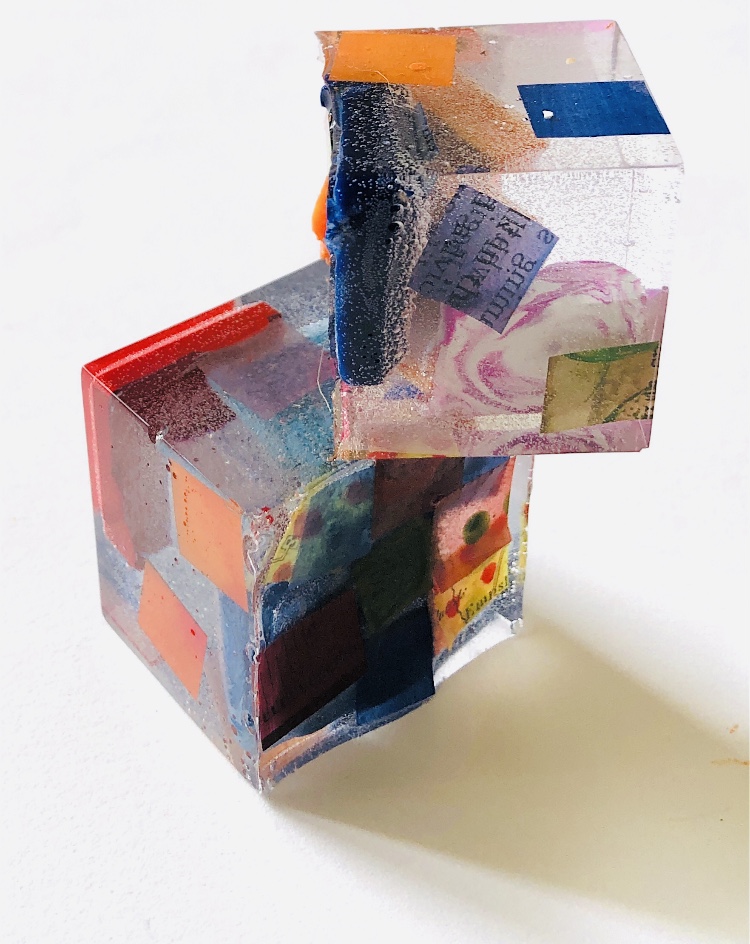
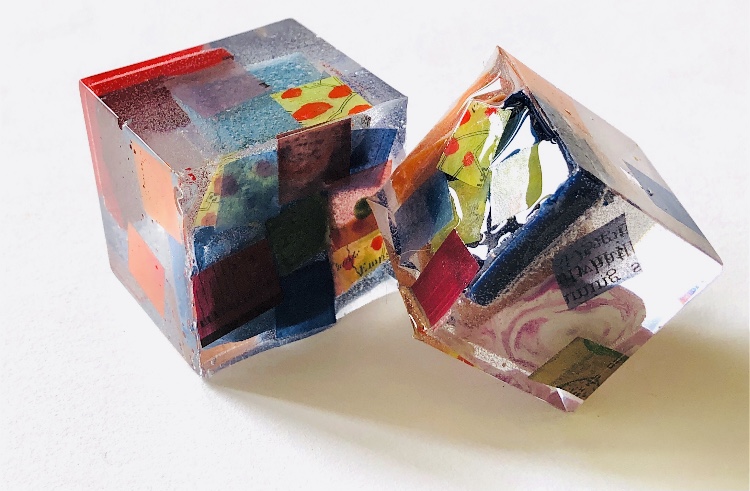
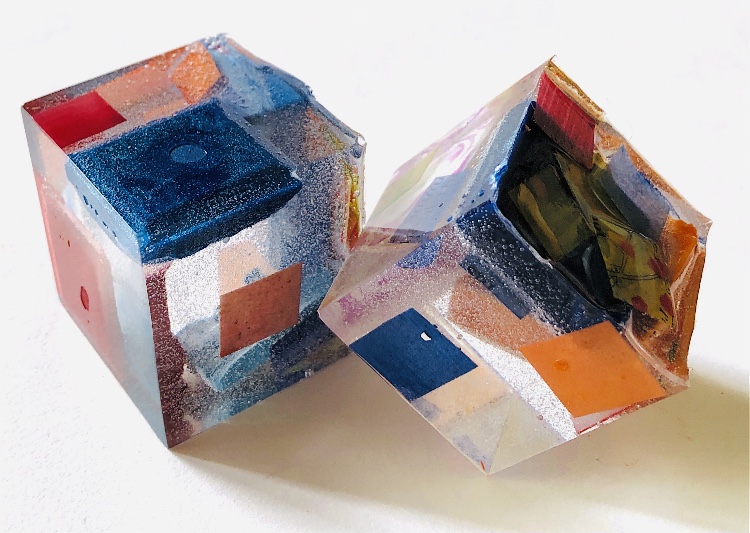
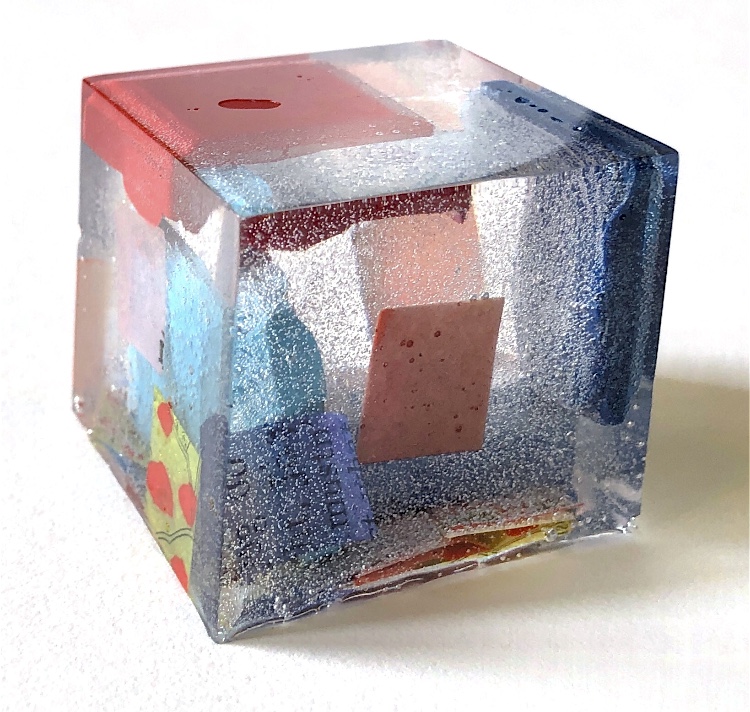
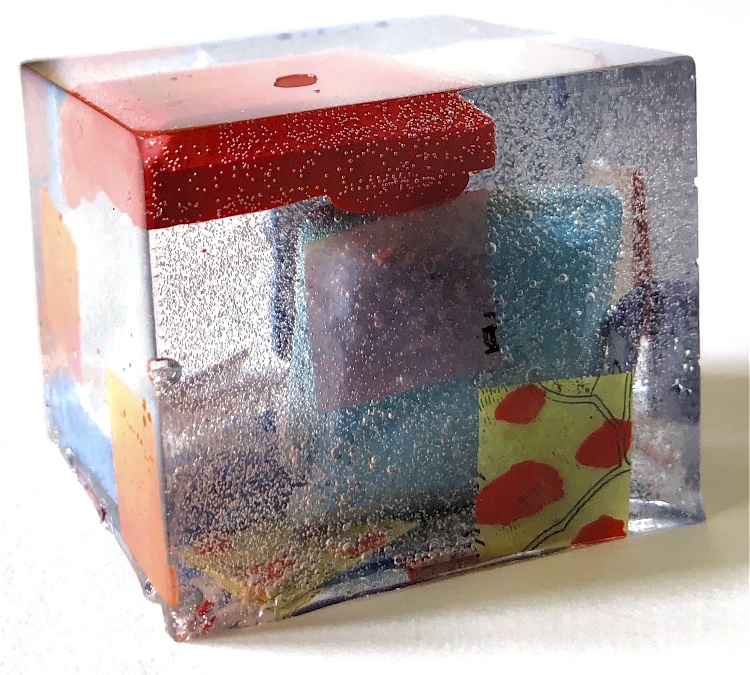
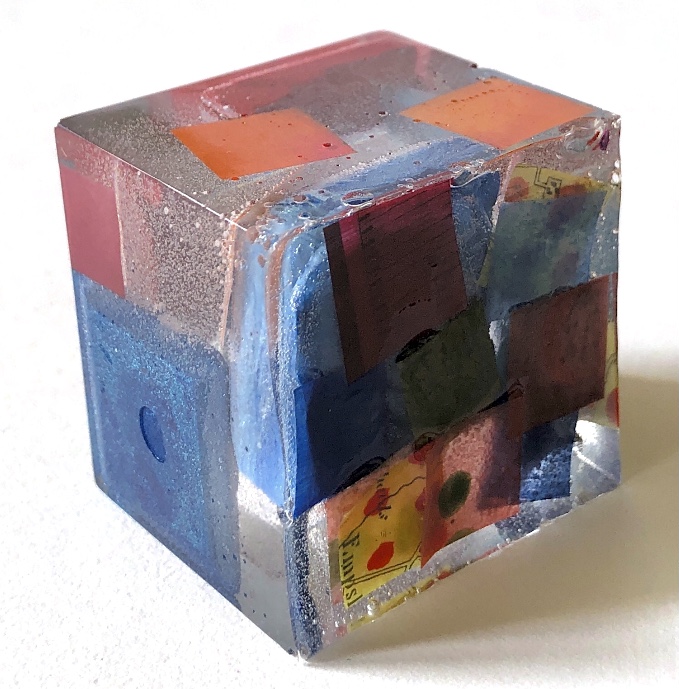
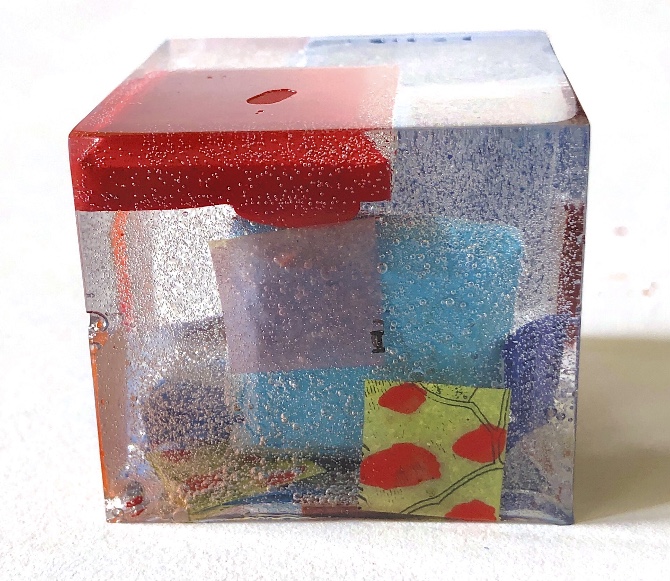
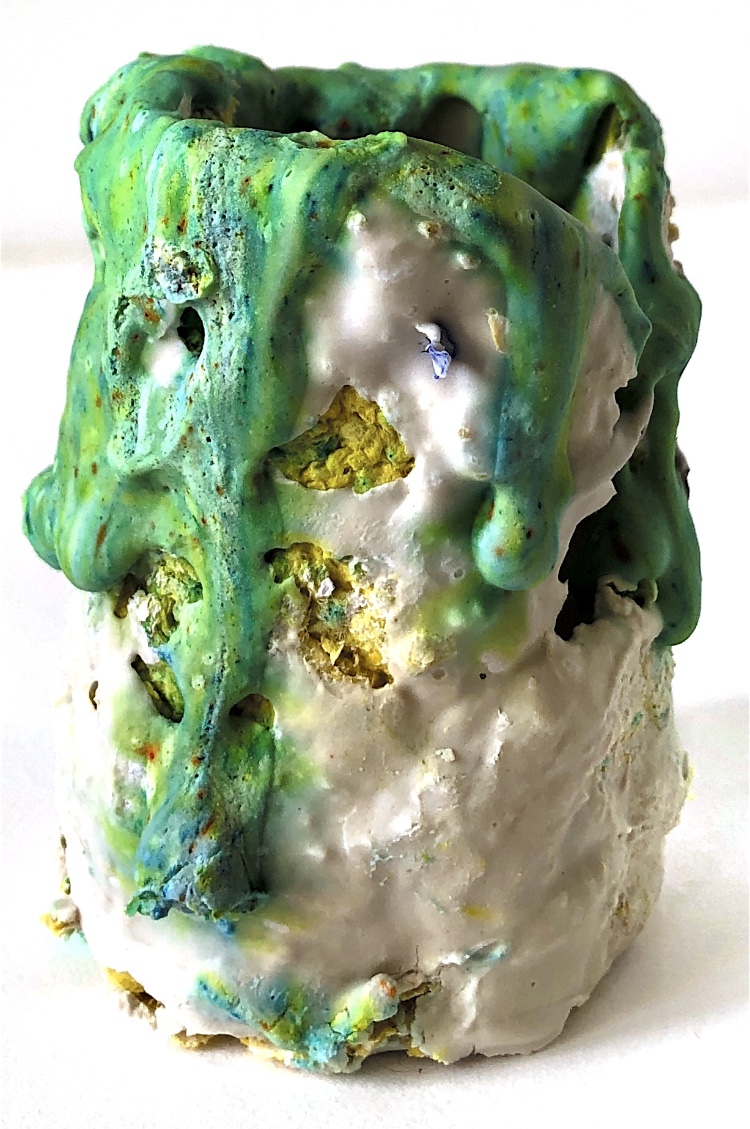
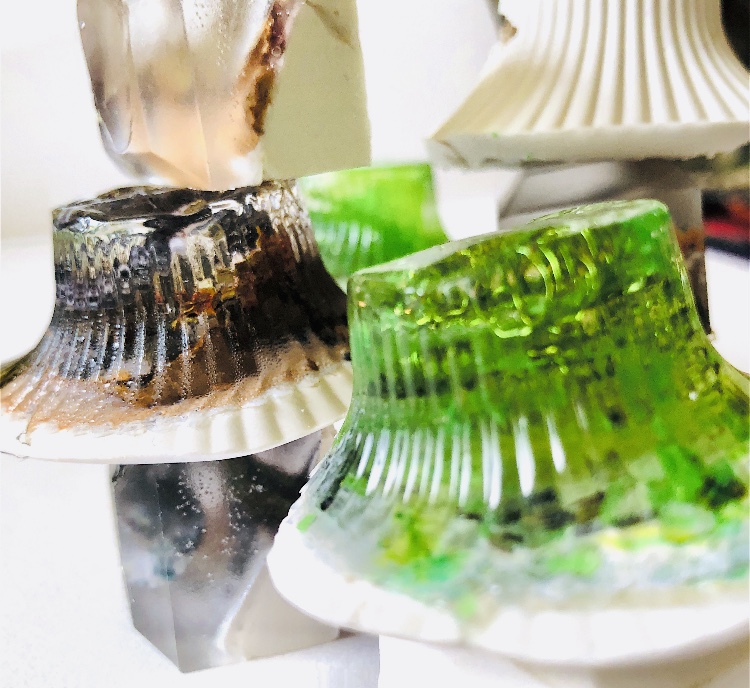
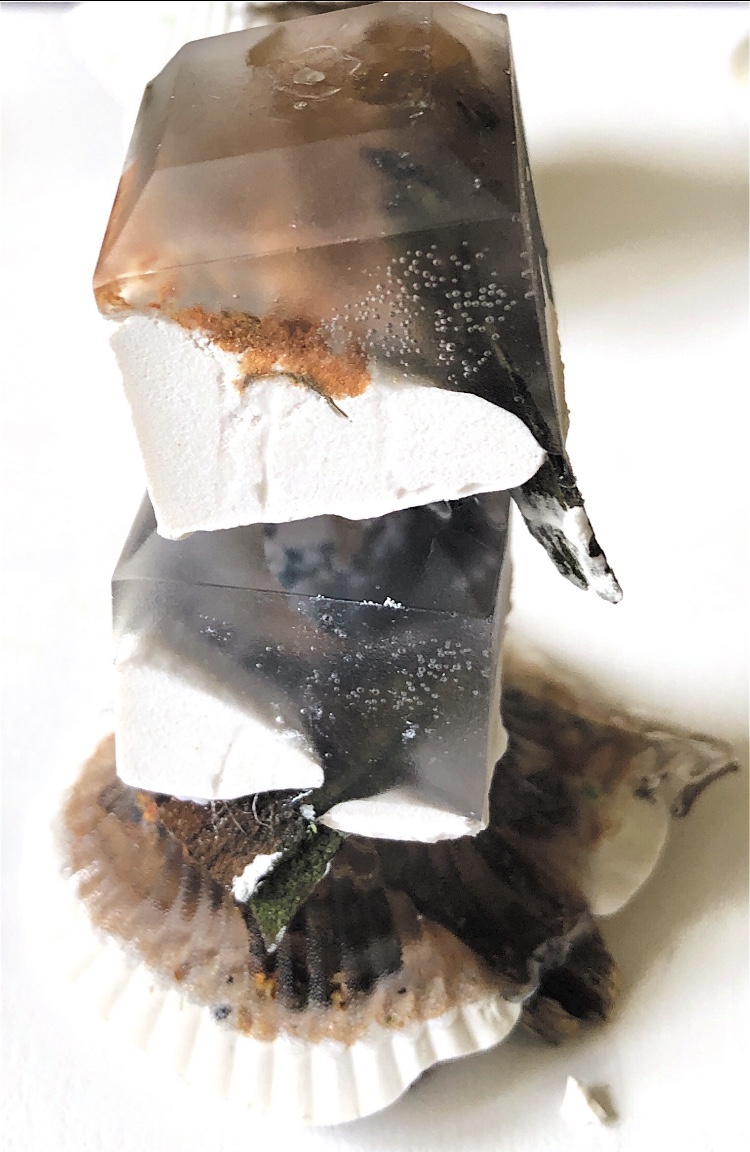
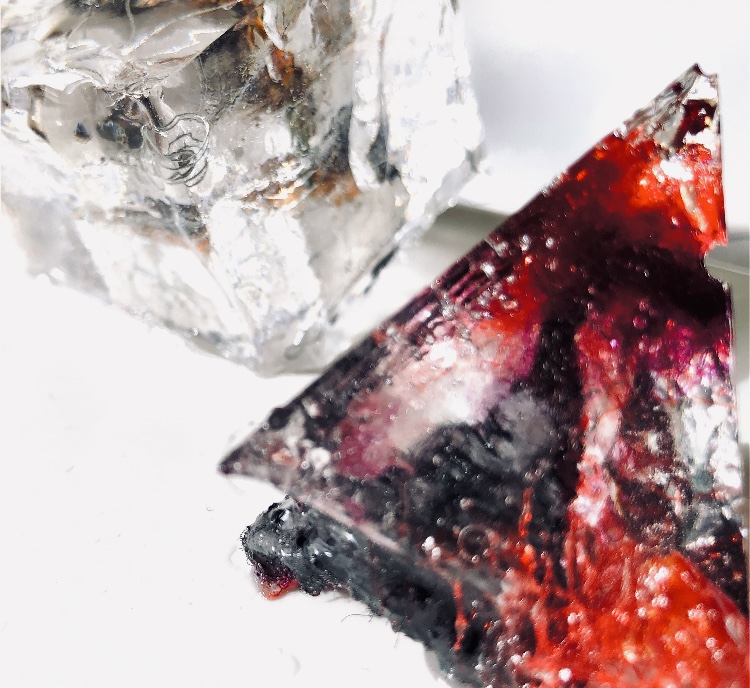
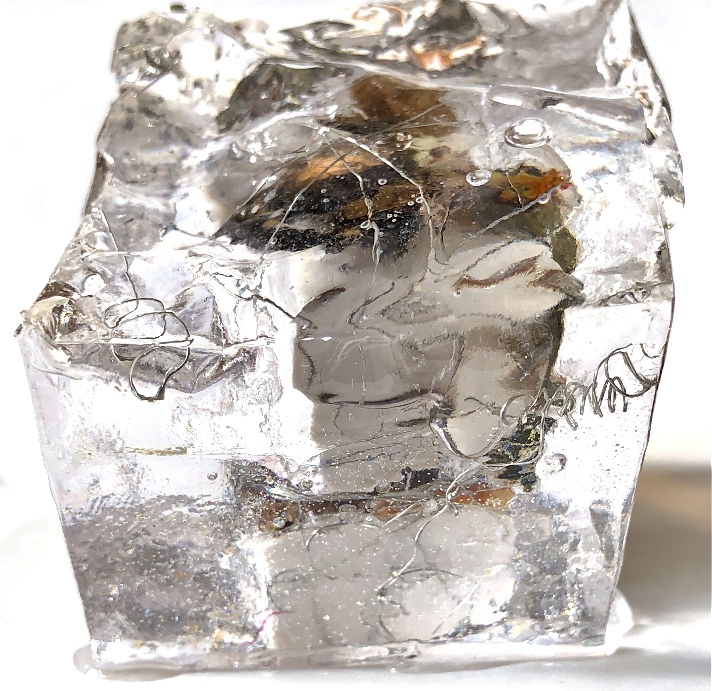
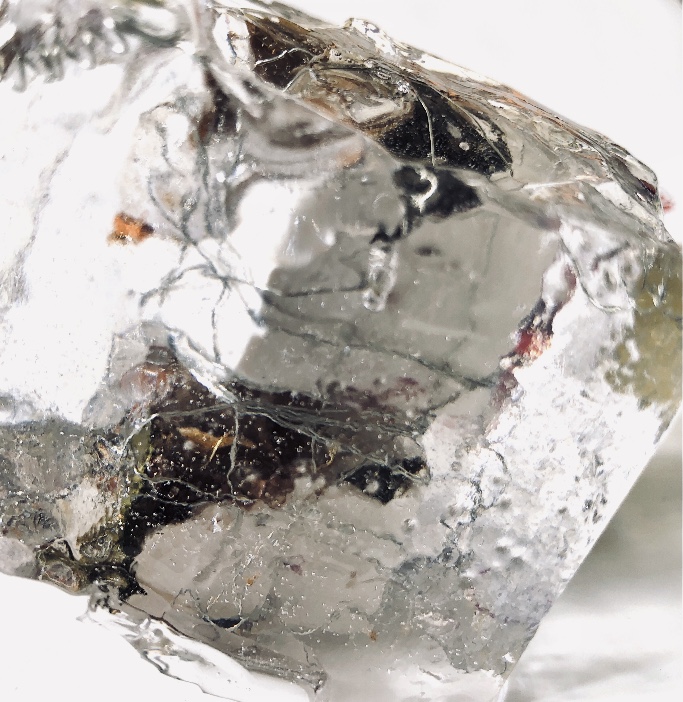
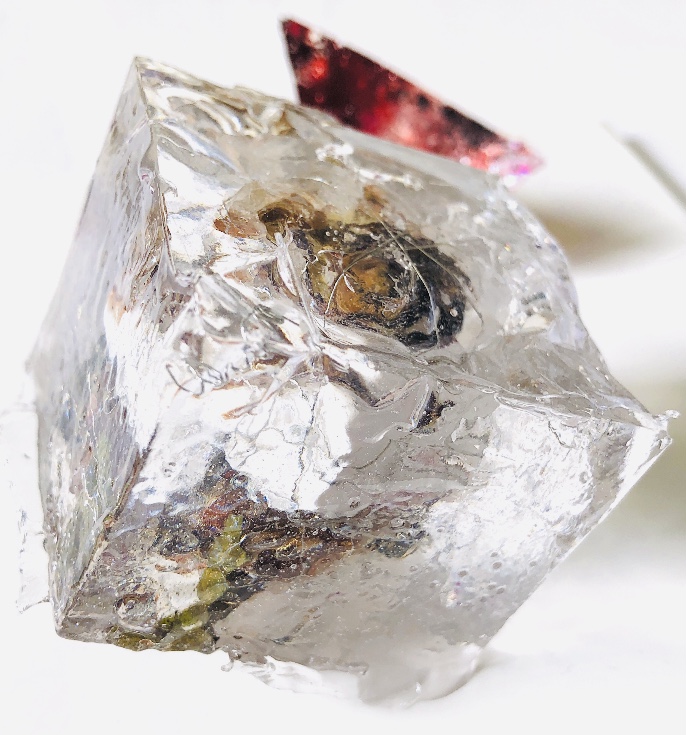
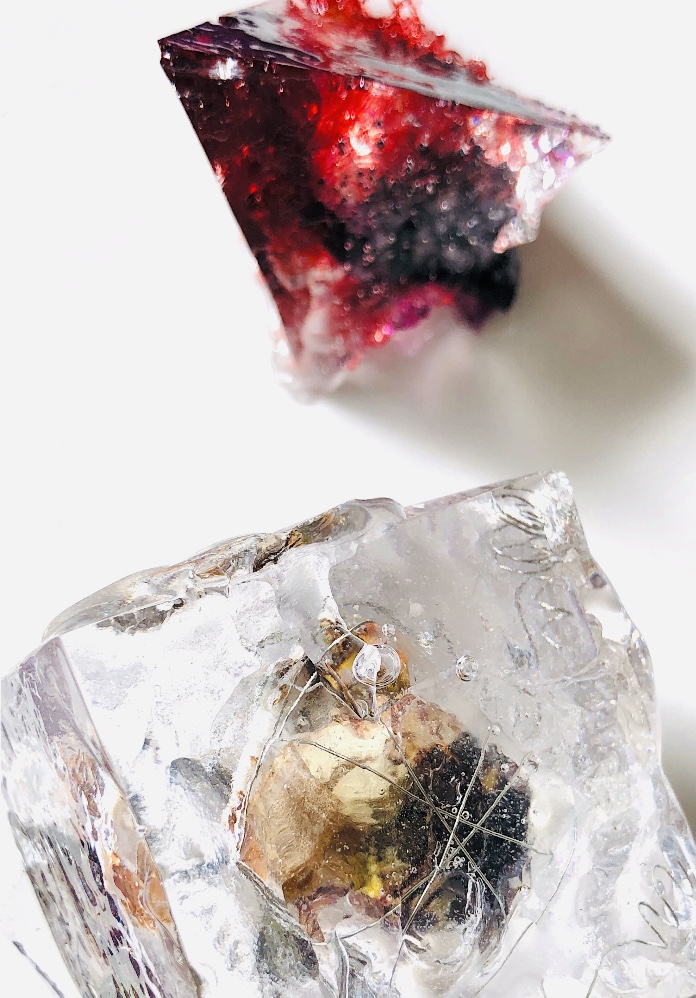
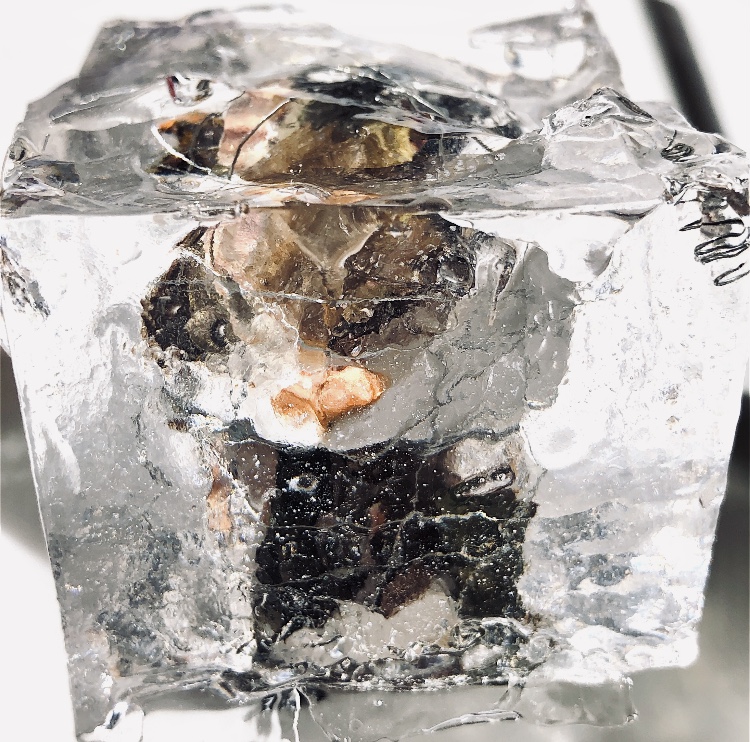
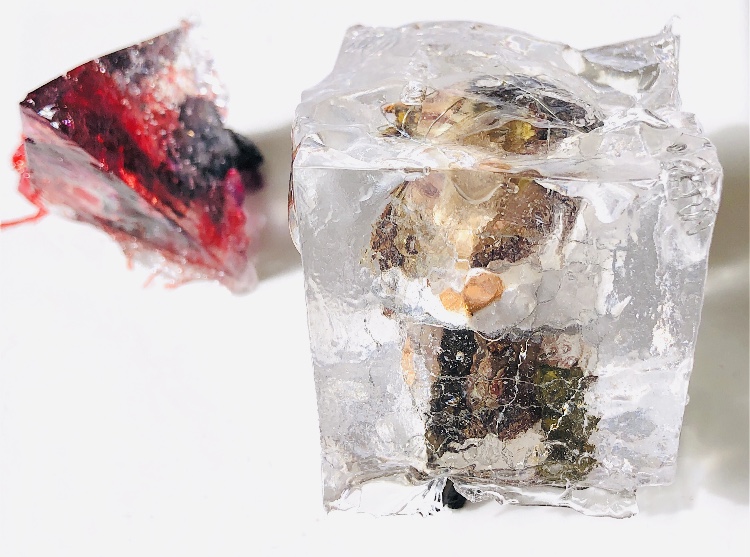
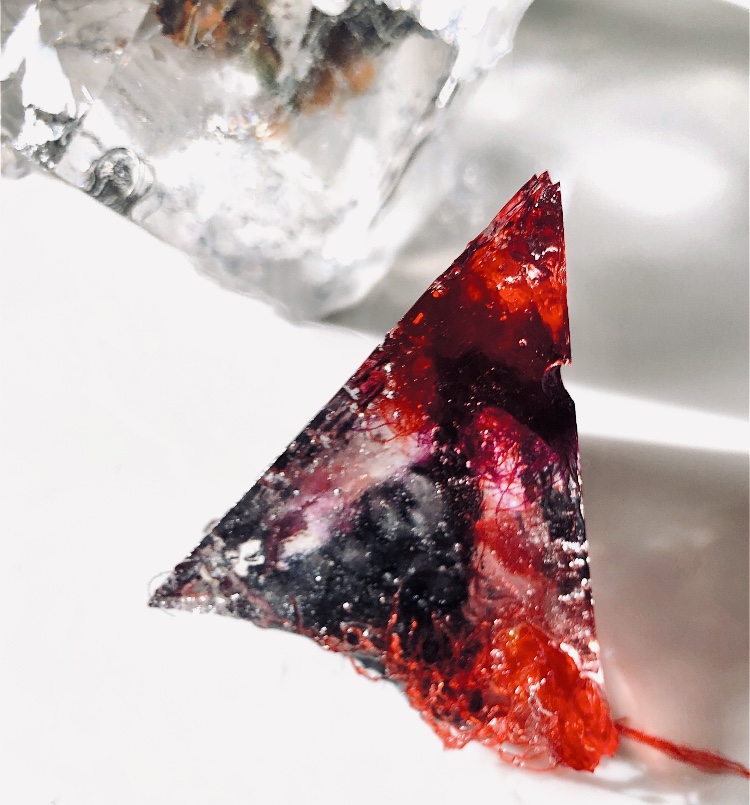
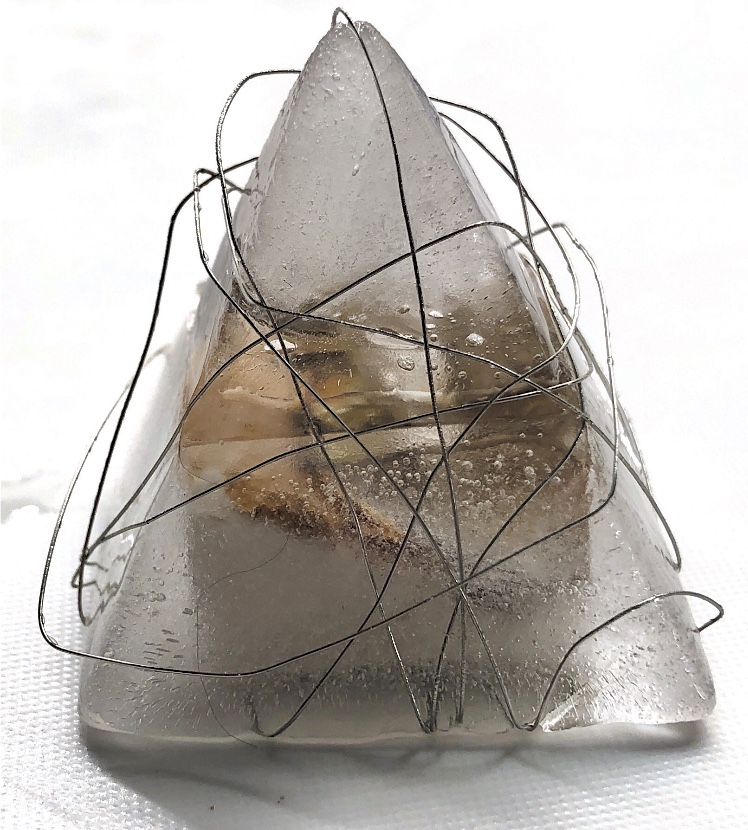
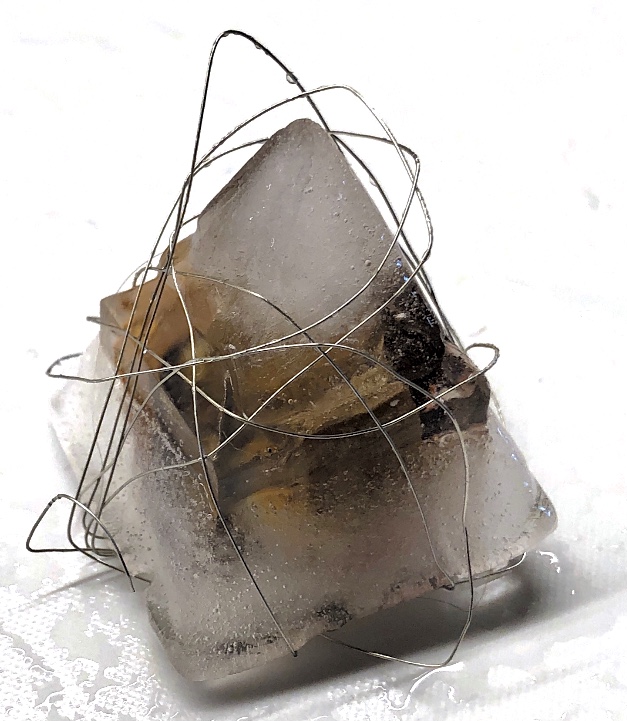
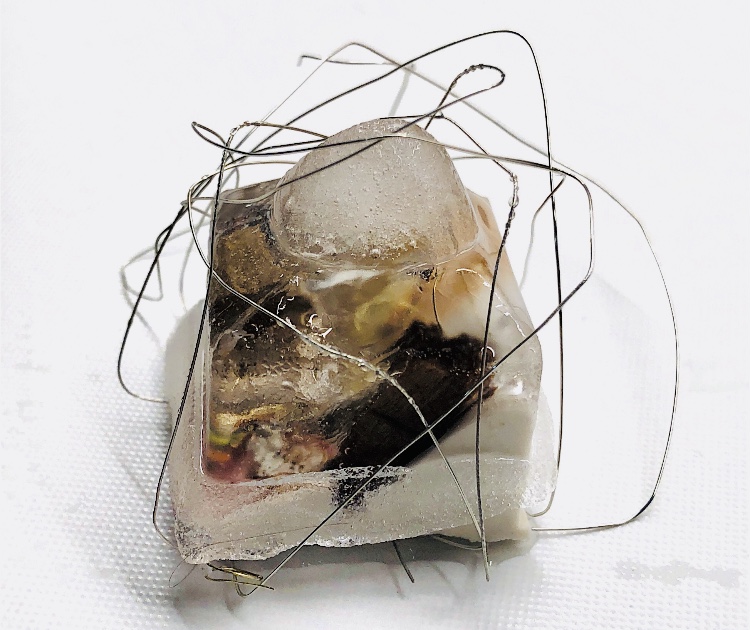
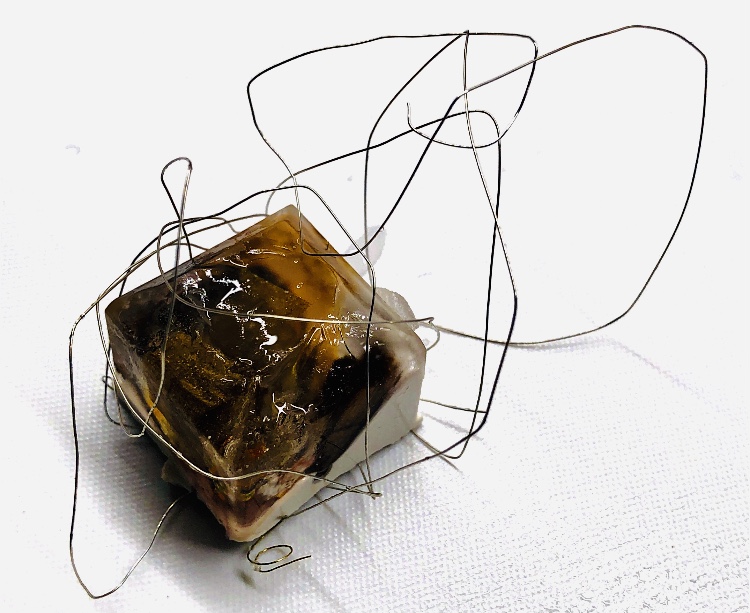
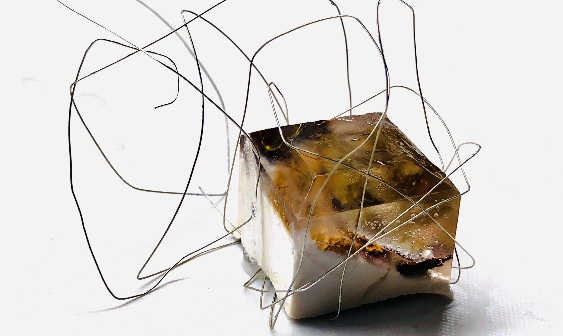
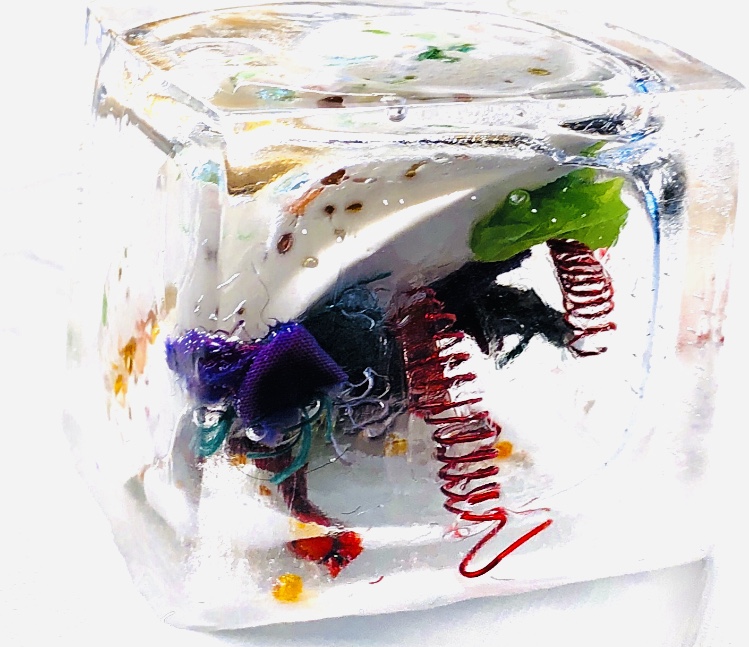
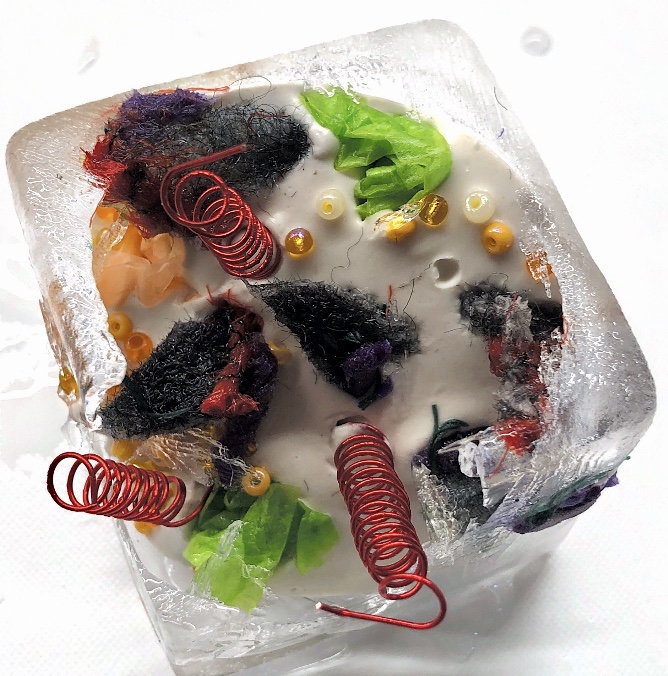
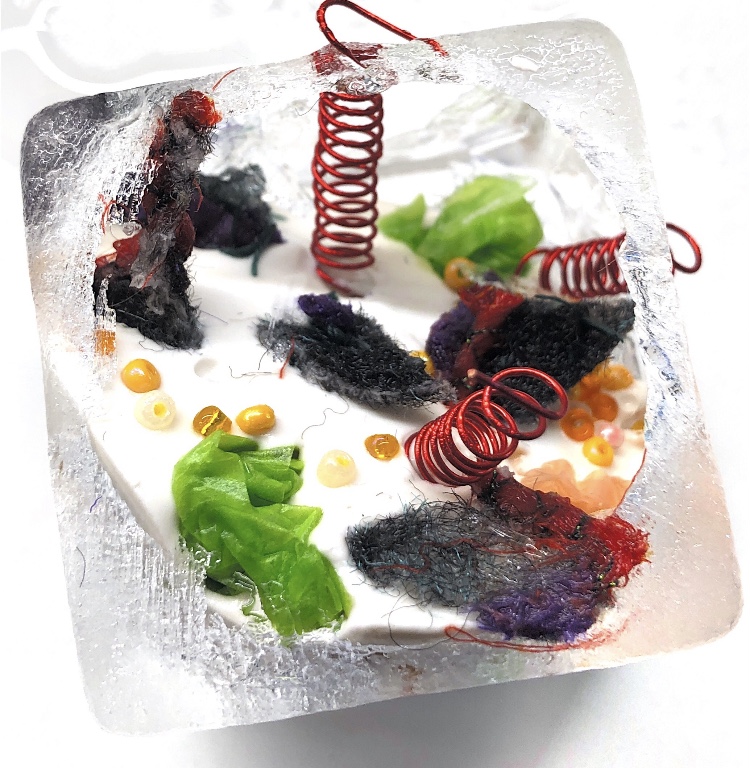
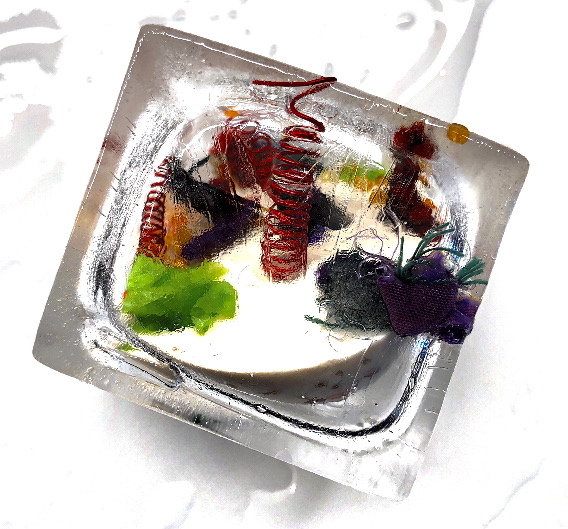
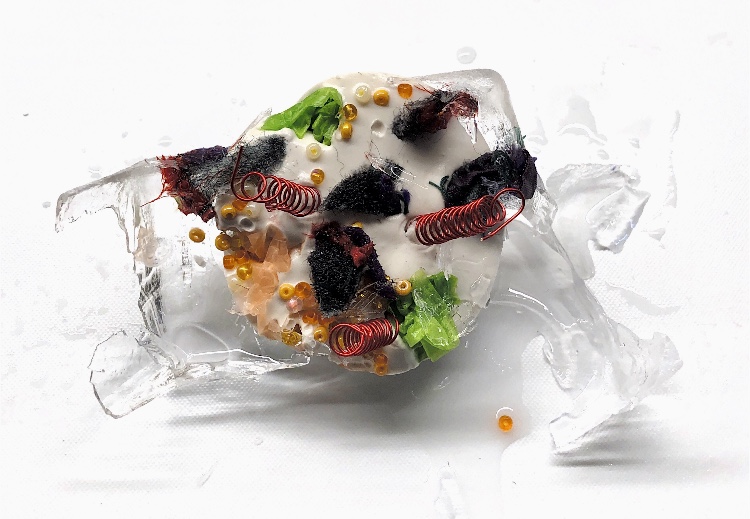
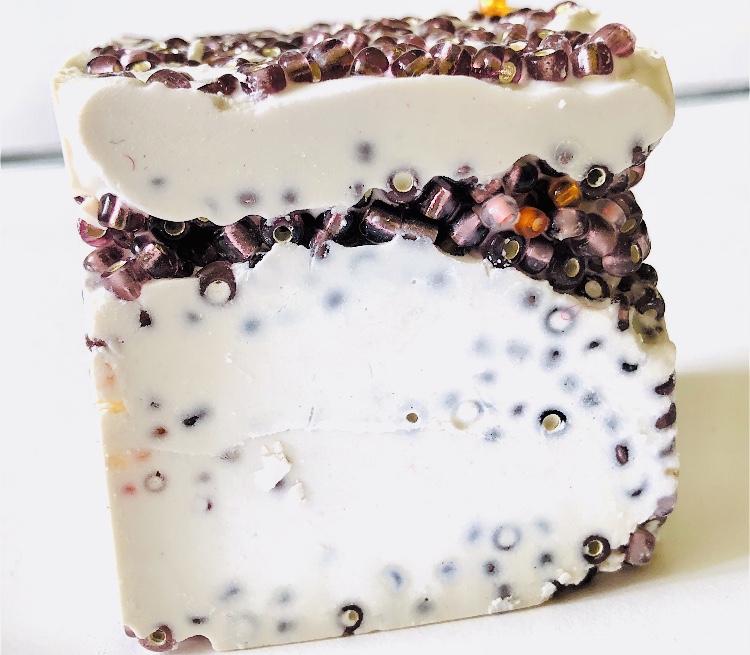
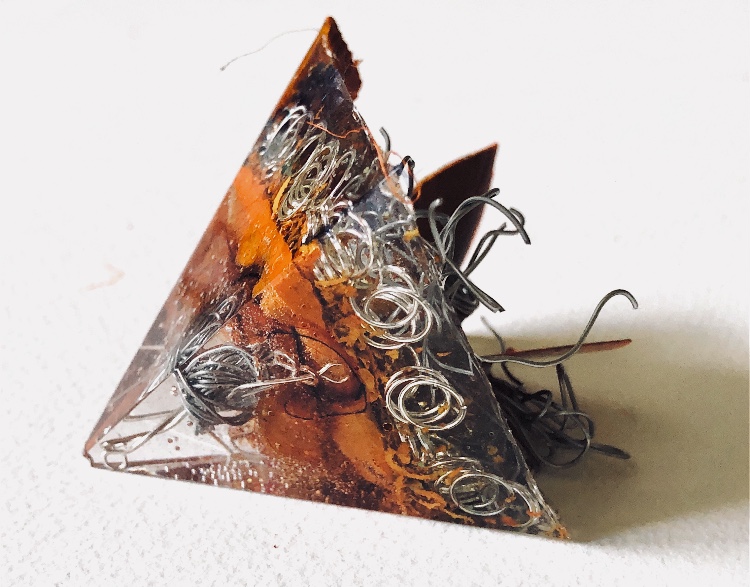
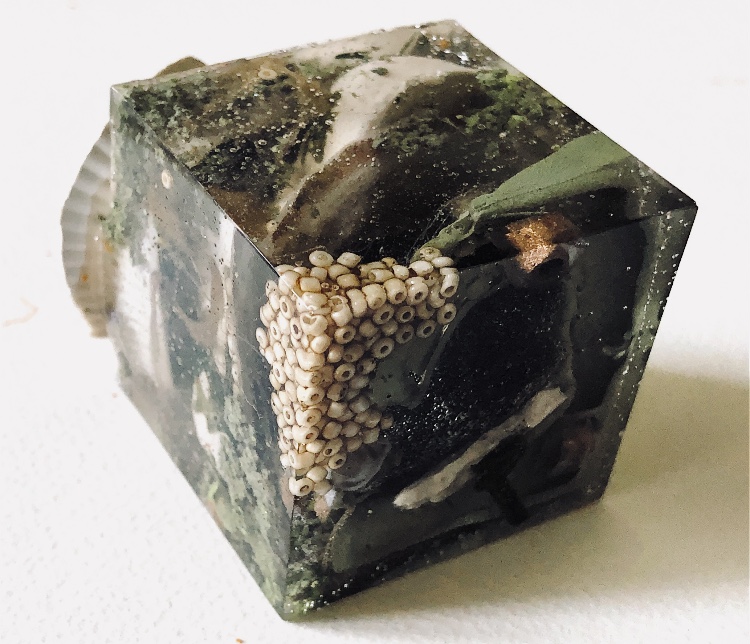
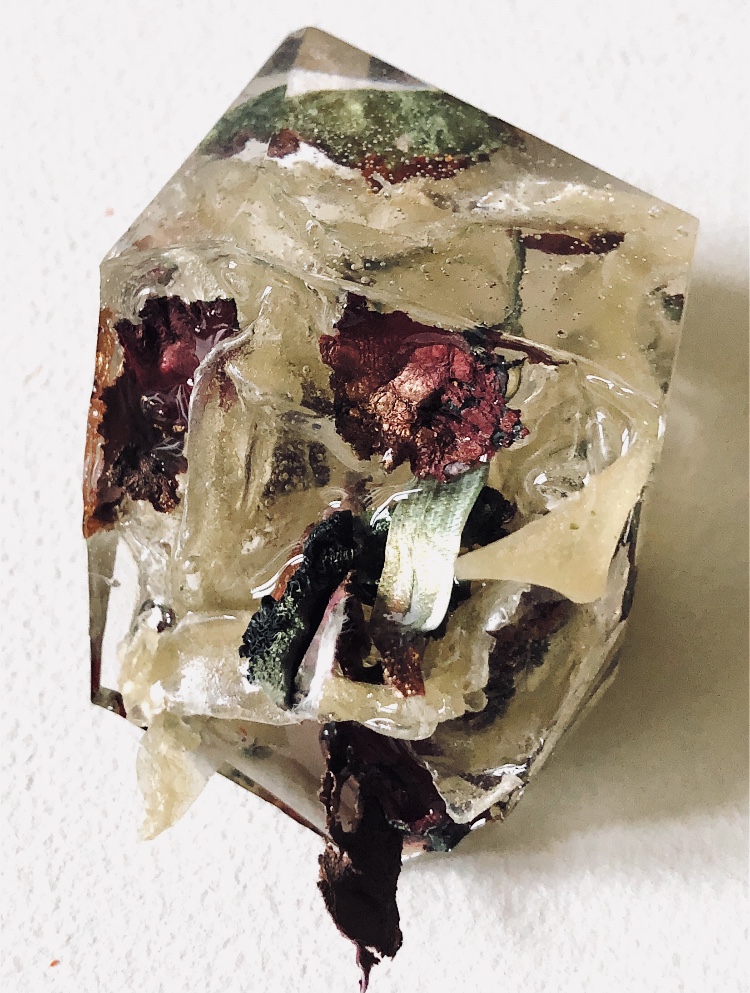
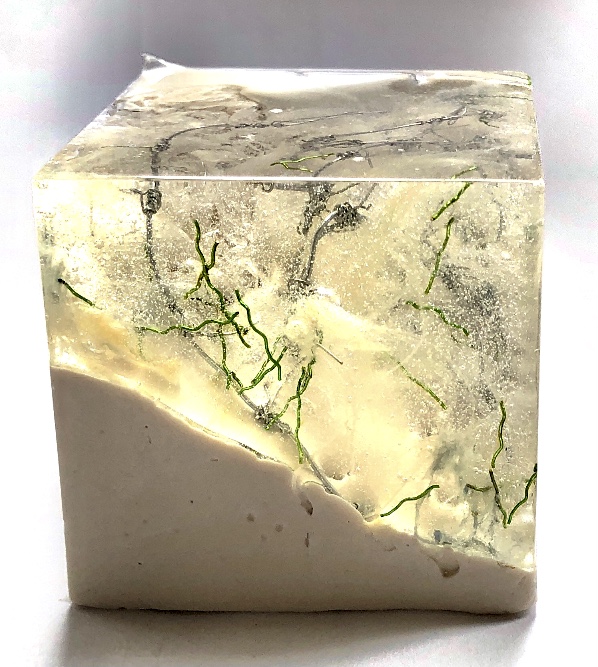
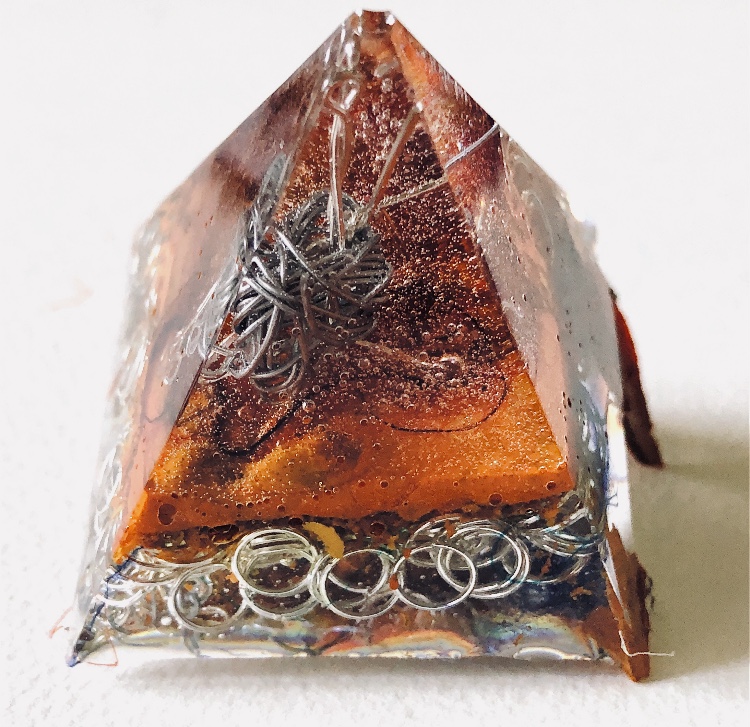
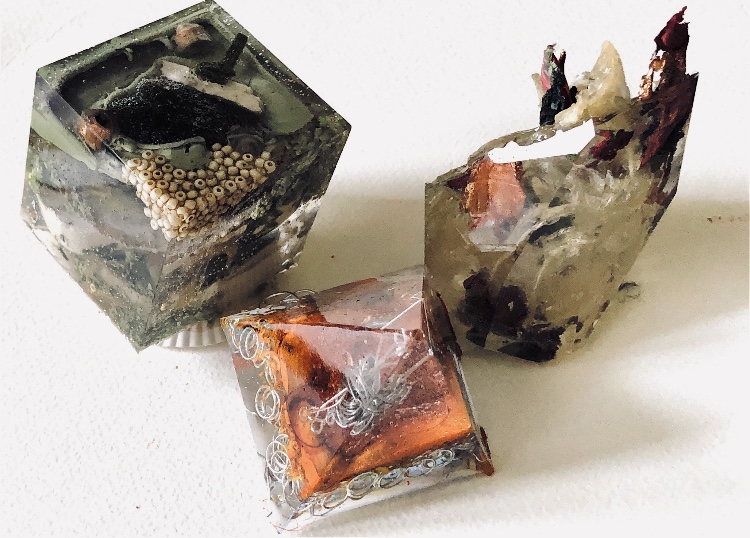
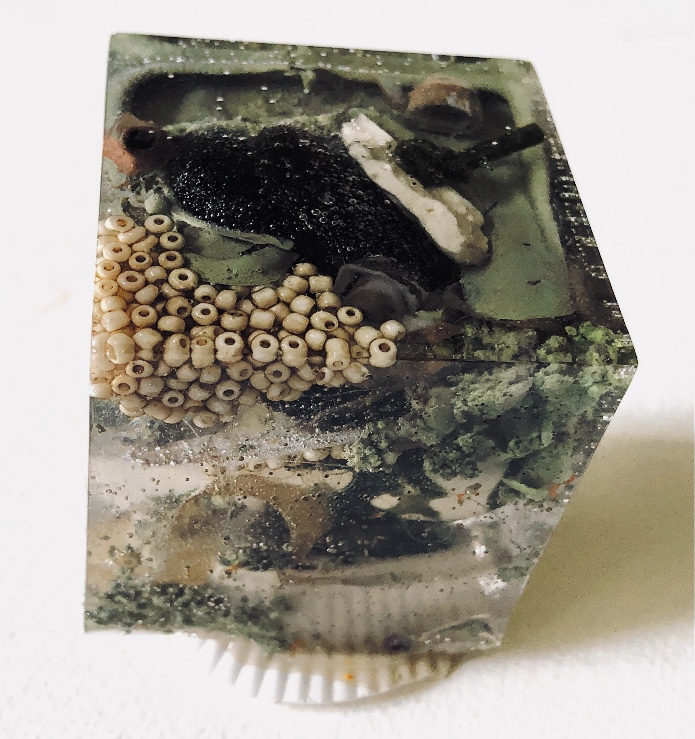
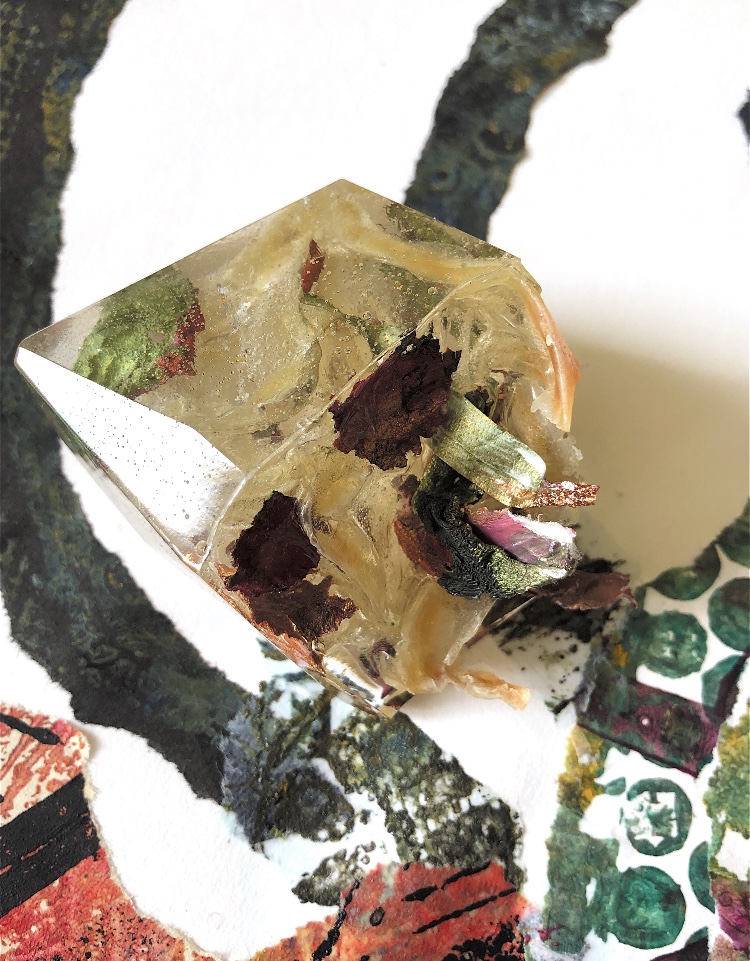
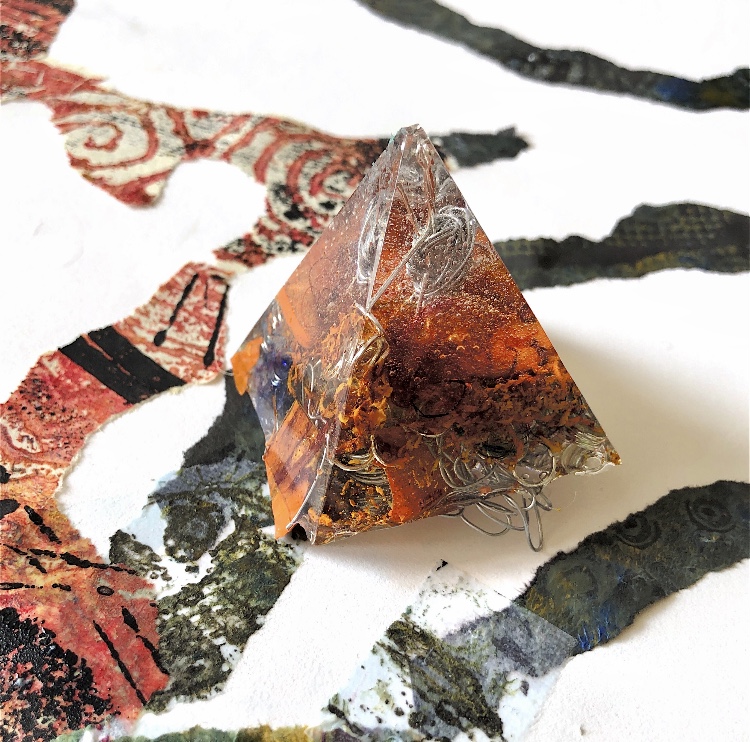
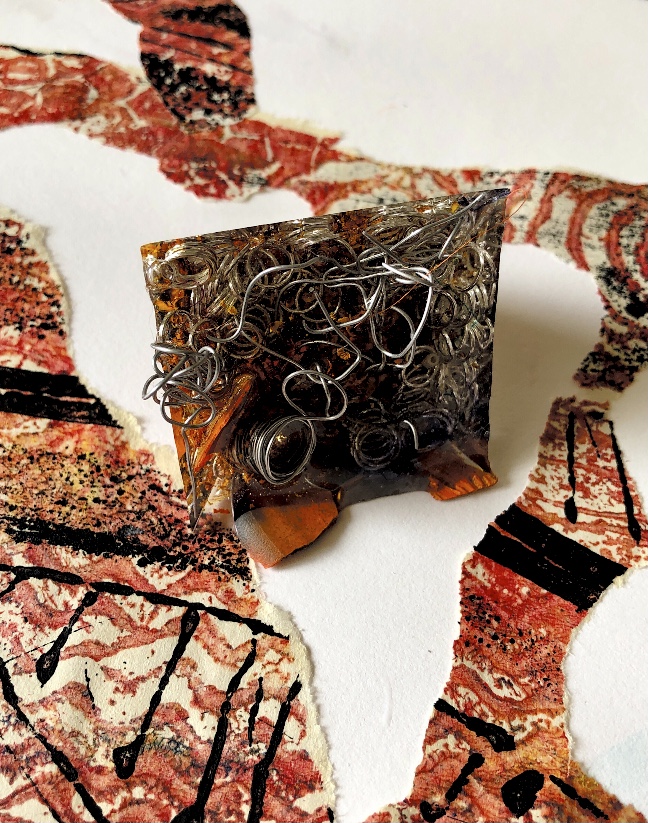
Fig, 10. These resin samples were created in silicone molds and contain natural and other materials such as wire, crayons, beads, latex samples, paper, tyvek and plaster. I particularly like the contrast of plaster and resin, the way the wire can be manipulated before entrapping, and the colours from melted wax crayons. These samples could be developed by experimenting more with molds – I haven’t tried resin in other types of mold. I also would like to experiment with making a number of pieces as a multiple sample. This is an area in which I intend to do some further experimentation.
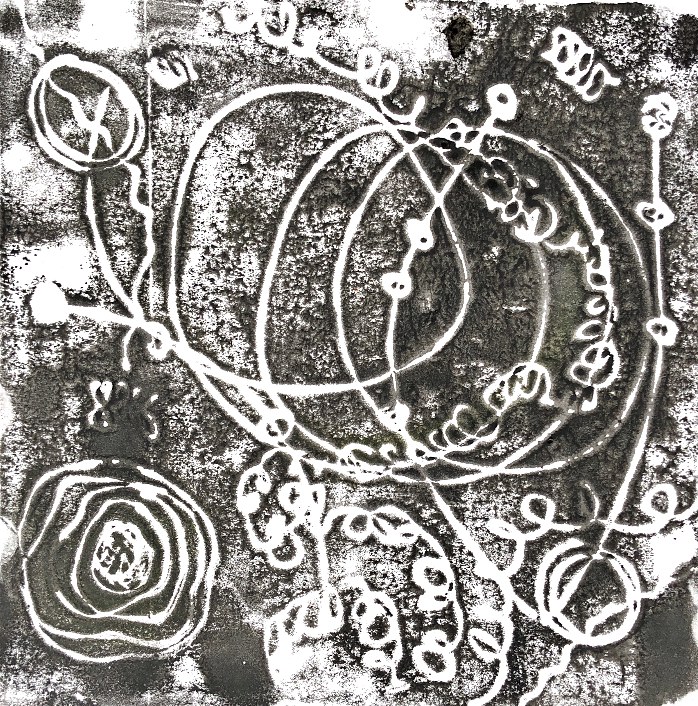
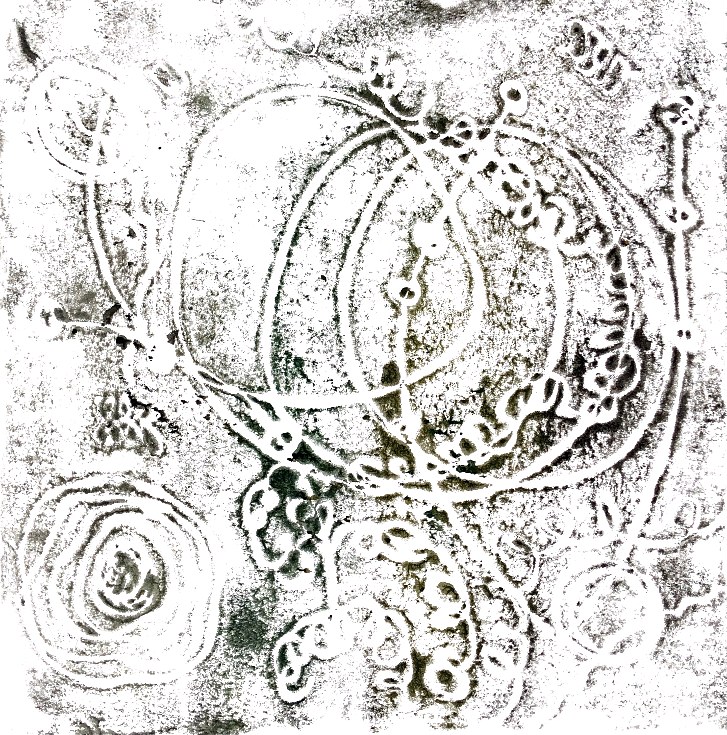
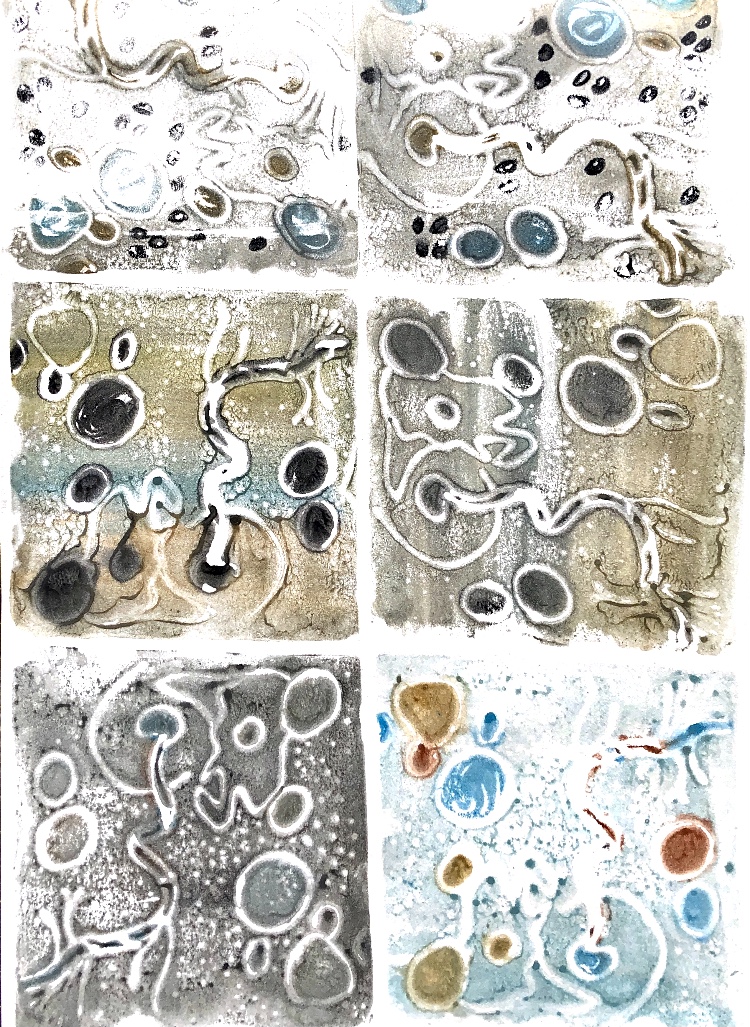
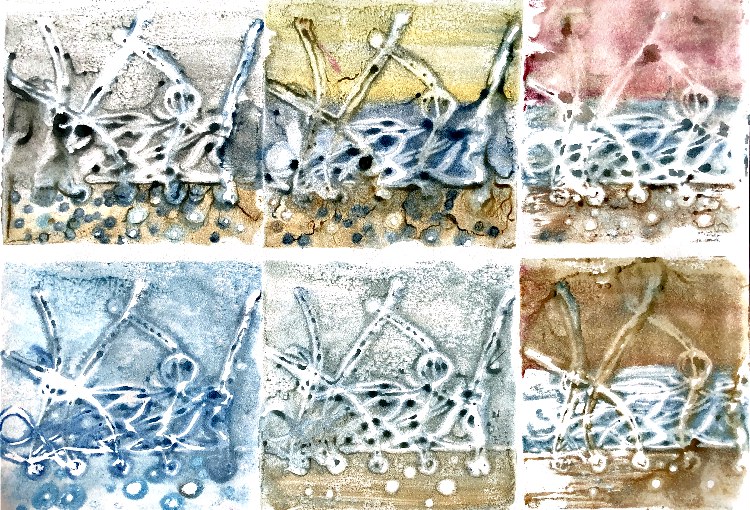
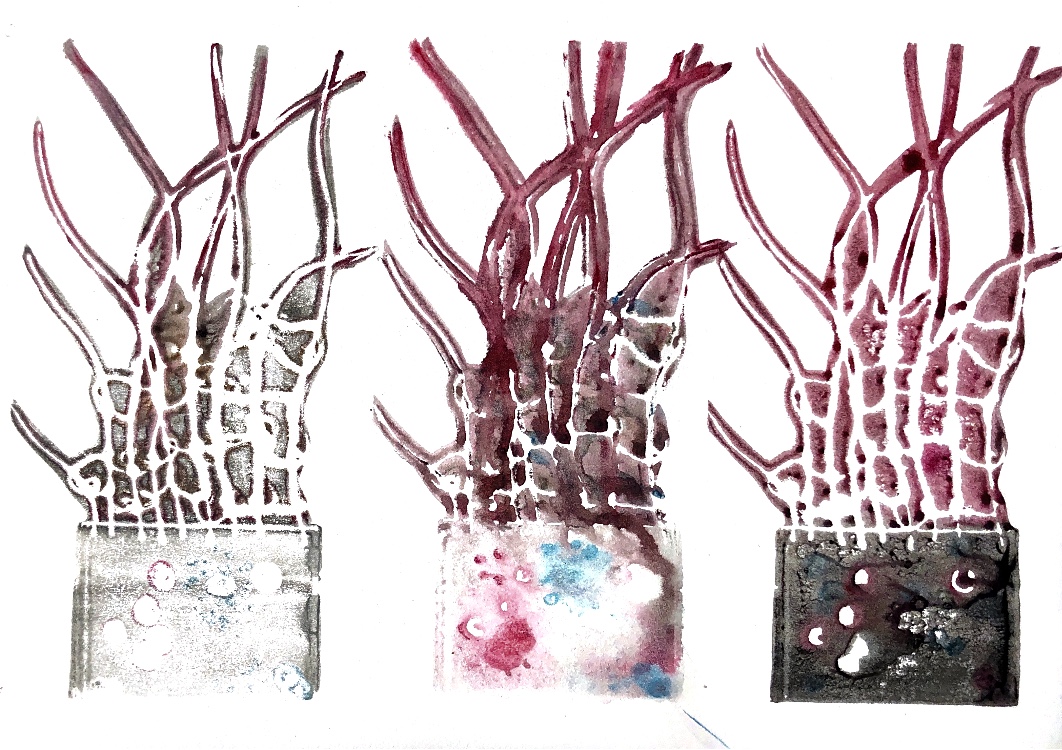
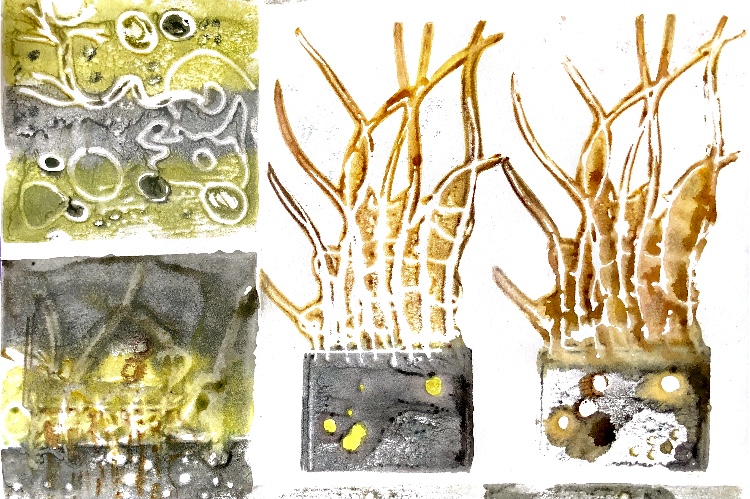
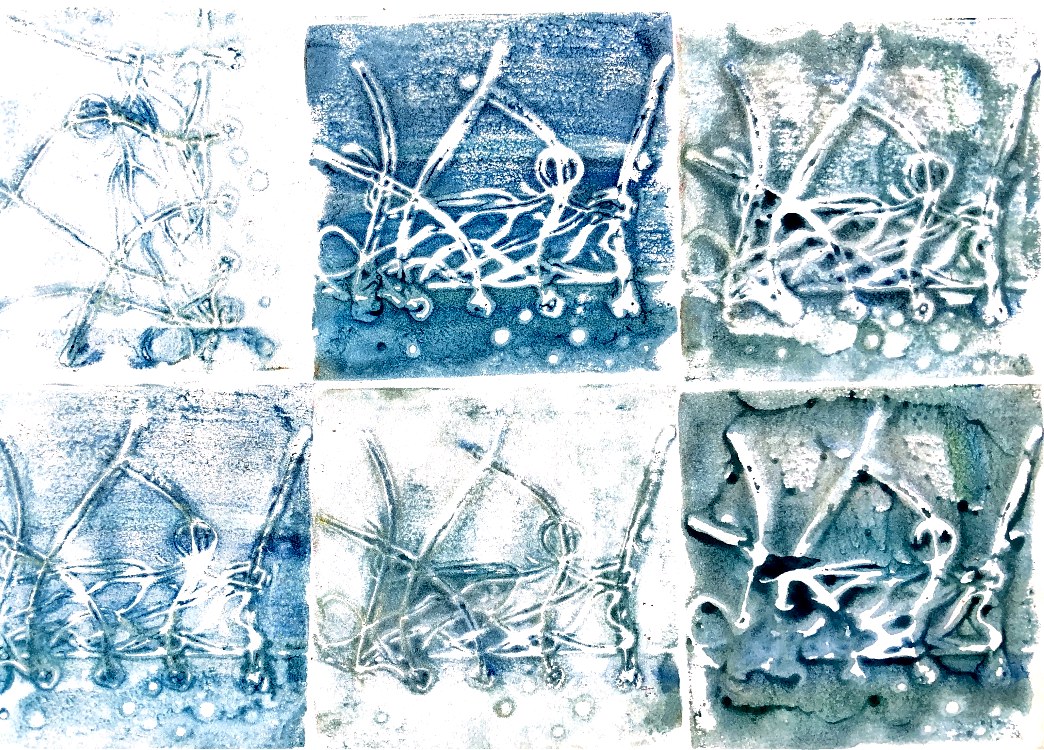
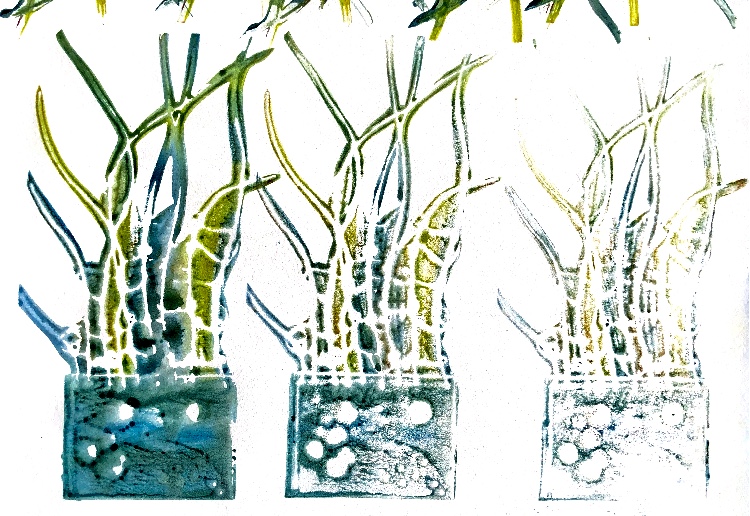
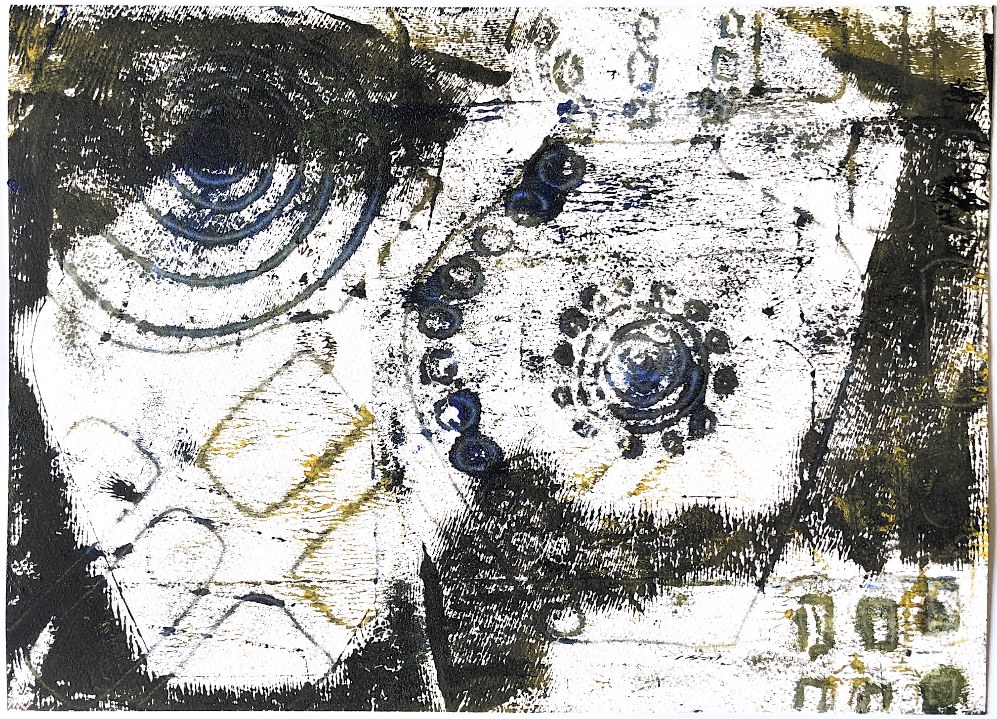
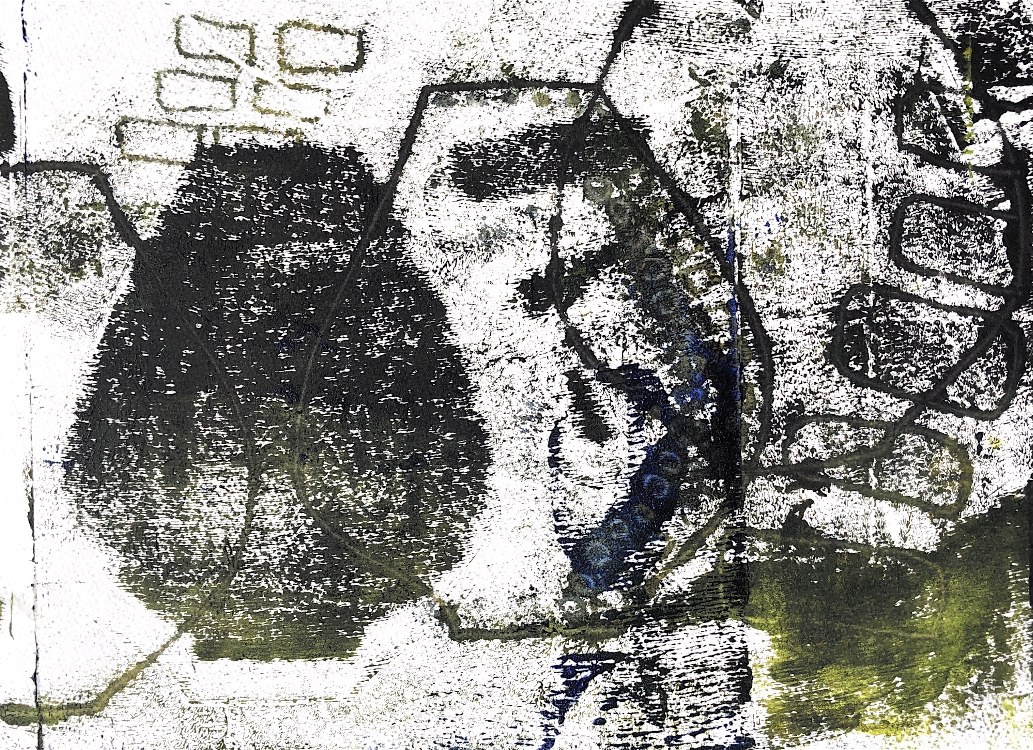
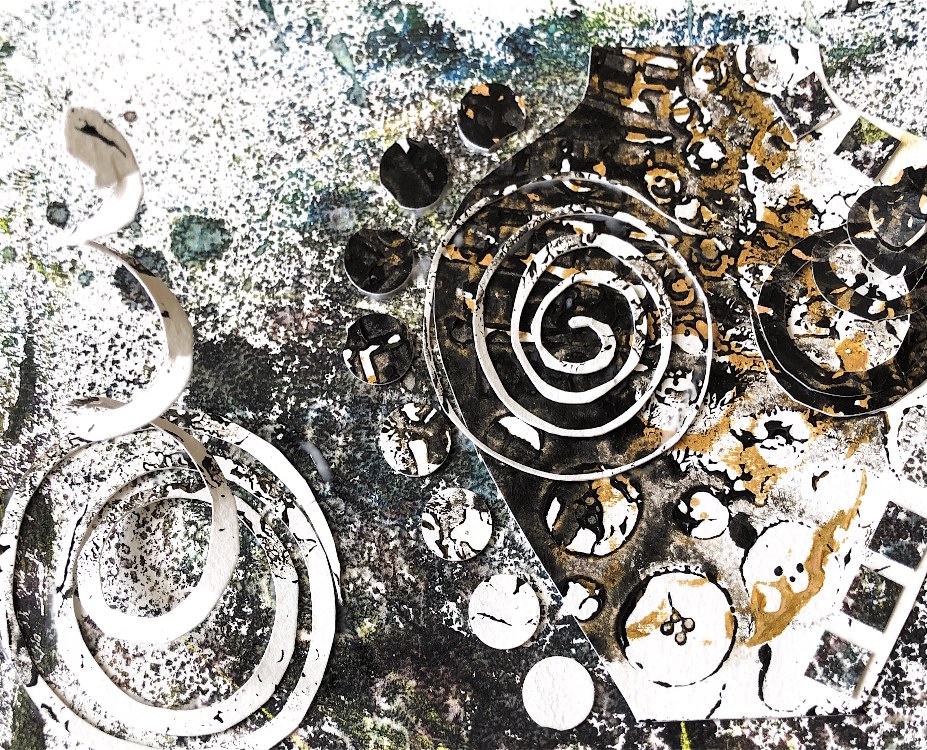
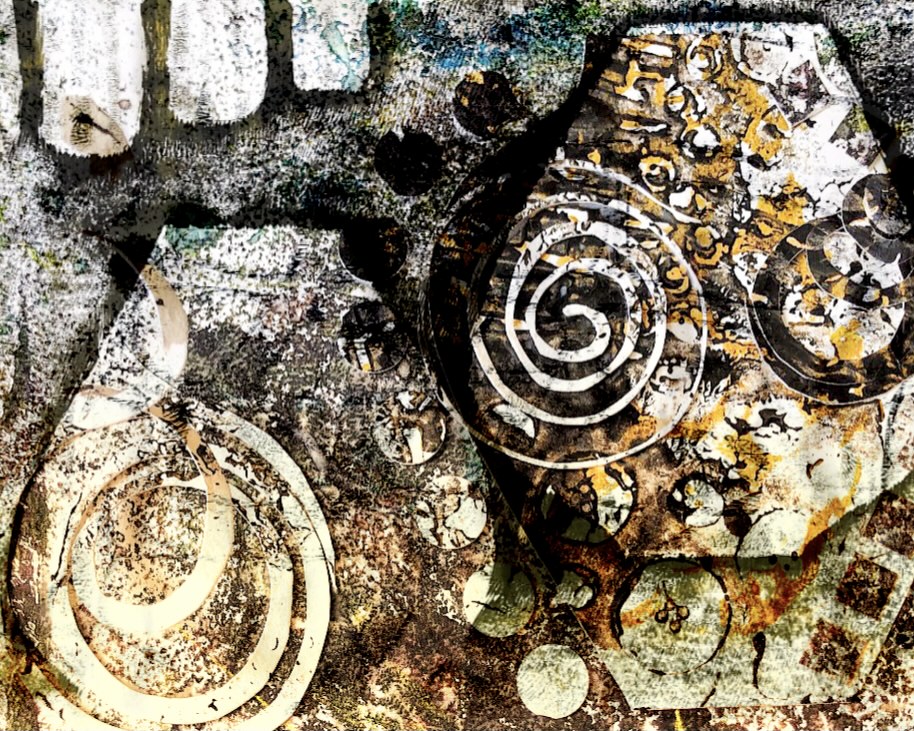
Fig, 11. It took a bit of trial and error to get to grips with back drawing as a part of printmaking but once I had experimented with different materials I was really happy with the result. The pot shape used in these prints contrasts with the decorative elements and the pieces have a dirty look of artefacts dug from the ground. Combining this technique with collagraph made a really exciting sample which has texture, light and shade and lots of inspiration for collage experiments.
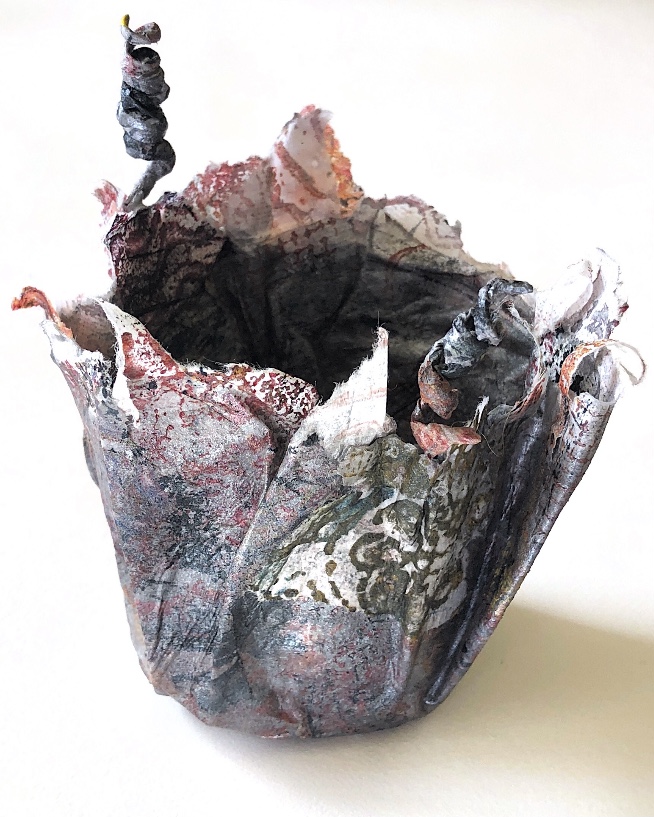
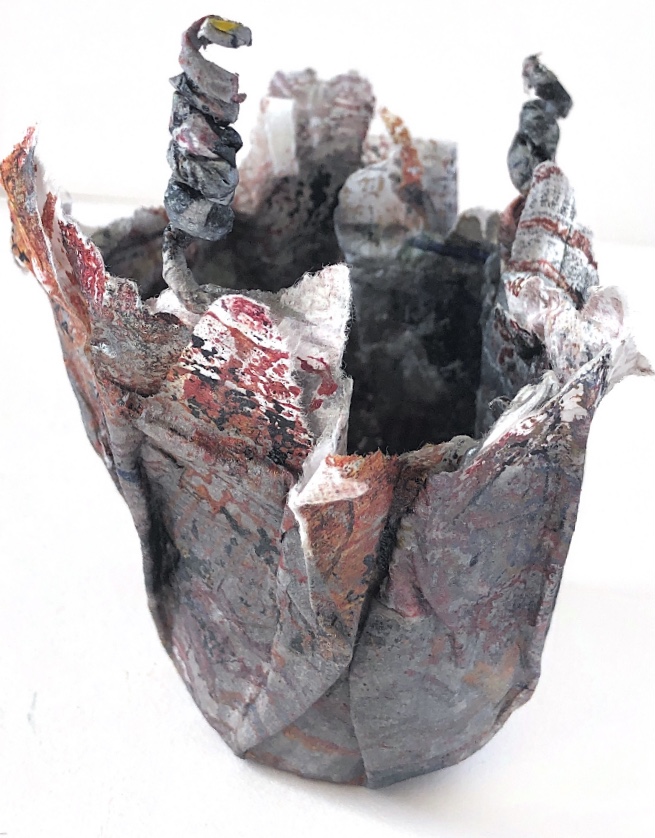
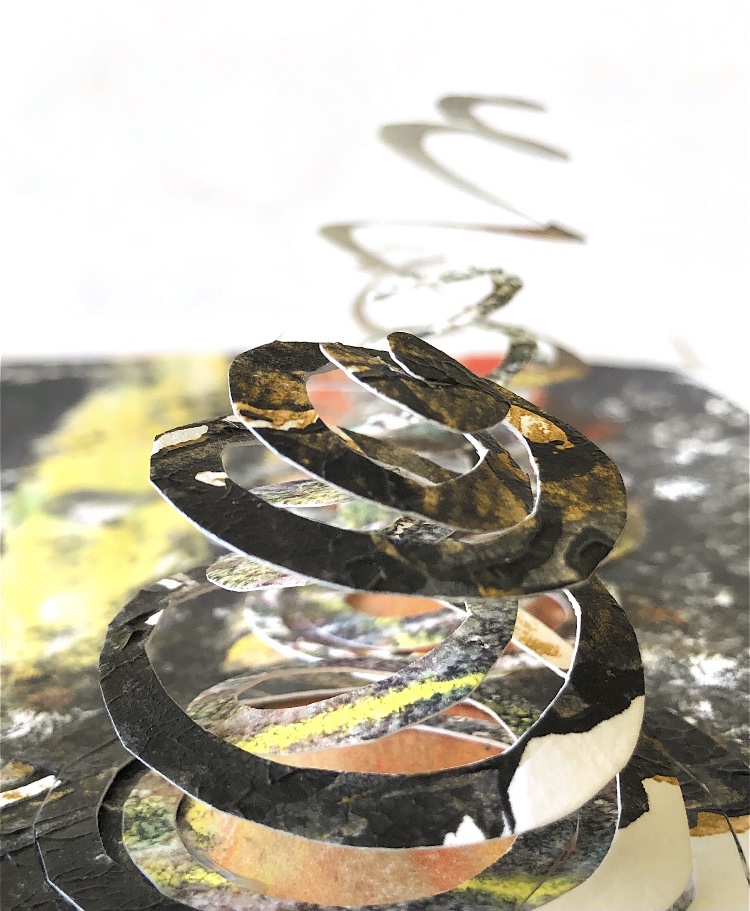
I was interested in the spiral shape which I developed with cut paper. This gave the samples a 3D element which is something I find myself wanting to create more and more as I progress. I’m wondering if these spirals could be combined with resin?.
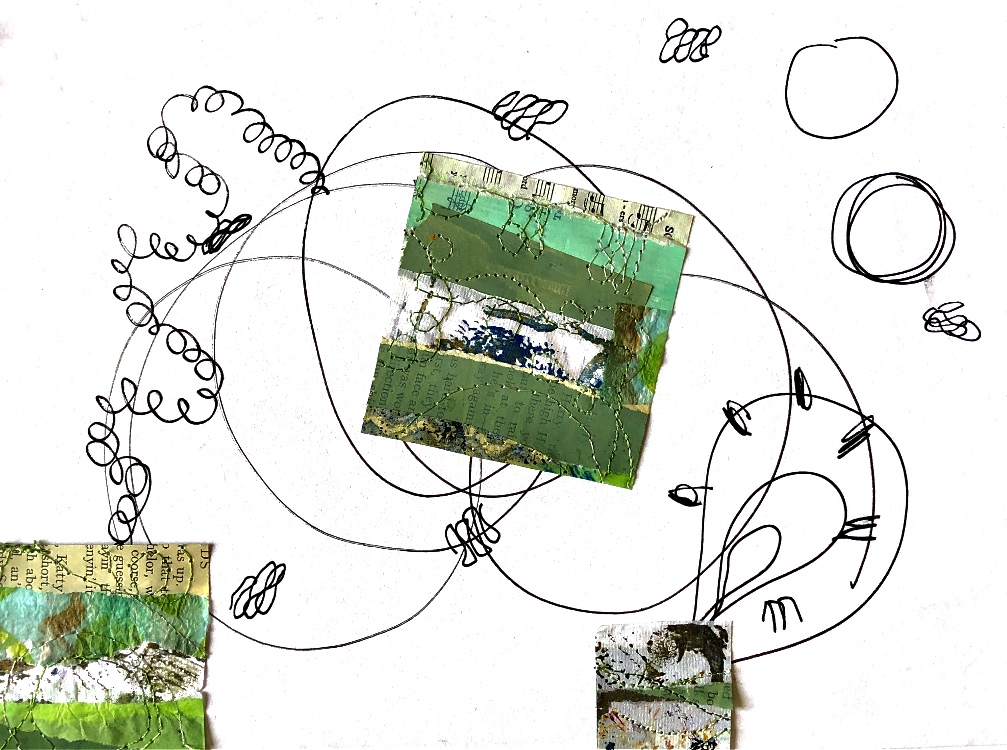
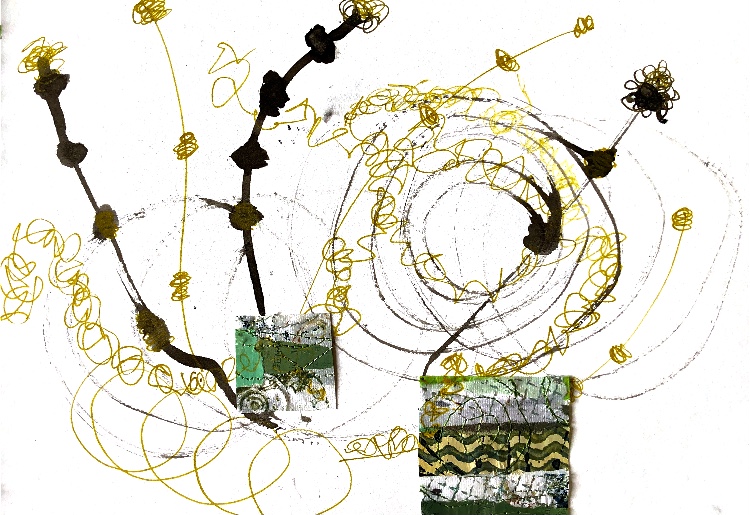
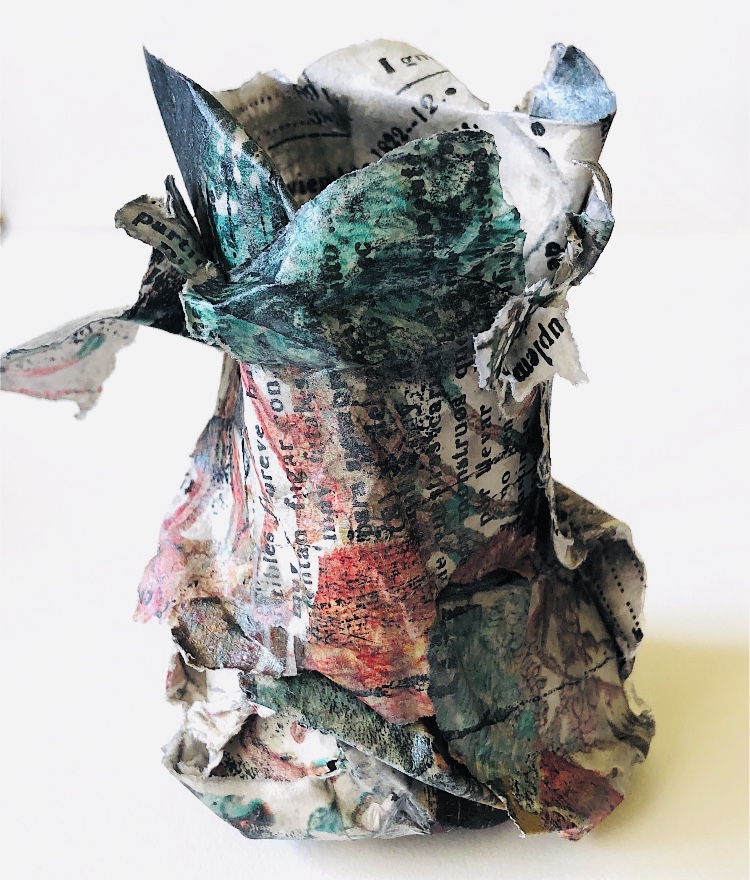
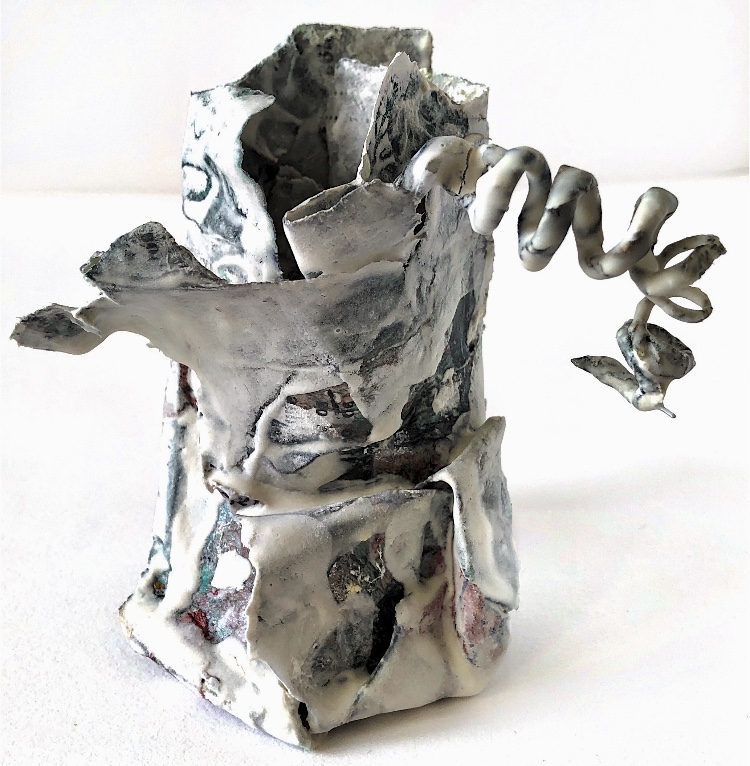
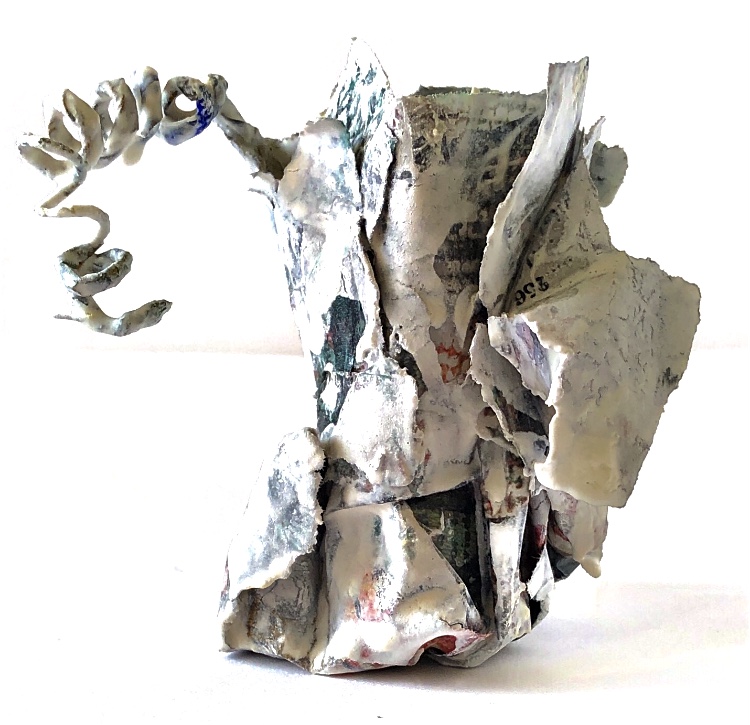
Fig, 12. For me making collages was a natural development from printmaking. Using the Snapseed App on my tablet I was able to put images together and create unusual patterns which I then made into torn paper collage. These made surreal, strange pieces which I combined with my resin samples. I like the contrast of materials and shapes, making an other wordly scene. The colours are bold and the torn paper lines lead the viewer to the solid object made of resin and other materials which looks like it has dropped there from space.
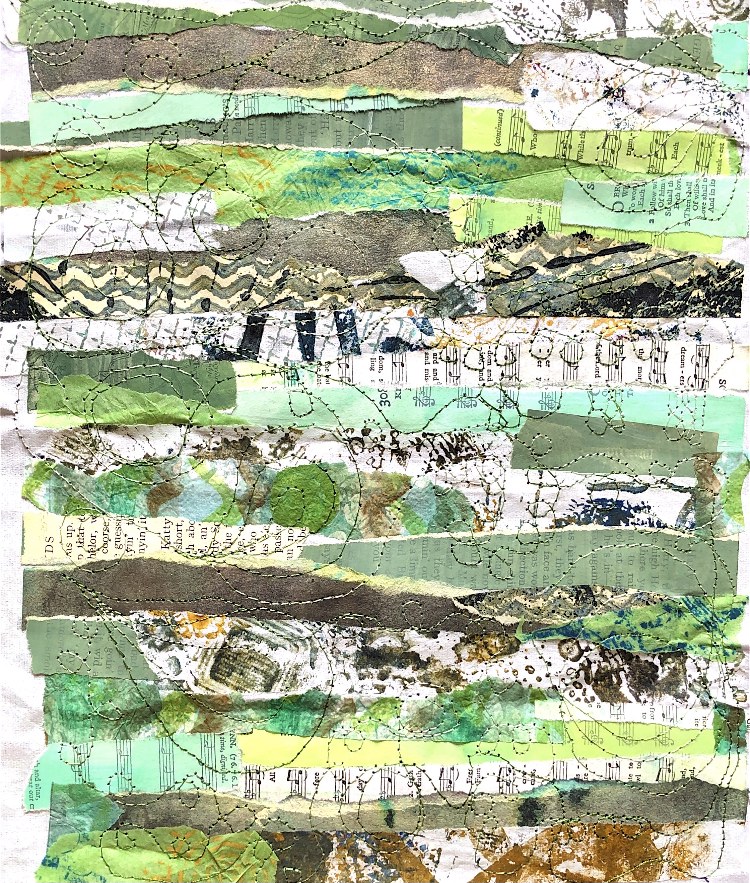
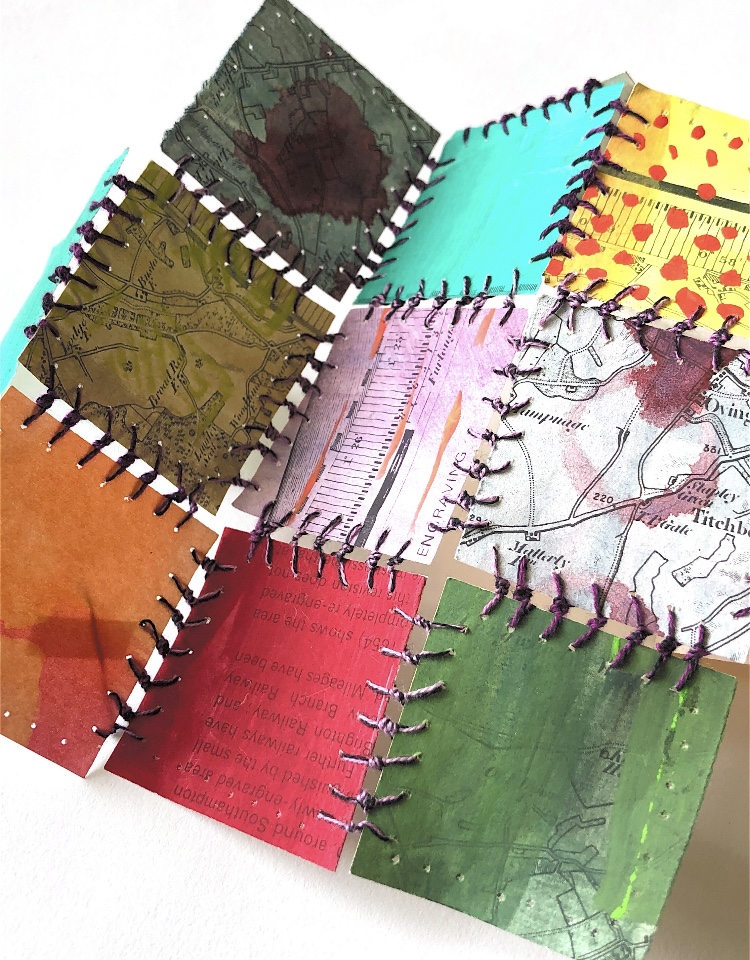
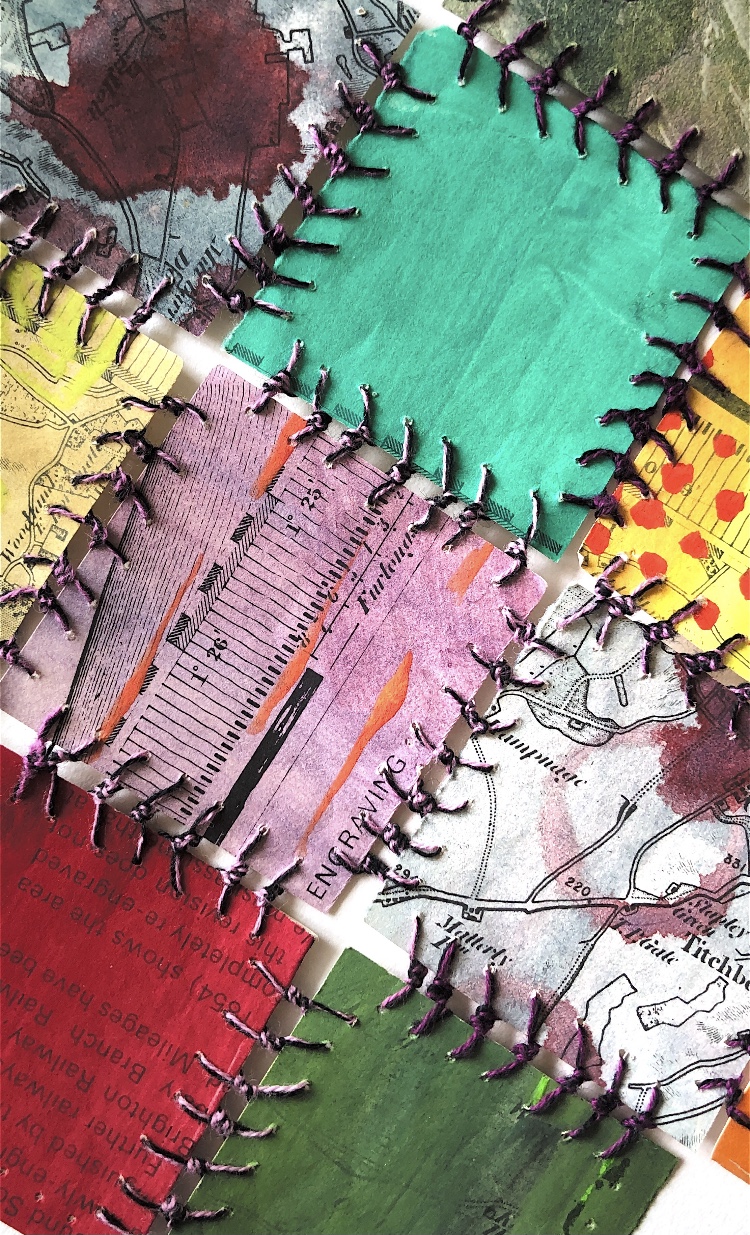
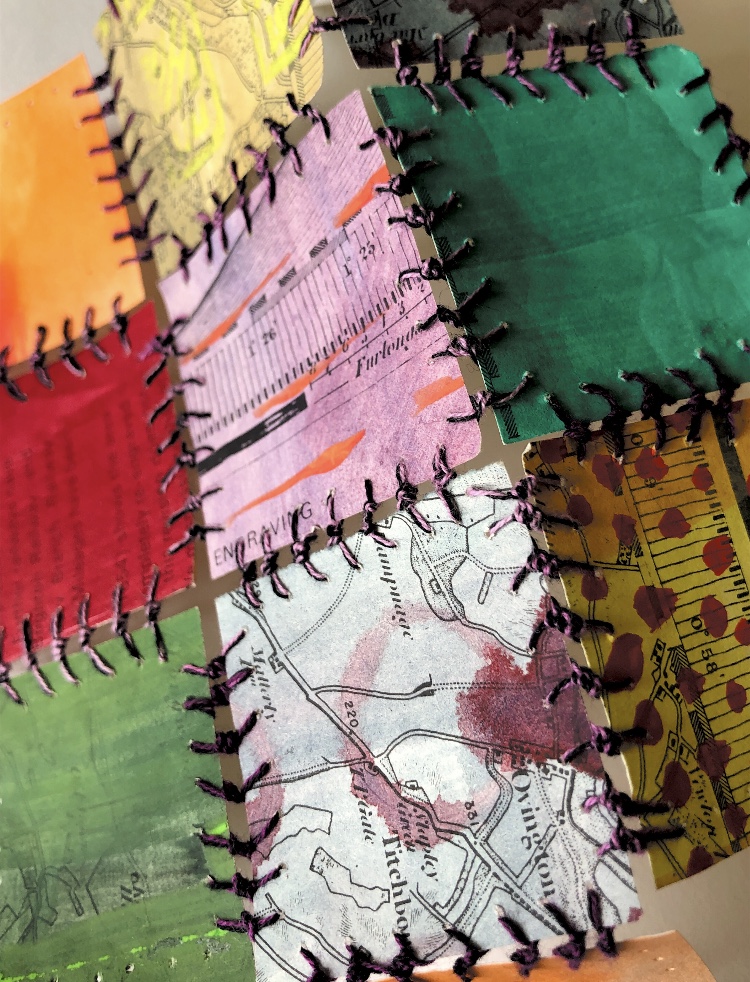
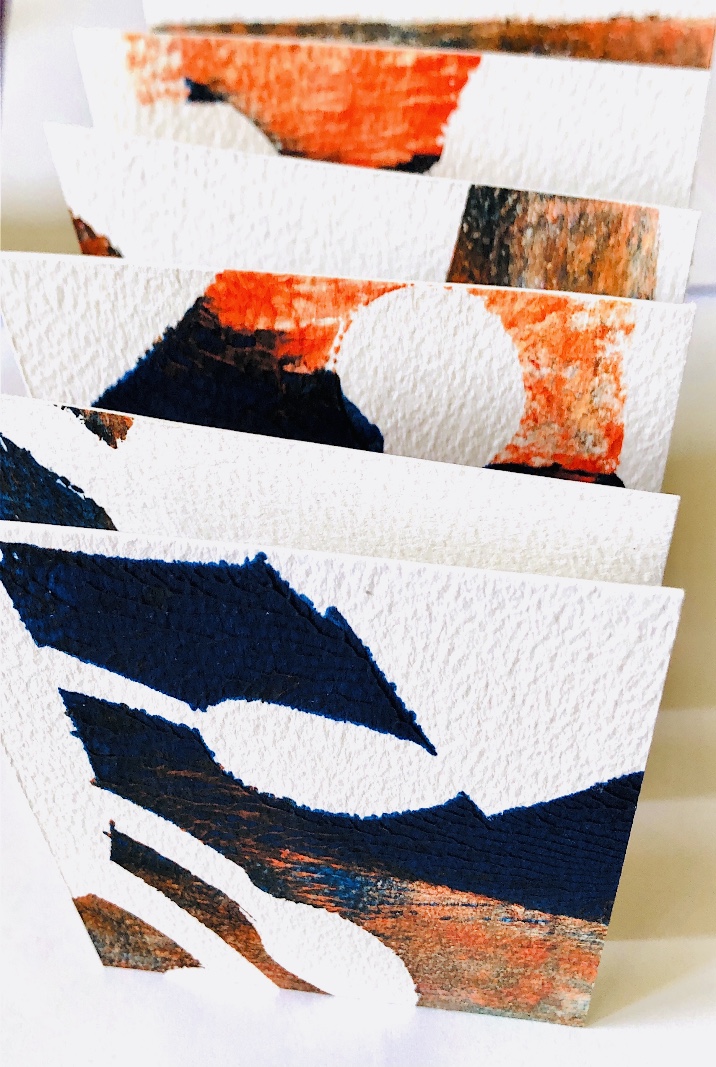
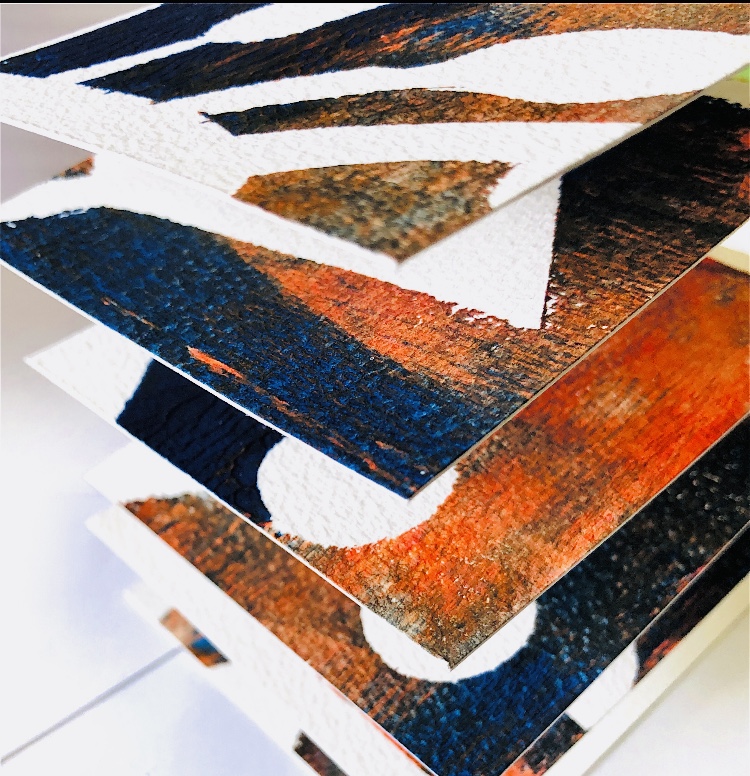
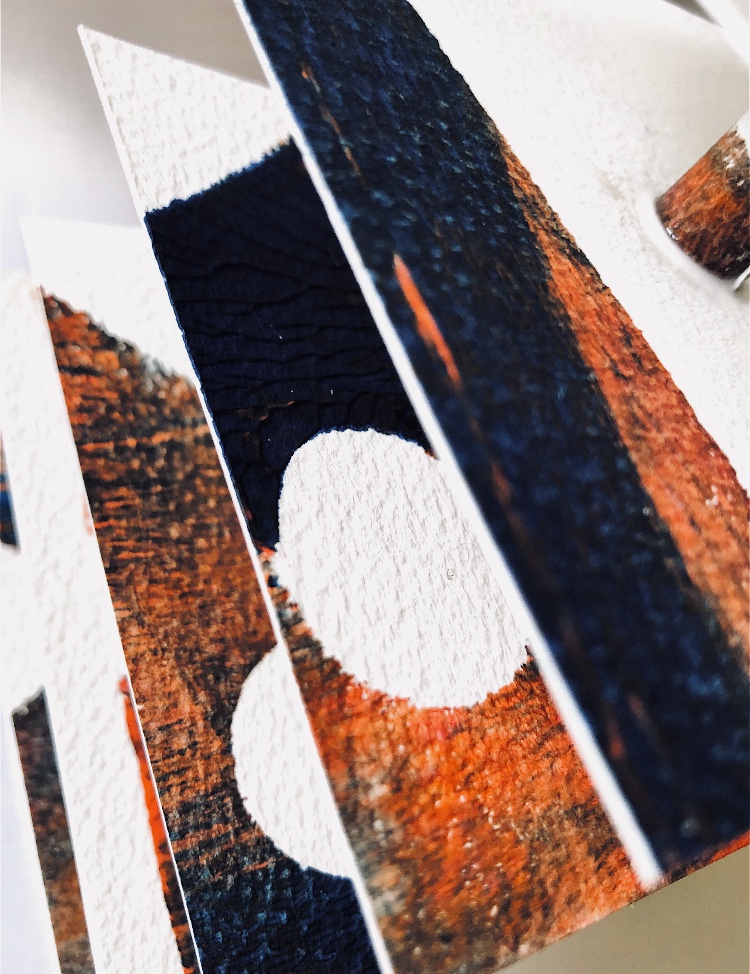
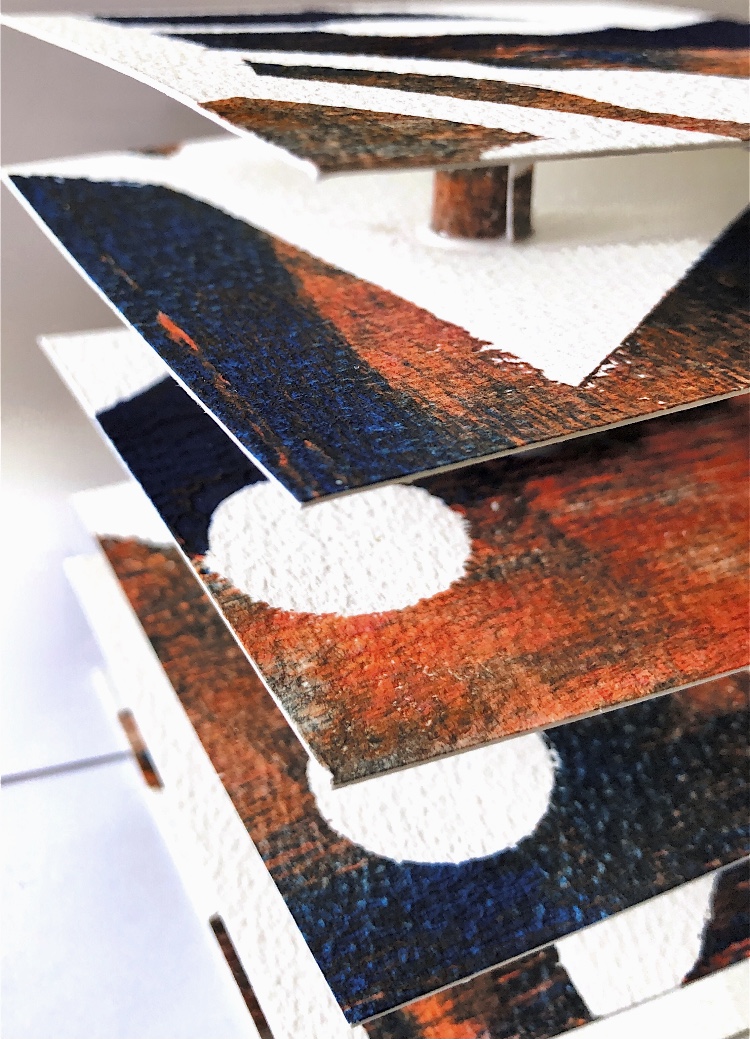
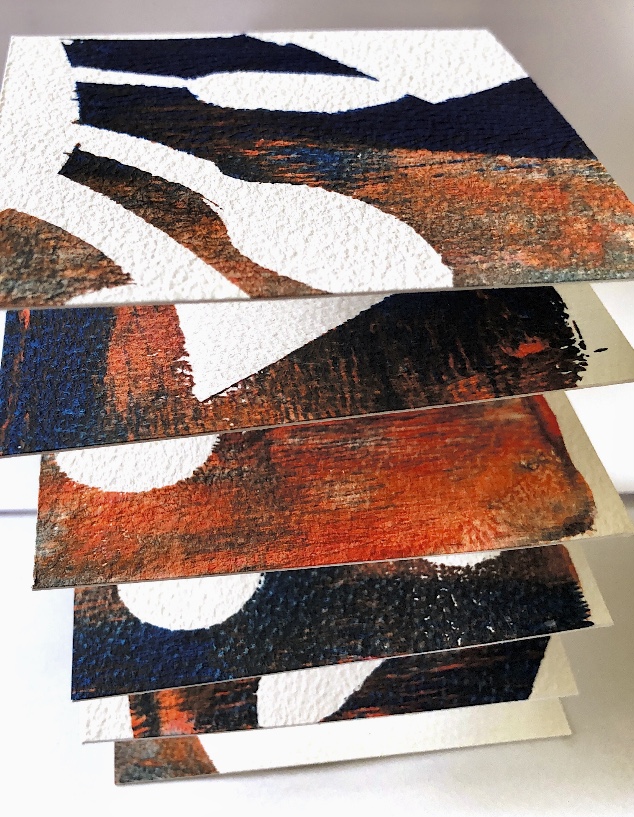
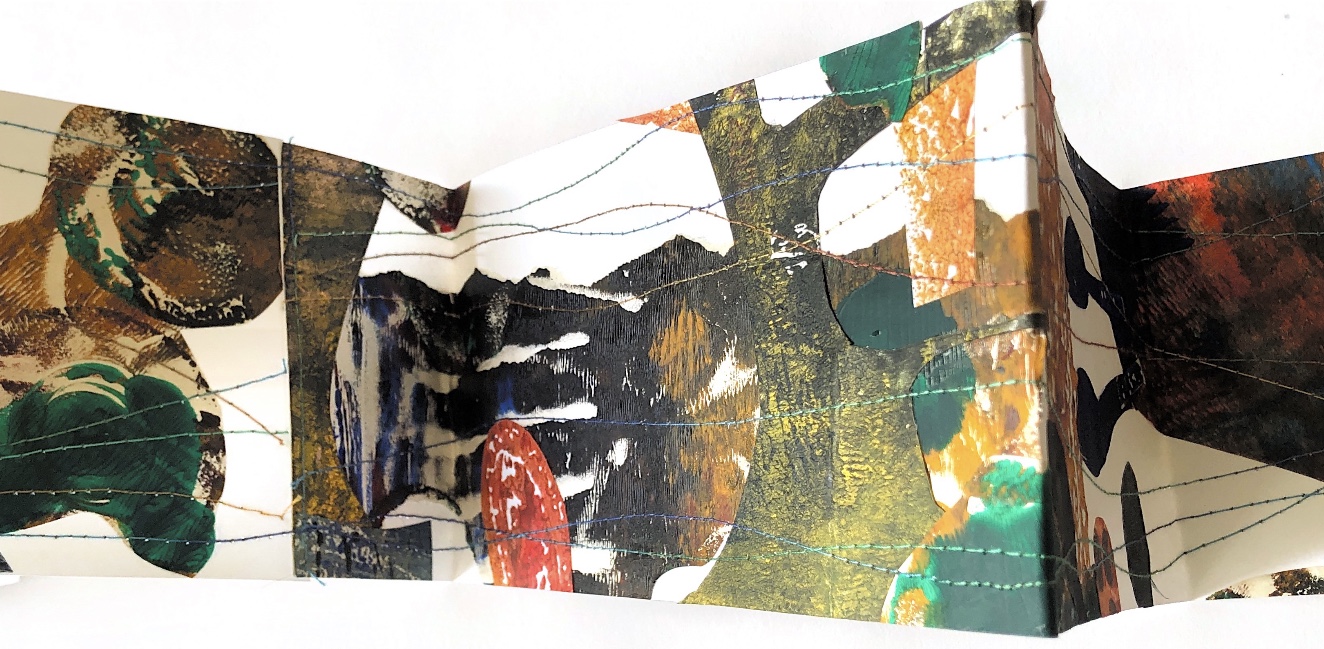
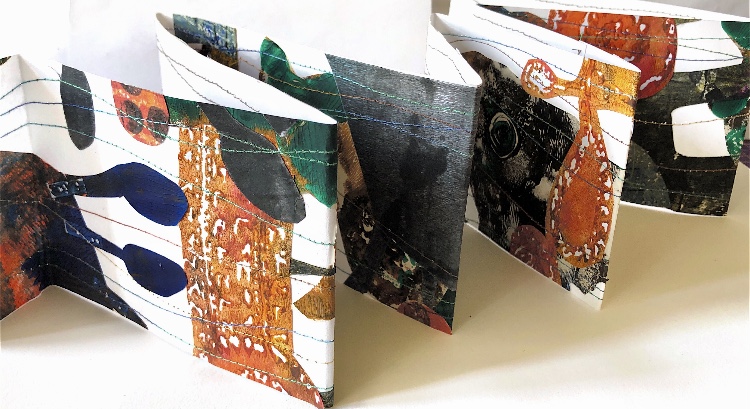
Fig, 13. Moving along the printing and collage theme I made these books with lots of leftover cutouts and added some stitch. Looking closely there are lots of landscapes which could provide inspiration for further work. I think these are fantasy landscapes as they don’t look real in shape, colour or perspective. The colours in these books would make different starting points for colour palettes for my next body of work.
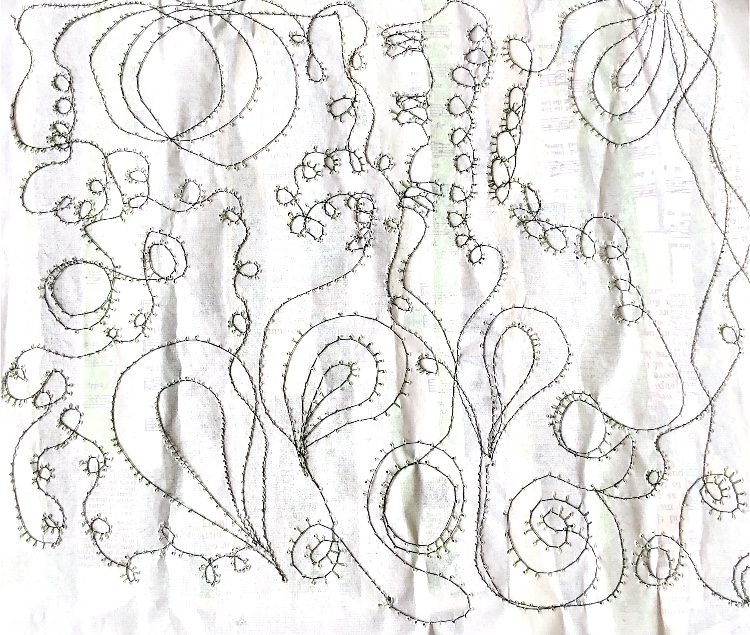
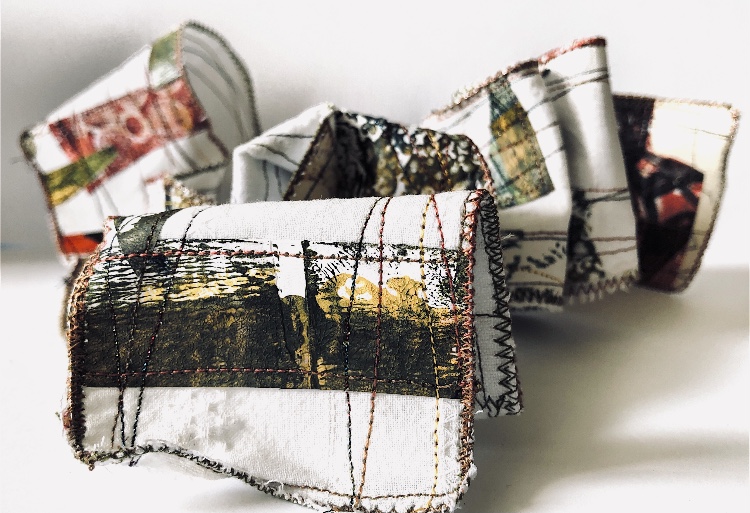
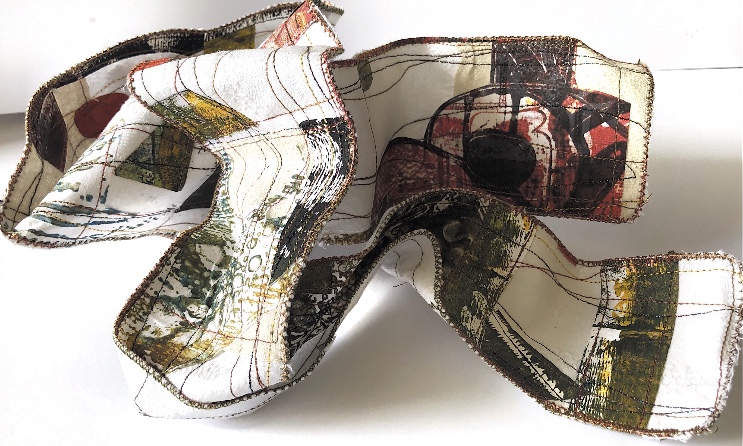
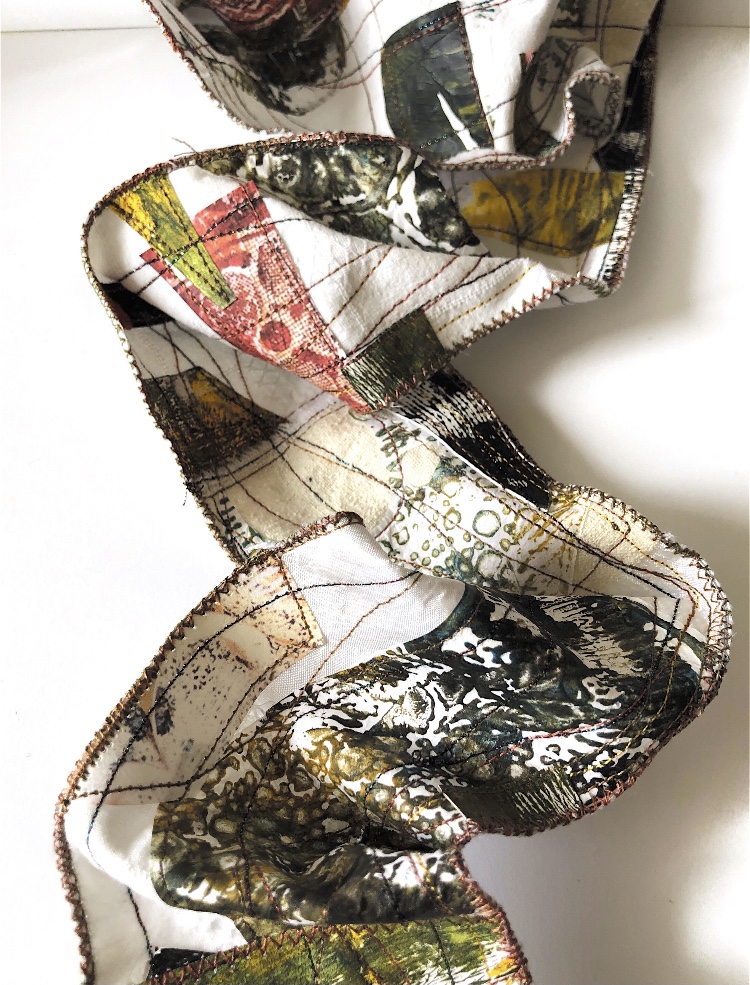
Fig, 14. Having completed MMT4, before starting my review, I decided to make a fabric strip a bit like the book above, with the scraps on my work desk. I stayed with the same idea of stitching lines to keep the eye moving along the piece, and added wire along the edges so that it could be manipulated into different shapes. The idea of a piece that the viewer could change to create another shape is something worth exploring I think.
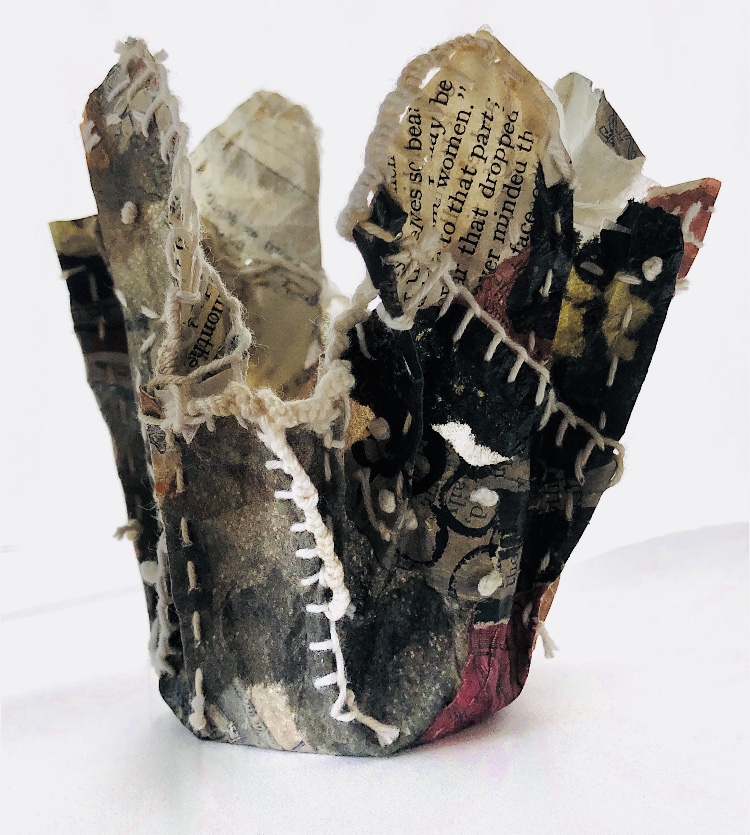
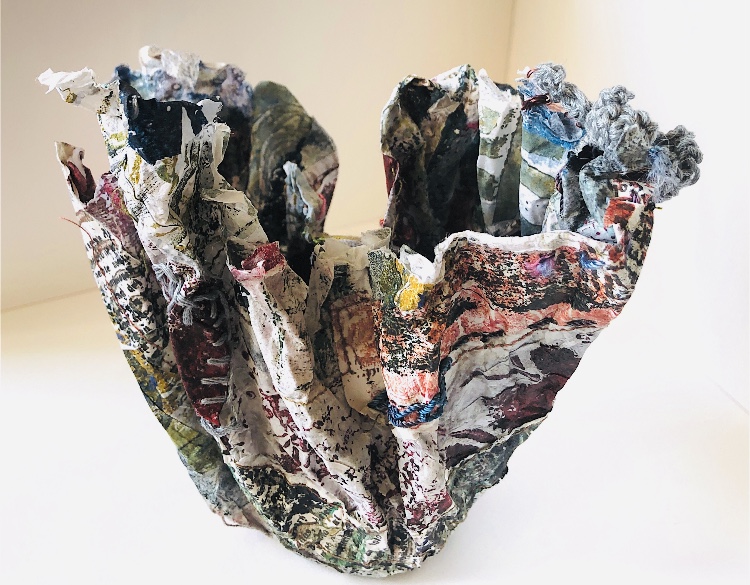
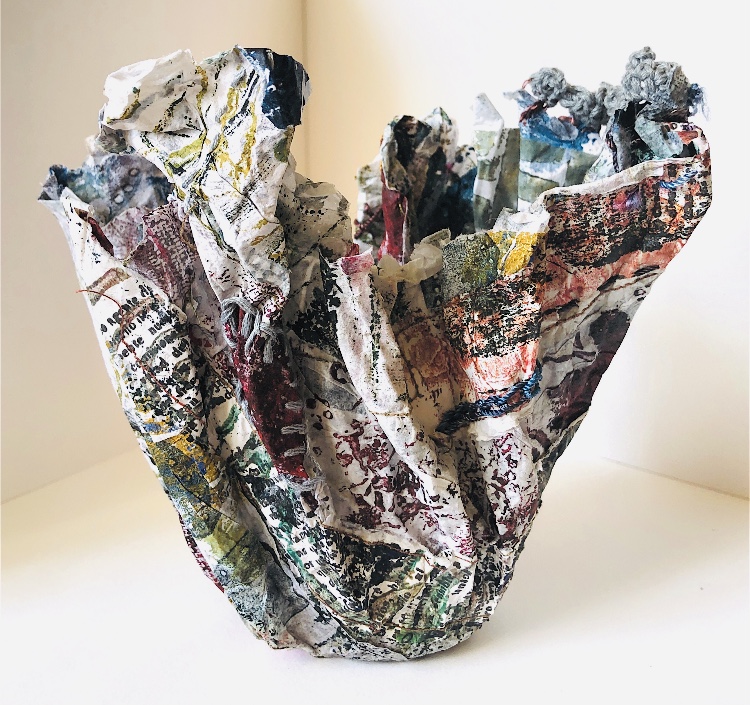
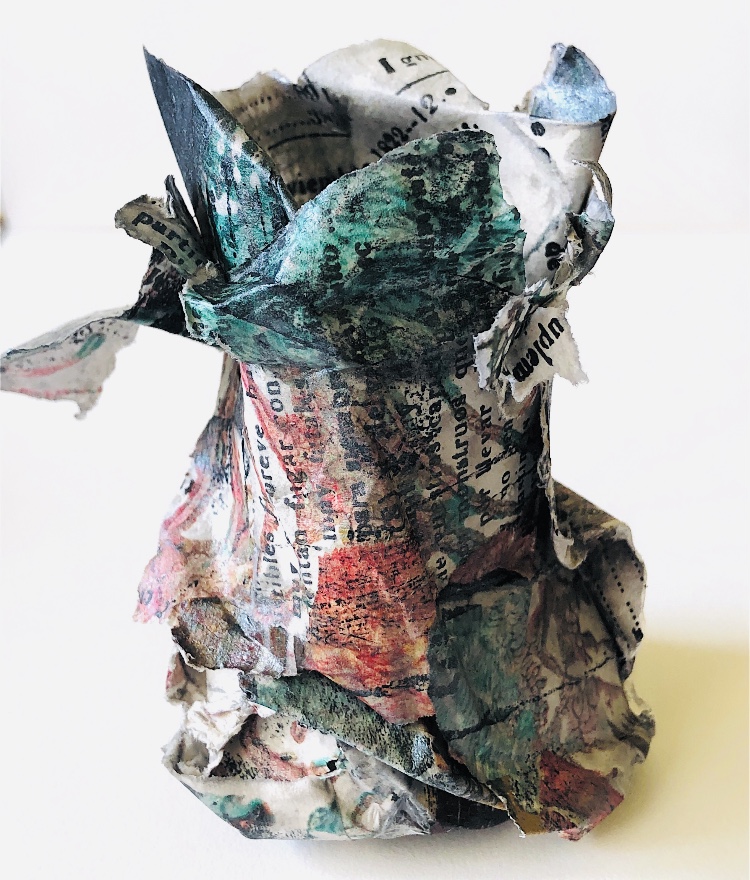
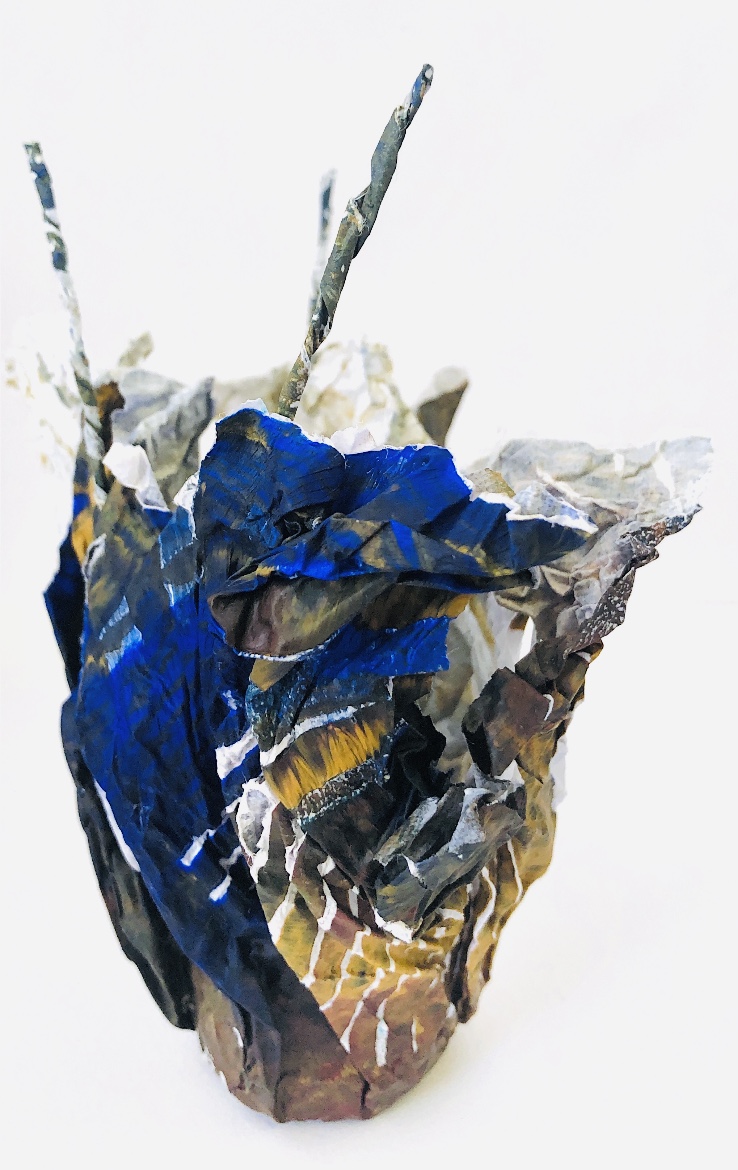
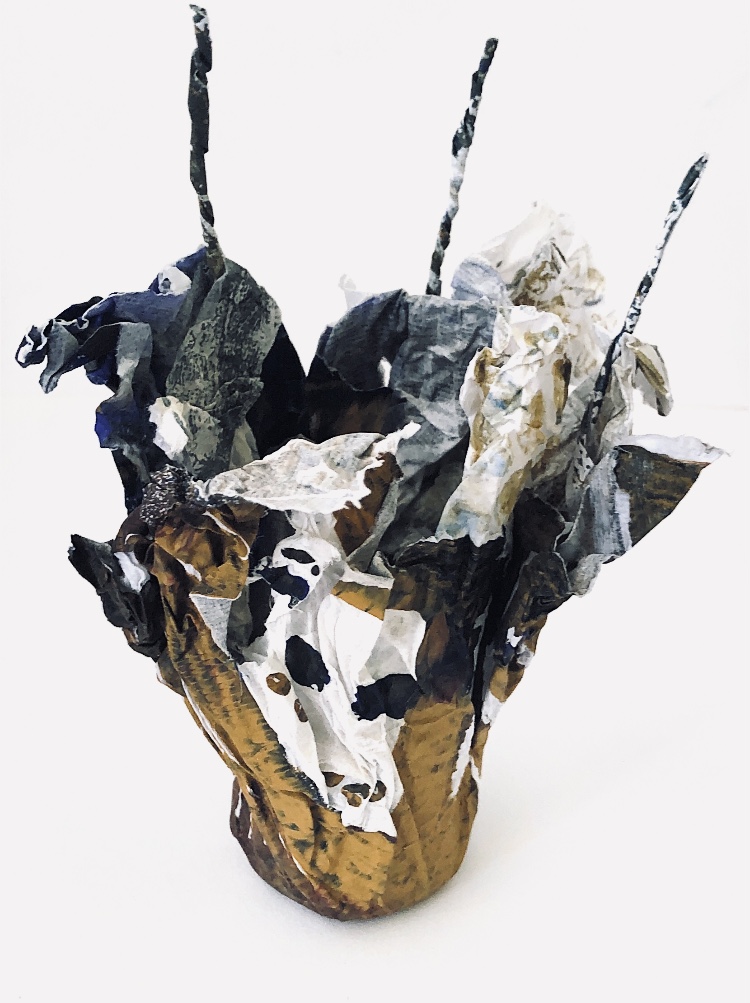
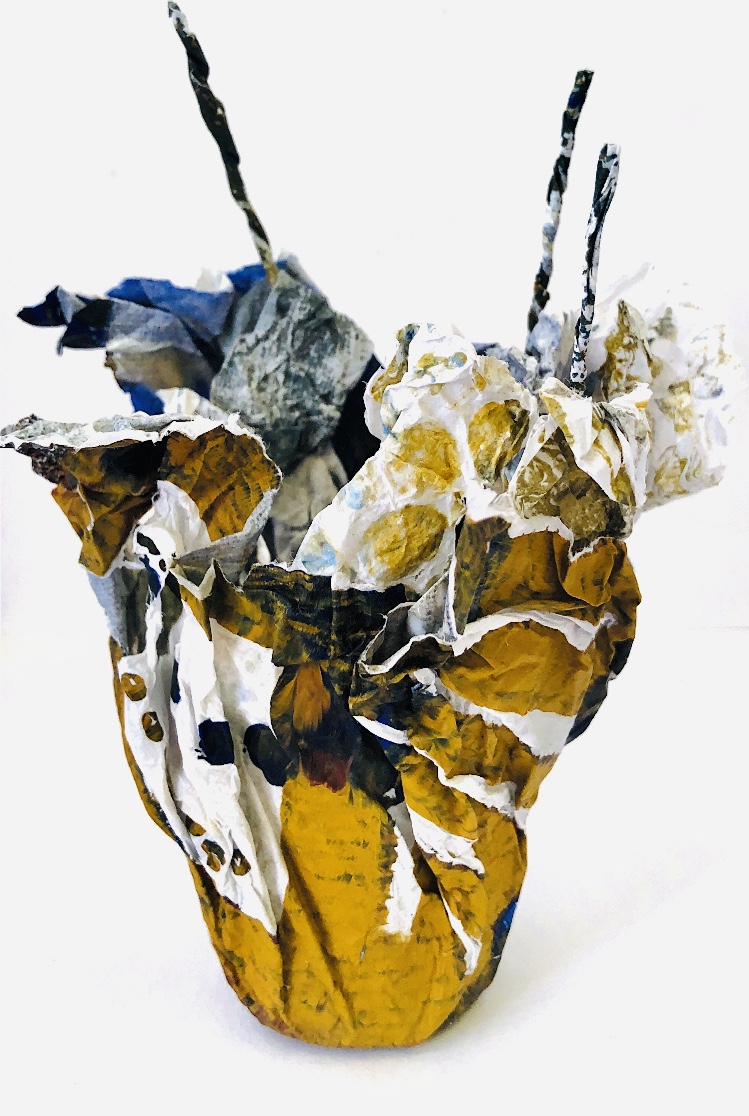
From reviewing these standout pieces I can see that I am developing my personal voice in my ideas and how I develop pieces. Assemblage, sculpture, wrapping, collage with printed materials and mixing different techniques and materials are areas that really stand out. I like to use pattern and detail alongside bold shapes. My themes of buried treasure, surreality, contrast, assemblage and manipulation can all be combined and developed.
I would like to experiment more with resin, – by combining it with plaster and other materials, and using different molds. Assemblage of multiple pieces is also something that interests me, and wrapping/tying together different materials.







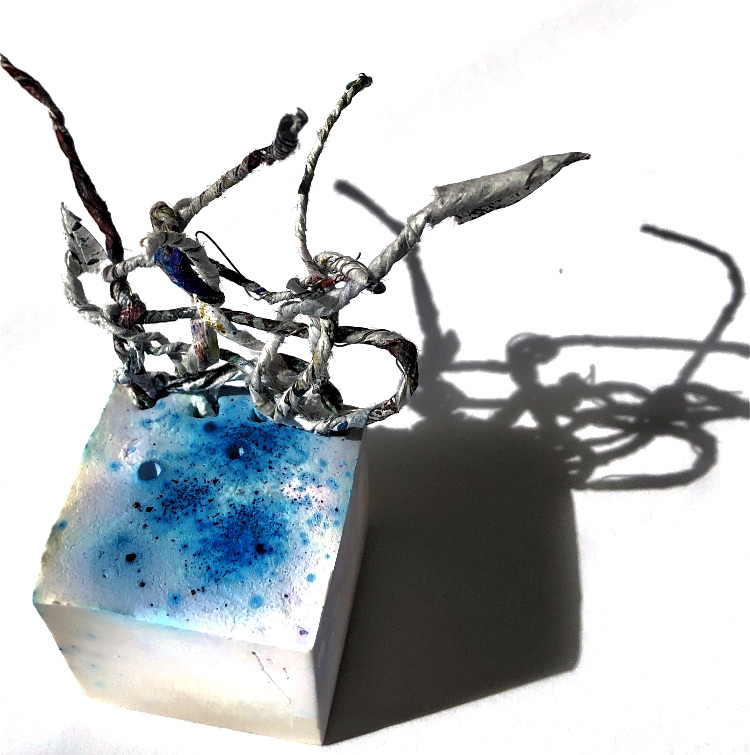
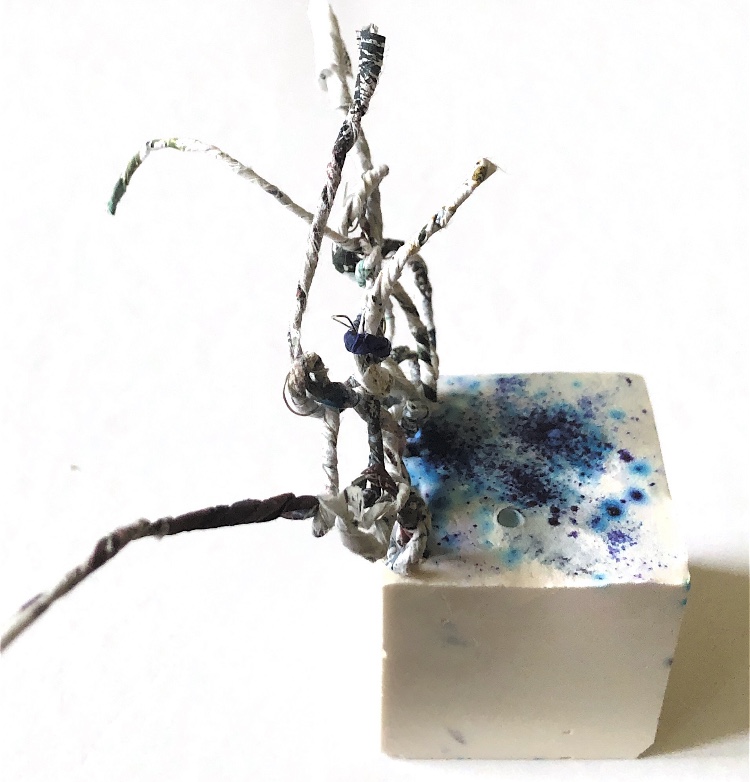
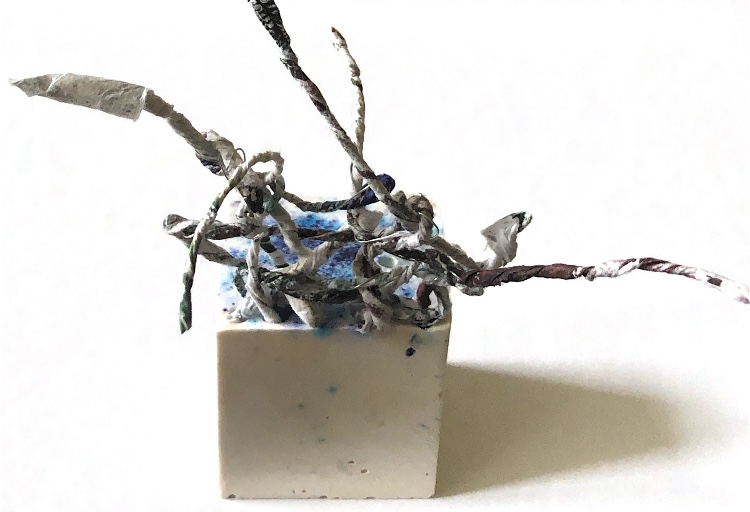
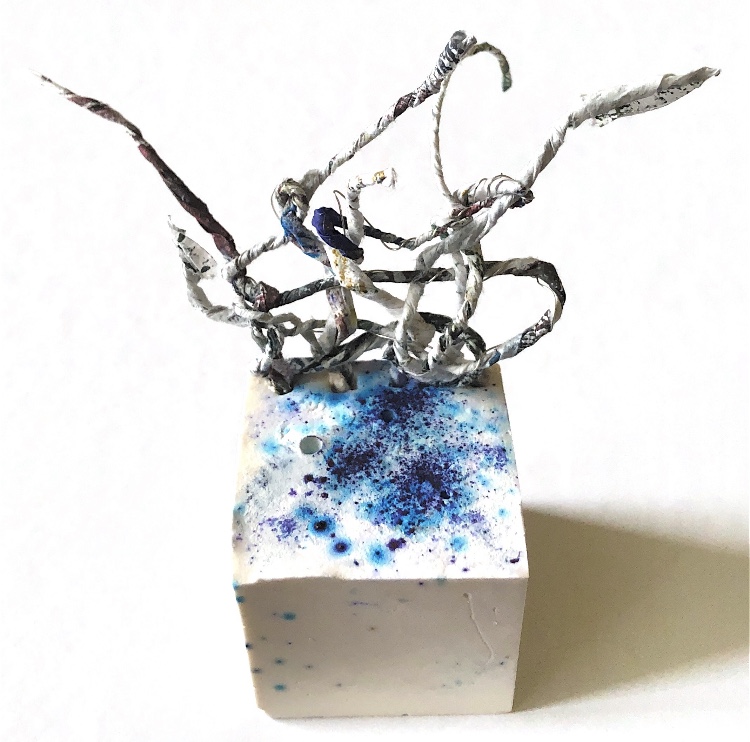






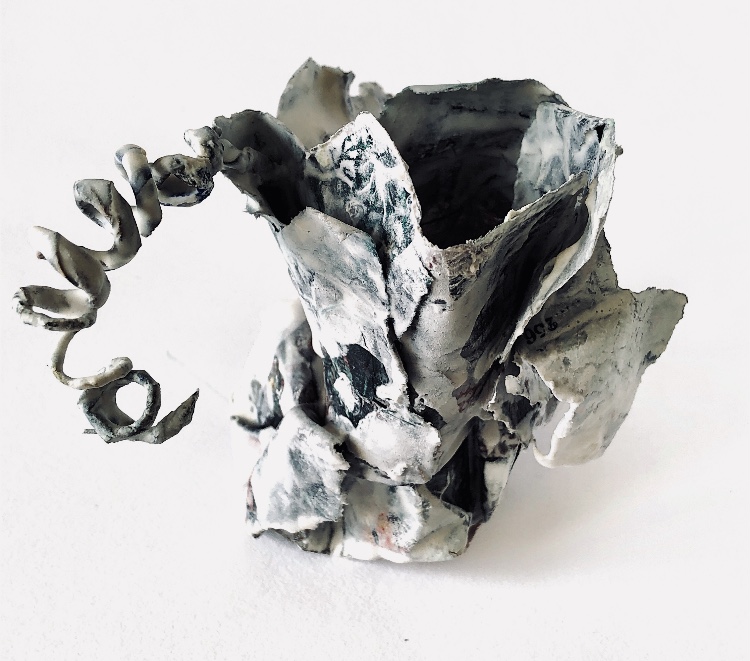
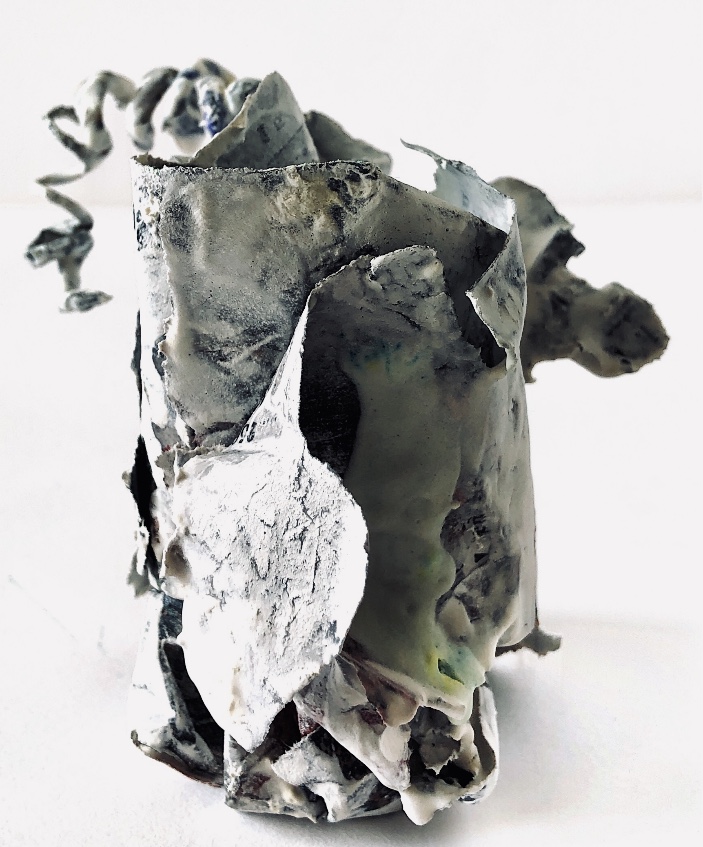
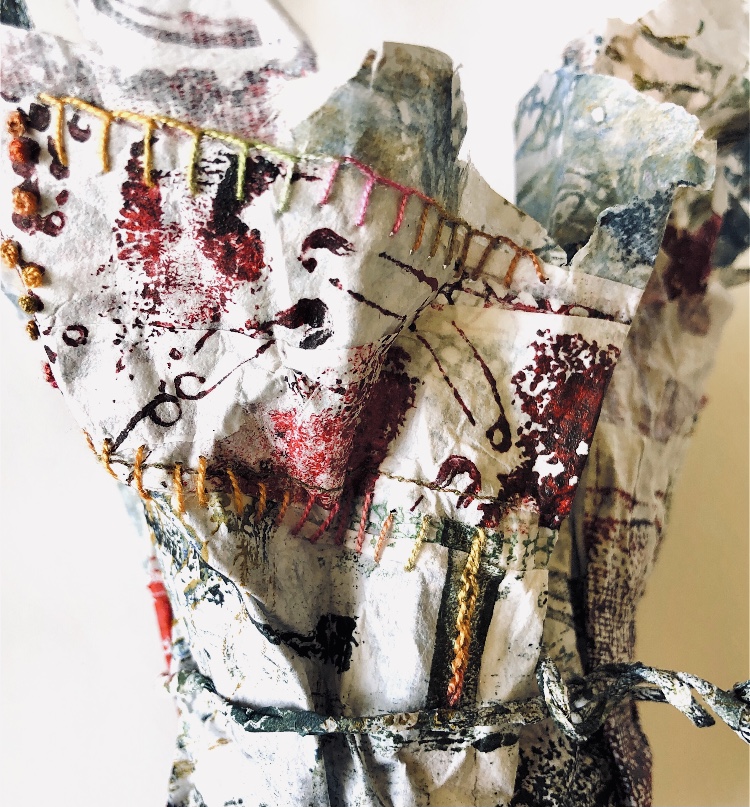
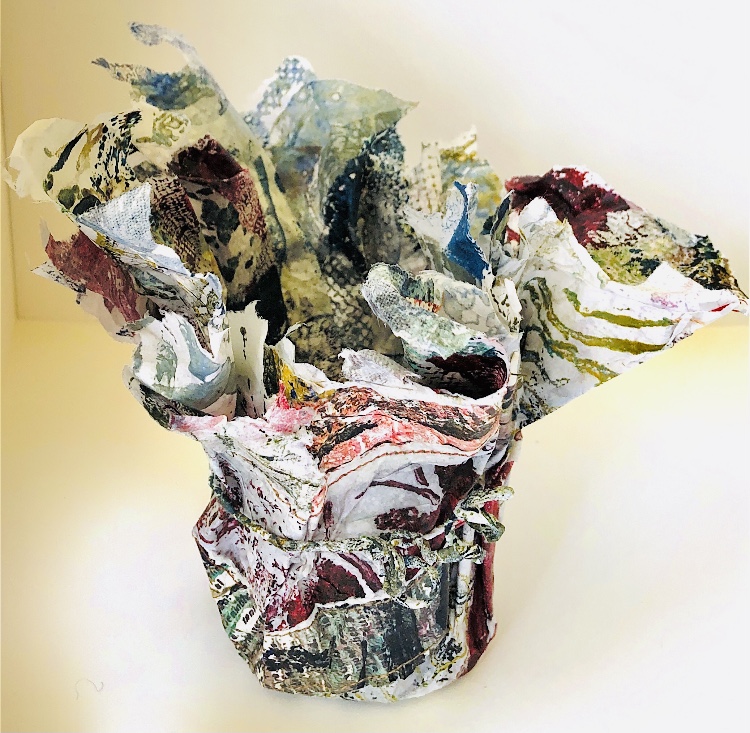
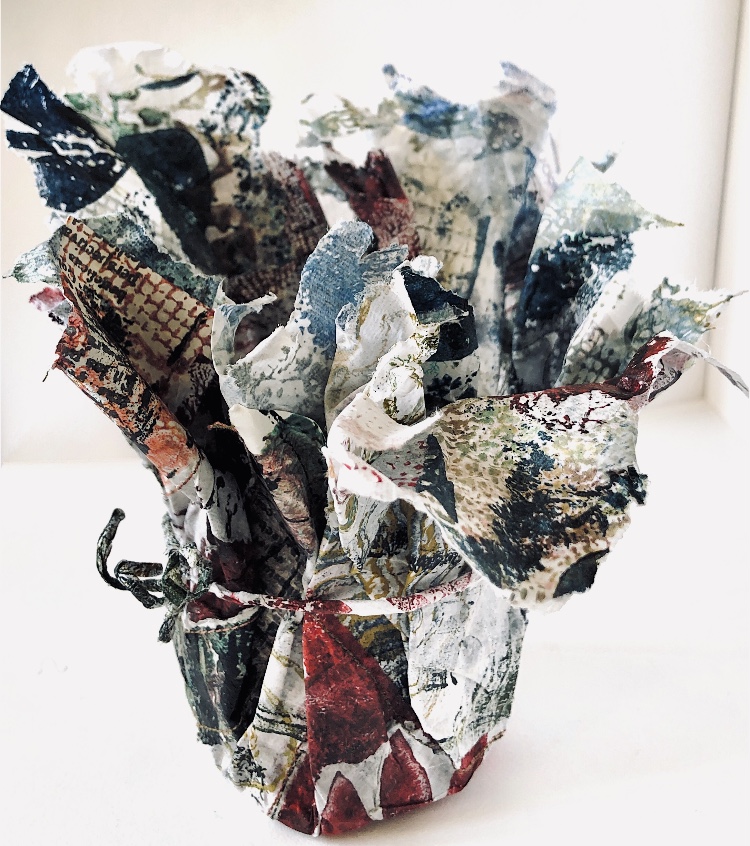
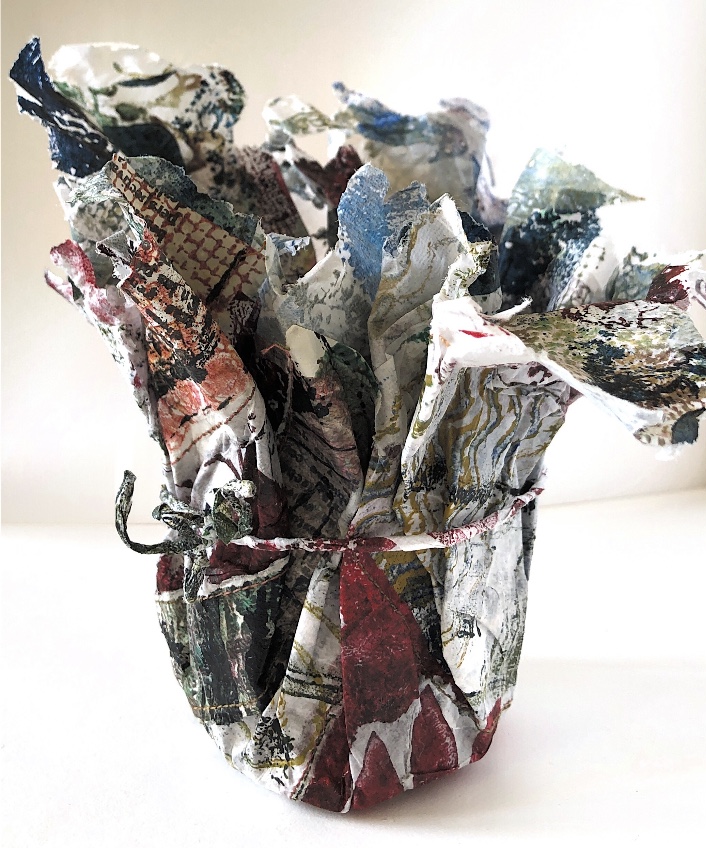
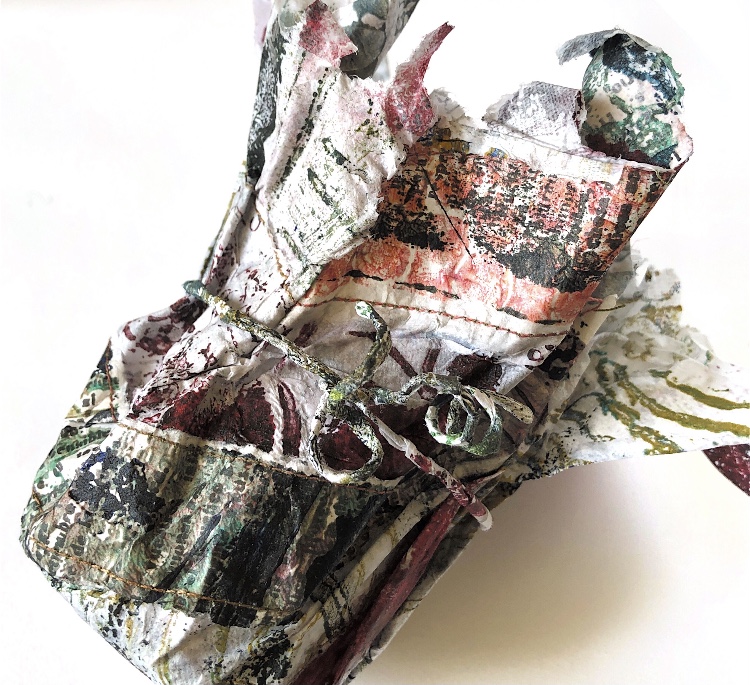
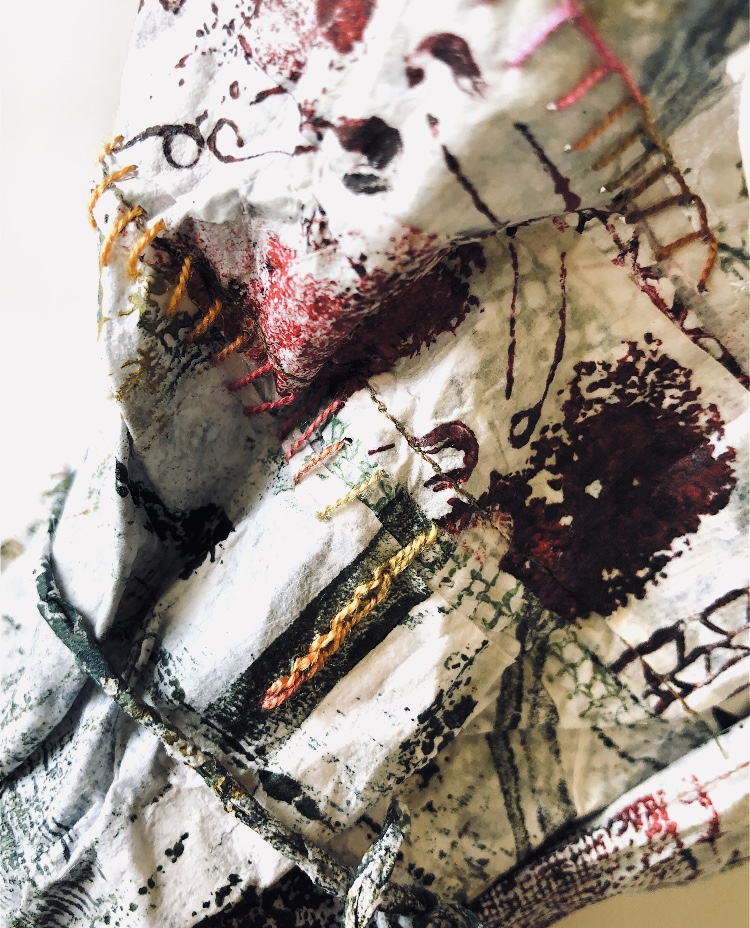






 Paper and stitch