Project 5 Puncturing and stitching
Exercise 2 Stitching
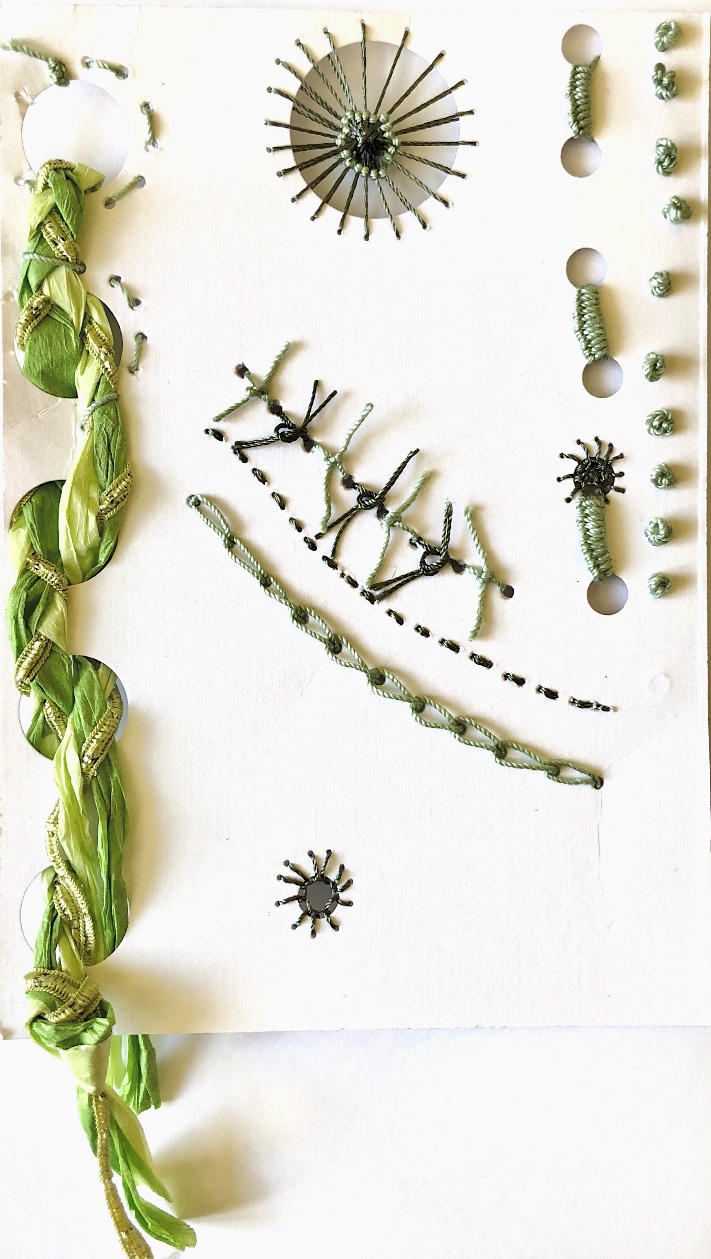
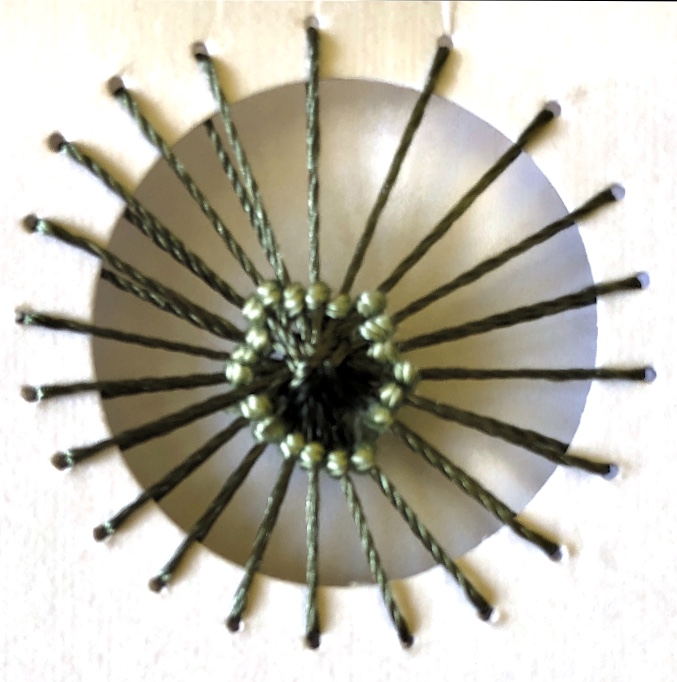
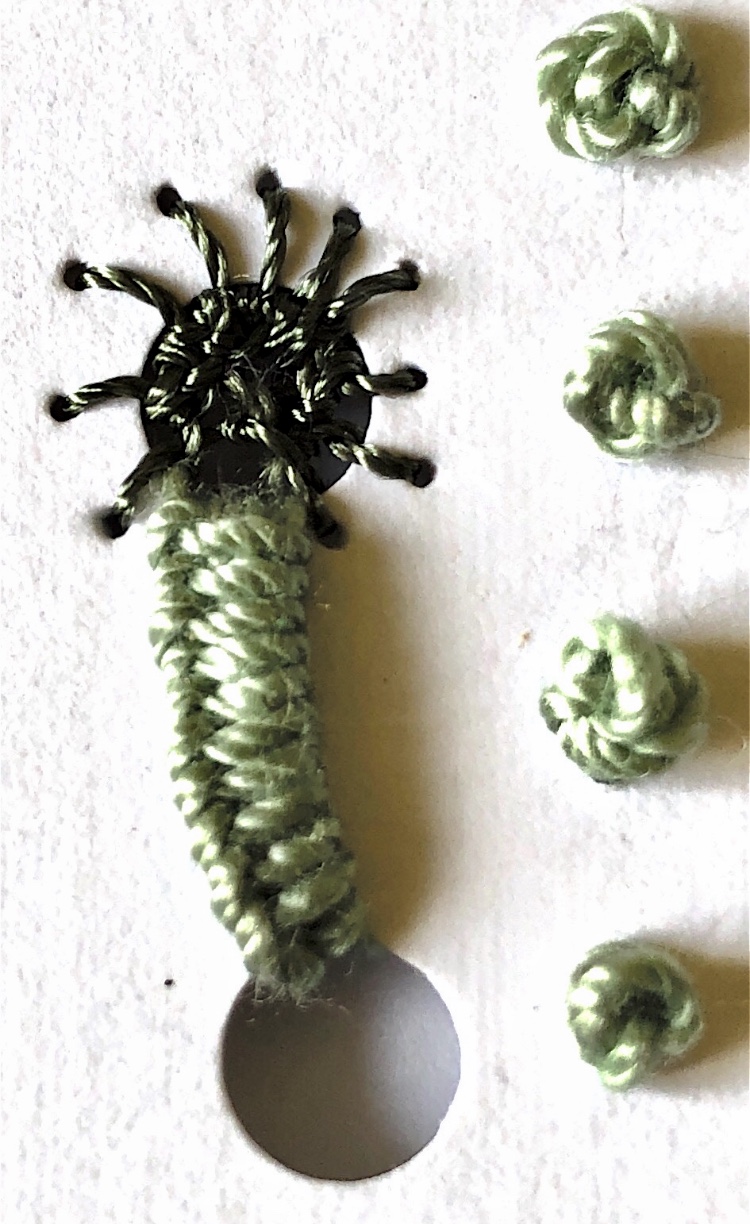
- Using a needle, hole punches and a bradawl to make holes in cartridge paper, I created a range of lines and spaces to stitch. The larger circles offered lots of ideas for combinations of threading and stitch.
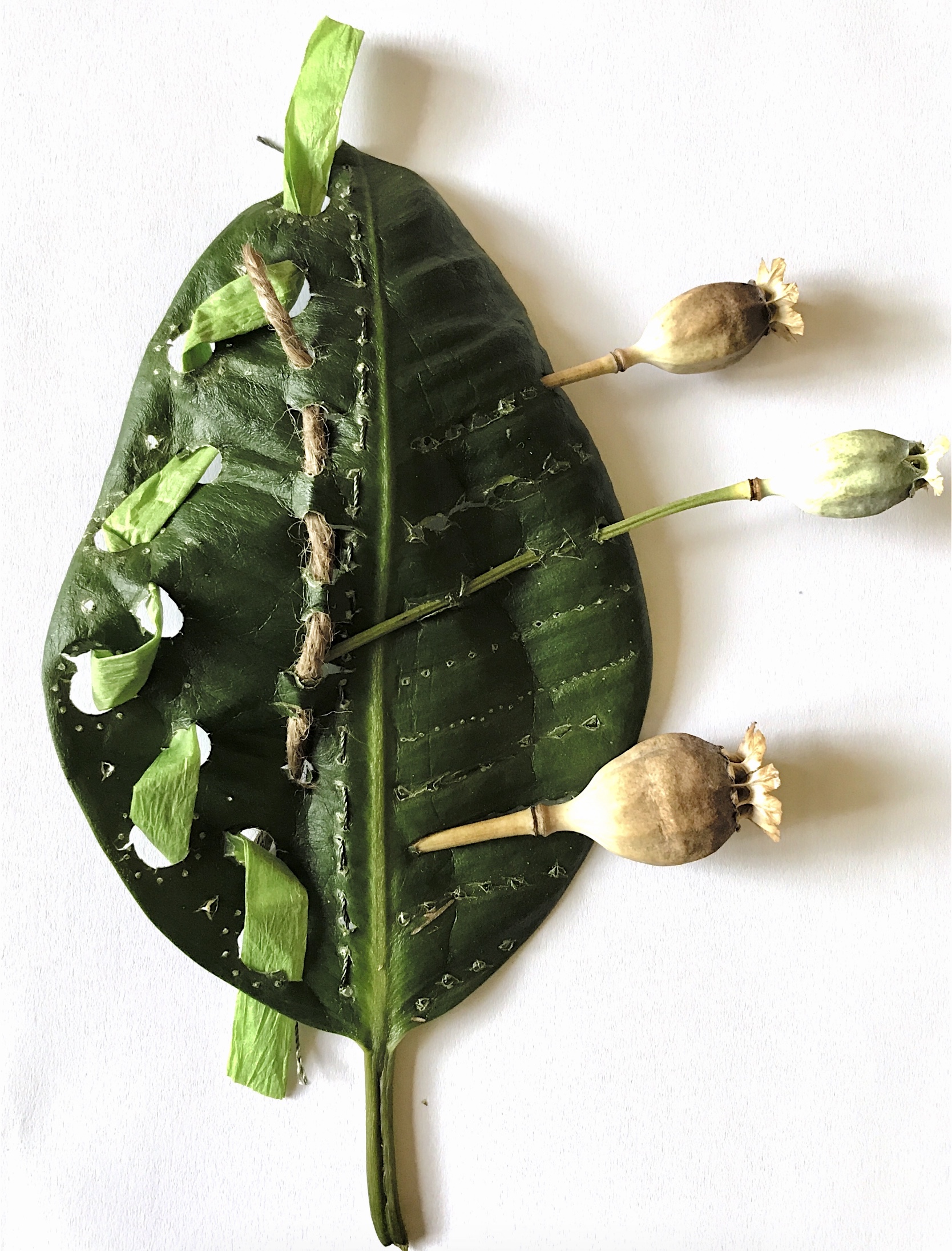
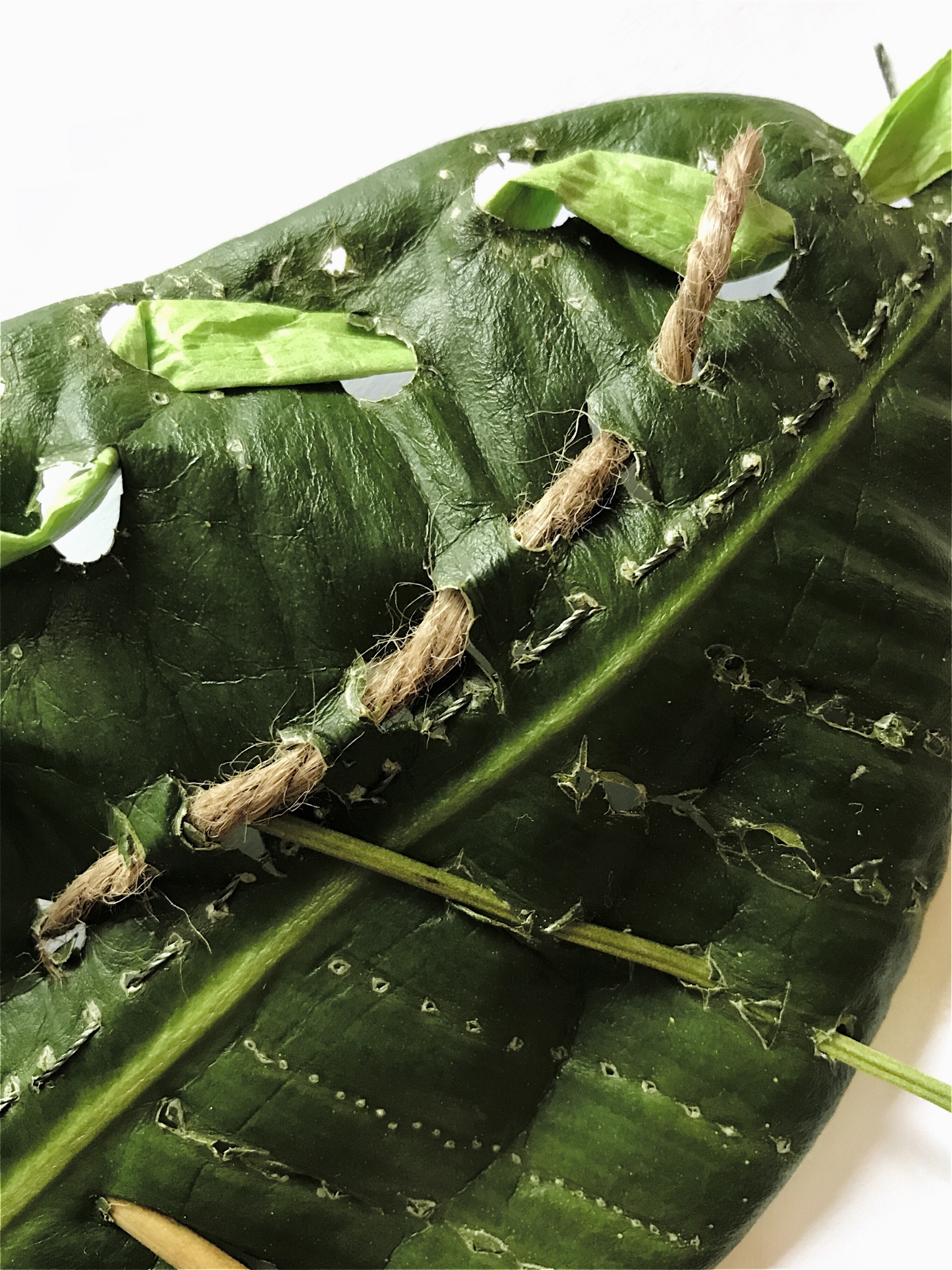
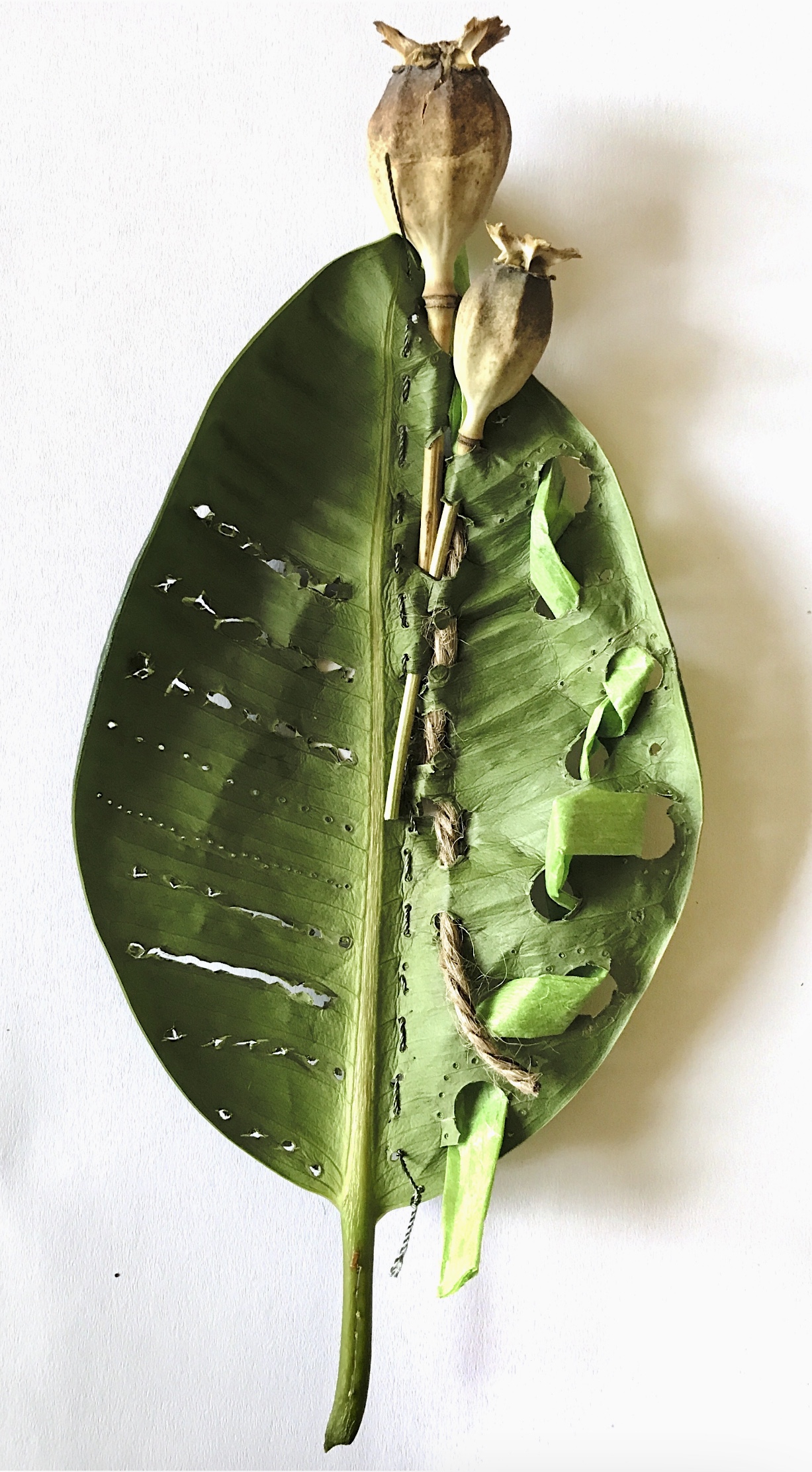
2. I used the leaf from the puncturing exercise and stitched into the holes with a variety of materials. I liked the look of the string as it is another natural material. As the leaf had become brittle – being a few days old, some of the punctured holes split when sewn.
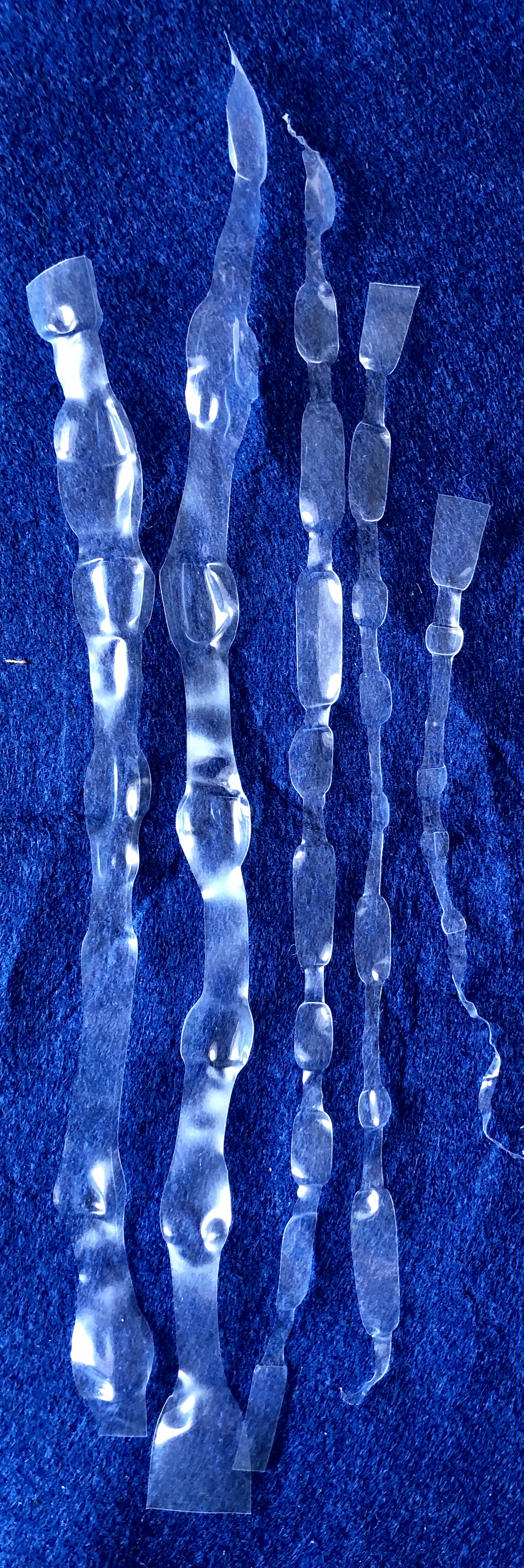
3. Stitching on clear plastic is interesting as the stitching material can be seen through to the back of the plastic as well as on the front. I cut strips of the same plastic to stitch with and found that stretching these strips created intriguing shapes as seen below. Ribbon, thick string, paper, and fine yarn all create different effects.
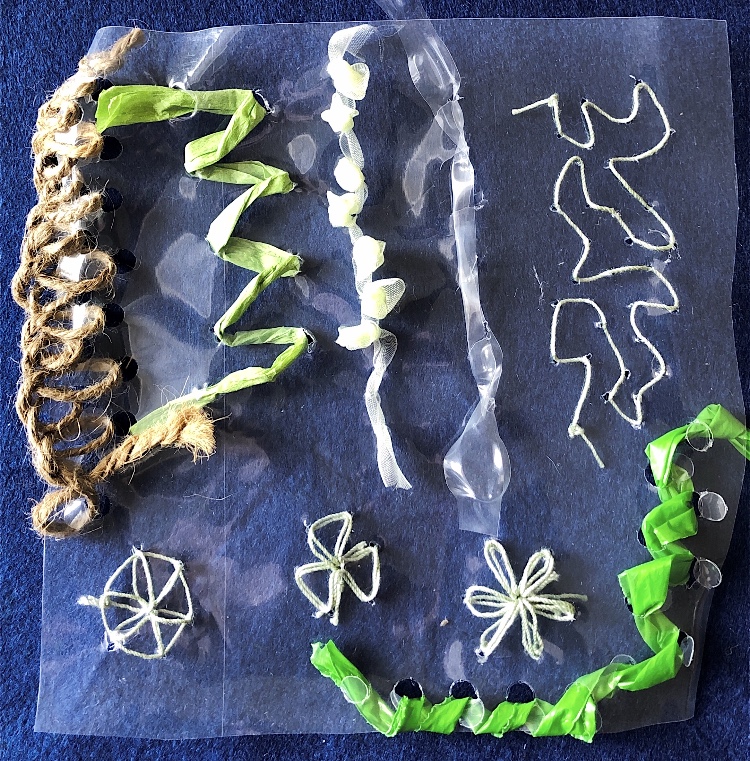
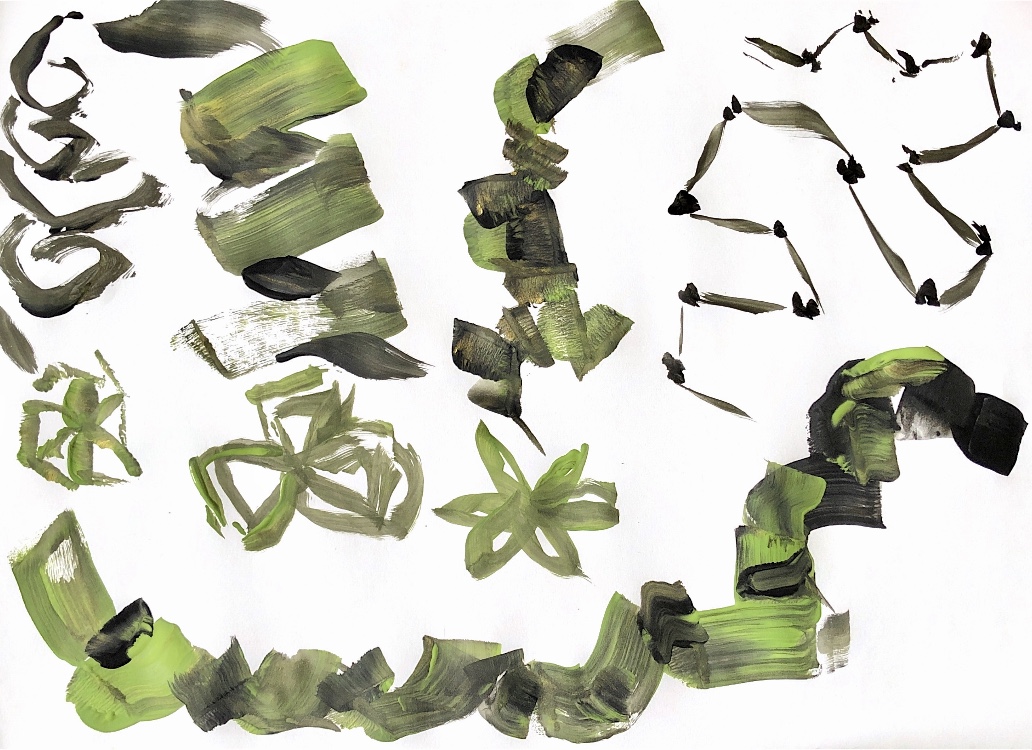
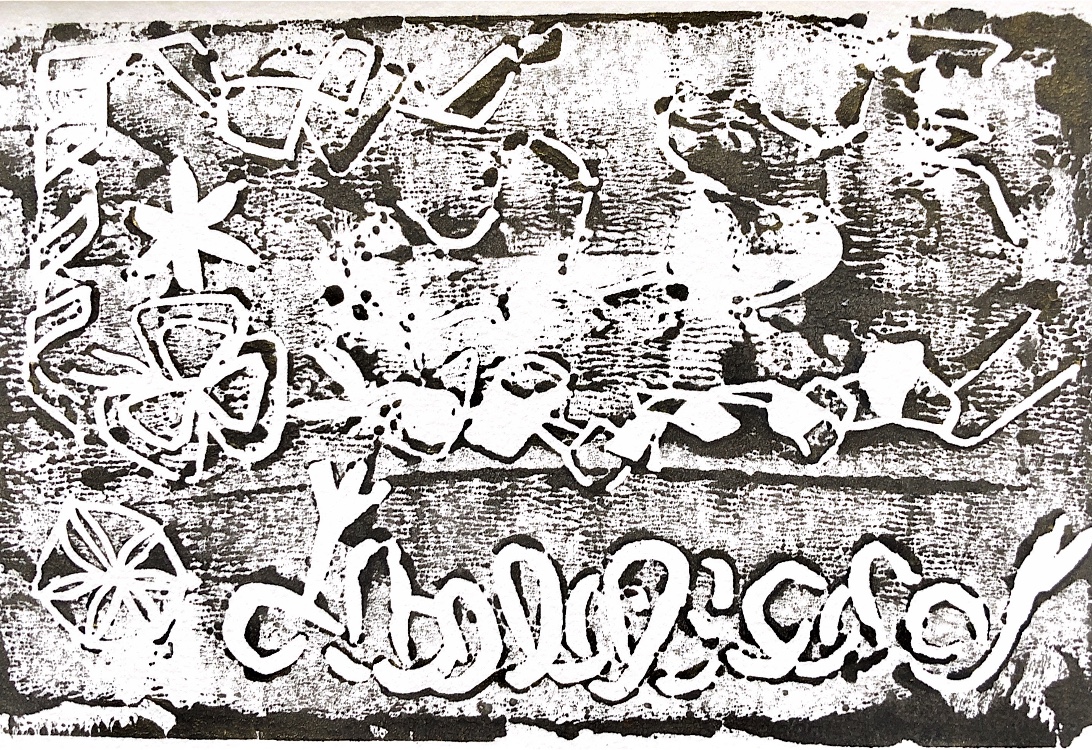
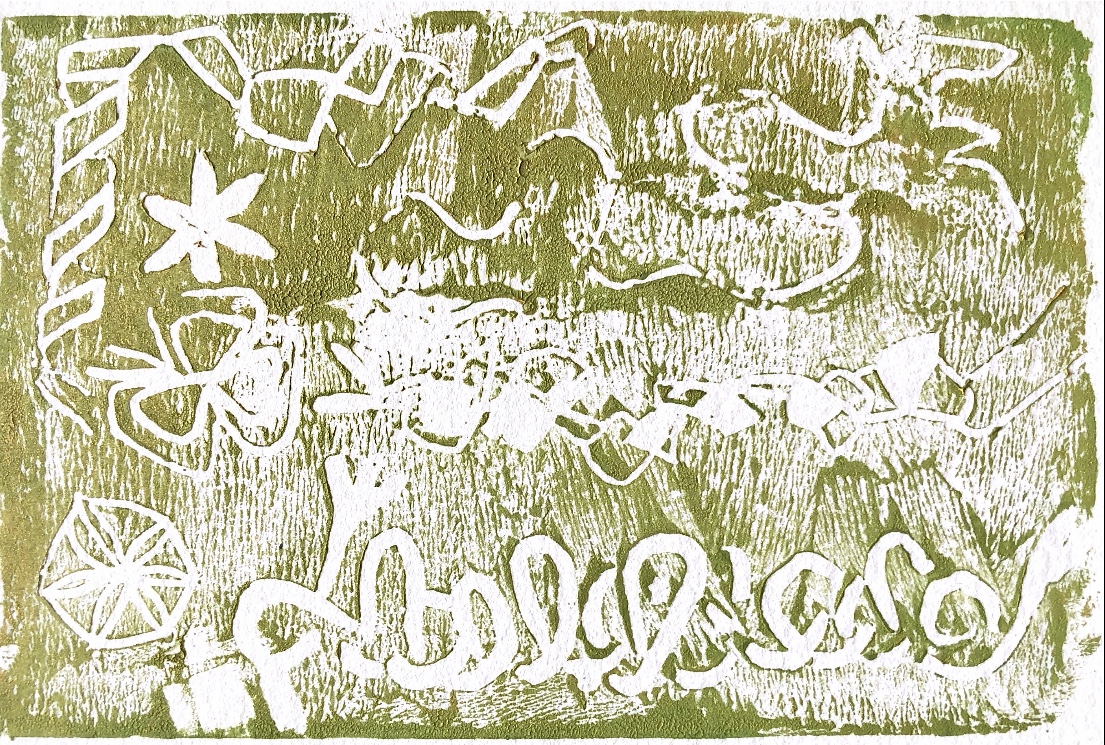
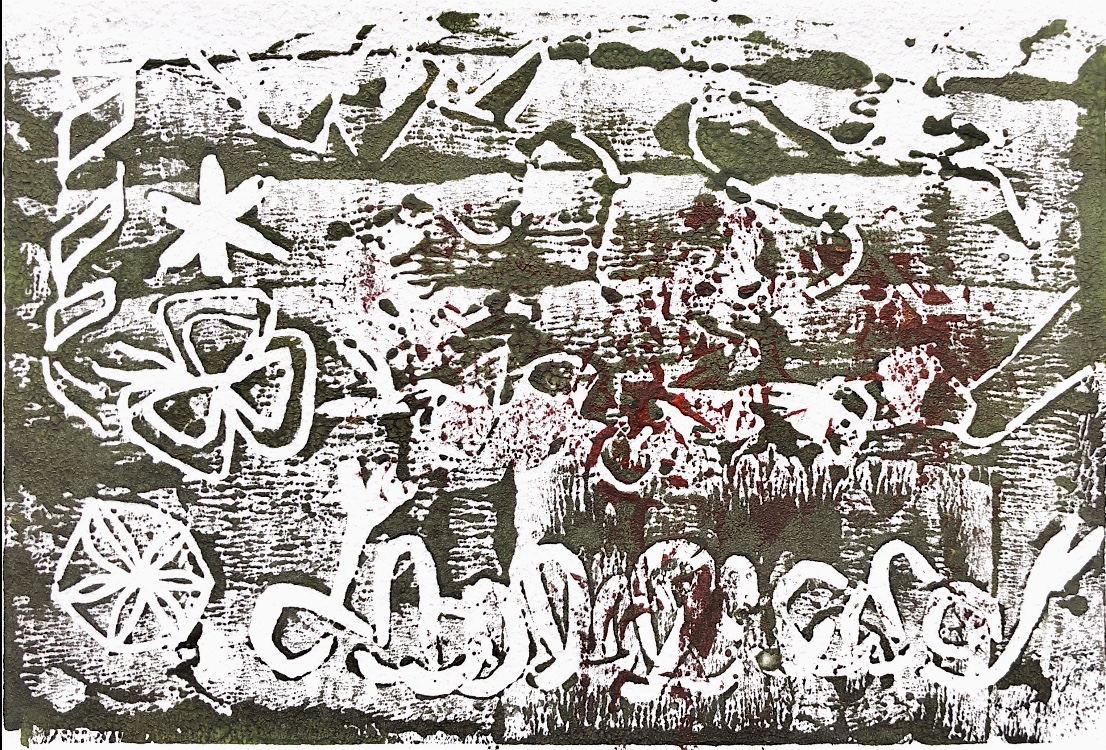
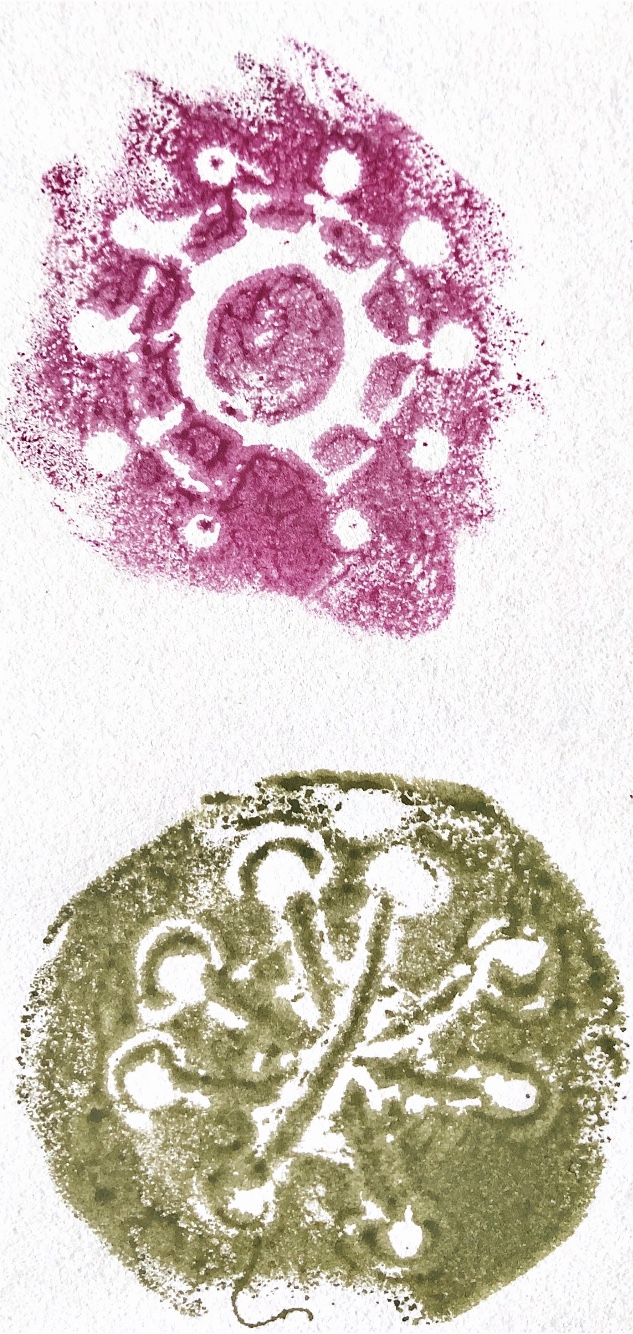
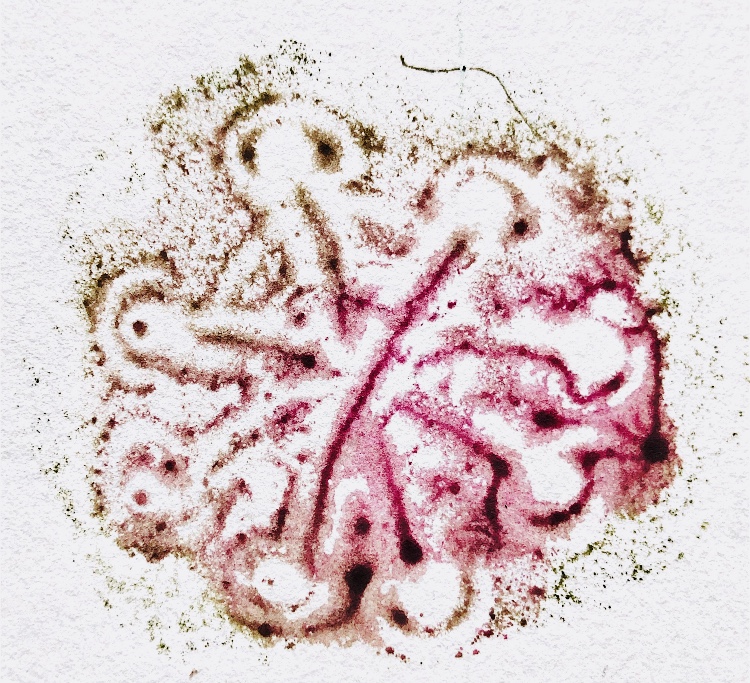
Painting with my left hand and lino cut printing, based on the plastic sample.

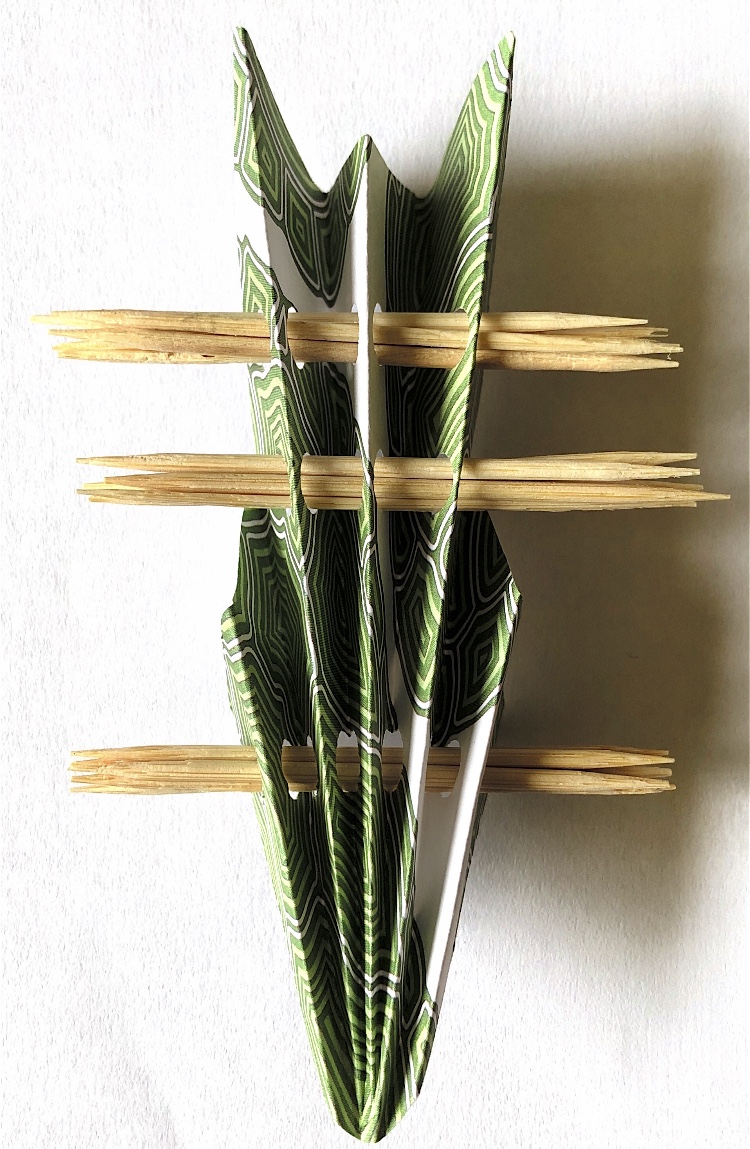
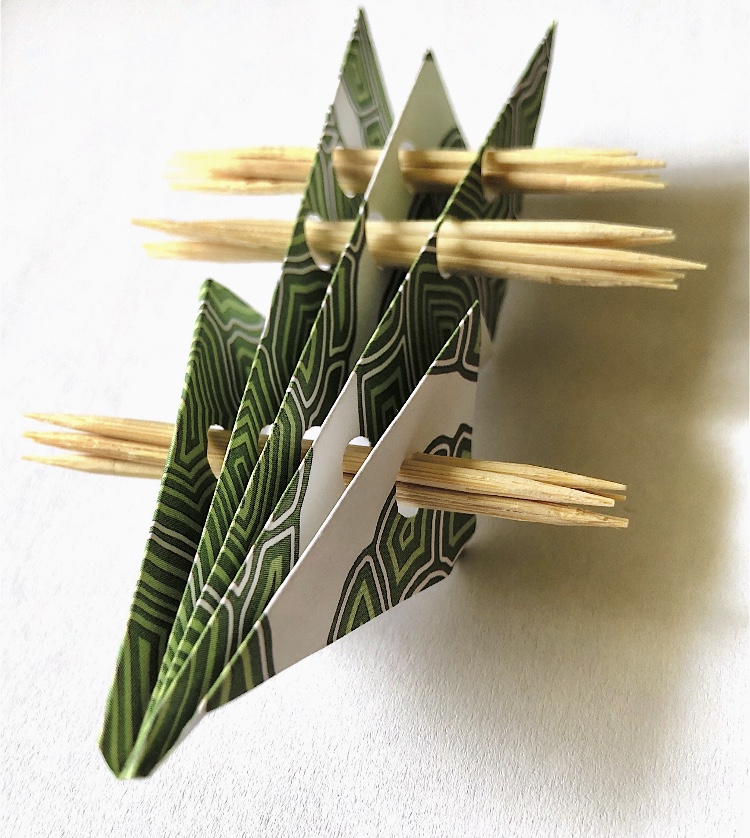
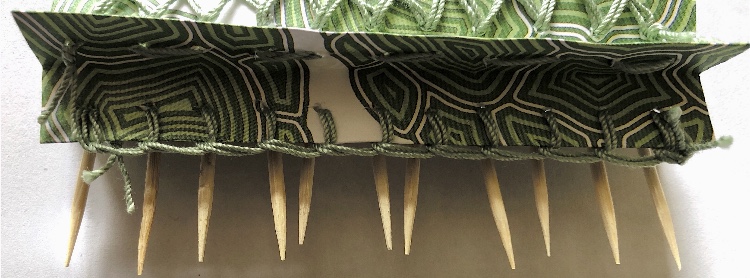
4. Wrapping paper folded and then punctured with a hole punch/bradawl. I found that threading with cocktail sticks kept the folded shape, and stitching emphasised the folds.

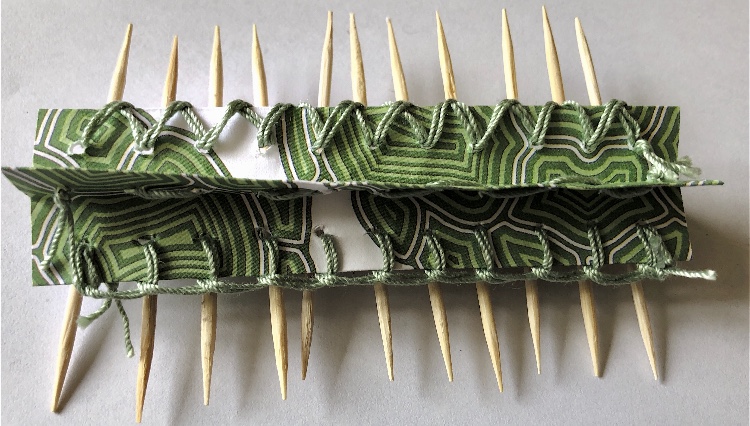
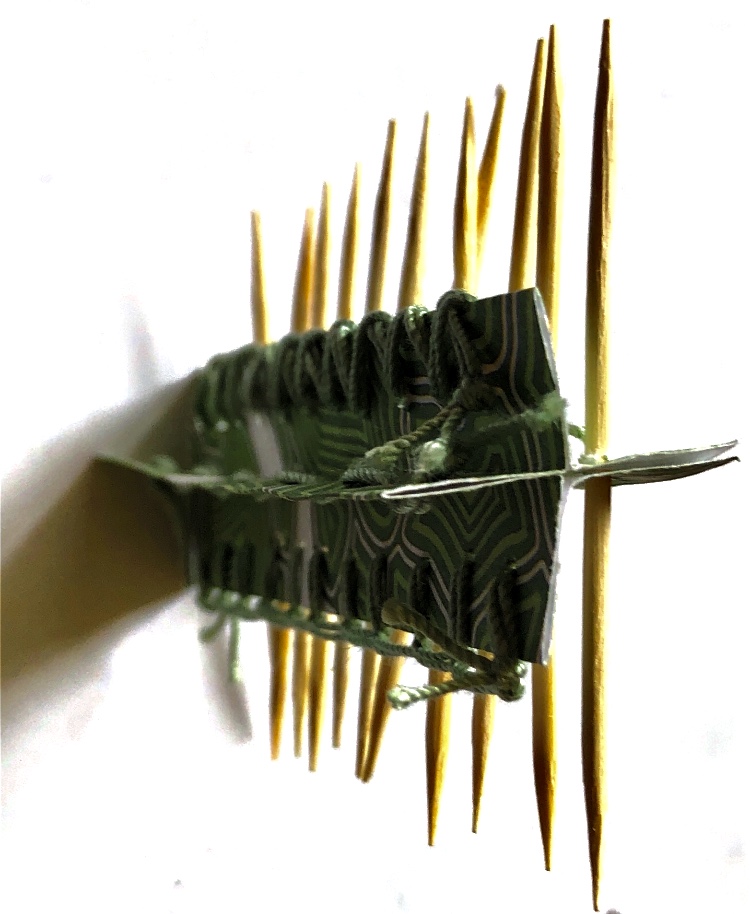
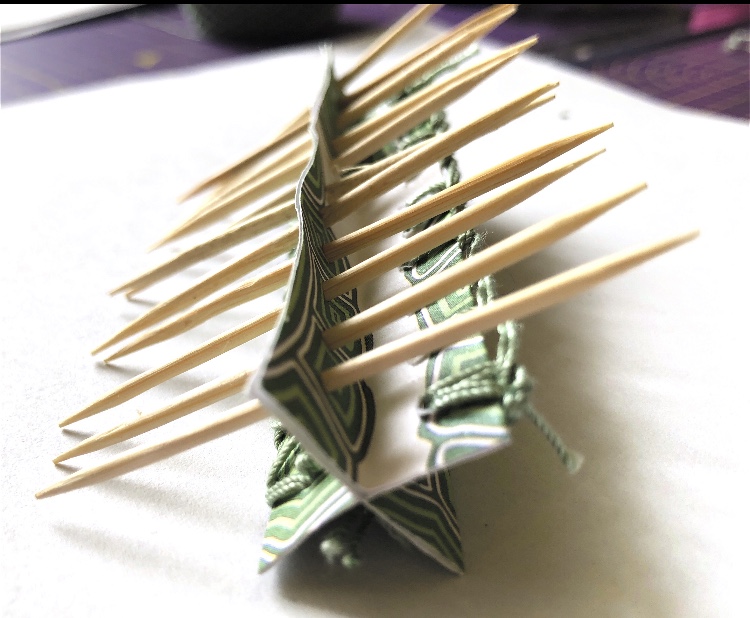
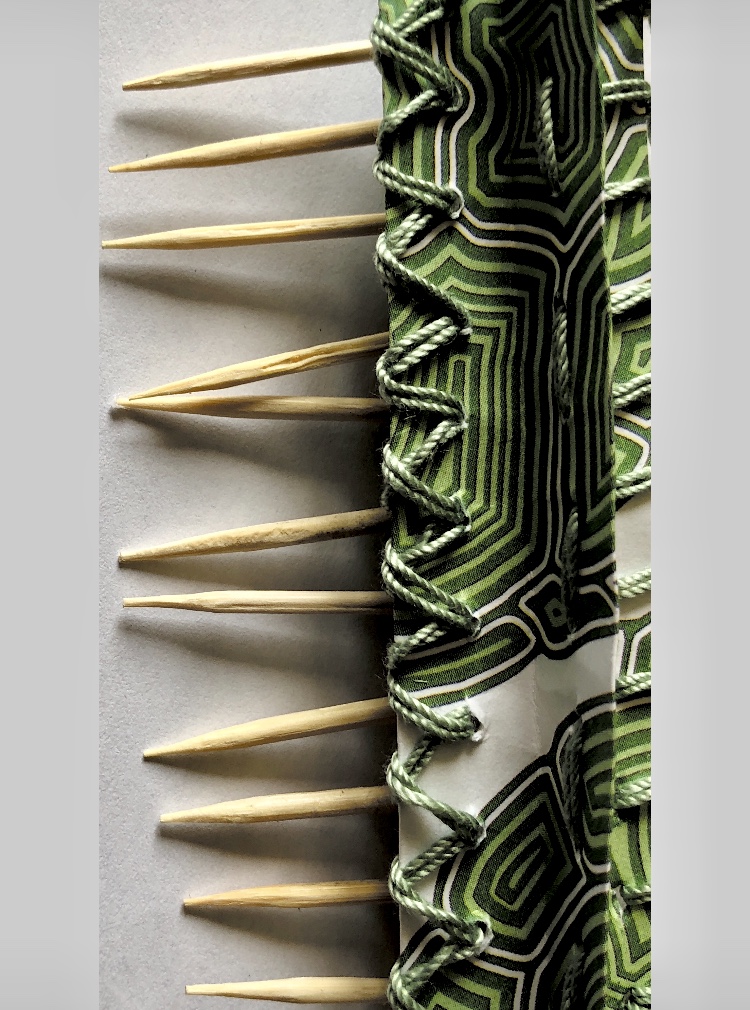
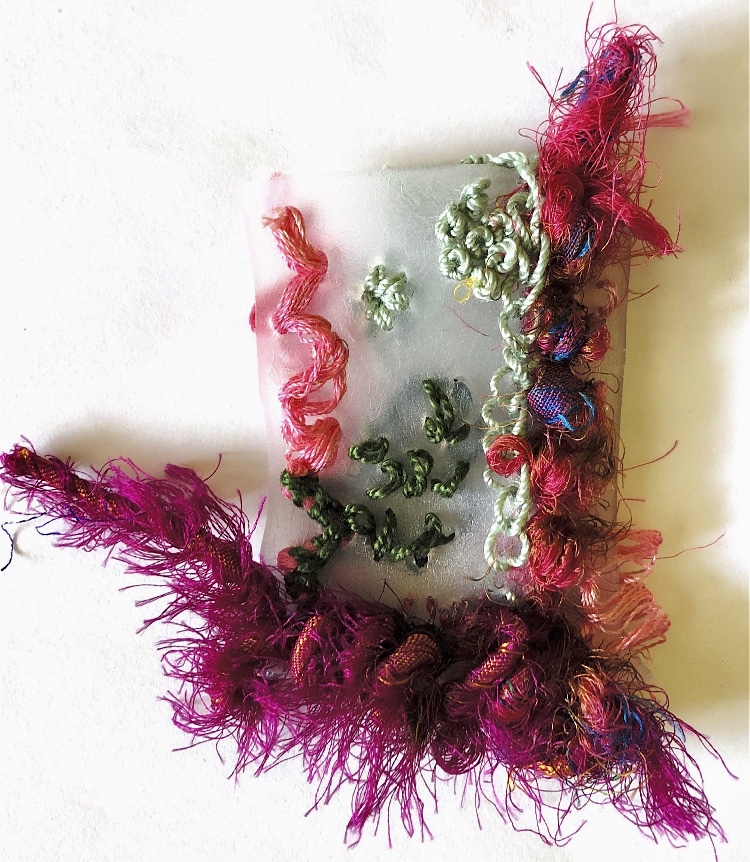
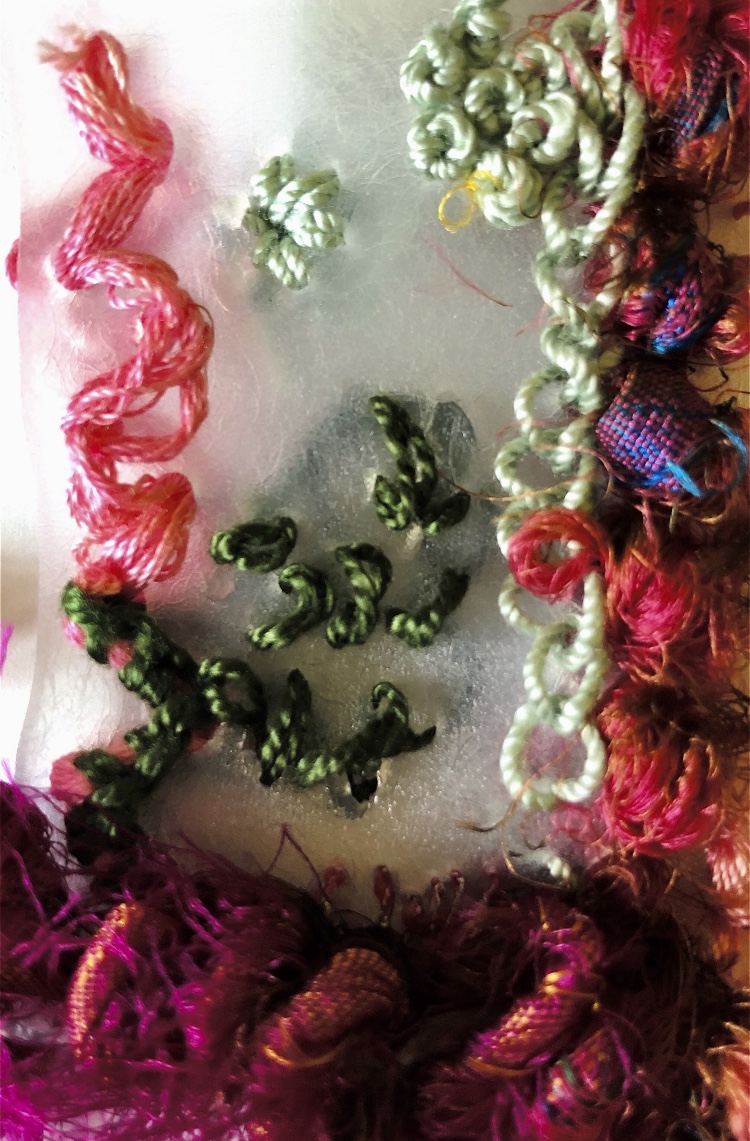
5. Shrink plastic sewn and then shrunk. I think that this idea could have possibilities but it is difficult to puncture without tearing the material. I used a hole punch but this only reaches so far into the material – a punch with a longer reach would be needed to explore this further.
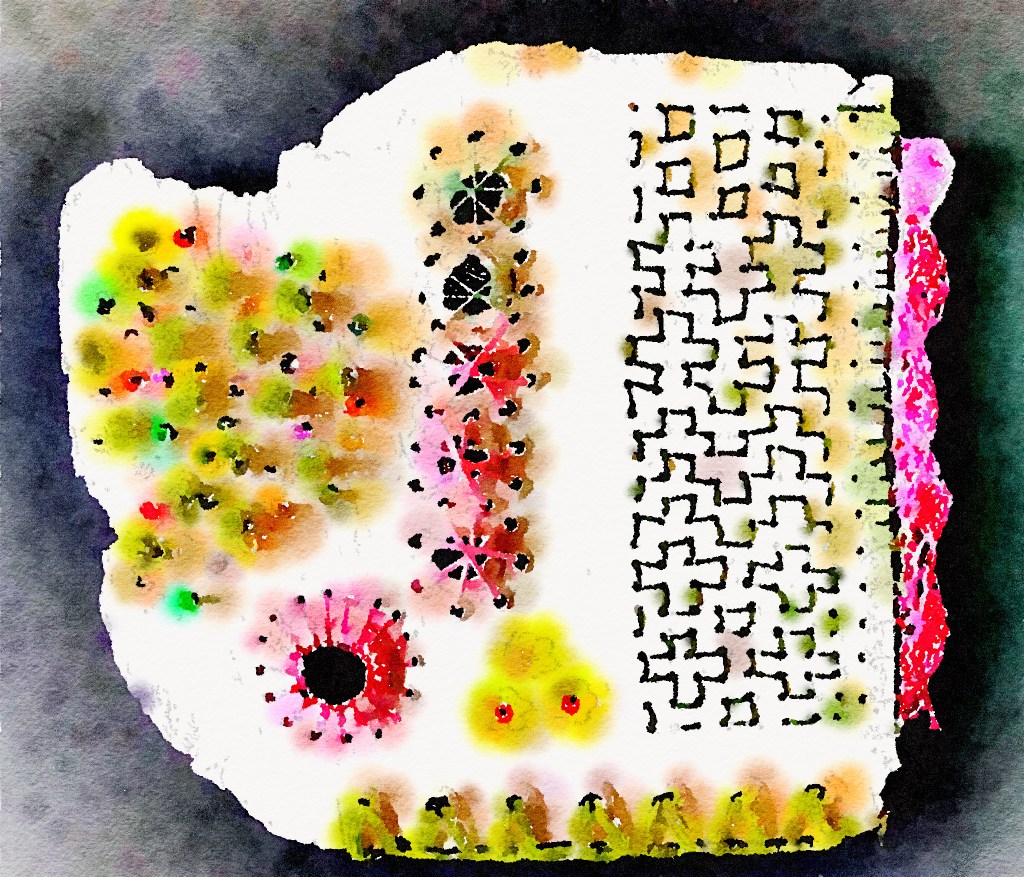
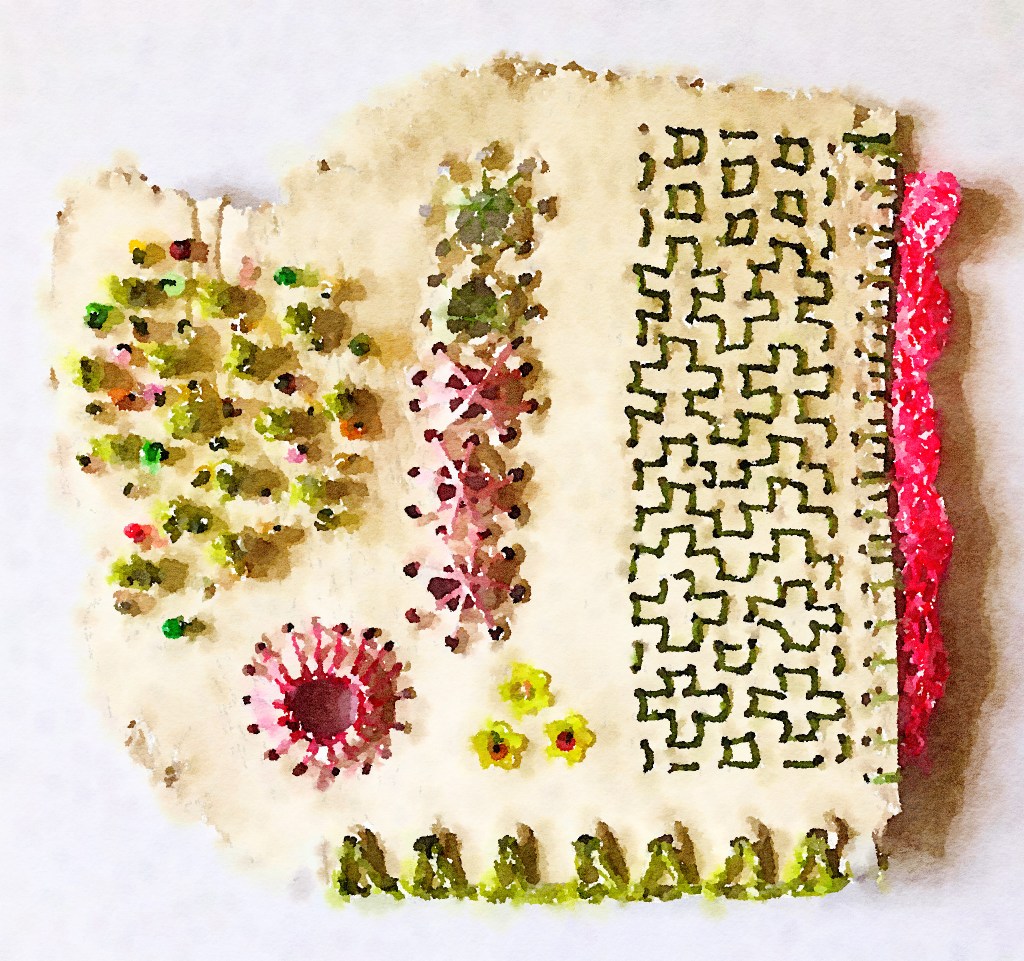
6. Air dry clay was punctured while still wet and then stitched when dry. I love this – it has the feel and look of an old textile due to the texture of the clay. Creating holes in the clay creates bumps and dips to be incorporated into the design.
I used a variety of stitches including ‘Kantha’ patterns. The sample was photographed on a white and a black background. It may be interesting to texture the surface of the clay with fabrics before it dries next time.
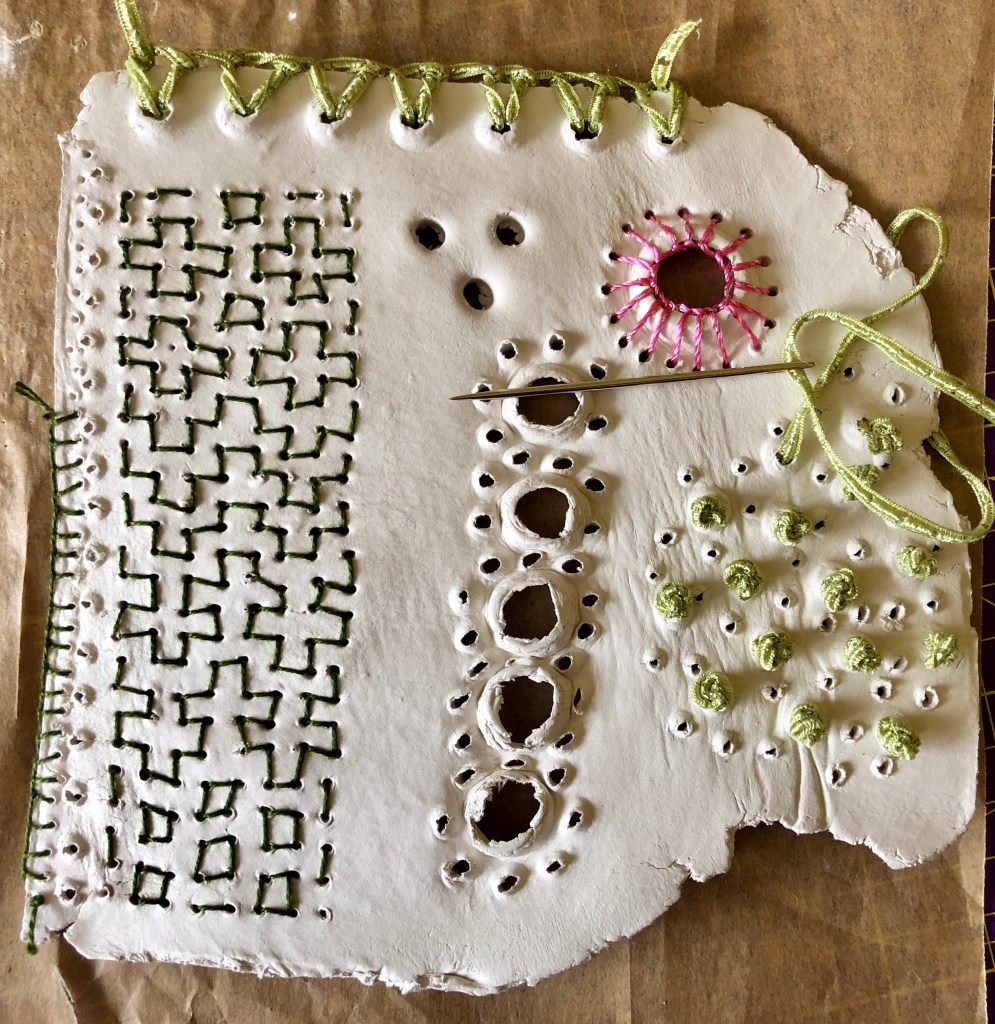
Work in progress

Finished sample on white background

Finished sample on black background
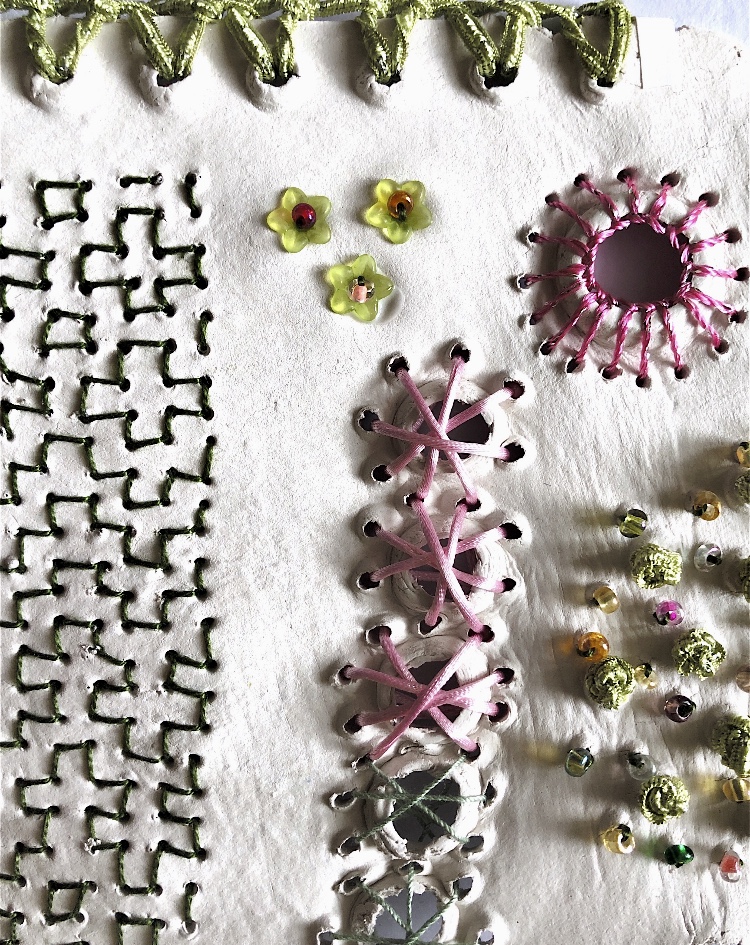
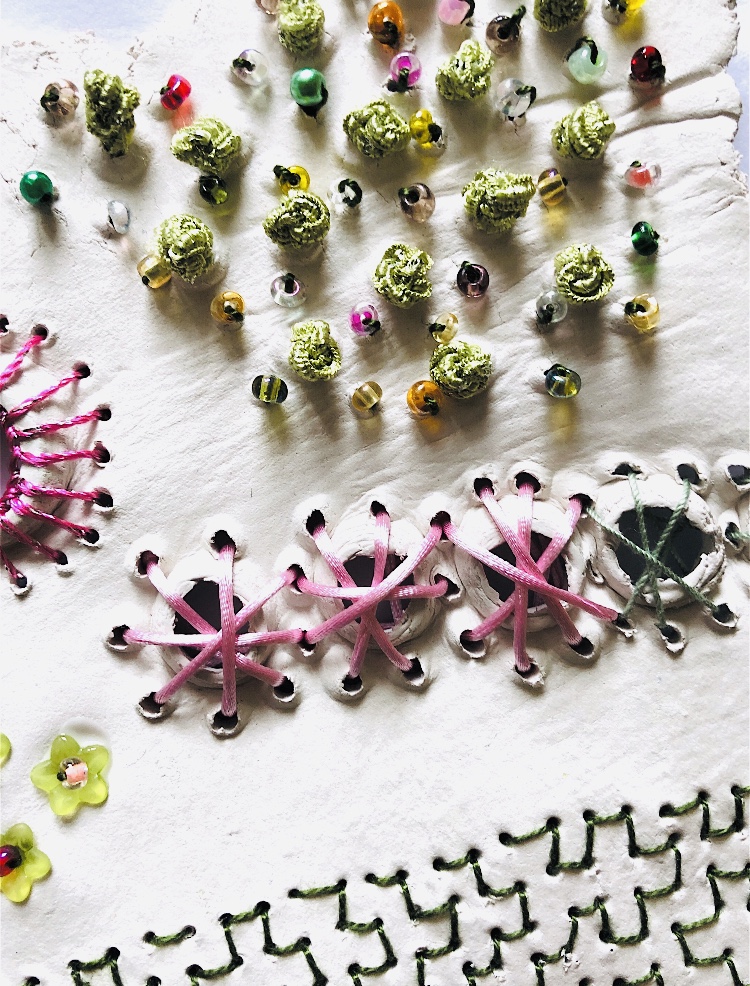
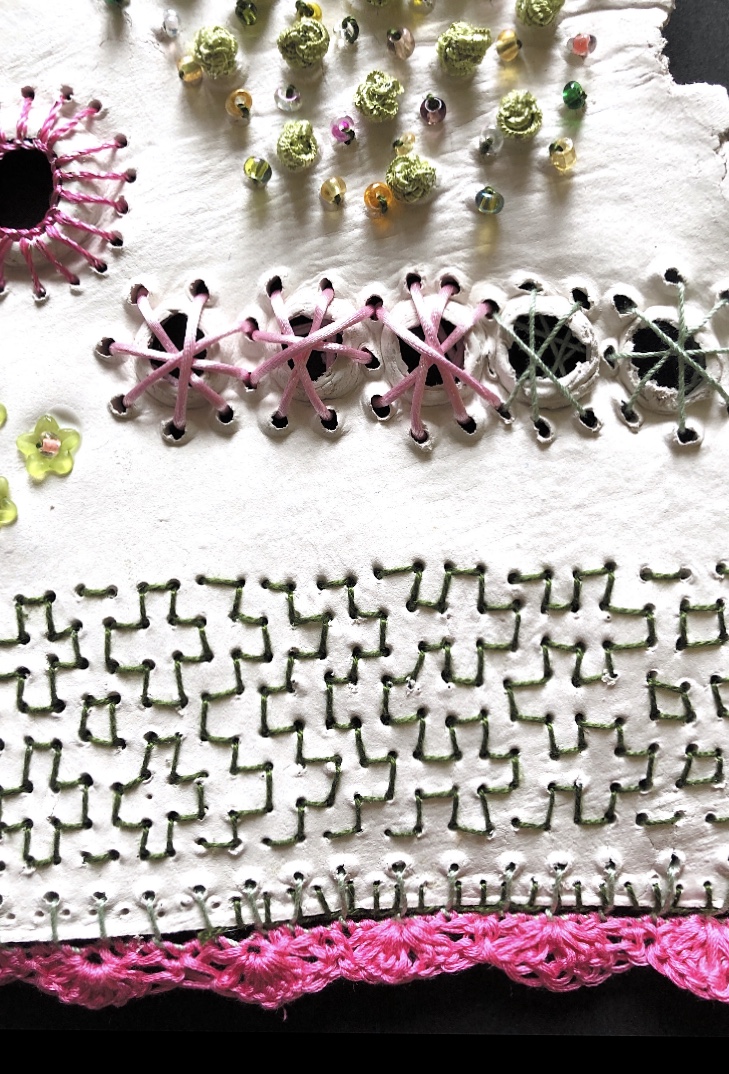
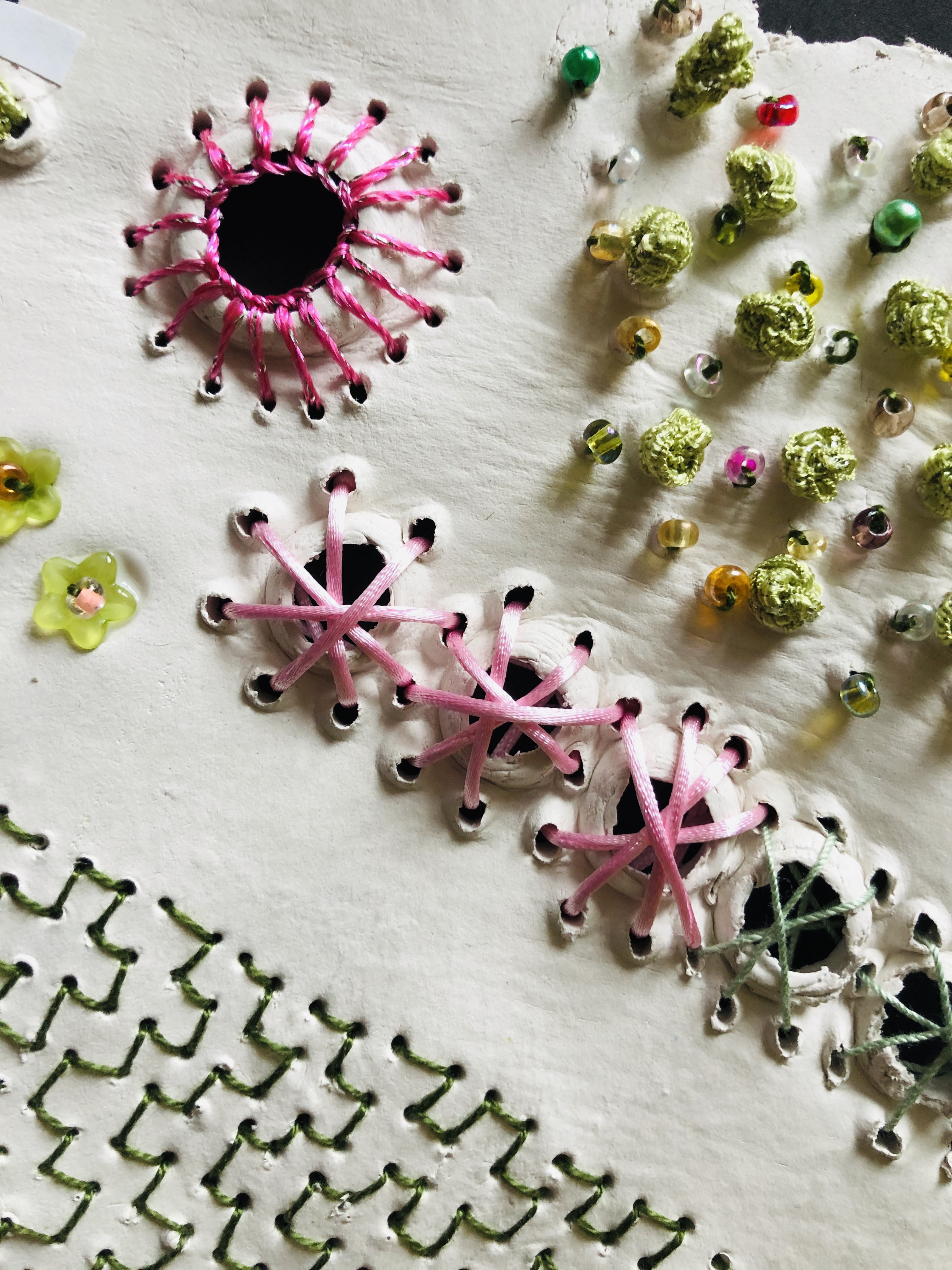
Sample images manipulated in ‘Waterlogue’ app.


Pen drawing and simple prints

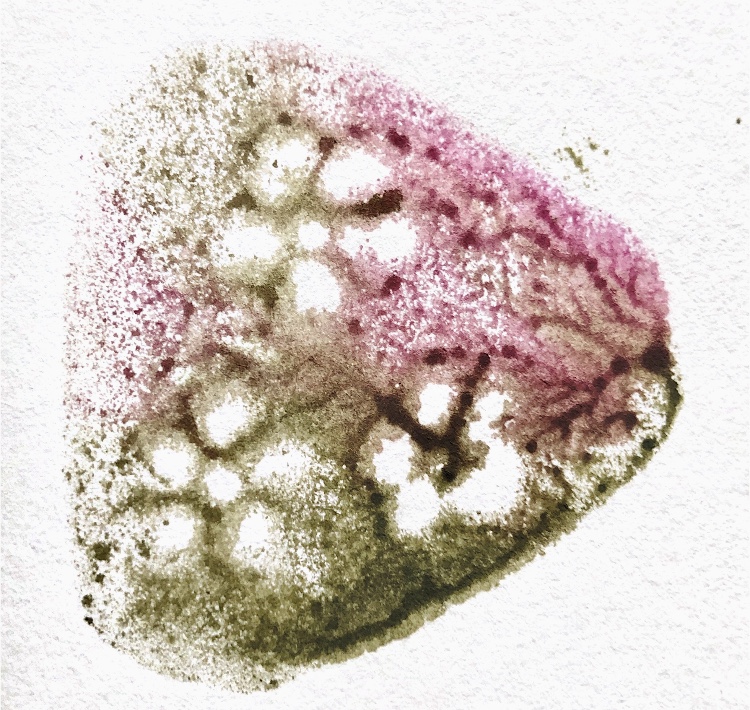
The paper and clay samples are my favourites from this exercise and I see the clay sample as leading on from the paper experiment. Maybe I need to try ‘paper clay’ – I will investigate.
When stitching the dried clay I was worried about breaking it but this is also a worry with paper which can easily tear. The limited colour palette on these samples works well, and I think I could experiment with a more muted or natural colour palette to give a vintage/ancient textile look with my stitches. Also creating a texture on the surface of the clay would add to the mood of the piece.
 Paper and stitch