Paradise Mill is currently closed for work to be done so instead I decided to visit Gawthorpe Textiles collection at Gawthorpe Hall in Lancashire.
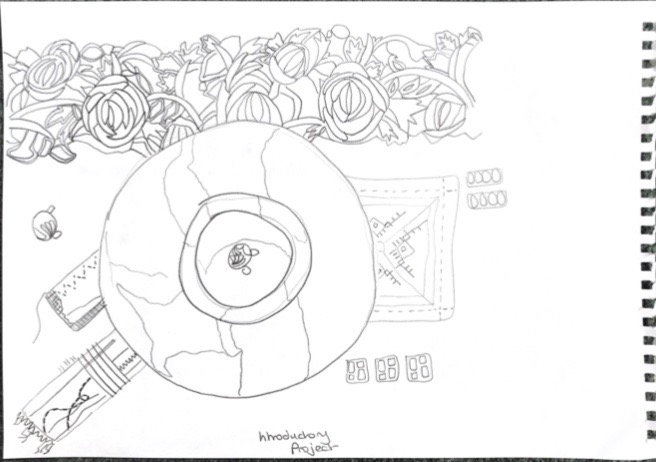
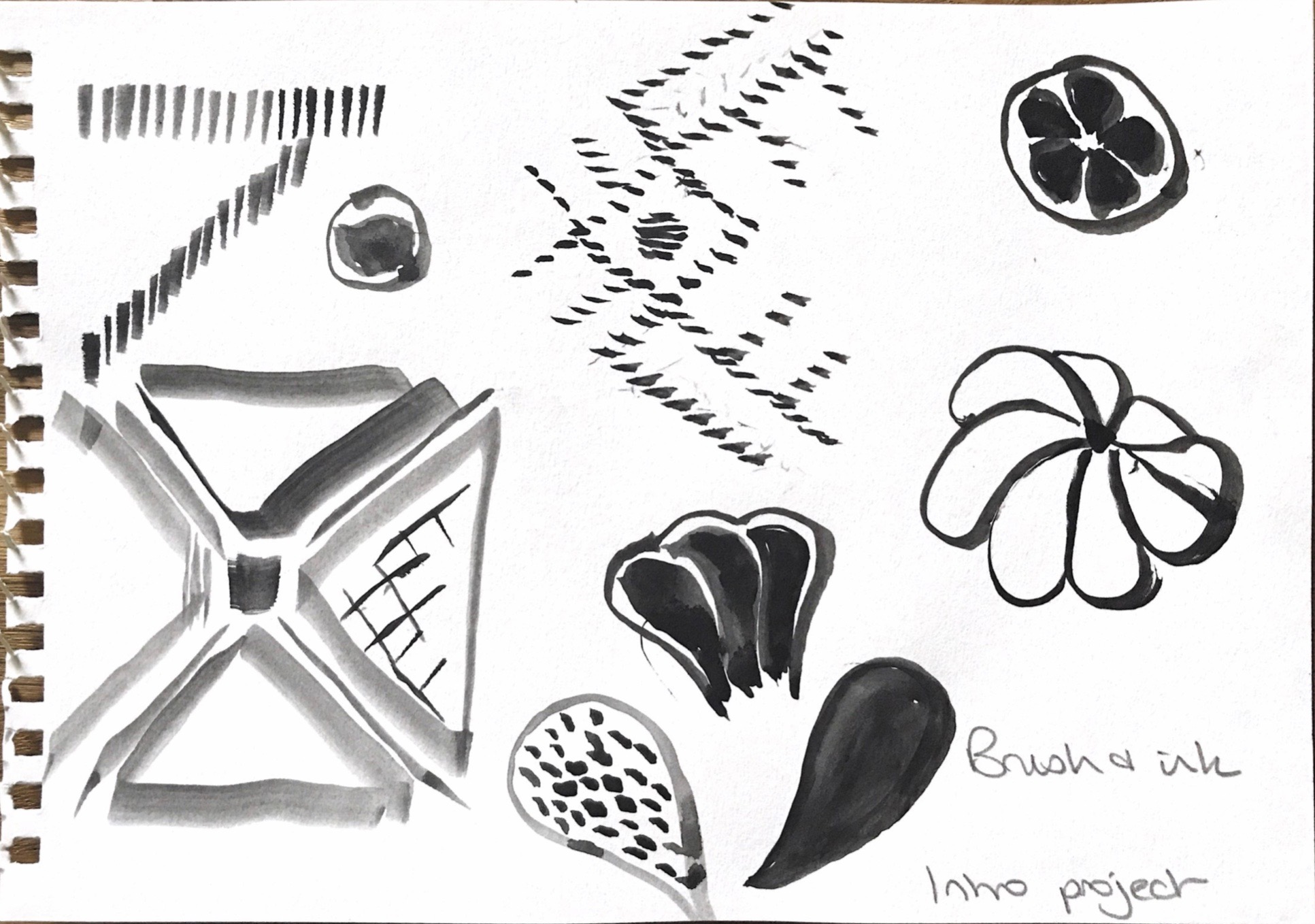
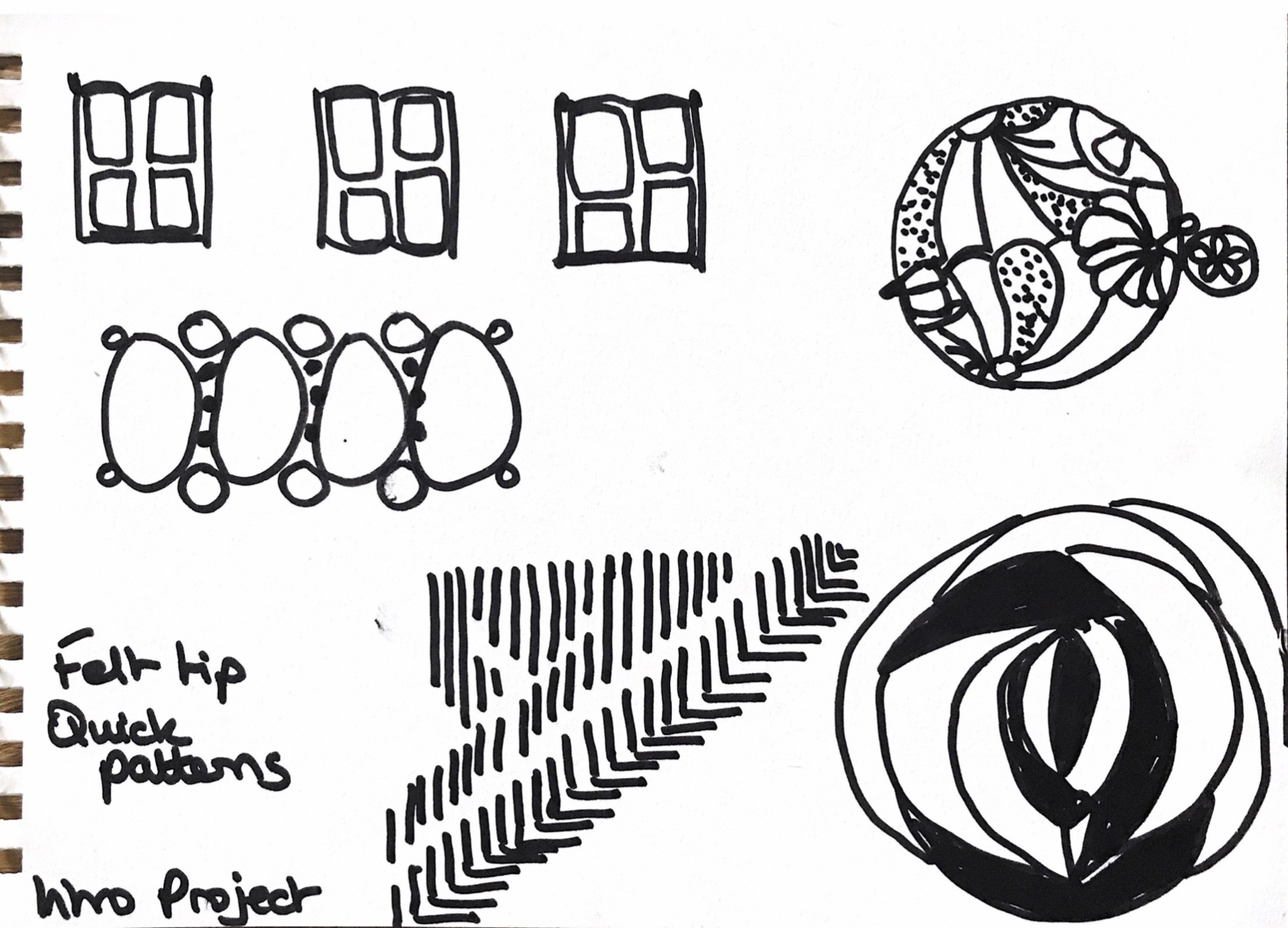
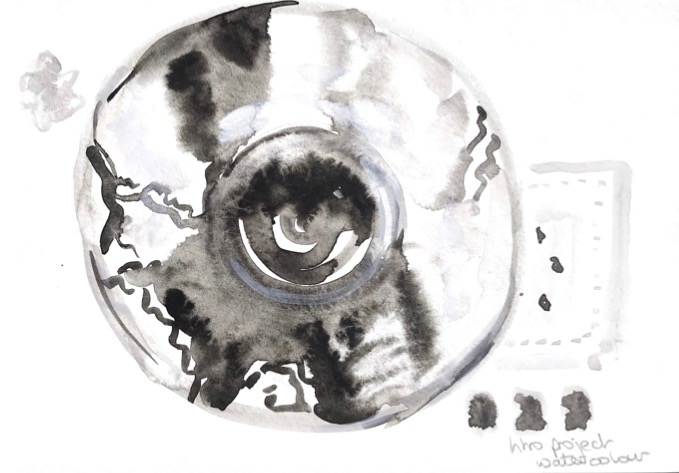
I have chosen three pieces to study and capture.
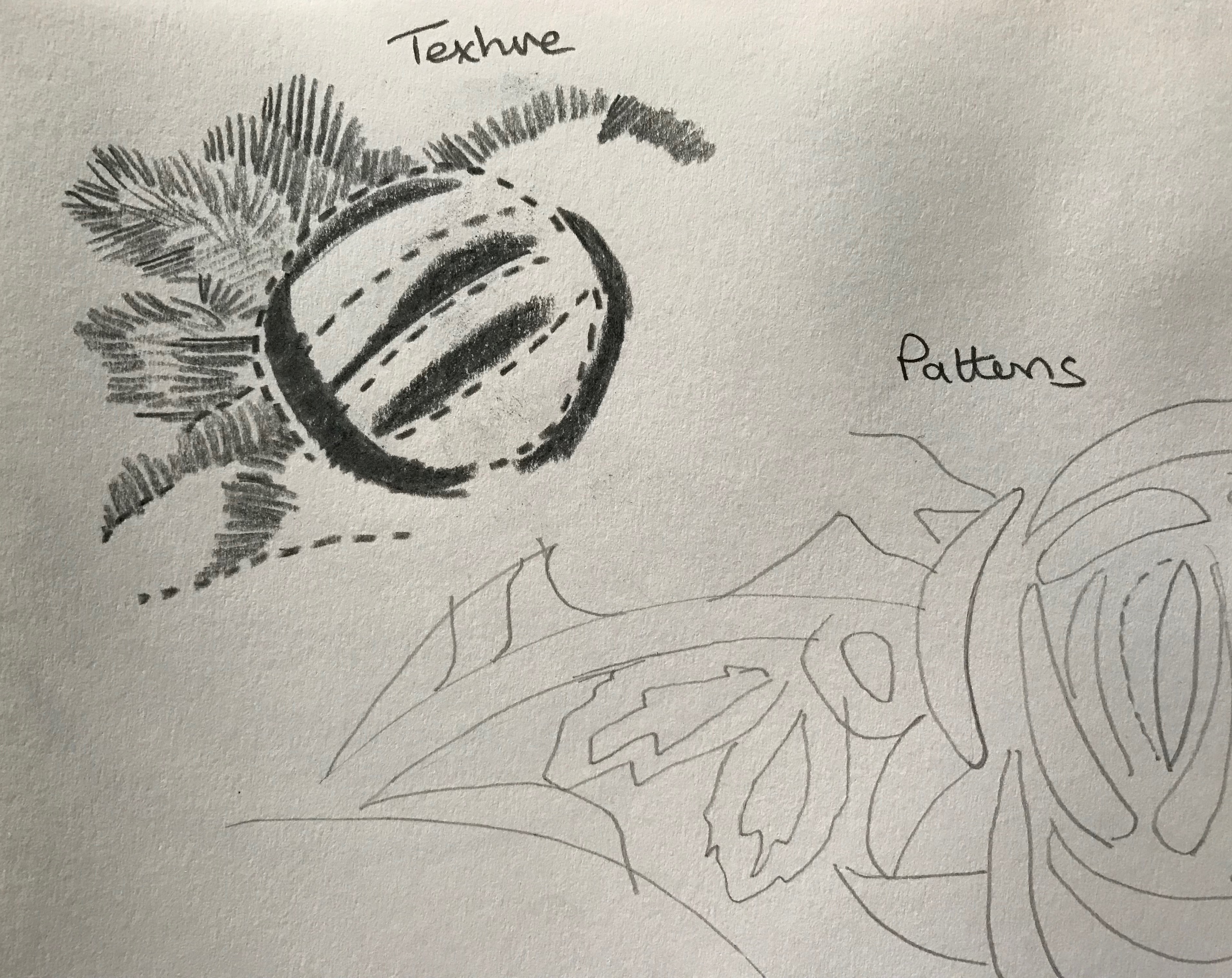
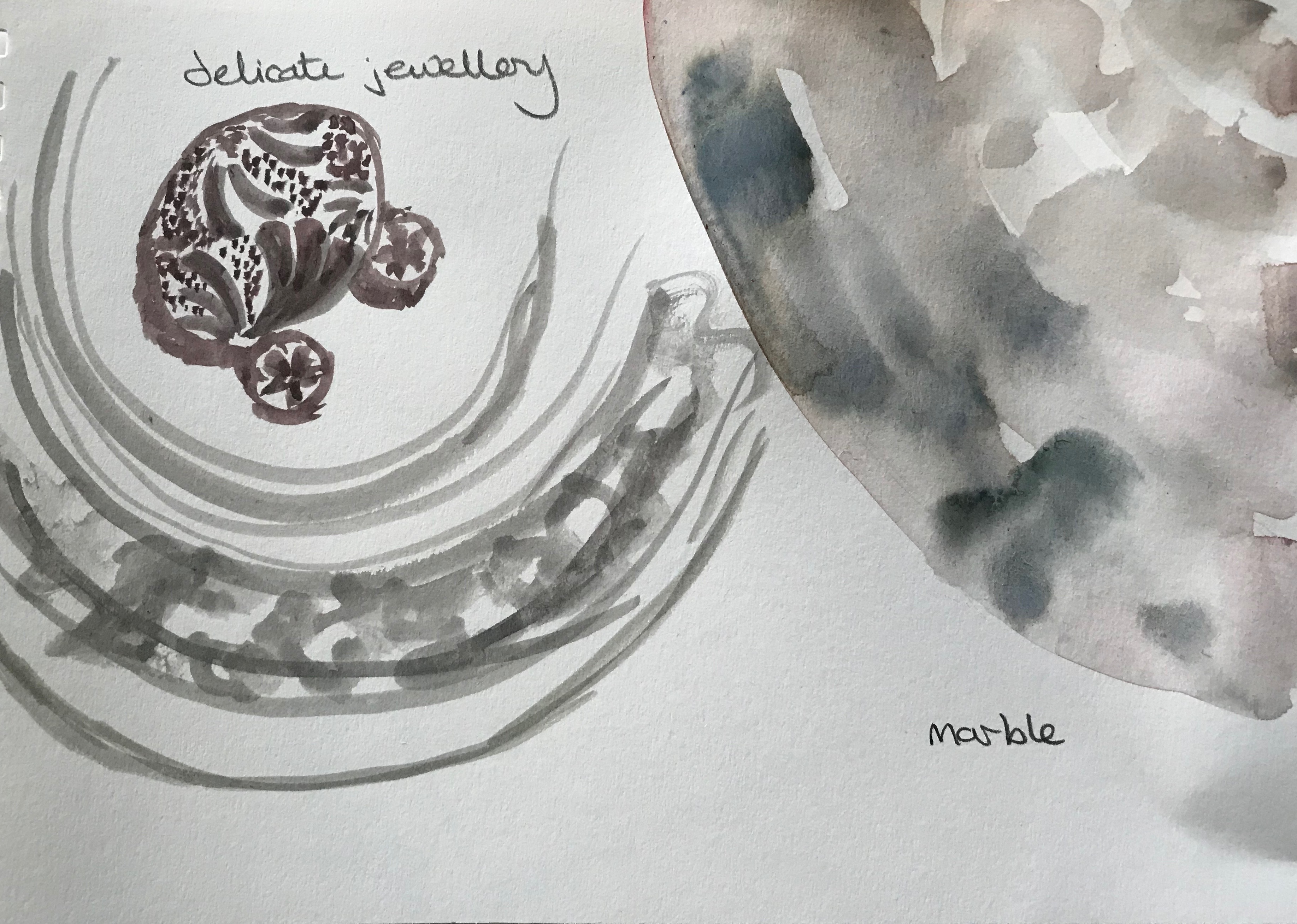
- A whitework collar embroidered with stylised flowers, berries and vermicelli like patterns, typically Indian in design. Circa 1830-1850.
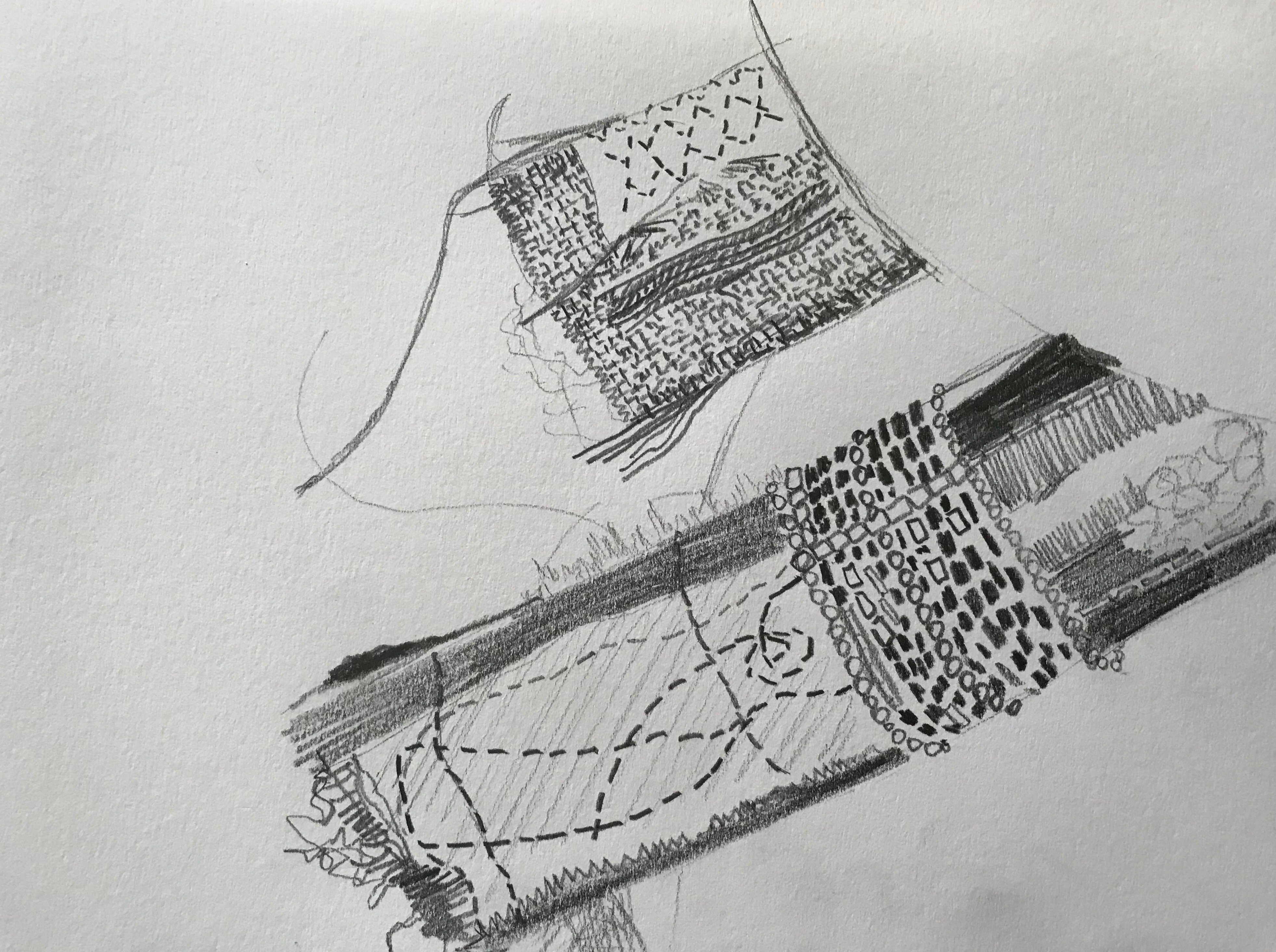
- A bedspread and bed hangings made in the early 20th century, based on Jacobean crewel work of the 17th century.
- A stole of fine wool woven in Kashmir and embroidered with silk. Circa 1800-1850.
WHITEWORK COLLAR
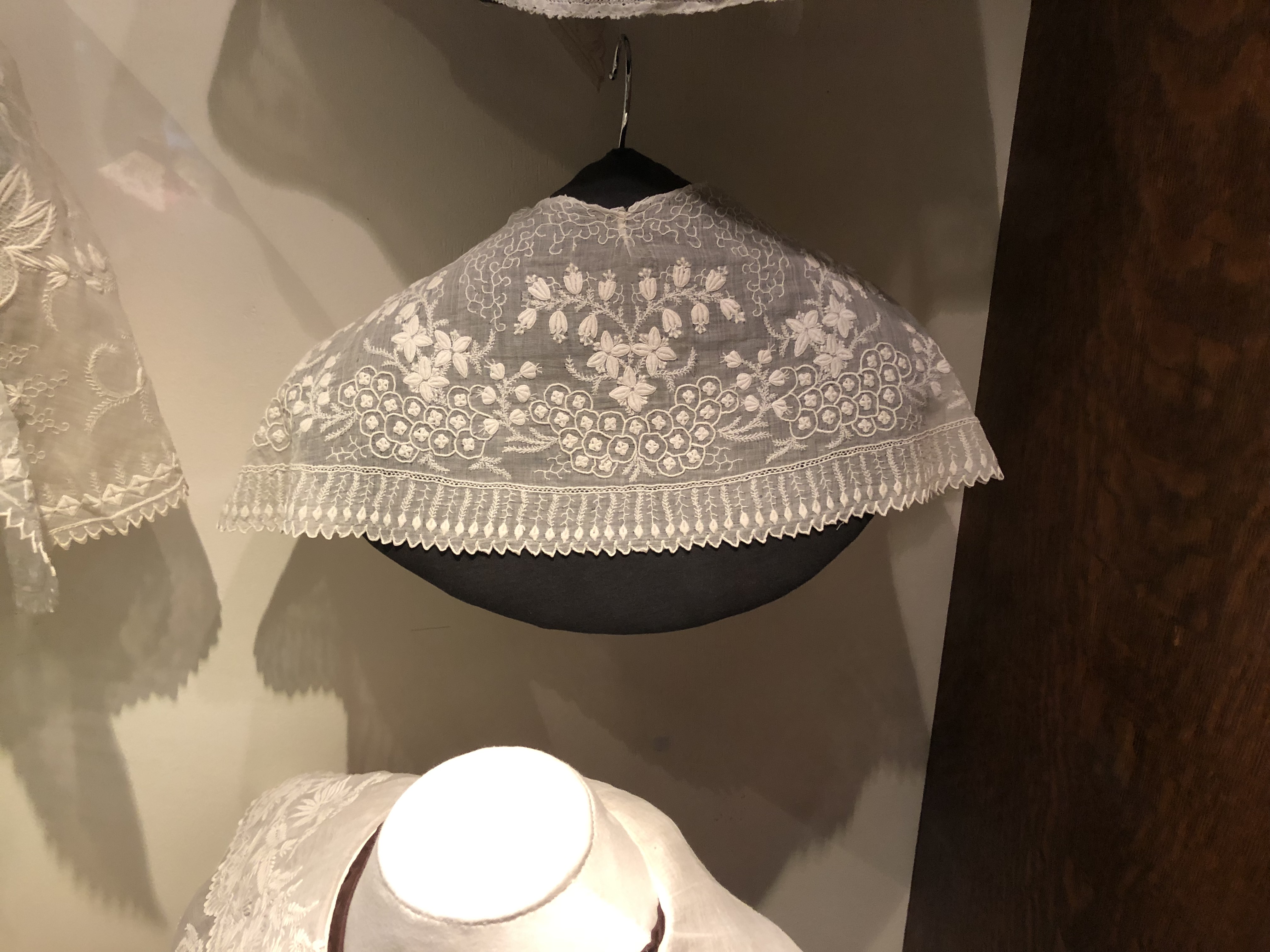
This is made from cotton muslin with fine cotton embroidery. Muslin is a fine woven cotton fabric and the embroidery would have been done by hand. Stitchers were highly skilled and would have drawn out their own intricate patterns or shared them with friends and family.
The cotton mills of North West England would have mainly imported raw cotton from American slave plantations to spin and weave in the mills. It is not certain where the muslin was produced for this collar or where the embroidery was done but the best whitework produced in Britain was produced in Ayrshire and also produced in vast quantities in India. Ayrshire whitework was mostly in the open style, but the work on this collar is flat indicating that it may have been produced in India.
It is not easy to find out any more information about this item at present but it may be that the textile curator has more information. It would be interesting to trace the origins of the fibres, making and embroidery to further study this type of work.
The collar is delicate and fragile looking but does not show signs of wear, and has no visible repair or alterations. This would indicate that it would have been worn perhaps for special occasions and the price would have been high due to the amount of work, making it out of reach for most people.
There is a sense of nostalgia in this beautiful piece, but also a sense of sadness in the slave trade and the use of child labour in the cotton industry. It is a piece produced for the rich by the very poor.
I love the delicacy of this piece.
TREE OF LIFE BEDSPREAD
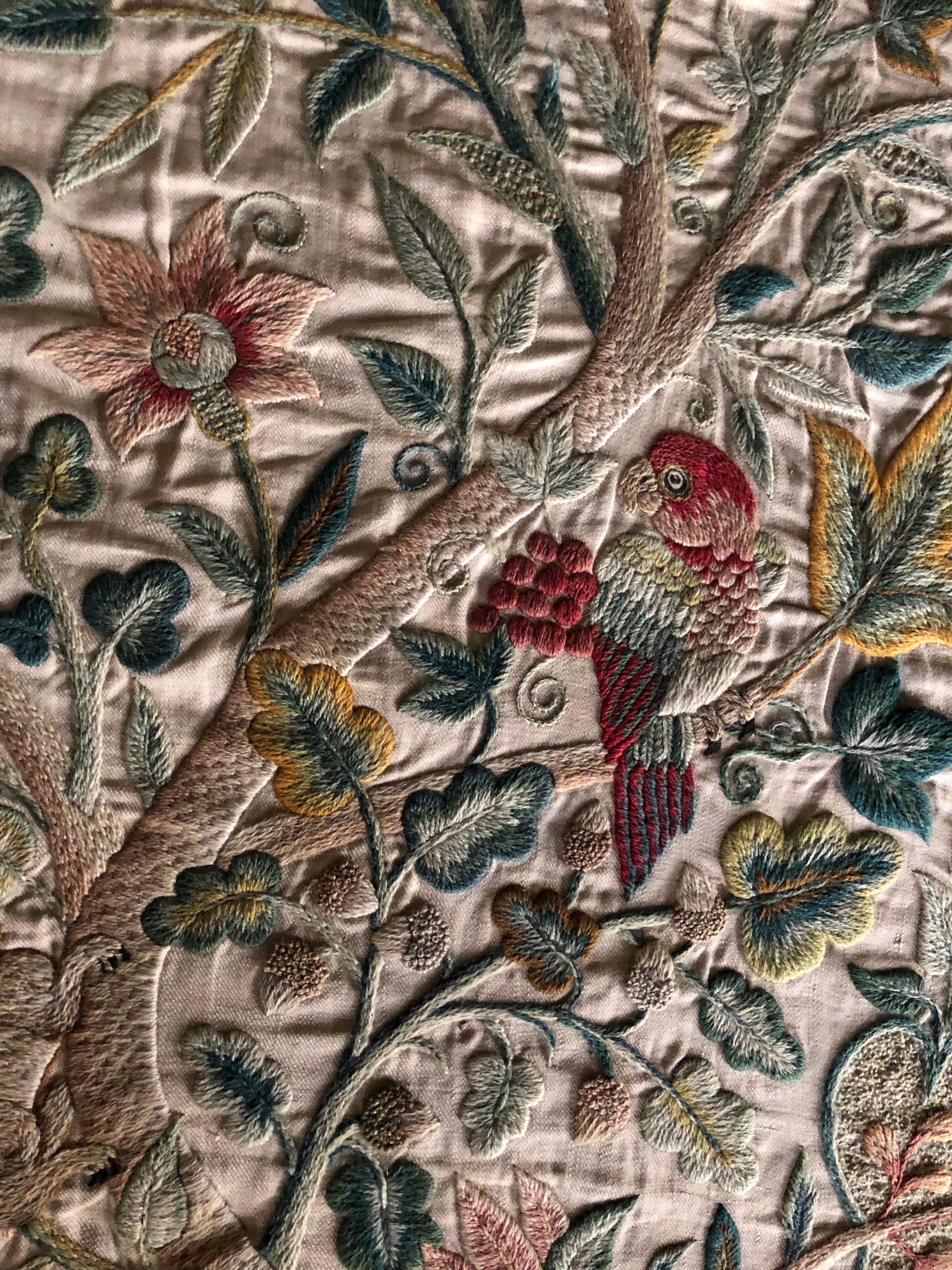
This piece is made from linen, embroidered with wool. Jacobean crewel work takes its name from James 6th as it was very popular during his reign but the earliest known example is the Bayeux Tapestry.
Jacobean crewel work used designs incorporating birds, flowers, animals, plants and the tree of life, and this piece includes these designs. Inspiration for these designs came from exotic fabrics imported by the English East India company in the 17th century, but due to lack of dyes, early crewel work was monochromatic until more varied dyes became available. By the time this piece was embroidered many colours would have been available and this can be seen in the variation of colour and tone in this piece.
It was made by Miss Rachel Kay-Shuttleworth who was a maker, collector and teacher of textiles and who turned her ancestral home into a craft house to keep alive traditional crafts and techniques. She was given a bed by her parents for her 21st birthday and she made a set of bed curtains, pelmets, valances and a bedspread using Jacobean crewel work. It was made in the early 20th century and has lasted well as it must have been well used by Miss Rachel. It is interesting to view this textile work on the bed for which it was made, and in the bedroom where it was used, giving a real sense of nostalgia for another age.
The textile is linen with a cotton backing and needs to be carefully preserved with gentle vacuuming by a professional.
WOOL STOLE FROM KASHMIR
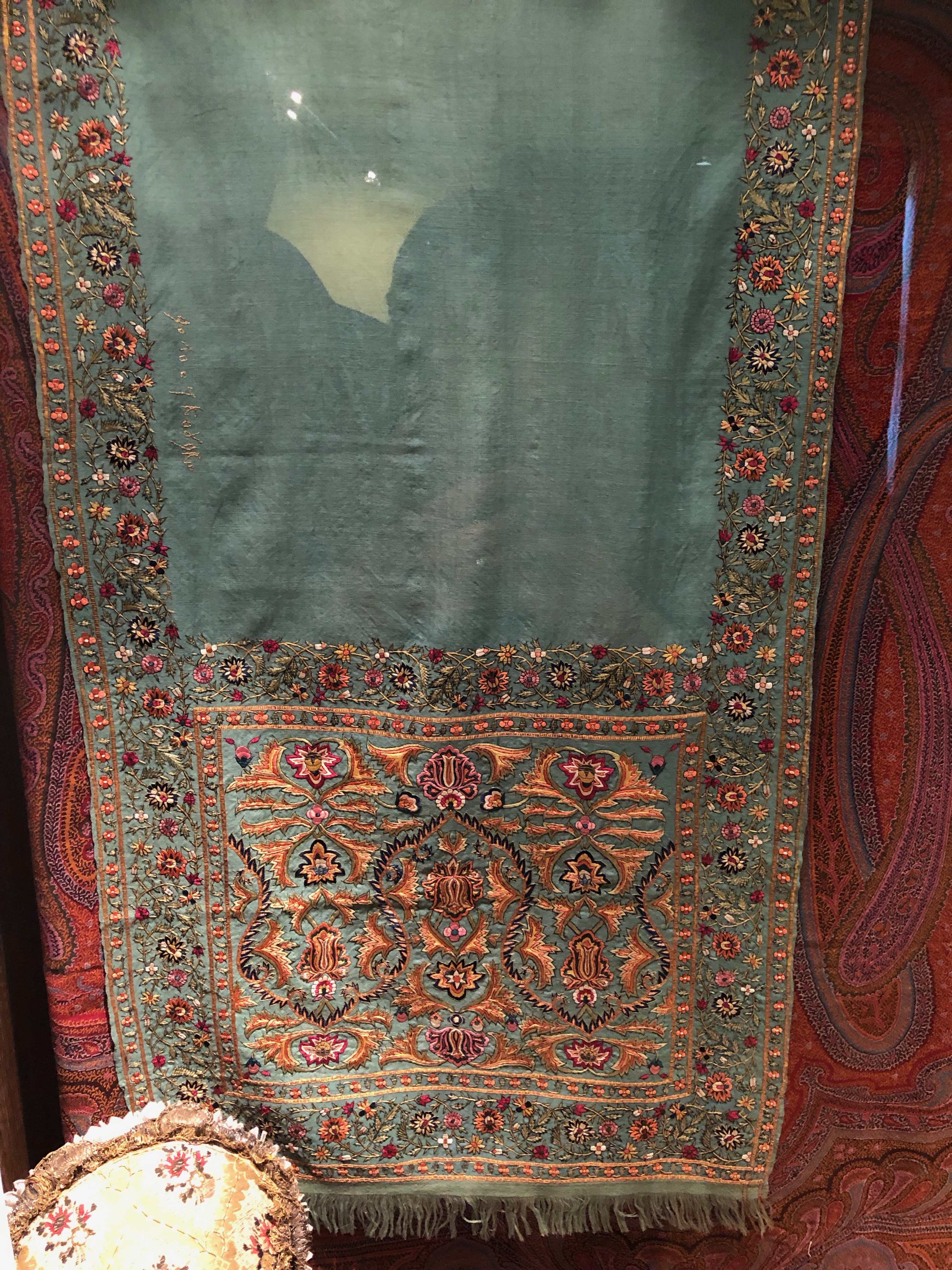
This is a stole from Kashmir and is a woven textile made from wool with silk embroidery. This luxurious fabric was very popular in the early 19th century with wealthy Europeans and was most likely woven on a handloom from goats hair. The wild mountain goat’s hair would have been imported from Tibet or central Asia, then given to women to wash and spin in their own homes. Further processes including natural dyes would have prepared it for the home weavers to produce a length of fabric on one or more looms. The weave is fine and the fabric is soft, warm, and drapes well so was perfect for a stole, but would also have been used for other garments as well.
It is embroidered with silk threads in many colours and appears to have mostly worked in satin stitch. Kashmir was on the Silk route which was a number of trade routes linking China to Western Europe over 4000 miles.The pattern creates a border all the way round the stole and the ends have a deeper border with a fringe. The pattern consists of traditional Indian stylised flowers and leaves. The sheen of the silk contrasts with the woven wool which is matt.
This stole would have been expensive due to the time taken to weave and embroider it and therefore would only have been available as an item for the very rich. It shows little sign of wear so maybe was kept for special occasions. It is bright and beautiful and I am very drawn to the colours of both the background and the embroidery.



 Paper and stitch